Perenco reports new Oil and Gas findings in Cameroon
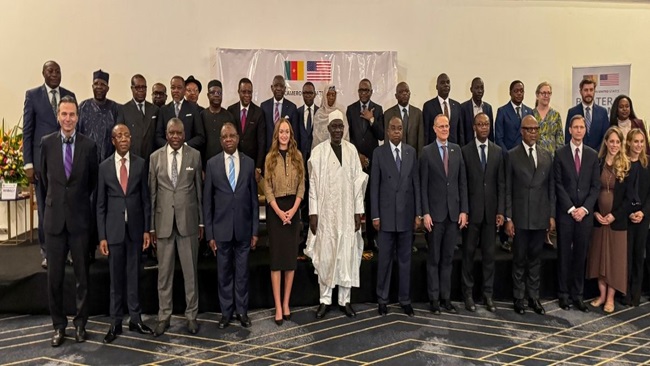
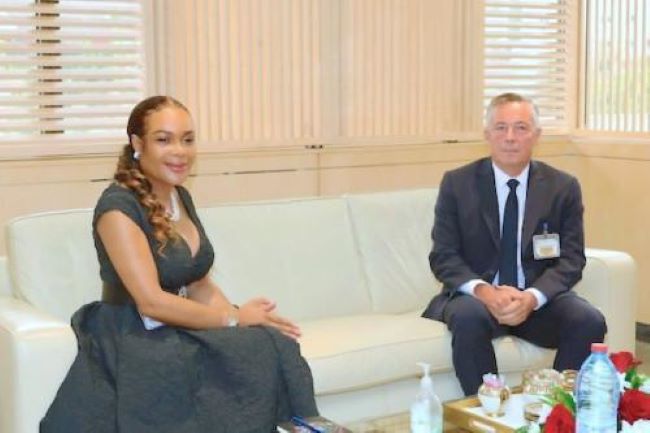
Cameroon’s National Hydrocarbons Corporation, SNH, and Perenco have released new data on exploration and development work in the Rio del Rey basin. The information was presented on September 17, 2026, in Yaoundé at a meeting marking the appointment of Julien Gras as managing director of Perenco’s Cameroonian subsidiaries.
According to a briefing note prepared by SNH for the meeting, work at the Kita and Bokwango structures under the Rio del Rey production-sharing contract identified more than 30 million barrels of oil and more than 40 billion cubic feet of gas. The state company also reported a new appraisal well at Bekita.
A speech delivered at the same event by Perenco CEO Armel Simondin provided additional detail on some of those volumes. The company said Bokwango alone had identified 31 million barrels of oil and 25 billion cubic feet of gas in place.
It remains unclear how the 31 million barrels should be classified. Unlike the gas, which Perenco explicitly described as being “in place,” the company did not say whether the oil figure refers to oil initially in place, technically recoverable resources or reserves. Based on the available information, the 31 million barrels therefore cannot be treated as commercially recoverable reserves.
SNH’s briefing note also does not break down the more than 40 billion cubic feet of gas attributed to Kita and Bokwango. Perenco puts Bokwango alone at 25 billion cubic feet of gas in place. But the difference between that figure and SNH’s overall estimate cannot be assumed to represent Kita’s share because neither source provided a breakdown.
55 Billion Cubic Feet of Gas at Lungahe
Perenco also reported a gas find from exploration work under the Bomana production-sharing contract. A well drilled on the Lungahe prospect identified 55 billion cubic feet of natural gas, according to SNH. Perenco said the figure represents 55 billion cubic feet of gas in place.
That volume does not necessarily correspond to the amount that can ultimately be recovered economically and brought to market. The field’s recovery factor, development costs, required infrastructure and economic and contractual conditions will determine how much of the gas can eventually be developed.
Preparatory work on Lungahe had been underway for several years. Cameroon’s 2023 EITI report states that the extension of the Bomana exploration authorization granted in April 2023 was intended in part to allow Perenco Rio del Rey to continue geoscientific work and prepare the drilling of the Lungahe well.
In Rio del Rey, Perenco said it has drilled 25 wells and carried out about 50 workover operations. The company said the program has increased production by nearly 13,000 barrels per day and added more than 21 million barrels to reserves.
SNH reported a separate figure, estimating that additional development work on the Rio del Rey field during the tenure of Yves Postec, the outgoing managing director of Perenco’s Cameroonian subsidiaries, increased national production by about 7,000 barrels per day.
The two figures cannot be directly compared. The documents do not use the same reference periods or provide enough information on the measurement basis to determine whether the 7,000 barrels per day cited by SNH are included in the 13,000 barrels per day of incremental production reported by Perenco.
Across its Cameroonian operations, Perenco said it has invested more than $1.5 billion alongside SNH since 2012. The company reported more than 100 workover operations, the drilling of about 100 wells and several infrastructure projects. It said it has added more than 240 million barrels to reserves over the period and put its current operated production at about 75,000 barrels of oil equivalent per day.
Gas Development Still Requires Contractual Agreement
The volumes identified at Bokwango, Kita and Lungahe do not in themselves mean the resources will be brought into production. Among the priorities handed over to Perenco Cameroon’s new managing director, SNH cited continued appraisal work, the development of Bokwango and the monetization of Rio del Rey’s gas resources.
Regarding gas development, Perenco said further investment will depend on finalizing the contractual framework with SNH. Simondin said he wants to complete the process “as soon as possible.”
SNH’s briefing note also mentions two technical upgrades: a 10 MW increase in power generation capacity and a 15 million cubic feet per day increase in gas-lift capacity. No investment amounts or commissioning timetable were provided.
Source: Business in Cameroon