
CEMAC drafts unified mining code to tighten governance
Central Africa’s economic bloc plans to tighten oversight of its mining sector and make it more attractive to investors through a unified legal framework.
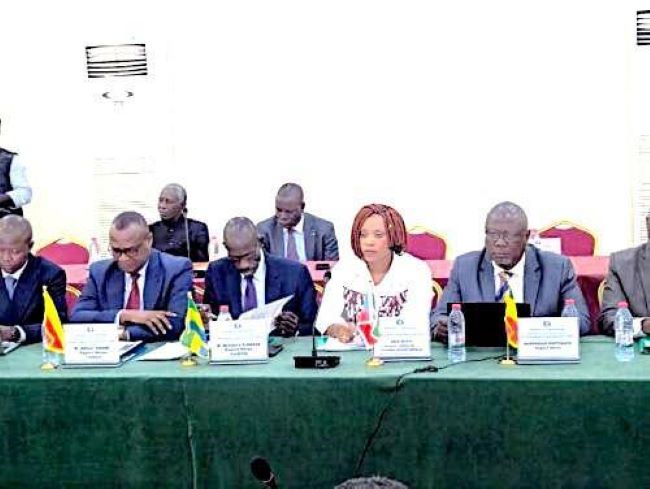
From April 20 to 25, 2026, officials and stakeholders met in Douala to finalize a draft Community Mining Code for the six member states of CEMAC. The initiative is part of a broader effort to align national regulations and create a more stable and predictable environment for mining investment.
The discussions, led by the CEMAC Commission, brought together national experts, lawmakers, mining officials, private sector representatives, civil society groups, and regional financial institutions, including the BEAC, COSUMAF, and BVMAC. The goal is to balance country-specific constraints while reducing regulatory gaps that complicate investment decisions.
The proposed code seeks to harmonize national mining laws, strengthen transparency in the allocation and management of mining rights, and improve accountability among both public and private actors. It also aims to limit regulatory arbitrage within the bloc, where large-scale mining projects often require cross-border infrastructure, significant capital, and long-term contractual stability.
The process builds on earlier steps. According to the CEMAC Commission, work on the code resumed in April 2024 in Brazzaville, followed by meetings in July 2024 in Riaba and Malabo, and a regional review workshop in February 2025. The initiative also draws on the African Mining Vision adopted by African Union leaders in 2009, which promotes transparent and equitable resource management for sustainable growth.
For member states, the stakes go beyond legal alignment. A shared framework could strengthen their negotiating position with international mining companies, particularly on fiscal terms, environmental and social standards, and local content requirements. It could also provide a more consistent basis for securing existing contracts and structuring new regional projects.
The reform comes as Central Africa continues to underuse its mining potential. In Cameroon, for example, authorities adopted a new mining code in December 2023 to address the limits of earlier legislation and improve sector attractiveness. But across the region, translating geological potential into public revenue, industrial jobs, and local value chains remains a challenge.
A more unified framework could also support regional capital markets. For mining companies, clearer and more consistent rules would reduce compliance costs and improve visibility on returns. For financial institutions and the BVMAC, it could open the door to more project financing tools, including public listings, bond issuances, and structured financing tied to extractive projects.
Still, the effectiveness of the future code will depend on how it is implemented. CEMAC will need to define how it interacts with national laws, country-specific tax regimes, and existing contracts. Without strong enforcement mechanisms, the code risks becoming a reference framework rather than a tool for real change.
Following the Douala meeting, the CEMAC Commission is seeking technical validation of the draft. The text will then be submitted to the member states’ mining ministers and reviewed by regional bodies, including the Council of Ministers of the Central African Economic Union. Through this reform, CEMAC aims to lay the groundwork for more integrated mining governance and to turn its resource potential into a stronger driver of growth, public revenue, and industrialization.
Source: Business in Cameroon


