

FIFA: President Gianni Infantino wins election pledge to expand World Cup to 48 teams
FIFA has unanimously decided the World Cup will be expanded to feature 48 countries from 2026. The football body’s ruling council said on Tuesday the tournament would see 16 groups of three nations.
Approval for the increase from 32 teams meets President Gianni Infantino’s election pledge to expand the World Cup and could help fund extra money for FIFA’s 211 members.
It will mean the current tournament format of 64 matches increasing to 80, which FIFA has forecast will equate to $1bn (£823m) of extra income from broadcasting and sponsorship deals as well as ticket sales. The 2018 World Cup in Russia is expected to generate $5.5bn (£4.5bn) in income.

FIFA’s six confederations will find out in May how many extra places they will get for the competition. UEFA has said it wants 16 European teams in the 2026 tournament, which will likely be held in North America.
The CONCACAF region – which also includes Canada and Central America – has not hosted the World Cup since it was held in the US in 1994. Football bodies from the US, Canada and Mexico have held initial talks about co-hosting a bid for 2026.
Africa and Asia could also benefit from the expansion, with up to nine places each. Africa had five and Asia only four at the 2014 World Cup.

But FIFA has admitted it expects the standard of the tournament to drop with an additional 16 teams. In a research document sent out to members last month, it said the “absolute quality” of play – defined by high-ranked teams facing each other most often – is achieved by 32 teams.
Three-team groups mean one country will be left idle for the final group matches, and concerns have been raised over collusion between the two remaining teams. FIFA has said it could guard against result rigging by introducing penalty shootouts if group games end in draws.
Culled from Sky Sports News
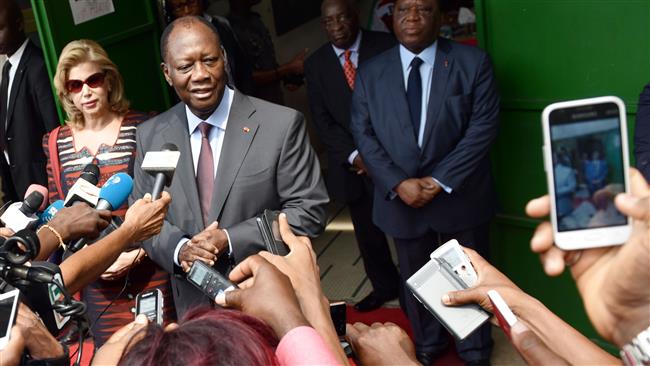
Ivory Coast: President Ouattara fires heads of the army, police and gendarmerie
Ivory Coast’s President Alassane Ouattara has sacked the heads of the army, police and gendarmerie after a two-day military revolt that renewed tensions in the West African country. Angry soldiers and military officers on Friday started a revolt against the central government over pay and bonuses, capturing the second largest city of Bouake before troops in military camps across the country joined the mutiny.
Most of those involved in the armed revolt are reportedly former rebels who were later integrated into the army. The presidency said in a statement on Monday that army chief General Soumaila Bakayoko was replaced by his second in command, General Sekou Toure. Bakayoko is the former military head of a 2002-2011 insurgency and has become increasingly unpopular with many troops.
Gervais Kouakou Kouassi, the superior commander of the National Gendarmerie and Director General of the National Police Bredou M’Bia were also relieved of command with immediate effect, the statement said. Prime Minister Daniel Kablan Duncan resigned and dissolved the cabinet on Monday, two days later than he was expected to step down based on the standard procedure for changing the government in the country. The delay came due to the military uprising.
Presstv
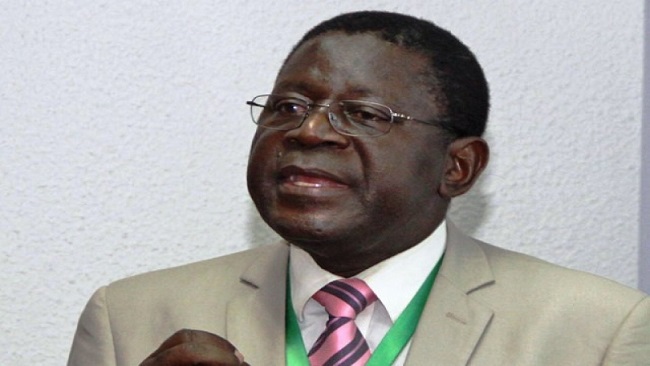
Former Governor David Abouèm à Tchoyi says Anglophone Problem may become another Boko Haram
The former governor of the South West and North West region, David Abouèm à Tchoyi has sounded a note of caution to President Biya and his Beti Ewondo gang, that the Anglophone crisis may become a more dangerous version of Boko Haram. The respected former civil administrator who served as governor of the two Anglophone regions noted recently that “One can remain deaf to appeals, close one’s eyes to the obvious, clash in denial, or even think like the first Vice Chancellor of the Federal University of Cameroon who, answering this question in 1964, had this memorable phrase: “There is no Anglophone problem; All Anglophones learn French very quickly “. But it is all of us who, very quickly, will be able to be caught up by the realities, warned the experienced administrator.
David Abouèm à Tchoyi pointed out that the Anglophone problem is not about vain threats and rhetoric that Cameroon is one and indivisible. The former governor observed that it is not a problem of living together. He revealed that Southern Cameroons as a nation welcomed thousands of French Cameroonians who escaped indigenous and forced labor from the French colonialists and other French Cameroonians who were involved in the UPC struggle for independence including thousands of men and women from African countries who lived and prospered there in harmony.
So, what’s the problem? How does it arise? Why these recurring eruptions in these two regions? David Abouèm à Tchoyi said there is obviously, an Anglophone problem in Cameroon. “This is not a problem between Anglophones and Francophones: there has never been a conflict between compatriots on both shores of the Mungo, on the basis of linguistic differences. It is not the rejection of what comes from Francophone Cameroon: no community in the North West or South West has ever opposed the practice in its territory of Bassa, Beti, Bamileke, Peuhl, Sawa … or other communities of the former East Cameroon.
David Abouèm à Tchoyi indicated that six facets come to mind:
1- Criticism of the centralized state.
2- The transfer of the decision-making centers to Yaoundé, far from the populations and their problems.
3- Failure to respect commitments to equitably take into account the institutional, legal and administrative cultures and traditions inherited from the former administering powers.
4- Non-compliance with the solemn promises made during the referendum campaign.
5- The change of the name of the State: replacement of “the United Republic of Cameroon” by “the Republic of Cameroon”.
6- Non-respect of bilingualism in the public sector, although the Constitution makes French and English two official languages of equal value.
The former has been making public a better understanding of the Anglophone problem to his French audience.
By Rita Akana with files from CIN
Culled from Cameroon Concord News Group
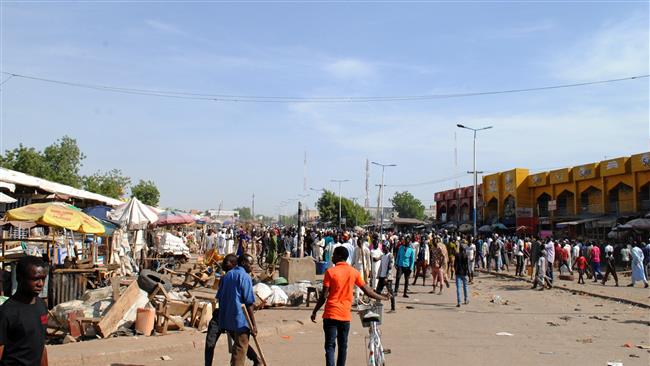
5 Boko Haram terrorists, 3 civilians killed in Nigeria
Five suspected members of the Boko Haram Takfiri terrorist group and three civilians have been killed after the terrorists detonated their explosive vests in Nigeria’s northeastern province of Borno, police say. According to deputy superintendent Victor Isuku, two separate attacks, one by a female duo and the other by three men, were conducted in the eastern outskirts of the provincial capital Maiduguri, some 10 kilometers apart from each other, late on Sunday.
He added that the three male assailants, wearing explosive-laden vests, approached a military checkpoint while firing assault rifles. One of them detonated his explosives, killing all three plus a pro-government anti-terror fighter. Some two hours later, two female bombers set off their explosives, killing themselves and two unidentified people passing close by them. Nobody has so far claimed responsibility for the deadly attacks but they bear the hallmarks of the ultra-violent group.
In recent months, army troops and civilian fighters in Nigeria have managed to foil many bomb attacks involving terrorists wearing explosive vests before the assailants were able to reach heavily-populated targets and detonate their bombs of their own accord. Last month, however, two women, with Boko Haram, killed 57 people and injured 177, including 120 children, after they detonated their explosive vests at a bustling market at Madagali, the capital city of the neighboring province of Adamawa.
At dusk on Saturday, a group of Boko Haram terrorists launched an attack on a military base in the town of Buni Yadi, in the northeastern province of Yobe, leading to an “intense battle”, which killed at least five soldiers, including a newly-deployed captain. The attack, however, was “repelled” by army troops, said Lieutenant George Okupe, a spokesman for the Buni Yadi base.
The town, situated some 65 kilometers from the provincial capital Damaturu, fell into the hands of the terror group in February 2014 after terrorists launched a deadly night assault on a boys’ boarding school, torching the building while students were asleep. At least 43 students lost their lives in the arson attack. The government troops, however, regained the control of the town in a bloody battle in March last year, after Boko Haram terrorists had sacked the town.
Presstv
Anglophone leaders suspend ghost town, says strikes to continue
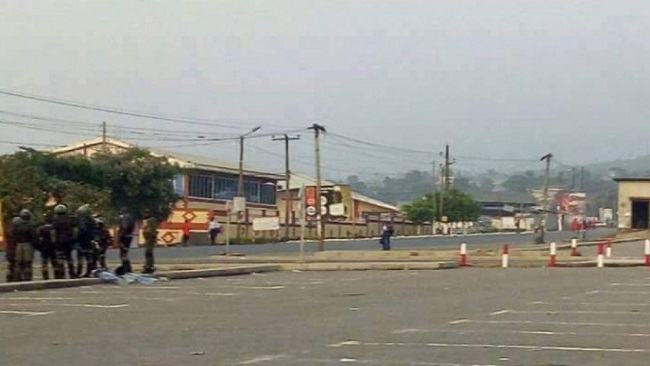
The civil disobedience campaign launched by The Cameroon Anglophone Civil Society Consortium was widely followed this Monday by the populations of the Northwest and Southwest regions. The Consortium had called for a ghost town operation and a pacific resistance without a protest march or street demonstration for Monday, January 9, 2017
The Francophone Yaounde regime had hope for an effective back to school in the Anglophone section of the country. The authorities went further and launched a dubious offensive to sensitize Southern Cameroons parents to send their children to school. However, the streets remained deserted. No public transport, buses or motorcycle taxis were seen in the streets of Bamenda, Bali, Batibo, Kumbo, Mamfe, Kumba, Menji, Akawaya, Tiko, Mutengene, Muea, Muyuka and Buea, for fear of reprisals.
The shops and markets remained closed and some barricades were erected on the public road by some individuals in Buea. The Biya Francophone Beti Ewondo regime that recently announced the recruitment of 1000 new teachers is now considering suspending the salaries of the striking teachers.
The authorities have been consistently inconsistent in their handling of the situation. Yaounde opened a dialogue on the main demands of the striking teachers and lawyers and later on denounced the protesters as “extremist”. The CPDM government further suggested that the Anglophone leaders were being manipulated by individuals with a hidden agenda from abroad.
President Biya (83) reaffirmed that Cameroon remains “ONE” and “Indivisible”. Today’s event will surely give the Cameroonian dictator a rare opportunity to think and rethink things. The Cameroon Anglophone Civil Society Consortium has announced a suspension of the ghost town operation. But maintained that all strike actions by the teachers and lawyers will continue under the Francophone government provides acceptable solutions to the Anglophone demands. Correspondingly, all schools and law firms will remain close indefinitely.
By Rita Akana for Cameroon Concord News

Southern Cameroons Uprising: French agents helping Etoudi
An anonymous source inside the presidency of the republic has hinted CIR that France has secretly sent some top advisers on African Affairs to help the Biya Francophone Beti Ewondo regime handle the Anglophone crisis.
Our informant revealed that the decision to release the Southern Cameroons detainees came after a meeting the French think tank held with the 83 year old Cameroonian dictator. The French have also given the Yaoundé regime assurances that the French government will quickly develop a strategies to down grade the current Anglophone uprising.
This news item is still developing
By Sama Ernest
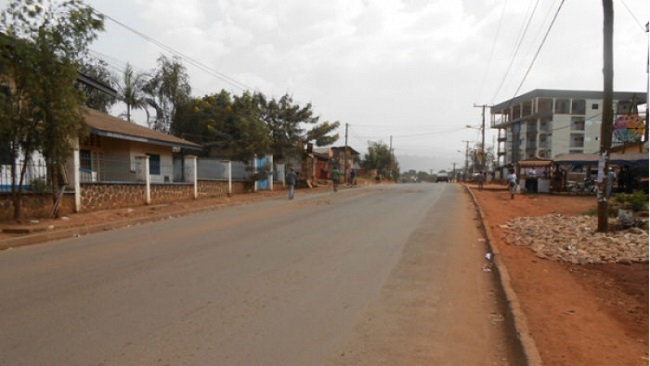
Tiko has recorded a 100% success rate after it observed a complete school lock down and ghost town
Tiko has recorded a 100% success rate after it observed a complete school lock down and ghost town.
From Ghost town to Ghost town: The essence of a new Anglophone nationalism
Since 2016 Southern Cameroons has been experiencing a wave of anti-government protests unleashed by hatred for the Biya Francophone Beti Ewondo regime. Anglophone Cameroonians say Francophones have taken over their country and were systematically destroying their Anglo-Saxon heritage. Many people have been killed in Kumba, Bamenda, Buea and Kumbo.
Anti-government demonstrations rocked the Universities of Buea and Bamenda. It was followed by an industrial action staged by Common Law Lawyers and the Anglophone Teachers Trade Unions. Thousands of demonstrators went on to the streets calling on the Yaounde regime to embrace political reform and to stop killing protesters. Southern Cameroonians also demanded the release of all those arrested and respect for justice and the rule of law. However, the response from the Francophone dominated security forces, which used live ammunition against protesters, led to the death of many unarmed people.
Although the government security apparatus reported that the demonstrations had been contained and the 83 year Head of State described the protesters as “extremist and manipulators”, the current political situation in British Southern Cameroons has become volatile. Our intelligence officers have all reported that things are fast changing and developments have become increasingly unpredictable. The leaders of the various trade unions have metamorphosed into a consortium and are said to be busy devising alternative methods of protest that range from weakening the Francophone government institutions through staying at home and not operating businesses to organizing a Diaspora-based grand solidarity rally. The ghost town being observe today in Southern Cameroons has so far been a huge success.
Some conclusions could be drawn following the failure on the part of the Francophone government to halt the ghost town operation. Firstly, these new generations of Anglophones have lost faith in the ONE Cameroun concept. Secondly, the so-called Anglophone political elites militating with the ruling CPDM party no longer have legitimate authority in Southern Cameroons. And thirdly, Cameroon as a nation has entered its last journey of many dangers.
In Mamfe, a town that hosted the 1953 Conference after the Eastern Regional Crisis at Enugu which eventually paved the way for reunification, Southern Cameroonians refused to sing the national anthem. To be sure, Manyu Division has shut down completely today Monday the 9th of January in support of the Anglophone nationalism. In Mundemba, even the lame and the blind joined in anti La Republique protest. In Kumba, Buea, Bamenda and Kumbo where the first demonstrations took place, residents have resorted to a new mode of protest – staying at home. The streets of all major towns and cities in Southern Cameroons are now deserted and workers are staying at home and business remained closed.
We of the Cameroon Concord News Group understand that Southern Cameroonians have opted for this type of protest because their leaders demanded an answer from the Francophone government, but the response was one of bullets in return. This peaceful ghost town method of protest demonstrates a complete rejection of the Biya Francophone Beti Ewondo regime by Southern Cameroonians. The ghost town protest is an indication of the increasing maturity of the leaders of the Consortium.
The Yaounde regime is planning to blocked internet connection and access to social media tools. But some experts have argued that this may attract the use of proxy servers. Cameroun’s Minister of Communications and government spokesman has repeatedly claimed that that social media had been used to churn out false information, mostly seditious remarks, trying to agitate people against security forces. There are growing numbers of Anglophone news websites all supporting the creation of a Southern Cameroons state.
Cameroon government receives billions of dollars annually from international donors and has remained a key strategic partner of the West, particularly the US and the French, in the ‘war against Boko Haram terror. This financial support has been toughening the regime’s resolve to silence Anglophone dissenting voices. The French and the US approach of tiptoeing around human right violations in Cameroun and its continued support for the Biya regime has been stirring up anger among even Francophone sections of the country. The US, the EU including the Roman Catholic Church are supporting a regime – which they know is clearly undemocratic and is the very cause of the state terrorism we now observe in Southern Cameroons.
Ever since the police atrocities in Bamenda, Buea Kumba and Kumbo, no pressure has been put on the regime to allow for credible investigation into the rapes and killings. Not a single UN official has demanded access to visit the affected areas to establish what really happened in Southern Cameroons. Minister Issa Tchiroma is always ready to inform international public opinion that the government has its own system of checks and balances and that Cameroun’s own Human Rights Commission was doing its job in investigating and publicizing the human rights situation in the country.
The regime supported by Anglophones such as Ghogomu Paul Minglo is still in denial of the injustice its policies have resulted in. With the success of today’s ghost town, President Biya now has the opportunity to change La Republique’s approach – otherwise if the situation is left to fester, there will be more outbursts, more unrest, more protests and perhaps more violence.


By Soter Tarh Agbaw-Ebai
Editor-in-Chief
Cameroon Concord News Group
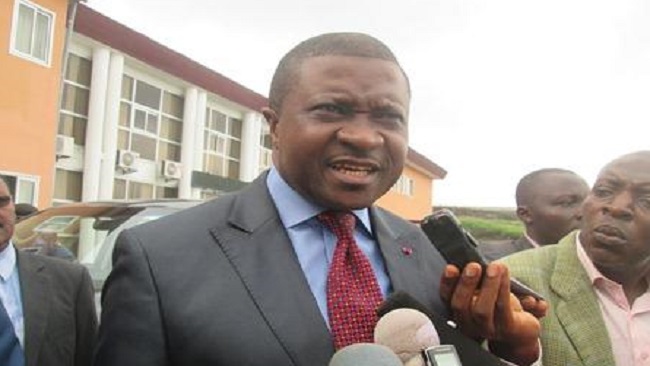
Ndop: Minister of Secondary Education jeered and ordered to sit down for delivering speech in French
The people of Ndop in Ngoketunjia Division, North West region have reportedly jeered at the Minister of Secondary Education, Jean Ernest Massena Ngale Bibehe yesterday Sunday January 8, 2017 during a working visit to the region as part of measures to lure teachers, students and pupils get back to school this Monday.
In a crisis meeting held in Ndop, the people threatened to walk out of the gathering as soon as the minister started delivering his speech in French. The Secondary education boss was compelled to speak in English for close to thirty minutes after the people pressed on him to do so. After addressing the people in English Jean Ernest Bibehe begged for permission and read his speech in French which was interpreted in English by the Regional Delegate for secondary Education Mombakuet Victor.
The minister who has a one week mission to the North West region has been moving from one town to the other trying to lure stakeholders to give go ahead with school resumption activities today Monday. The minister met with leaders of trade unions in Bamenda in which he is said to have been on bended knees for them to call off the strike action. The Bamenda meeting did not yield fruits.
Culled from Cameroon Concord News