
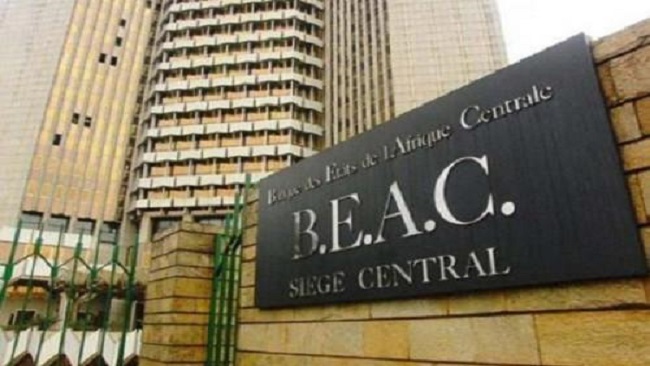
BEAC says Cameroon remains CEMAC’s largest credit market
Cameroon remained the largest credit market in the Central African Economic and Monetary Community (CEMAC) during the first quarter of 2026, despite a sharp decline in lending activity and higher borrowing costs.
According to a report on lending rates published by the Bank of Central African States (BEAC), banks and other credit institutions operating in Cameroon issued CFA1.34 trillion ($2.3 billion) in new loans between January and March 2026, down from CFA1.89 trillion during the same period a year earlier.
The decline represents a 28.2% drop year-on-year. Despite the slowdown, Cameroon accounted for 53.3% of all new credit granted across the six-member CEMAC bloc during the quarter, confirming its dominant position in the region’s banking market.
Commercial banks remained the main source of financing, providing more than 99% of the loans issued during the period. The gap between Cameroon and other CEMAC countries highlights the scale of its financial sector and broader economy.
During the first quarter, lenders in Cameroon issued more than twice as much credit as those in Gabon, which represented 22.8% of total regional lending, and roughly four times more than the Republic of Congo, which accounted for 12.9%.
Credit activity was considerably lower in Equatorial Guinea, Chad, and the Central African Republic, which together represented less than 11% of new lending across the region.
Cameroon’s dominance reflects its broader economic weight within CEMAC. The country hosts about 40% of the region’s industrial base and roughly 40% of its banking network, making it the bloc’s largest market for financial services.
Borrowing Costs Rise but Stay Below Regional Average
The first quarter was also marked by higher lending rates, in line with a broader regional trend. According to the BEAC, the average lending rate in Cameroon rose to 9.03% during the period, compared with 8.26% a year earlier. That represents an increase of 77 basis points year-on-year.
On a quarterly basis, rates increased by 65 basis points from 8.38% in the fourth quarter of 2025. Despite the rise, borrowing costs in Cameroon remained well below the CEMAC average of 12.38%.
The country also continued to offer the lowest average lending rates in the region. In all five other member states, average borrowing costs remained in double digits, reaching 21.51% in Gabon and 17.44% in Equatorial Guinea.
The figures suggest that while credit has become more expensive across Central Africa, Cameroon continues to offer the region’s most favorable financing conditions, helping sustain its position as CEMAC’s leading credit market.
Source: Business in Cameroon


