Iran launches 40th wave of Operation True Promise 4 in cooperation with Hezbollah
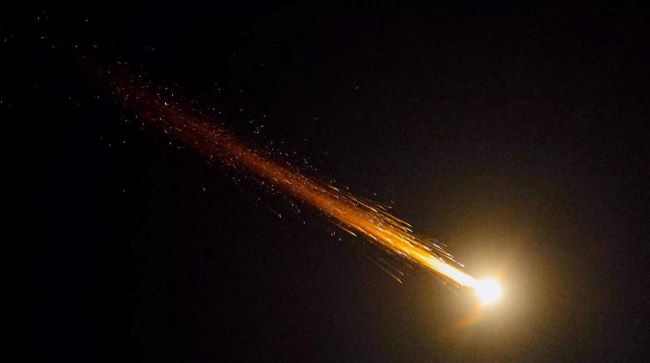
The Islamic Revolution Guards Corps (IRGC) says it has carried out the 40th wave of its ongoing retaliatory Operation True Promise 4, launching decisive strikes against hostile targets throughout the region.
According to the Corps, the latest phase of the operation involved the firing of Qadr, Emad, Kheibar Shekan, and Fattah missiles against targets in the occupied territories.
‘5 hours of sustained retaliation’
“The operation was designed to maintain continuous and sustained fire over a five-hour period,” it said.
The strikes were conducted jointly with the fighters of Lebanon’s Hezbollah resistance movement, the Corps noted.
The movement cooperated by firing “large numbers of attack drones and missiles,” the IRGC stated, adding that the combined strikes targeted “more than 50 objectives across the occupied territories.”
“This powerful and unified front inflicted painful blows on military bases of the child-killing regime, from [the occupied port of] Haifa in the north, Tel Aviv in the center, and Be’er Sheva in the south of the occupied territories.”
Enemy faced with ‘new reality on the ground’
“As Zionist regime media sources themselves have admitted and confirmed, the launch of missiles from Iran towards Israel has increased noticeably over the past 24 hours, and Zionist casualties have risen exponentially,” the IRGC stated.
The deadly strikes are continuing, rendering existence for the Israeli regime’s illegal settlers into “life from siren to siren” and prolonged confinement in shelters, the Corps said.
“The strikes confronted the enemy with a new reality on the ground.”
The 40th wave of the Corps’ counteroffensive additionally hit US bases in the region such as al-Azraq in Jordan and al-Kharj in Saudi Arabia.
The overall situation, the IRGC added, was “the most significant outcome of the war brought about by the lying [US President Donald] Trump and the malicious [Israeli prime minister Benjamin] Netanyahu.”
’39th wave conducted in memory of martyrs’
Earlier, the IRGC also announced carrying out the 39th phase of the reprisal, which it said was staged in memory of the martyrs, who had sacrificed their lives down the path of preserving the country’s strength.
The latter phase targeted “the criminal and terrorist US army in the Persian Gulf region with multi-warhead Qadr and Khorramshahr missiles as well as Emad missiles,” it stated.
The Corps expressed appreciation for “the effective, heroic, and courageous attacks by the Resistance forces.” “These attacks have created terror in the occupied territories and forced the criminal Zionists into a life of constant sirens and 11 days of confinement.”
Earlier strikes on US military facilities
A previous statement had detailed the 38th phase of the retaliation as carried out by the IRGC Navy.
“The glorious and powerful operation swept away the remaining American military presence in the region,” it read.
According to the statement, two simultaneous heavy missile strikes targeted the al-Adiri helicopter base, leaving numerous American troops scattered and sending more than 100 wounded to al-Jaber and al-Mubarak hospitals in Kuwait.
The IRGC said Iranian missiles and drones also struck key infrastructure at the US base at the Mina Salman port, described as the center of the US Navy’s Fifth Fleet in Bahrain.
Additional strikes hit Camp Patriot, equipment hangars, and troop accommodation and assembly facilities at the Mohammad al-Ahmad and Ali al-Salem naval bases in Kuwait.
The Corps concluded that statement by stressing that the confrontation with the United States and the Israeli regime would continue, asserting, “We think only of the enemy’s complete surrender, and we will end the war only when the shadow of war is lifted from the country.”
Source: Presstv