French Cameroun: Rebellion Boils as Biya Seeks to Extend Rule
While President Paul Biya appears to be a shoo-in to extend his 36-year rule in elections next month, he’s had no success in stifling a rebellion in Anglophone regions that’s threatening to split the mainly French-speaking central African nation.
“I’m not surprised this happened,” said Agnes, a 66-year-old former civil servant who fled her farm in the Southwest Region where she’d hoped to retire and now lives with her son in the capital, Yaounde. “When there’s a lot of repression, there’s going to be an explosion,” she said, asking not to be identified by her family name.
Like Agnes, many Cameroonians are afraid to speak publicly about the country’s worst crisis in decades, fearing both the secret service and reprisals from the secessionists.
In a bid to sabotage the start of the school year this month, separatists murdered the headmaster of a primary school and abducted six girls from a secondary school. On Saturday, gunmen seized an excavator and dug a trench in a highway to the Northwest’s regional capital, Bamenda. They forced buses to stop and killed two passengers. The government responded by imposing an indefinite nighttime curfew in the Northwest Region.
Escalation of Violence
“Nothing can justify the atrocities committed by criminals who lay claim to the secessionist movement with their only goal being the disruption of the 2018-19 school year,” government spokesman Issa Tchiroma Bakary said on Twitter. “We must all condemn in the strongest possible terms this escalation of violence.”
Oil-dependent Cameroon is increasingly a key regional hub, with roads and ports that are vital for landlocked neighbors including Chad and Central African Republic.
The only country in Africa with both English and French as official languages, Cameroon was split after World War I into a French-run zone and a smaller British-controlled area. They were unified in 1961, but the English-speaking minority, about a fifth of the population, has complained of marginalization for decades. Only in recent years did the struggle become violent.
“It’s taken this magnitude because there was no anticipation and no early efforts to quickly resolve the crisis,” Manasse Aboya Endong, a political science lecturer at the University of Douala, said in an interview. “Now, the movement has been hijacked by radicals who want to split up the state and refuse all mediation.”
At the same time, advocacy groups such as New York-based Human Rights Watch have documented evidence of troops killing protesters, jailing hundreds of people and burning down villages — allegations the government denies.
Widespread Discontent
The rebellion has highlighted widespread discontent with Biya and his handling of the crisis. Biya rules mainly by decree and often spends weeks at a time at the Intercontinental Hotel in Geneva for “private visits.” Government spokesman Bakary has defended the trips, saying Biya works very hard while he’s in Europe.
Biya has convened only one cabinet meeting this year, the first since 2015, and hasn’t addressed the revolt apart from a brief statement in November. His decision to run again was announced on Twitter.
“Nobody knows what the guy is thinking,” Akere Muna, a 66-year-old opposition candidate whose late father Salomon was Cameroon’s first Anglophone prime minister, said in an interview. “We have tens of thousands of people who are internally displaced, thousands of kids who can’t go to school, and yet the president doesn’t speak. We are in a rudderless ship.”

Akere Muna
Despite Biya’s absenteeism, Cameroon’s opposition has never been able to effectively unite and unseat him in elections.
Calls for talks between the authorities and the insurgents have so far fallen on deaf ears. The government refuses to release secessionist leaders who’ve been in prison since January following their expulsion from neighboring Nigeria. That’s left the movement without a visible leadership, while Anglophones who don’t support secession are accused of being sell-outs by those who call for armed struggle.
Moderate Anglophone leaders are now pushing for a general conference to choose representatives and persuade the government to hold talks.
Initially scheduled for Aug. 28-29, the conference has been postponed to avoid tensions surrounding the presidential vote and to allow more time for Anglophones in the diaspora to attend, said Simon Munzu, a former senior United Nations official who is organizing the conference.
“We believe that this will nudge them towards a national dialogue,” Munzu said in an interview. “We can have federalism at a low cost now or separatism at an exorbitant cost on the population, and we have to weigh those costs.”
Source: Bloomberg
Nigeria: Senate president submits presidential nomination forms
Nigeria’s Senate President, Abubakar Bukola Saraki, has submitted nomination forms he picked up for the presidential candidacy race of the main opposition Peoples Democratic Party, PDP.
Saraki wrote on Twitter that he had submitted the presidential nomination and expression of interest forms to the PDP at the Abuja headquarters of the party, adding “It is time to #GrowNigeria!”
Saraki defected from the ruling All Progressives Congress, APC, in late July and quickly joined the PDP. His quit message read: “I wish to inform Nigerians that, after extensive consultations, I have decided to take my leave of the All Progressives Congress (APC).”
After giving reasons among others that the APC had failed to deliver on the promises that brought them to power in 2015, he declared his presidential ambition almost a month later on August 30.
He is reported to have quit the APC seeing that incumbent Muhammadu Buhari had expressed interest in seeking a second and final term in office. Saraki, a former Kwara State governor on the ticket of the PDP, will come up against a number of heavyweights.
Former vice president Atiku Abubakar and former Kano State governor Muhammed Rabiu Kwankwaso are two main challengers Saraki will face in the PDP primaries.
He has fended off calls to resign his post ad leader of the Senate because it was a post he got by being an APC member. He insists that it is a role he got from colleague senators and not the party.
APC leadership are on record to have threatened to impeach him if he fails to step down. The Senate is currently on recess and is not known when it will be reconvened.
Source: Africa News
What France wants us to know: In Burkina Faso, the terrorist threat is spreading to the east
Burkina Faso has become a frequent target for terrorist attacks. But while jihadist activity was previously confined to the north of the country, it is now moving to the east, a region already suffering from rampant organised crime.
On September 5, a group of Burkinabésoldiers were travelling to defuse mines laid by jihadist groups when, in the eastern town of Kabonga, they were hit by an improvised explosive device (IED). Two were killed and six were injured, while the perpetrators of the attack have not been identified.
This was the third deadly IED attack in a month in eastern Burkina Faso. “This is by no means a new phenomenon,” said Sidi Kounté, a sociologist specialising in jihadism in the Sahel. “But, since February, these attacks have become more and more frequent – daily even,” he told FRANCE 24.
Attacks on security forces ‘suggest jihadist group’
“We’re asking ourselves a lot of questions,” said Rodrigue Tagnan, an independent journalist focused on the Sahel, in an interview with FRANCE 24. “For example, we don’t know who the perpetrators of these attacks really are.”
This is a pressing question, especially in light of the fact that no one has claimed responsibility for these attacks. However, “the use of IEDs and the attacks targeting the security forces, police units and police stations all suggest that jihadist groups are responsible, although we should keep an open mind,” argued William Assanvo, an analyst at the ISS, a Pretoria-based think-tank specialising in African security and defence.
“The lack of any claims for these attacks might constitute a strategic move by a new group that is moving in and doesn’t yet have a solid base, but there’s no doubt that there’s an active group in the east of Burkina Faso,” Kounté added.
Attacks on capital
Since the fall of President Blaise Compaoré’s iron rule in October 2014, Burkina Faso – erstwhile relatively secure – has become a prime target for jihadist movements. However, these attacks were mainly confined to the north of the country, and were often perpetrated by terrorists crossing the border from neighbouring Mali. Until January 2016 – when 30 people were killed in an attack on Capuccino, a café popular with expatriates in the capital Ouagadougou. The terrorist group AQIM claimed responsibility.
In March 2018, a coordinated pair of terrorist attacks struck the French embassy in Ouagadougou and the General Staff of the Burkinabé armed forces, killing eight soldiers and wounding 60 people – and exposing the vulnerability of the fledgling democracy, after 27 years of Compaoré’s strongman rule.
The attack was claimed by the Group for the Support of Islam and Muslims (GSIM). Led by Iyad Ag Ghaly, the notorious Touareg separatist turned jihadist and the most wanted man in the Sahel, the GSIM was formed out of a merger between Ag Ghaly’s Ansar Dine group, Al Qaeda in the Sahel and a range of smaller militant groups in Mali and Burkina Faso.
But, thanks to the efforts of anti-terrorist local militias and French, Malian and Burkinabé forces, “GSIM have moved to new areas, probably including eastern Burkina Faso”, according to Kounté.
East neglected by central government
A forest region bordering Ghana, Togo, Benin and Niger, eastern Burkina Faso has long been regarded as a bastion of organised crime. Thanks to the central government’s neglect of the region, self-defence militias known as “koglweogo” have become the guarantors of security for the local population. And thanks to the dense forests and the lack of adequate road networks, the area is practically inaccessible for national security forces.
Thus, eastern Burkina Faso is fertile ground for jihadists. “All places where jihadists can go and settle have been abandoned by the national authorities,” Kounté noted. “The big, thick forests give jihadists a place to organise themselves and put plans in place,” Assanvo added.
A response from the Burkinabé government is long overdue. In a memo on the security situation in the east, relayed by local media, the regional police chief Commissioner Karim Drabo warned that “if security forces do not respond vigorously, the attackers will have time to settle and to spread IEDs throughout the areas they have occupied […] and they are gaining ground”.
But, according to Sidi Kounté, the Burkinabé army is already “overwhelmed by having to fight on numerous fronts”, while lacking sufficient manpower and equipment.
Alternatively, Burkina Faso could draw on the G5 Sahel, the French-backed military group set up in 2014 to combat armed groups in the region, combining troops from Burkina Faso, Mali, Mauritania, Niger and Chad. But, except for the latter two, these countries’ militaries “aren’t up to scratch”, François-Xavier Freland, an independent journalist specialising in the Sahel, argued in an interview with FRANCE 24 in April.
France 24
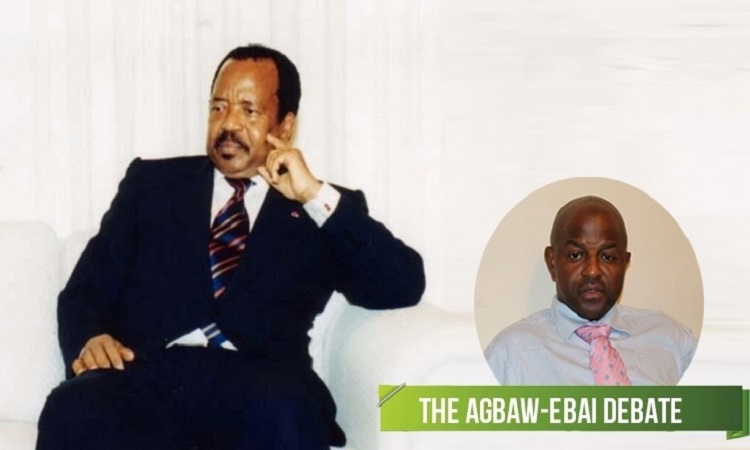
For God and Country, Anyone But Biya: The AGBAW-EBAI Debate
It is not rocket science to recognize that as Biya advances in age, he is showing more wear and tear most visibly in the form of his wrinkled face; the deterioration in his husky voice; the declining swagger of his gait; the alleged diapers and uncontrollable flatulence and protracted anal blasts in public and private outings.
As it is, the ailing 85-year octogenarian cuts the image of a living corpse and walking dead; an isolated man; frail, distraught, withdrawn, and completely out of touch with the reality of the country.
Cameroonians must therefore view all pro-Biya campaigners as treasonable felons and enemies of the nation who are only actuated by the impulse to line their pockets. They will be held accountable…
US: “Coup d’état” launched against President Donald Trump
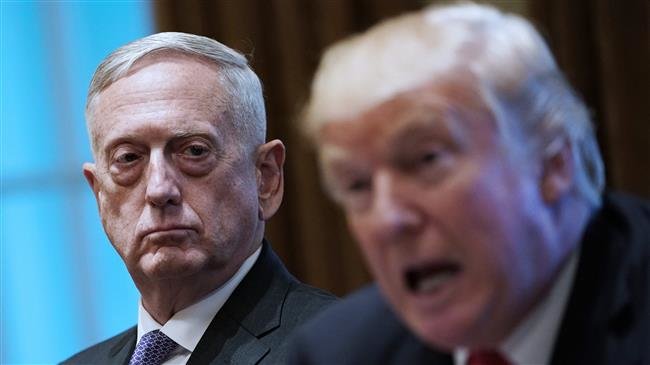
A “coup d’état” has been launched by the White House against the US President Donald Trump, according to Stephen Lendman, an American journalist, writer and political analyst based in Chicago.
“What’s going on is a slow motion coup d’état to oust him from office,” Lendman said.
The New York Times published an Op-Ed by an anonymous writer on Wednesday that claimed senior officials within the Trump administration were weary of the president’s impulsive nature and were quietly working against him.
The article stated cabinet members had even considered invoking the 25th Amendment of the US Constitution to oust the president.
In an interview with Press TV on Friday, Lendman said the NYT article was part of a coup aimed to oust Trump.
He said that the Op-Ed aimed to trash Trump and criticize him for wanting better relations with Russia and North Korea while being very anti-Iran.
Lendman said, instead, the article should have criticized Trump for his many mistakes, including launching “imperial wars” and giving “tax cuts to the rich” and “destroying social justice in the country”.
Lendman believes the mounting pressure on Trump is paving the way for his early exit from office.
Insanity must end
Trump has been hit by numerous scandals since he entered office in January 2017.
The scandals surround illegal payments to playmates, collusion with Russians, firing staff, attacks on adversaries, support for supremacist, trade wars, exiting the climate agreement and Iran nuclear deal, etc.
His presidency has been described as the most insane administration in the history of the United States.
Many political and media pundits are of the opinion that as early as next month, in November, Trump may either resign from office or face impeachment.
If the Democrats gain majority in November’s midterm congressional elections, Trump’s impeachment is certain, according to Vice President Mike Pence.
Either way, impeachment or resignation, pundits say Trump must go.
An eye-opening book by renowned investigative reporter Bob Woodward, this week, described the White House under Trump as an insane “crazytown.”
The Woodward book, “Fear: Trump in the White House,” reported that senior officials stole documents from the president Oval Office to stop the president from acting on his impulses, reinforcing the assertions in the NYT Op-Ed.
Atiku takes on Buhari on Nigeria’s restructuring ahead of 2019 polls
Nigeria’s former vice-president Atiku Abubakar has revived debate on restructuring of the country’s federal structure by pledging greater devolution if he becomes president at polls next year.
Atiku, who picked nomination forms to be the presidential flag-bearer of the opposition People’s Development Party (PDP) this week, says he is in favour of handing more powers to the country’s 36 states and the Federal Capital Territory if he wins in February.
“Over the years, since (the) military got involved governing the country, they have created too many states and concentrated a lot of power in the centre,” he said.
“So, we believe we should return to the principles of true federalism: devolving more power and resources to the components of federalism in terms of security, healthcare, education.”
Such issues “will be best dealt with by people nearer to the people than the FG (federal government), which is too far away”, Abubakar, 71, told reporters in an interview.
The restructuring debate
In July, states and local governments received 656.6 billion naira ($1.8 billion) from a total of 821.9 billion naira in federal funding, according to official statistics.
The money shared out from the central account comes from revenue generated by the states themselves.
But more prosperous states, particularly those in the oil-producing south, have long complained they are subsidising less productive counterparts, especially those in the more impoverished north.
Atiku vs Buhari
Abubakar’s call for a loosening of federal ties is significant because it stands at odds with the position of his fellow politicians from the north, including Buhari.
Until now, the idea has had more support in the south.
Nigeria as a single entity dates back to 1914 when British colonial rulers amalgamated northern and southern Nigeria for commercial purposes.
But there have been tensions ever since, and questions about whether the union can hold, because of ethnic, cultural and religious divisions.
Regional identity is fiercely guarded in Nigeria, which is almost evenly divided between a mainly Muslim north and the largely Christian south. The most obvious division has been between the north and south.
Abubakar, who was president Olusegun Obasanjo’s deputy from 1999 to 2007, described Nigeria as “a number of countries in one country”.
Militancy in the oil-producing south has largely been fuelled by demands for greater control of the revenue generated by oil and gas.
Repeated lack of central funding for infrastructure has equally contributed to the revival of separatist sentiment in the southeast.
But Buhari’s administration has maintained that good governance and better execution of infrastructure projects is more important than restructuring.
VP Osinbanjo criticises Atiku’s devolution plans
Vice-President Yemi Osinbajo said last month: “It is about managing resources properly and providing for the people properly, that is what it is all about.”
He recalled his time as a commissioner in Nigeria’s commercial capital, Lagos, between 1999 and 2007 and how he fought for financial autonomy for the state.
“We felt that there was a need for the states to be stronger, for states, to more or less, determine their fortunes.”
Osinbajo on Tuesday said Abubakar lacked proper understanding of restructuring, calling his plan “vague” and ill thought-out.
Nigeria is riven with security challenges from Boko Haram Islamists in the northeast to Biafran separatists in the southeast and violence between farmers and herders in central states.
Peace and stability would be elusive without restructuring, he added.
AFP
Trump Seems to Be Writing Off African Security, but Will It Matter to the U.S.?
It is often hard to figure out precisely what President Donald Trump’s security strategy is. He seldom talks about U.S. national interests and priorities other than trade. His broad regional policies are vague or missing altogether. This is particularly true for Africa. Nearly halfway through his term, Trump has made no speeches on Africa, has not visited the continent, and was slow to appoint an assistant secretary of state for African affairs, America’s key policy coordinator for that part of the world. All this suggests that after 50 years of modest involvement in African security, the United States may be writing the continent off.
Africa has always been at the fringe of American global strategy. The United States came late to the region, only showing an interest when the European colonial empires began crumbling in the 1960s and 1970s. Even then, Washington’s motives were mostly to check the Soviet Union and China. The fear was that if communism dominated the continent, it might starve the West of Africa’s raw materials, particularly vital minerals like cobalt, manganese and platinum. However preposterous this idea looks in hindsight, many American political leaders bought it and set the United States on a course where all that mattered was that African governments were relatively stable and anti-communist or, at least, non-aligned. Being autocratic or pathologically corrupt was not an impediment to cordial ties with Washington.
The collapse of the Soviet Union initially left the United States without a central purpose in Africa. Washington did welcome the subsequent movement toward democracy and responsive government on the continent, providing some support. But the seminal events for American policy in Africa during the 1990s were humanitarian disasters generated by African conflicts, particularly in Somalia and Rwanda. While neither Americans nor Africans wanted large numbers of U.S. troops on the continent, the United States developed a number of training and educational programs to help African militaries and governments build their own capability for crisis management, conflict resolution and peacekeeping. The hope was that Africans themselves could prevent or manage future humanitarian disasters.
After the 9/11 attacks, American security policy in Africa shifted almost entirely to counterterrorism. Once again, Washington was willing to overlook undemocratic practices so long as African governments promoted stability and opposed violent jihadism. Believing that economic growth could undercut the resentment and anger that radical jihadists exploited, Presidents George W. Bush and Barack Obama also implemented modest U.S. assistance programs.
Despite that, violent jihadism grew deeper roots in the weakly governed northern half of the African continent, from Mali to Libya, and has even established a foothold in the southeast, in Mozambique. Boko Haram, a Nigerian movement that, like many African extremist groups, spread to neighboring nations, has proven devilishly difficult to eradicate. The same holds for al-Shabab, which is based in Somalia but also threatens Kenya and other nearby states. And across the region of Africa known as the Sahel, which lies between the Sahara desert to the north and the savannah belt of the continent to the south, a patchwork of extremists—part revolutionary jihadists, part heavily armed criminal gangs—destabilizes governments and preys on local populations.
Greater Chinese and Russian involvement in Africa, whether economic or in the security sector, will not endanger U.S. national interests.
Today, the way forward isn’t clear. For decades, the United States considered aid for African security a long-term investment in the continent’s political and economic potential, but Trump sees things differently. Given Africa’s limited current economic importance to the United States, he seems satisfied to sustain some small military training missions and keep the jihadists on their heels with drone attacks, even while withdrawing many of the U.S. special operations forces that had been supporting African counterterrorism operations since 9/11.
While Obama was often criticized for downsizing America’s security commitments around the world, there has been little mention of Trump’s move to ignore Africa, outside the very small community of regional experts. While China, with its growing need for markets and raw materials, has greatly expanded its economic presence on the continent and undertaken a greater security role, the Trump administration shows little concern. Even Russia’s return to Africa, including to former Soviet-aligned states like Angola, has raised few eyebrows in Washington. For Trump, limited trade means limited interest.
Ultimately, though, Trump’s disengagement from Africa may be the right move. Greater Chinese and Russian involvement there, whether economic or in the security sector, will not endanger U.S. national interests. African leaders aren’t worried at all about great-power competition, so they won’t refuse to sell resources for political reasons. African jihadists, while cancerous, cannot create a state that might provide sanctuary for transnational terrorism, particularly while hiding from American drones and air strikes. Meanwhile, African security services have become much more effective. And while the inability of many African countries to generate enough jobs to employ their rapidly expanding populations generates serious migration problems for Europe, there is little the United States can do about it.
The continent has far to go to fully reach its immense potential and, from South Africa to Algeria, still suffers from corruption, sectarian conflict, uneven economic growth and the devastating effects of climate change. But it has made great strides in recent years, economically and politically. Security is fragile in many African nations, but getting better in others. Most Africans would welcome increased U.S. economic assistance, but not more active American involvement in their own affairs. So yes, Trump seems to be largely writing the continent off. But ultimately it may not matter to either the United States or Africa, as each charts its own way into the future.
Culled from World Politics Review
US: Senator Warren says it is time to remove President Trump
US Senator Elizabeth Warren of Massachusetts has called on senior administration officials to oust US President Donald Trump following the release of another damning report about Trump’s impulsive nature.
A Wednesday op-ed in The New York Times, titled “I Am Part of the Resistance Inside the Trump Administration,” written by an anonymous official, described how the Trump administration had been stopping the chief executive from making detrimental mistakes due to his poor morals and unruly behavior.
“If senior administration officials think the president of the United States is not able to do his job, then they should invoke the 25th Amendment,” Warren, who is a potential 2020 presidential candidate, told media on Thursday.
Section 4 of the 25th Amendment of the Constitution allows the vice president and cabinet officials to write to Congress if they believe the president is not capable of fulfilling his duties. In that event, the vice president would assume presidential duties.
“What kind of a crisis do we have if senior officials believe that the president can’t do his job and then refuse to follow the rules that have been laid down in the Constitution?” Warren asked. “They can’t have it both ways.”
The 1967 amendment allows the temporary transfer of power in case the president is unable to do his job. The temporary transfer becomes permanent after Congress approves a subsequent vote that states that the president lacks the ability to carry out his duties.
The op-ed was published, a day after a book from renowned investigative journalist Bob Woodward’s named Fear: Trump in the White House came out.
The book paints a harrowing portrait of the Trump presidency in which Trump’s inner circle tries to control Trump’s impulses and prevent detrimental decisions by the president.
It also describes how Trump administration officials would remove important documents from his desk to prevent him from signing.
Woodward describes the situation in the White House as “an administrative coup d’etat” launched by the top officials.
Source: Presstv
eSwatini celebrates 50 years of independence
eSwatini, formerly known as Swaziland, is celebrating 50 years of independence.
A few months earlier, in order to mark the event, King Mswati III had announced that the country would henceforth be called the “Kingdom of ESwatini”.
He wanted to stop the confusion between Swaziland and Switzerland, whose English name is “Switzerland”.
For the king, this name “Swazi-land” was a heritage of the British passage and its change marks the end of the colonial era.
The decision to change the name did not come suddenly. , King Mswati had on several occasions mentioned Swaziland as the “land of the Swazis”, or ESwatini.
In 2017, he had used this term during the General Assembly of the European Union and also at the opening of the 2018 parliamentary session.
However, the decision was not viewed favourably by some citizens. They believe that this decision comes at a time when the country is facing more important issues such as the economic situation or lack of access to medical care.
Most Swazi people struggle to earn a living in agriculture, often cultivating sugar. There is widespread poverty in a country with the world’s highest HIV/Aids rate.
The impoverished southern African nation, a member of the Commonwealth, gained independence from Britain on September 6th, 1968.
Source: Africa News
British people would now vote 59-41 to stay in EU
A new opinion poll has shown that support for EU membership has reached a record high in Britain, with nearly 60 percent of voters saying they would now vote to stay in the European Union.
In the June 23, 2016 referendum, 17.4 million voters, or 51.9 percent of the votes, backed leaving the bloc while 16.1 million voters, or 48.1 percent of votes cast, backed staying.
Polling by research bodies NatCen and The UK in a Changing Europe has found that 59 percent of voters would now vote to remain in the EU, versus 41 percent who would vote to leave.
That is the highest recorded support for “Remain” in a number of surveys conducted since the Brexit referendum and a large reversal of the actual 52-48 percent vote to leave.
Polling expert John Curtice, who authored the report, said their panel of interviewees reported they had voted 53 percent in favor of Remain in original Brexit vote – a higher percentage than the actual vote.
“Nevertheless, this still means that there has apparently been a six-point swing from Leave to Remain, larger than that registered by any of our previous rounds of interviewing, and a figure that would seemingly point to a 54 percent (Remain) vote in any second referendum held now,” Curtice said in the report.
About 970,000 people have switched their support from Remain to Leave, meaning that a net total of 1.6 million more voters now support being part of the bloc, according to the poll carried out by YouGov for the pro-EU group Best for Britain.
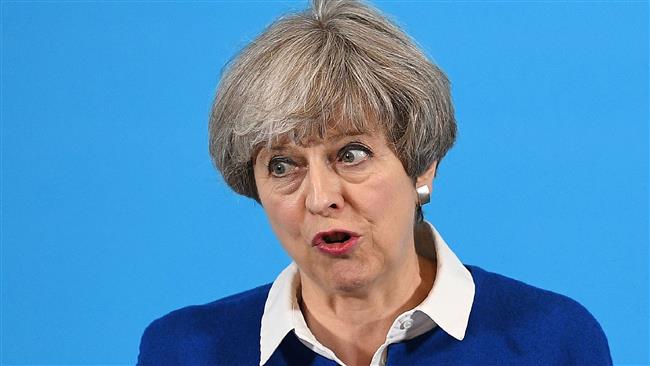
The UK and the EU have less than two months to reach a deal to end over 40 years of union. Prime Minister Theresa May is having a hard time selling what she describes as her business-friendly Brexit to her own party and a divided country.
Many backbench Labour and Conservative lawmakers have voiced their support for a fresh referendum on EU membership in recent months. But Prime Minister May says that such a move would be “a gross betrayal of our democracy.”
The premier has insisted she would not revise her strategy, which contains proposals for free trade between Britain and the EU in manufactured and agricultural goods. The government says accepting regulations over traded goods that align with EU rules would be the only way to achieve Brexit without harming the economy.
There is an increasing uncertainty on whether the UK could secure an agreement with the EU on its future relations with the bloc or it would simply crash out in March next year without determining how trade and other issues will be regulated.
Source: Presstv