
Anthony Joshua KOs Alexander Povetkin to retain world heavyweight title
Anthony Joshua KOs Alexander Povetkin to retain world heavyweight title

Anthony Joshua KOs Alexander Povetkin to retain world heavyweight title
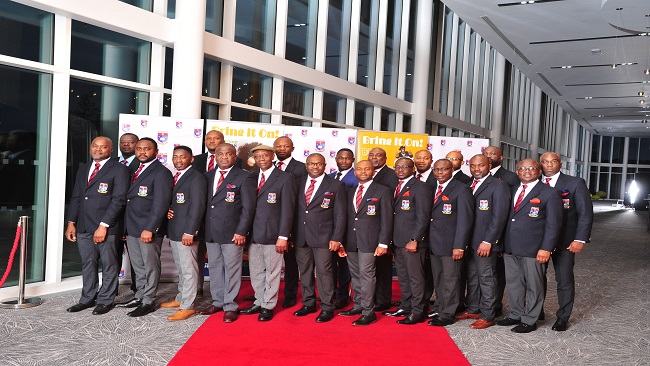
The members of the Sasse Old Boys Association, SOBA UK rose from an AGM today at Hilton Hotel Saint George’s Park Burton Upon Trent with a resolve to work tenaciously for the realization of the goals of the executive council. At the general assembly meeting that held under the chairmanship of the President of SOBA UK, Akoh Arrey, the Sasse Old Boys also reiterated their commitment to the principle of “Together We Succeed”, saying that only the general assembly of SOBA UK has constituted authority to change SOBA UK leadership.
Cameroon Concord News understands that a strongly worded communiqué will be issued at the end of the Residential Convention on the bill of health of SOBA UK. The memo will inter alia make public SOBA UK’s stance on the deteriorating relationship with the leadership of SOBA General in Cameroon.
Our UK correspondent on special assignment who contributed to this report noted that in declaring their unflinching support for President Akoh Arrey and his team, SOBA UK members however demanded that the association should also focus on the crisis in the Northwest and Southwest regions in Cameroon which has led to thousands of people being displaced and significant loss of lives.
We are keeping a watchful eye on the SOBA UK Residential Convention 2018 and we will keep our readers posted.
By Soter Agbaw-Ebai
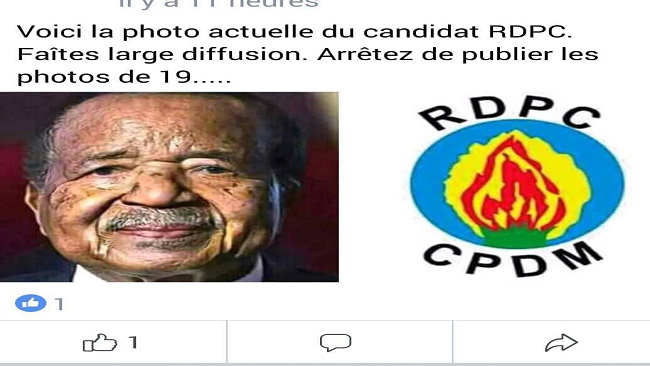
Eight candidates will be competing against the 85-year-old incumbent, Paul Biya in the upcoming presidential elections slated for October 7. Cameroon’s opposition again failed to present a single presidential candidate which to many was the best way to challenge Biya’s 35-year-rule and bring his reign to an end.
Maurice Kamto, former Biya loyalist and leader of the Cameroon Renaissance Movement (MRC) had once initiated a coalition process with Akere Muna and the main opposition political party the SDF to discuss the possibility of a single candidate.
Kamto indicated that all parties had generally consented to a coalition, but none of them was ready to cede power to the other.
However, Akere had earlier stated that he was ready to support any candidate whose ideas and vision was superior to his given that the ultimate goal is to end decades of rule of Paul Biya. The SDF leaders on their part consider the party the only political force which stands a better chance defeat Biya.
With the failure of a coalition, pundits have it that these political “novices” will need more than an apt strategy if they want to beat Biya who has been in the race since 1992.
Akere, Kamto and six other candidates, Joshua Osih of Social Democratic Front (SDF); Cabral Libii of the National Union for Integration Towards Solidarity (UNIVERS); Ndifor Frankline of the Cameroon National Citizen Movement (CNCM); and Serge Espoir Matomba of the United People for Social Renovation (UPSR), are facing Biya for the very first time in this race, leaving many in doubt as to whether any of them stand a chance to top the race.
Source: Africa News
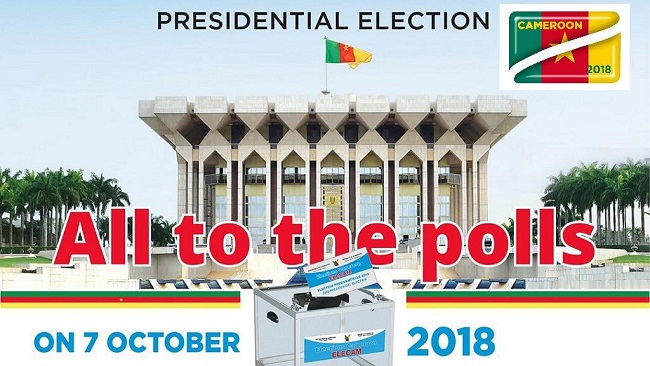
Armed separatists in the Anglophone northwest and neigboring southwest regions have vowed they will not allow a “foreign election.”
Paul Biya, Cameroon’s president since 1982, is seeking re-election. Vying to oust the 85-year-old leader are eight candidates representing a string of opposition parties. The election campaigning starts nationwide on Saturday.
The incumbent himself is not expected to show up in the Anglophone regions, where only one candidate has ventured in the run-up to the vote and the escalating conflict has prompted an exodus of people – including voters.
Nearly 400 people have been reported killed since long-running tensions turned violent in October 2017 and separatists declared self-rule in the region they call Ambazonia.
At the Mile 17 Motor Park in Buea, region’s capital, the governor of the region, Bernard Okalia Bilai, is pleading with hundreds of commuters to go back to their homes. “There is fake news that the army will launch an attack. No, the army is not launching attacks. The army is there to protect the population and their property and the army is there to neutralize those attacks,” Bilai says.
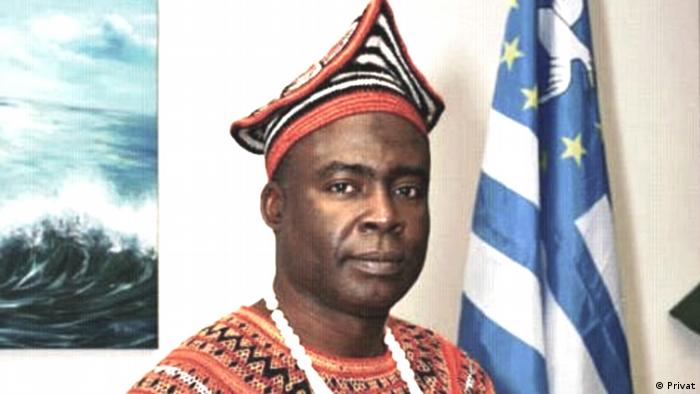 Samuel Ikome Sako, was named interim president of the self-declared Ambazonian republic at the beginning of 2018
Thousands have left
“Those who are abandoning their homes, you can see here, the luggage, we have beds, furniture. No, where are they going? No, we want them to stay at home.”
Bilai has been visiting the park almost daily to try and stop the exodus of residents from the worst-affected regions.
Teacher John Nlom, who is leaving with his wife and five children, says he does not trust the governor’s assurances that their security is guaranteed.
“The governor himself, who is saying that people should stay back, that they are protected, is moving around with soldiers protecting him. Will the soldiers protect all the people? That is the reason I cannot stay. I have to leave,” Nlom says.
Over the past three weeks, thousands of residents have packed up and left, according to authorities. They don’t care much about voting in an election that won’t be free and fair, says Prince Ekosso, president of the United Socialist Democratic Party (USDP).
Credible elections “impossible”
“It is impossible for credible elections to take place in the northwest and the southwest. As a matter of fact, the towns and cities of the northwest and the southwest have been deserted,” Ekosso says.
“It’s already late now for anything to be done for free and fair elections to take place in the two regions.”
Presidential candidates across the country have been encouraging voters to cast their ballots on October 7. Prophet Frank Ndifor Afanui, a candidate for the opposition Cameroon National Citizenship Movement, is the only one to travel to the southwest region so far, with a visit to Mutengene.
In Cameroon’s capital Yaounde, opposition Cameroon Renaissance Movement (MRC) candidate Maurice Kamto suggests the separatists should allow people to vote as the only way to change the system they have been fighting.
“They will not win the war, so why continue fighting that war? Is it a solution for a country in crisis just to split into two parts just because we have may be a government which is not listening to them? Go and vote because it is the only solution. We do not have to sacrifice our people,” Kamto says.
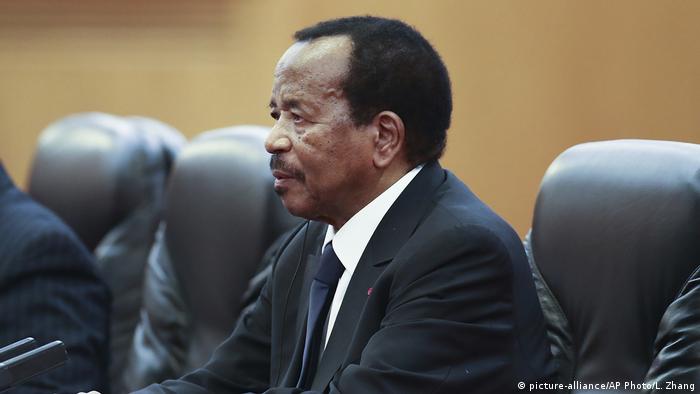 The crisis in Cameroon’s anglophone regions has put President Biya on shaky ground
Ballots on the way
Social Democratic Front (SDF) candidate Joshua Osih says he sees a solution to the conflict.
“The problem is not the secession. The problem is the marginalization and injustices that lead to that secession. The secession will not necessarily solve that problem,” says Osih.
“When you have a president of the republic who understands these issues, the first thing that has to happen is to solve the problem of marginalization. I have absolutely no problem that as soon as I am elected, one of the first decisions I take is to recognize that it is a political problem.”
Cameroon’s election commission, ELECAM, has been meeting with political parties to find out what can be done for elections to take place peacefully in the sub-regions. Its board chair, Enow Abrams Egbe, says that although voters are leaving the areas, the commission will ensure an election is held for those who remain.
“In terms of security measures, after much discussion with our partners on the ground, we felt that it was necessary to regroup the polling stations into polling centers and a lot of considerations were taken,” Egbe says.
“There are two levels of distribution of material. The first material we call light electoral materials, I can say almost 100 percent are already on the ground. The heavy material concerning ballot papers and campaign materials are already on the way.”
 The European Union routinely monitors elections in Africa
EU observers won’t be there
Many Cameroonians believe the election is merely a charade to rubberstamp the Biya’s stay in power. The government in Yaounde says more than 100 countries and institutions have applied to send election observers, but it is not known which have been accredited.
The European Union will not deploy observers to Cameroon for the election, as it has with all polls since the country adopted a multi-party system in 1990.
“Election observation has not been scheduled or prepared. But of course we are watching what happens,” says Hans-Peter Schadek, the head of the EU delegation in Cameroon. The 28-member bloc, Schadek says, is working with civil society in Cameroon – and in particular, a non-governmental initiative to promote more participation of women in politics.
Emile Bindzi, a spokesman for Universe party candidate Cabral Libii says the EU’s failure to send election observers “raises a lot of questions in Cameroonian society.” There are some who believe that the EU would like to leave Cameroonians to their sad fate.
Culled from Deutsch Welle
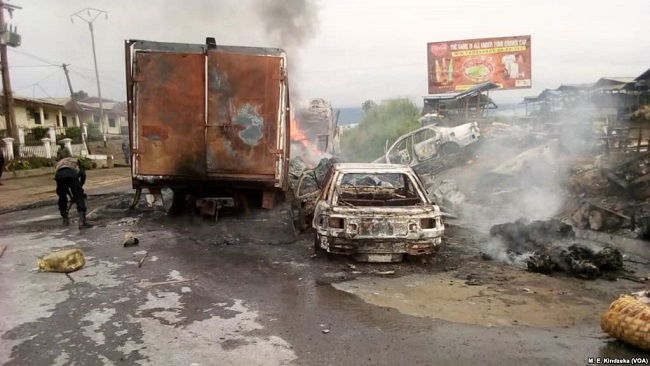
Protracted violence in the English-speaking regions of Cameroon has forced start-ups to ship their businesses. The Cameroon tech industry is one of the fastest growing in Africa, with Buea the former capital of Southern Cameroon termed the “Silicon Mountain” as it hosts a cluster of flourishing tech start-ups.
As violence increases between armed separatists and government troops, displacing thousands and forcing others into neighbouring Nigeria, IT start-ups have been forced to escape as well.
At just 27, Cedric Yengo, inspired by the Silicon Valley success stories, amongst others, has been forced to ship his business Rydz2Go overseas. Rydz2Go plans to shake up the transport technology, currently dominated by Uber and Lyft.
Engineering for Rydz2Go began in Buea, but later moved to the US, after authorities shut down the Internet for several months, crippling the operations of most start-ups.
The Cameroonian government suspended Internet services to the Northwest and Southwest in January last year in what activists described as “human right violation”.
Internet disruption
Though Internet access was later restored in April after international pressure from, among others, the United Nations and Pope Francis; the nearly 100 days blockade remains the longest period of Internet disruption by an African government.
According to the Paris-based Internet Without Borders, Egypt and Ethiopia were also among nine countries globally that experienced Internet blockades between January and June 2017.
The initial threat to the start-ups in Cameroon was the offline status of their bases but with increasing violence, the major threat now is safety. Young entrepreneurs like Yengo were at the highest risk of arbitrary arrests and stray bullets. Many civilians have been killed by stray bullets in the regions, including a Roman Catholic priest, the Rev Father Alexander Nougi Sob, who was killed in the Southwestern town of Muyuka.
“It is no longer just our businesses suffering, we as individuals are not safe at all,” said Yengo.
Best location
While Rydz2Go and many others were forced to relocate abroad, other young entrepreneurs like Fritz Ekogwe, Founder and CEO of the file transfer app (Feem.io) and a fast secure crypto wallet (intersteller.exchange) was forced to move internally to Yaoundé, Cameroon’s political capital.
Churchill Mambe, founder and CEO of Njorku, an employment and hotel services company, keeps building his business in Southern Cameroons amidst the turmoil.
“Rydz2Go’s goal is to break onto the global market and our move to New York is the best location to achieve that,” Yengo added.
Ridesharing apps like Uber and Lyft offer pick up from point A and drop off at point B, but Rydz2Go is different because its offer is time bundles, Yengo explained. He said the latter guarantees maximum flexibility and permits users to have a ride waiting while they do their errands.

President Paul Biya
“We offer users more control with their perfect service for business appointments, city tours and date nights. Have you ever been to a new city and not know how to get around? Rydz2Go strives to ensure that you have not only a local ride but a local guide as well,” Yengo said of the app which was currently being tested.
Up to 400 civilians have been killed by both the security forces and the armed separatists in the trouble-hit regions, according to Amnesty International. The group said in a new report on September 17 that it had also documented the deaths of more than 160 members of the security forces at the hands of armed separatists since late 2016. It noted, however, that the toll could be much higher as some attacks went unreported.
“The situation in the Anglophone regions of Cameroon is becoming increasingly desperate with no one spared from the violence which is spiralling out of control,” said Ms Samira Daoud, the Amnesty International Deputy Director for West and Central Africa.
Attacking dozens
Armed separatists are accused by Amnesty of kidnapping students and teachers and attacking dozens of schools between February 2017 and May 2018 in a bid to “strike fear amongst the population”.
“We have reasons to believe many other lives of ordinary people are now at risk with the violence carried out by some members of the armed separatists groups. This must immediately stop,” Ms Daoud said further.
The almost two-year long violence that has gripped the English-speaking regions of Cameroon started as an industrial strike by lawyers and teachers, but morphed into an internal armed conflict with fears the Central African country could slide into a civil war, if the violence persists.
The crisis
“We see the situation degenerating from a crisis to a conflict,” said Mr Gaby Ambo, the Executive Director of the Finders Group Initiative, a human rights group in Cameroon.
“And if nothing is done soon, it will turn into a civil war with grave consequences.”
The recurrent deadly confrontations have led to a mass movement of people seeking safety. The UN Office for the Coordination of Humanitarian Affairs estimates some 160,000 people have fled their homes in the strife-hit regions into the bushes, while more than 21,000 have crossed to next door Nigeria as refugees.
Many countries and groups have prescribed dialogue as a way out of the crisis, but the path was yet to be seriously pursued. The opposition thinks that President Paul Biya who has ruled Cameroon since 1982 and will be seeking reelection in October was not interested in pursuing dialogue.
Culled from The East African
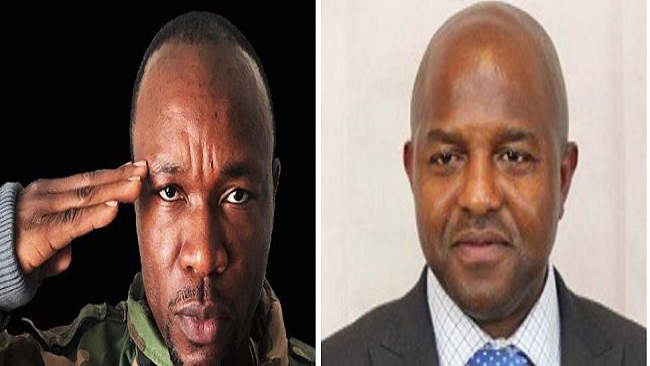
When Paul Biya of French Cameroun rushed his Secretary-General Ferdinand Ngoh Ngoh to London a few months ago to sign an oil deal over the oil resources of Ambazonia, Cameroon Concord News and Cameroon Intelligence Report in an editorial called on the Serious Fraud Unit of the British Police, the FBI and the Ambazonia Federal Criminal Investigation Department to initiate criminal investigations and the prosecution of all the persons and entities involved in this criminal oil deal. Cameroon Concord News Group cautioned that the deal was intended to generate money to buy weapons to prosecute the genocide against Ambazonia. A majority of Ambazonians condemned the criminal deal. They overwhelmingly supported the call for the investigation and the prosecution of the culprits.
The Interim Government of the Federal Republic of Ambazonia promptly harkened to the people’s call and initiated complaints against the bloodletting criminal and commenced diplomatic efforts to stop the criminal deal. Thousands of Ambazonians world-wide threw their overwhelming support for the measures taken by the Interim Government to preserve our oil resources and the territorial integrity of the Federal Republic of Ambazonia.
The Government of the Federal Republic of Ambazonia and individual citizens of Ambazonia in Britain and other parts of the world, mounted diplomatic efforts in Britain for this blood oil deal to be nullified. The diplomatic efforts began paying off with British members of the House of Commons bringing up the crimes committed against Ambazonians for debate during parliamentary sessions and with other arms of government.
The momentum and pressure were on when Cho Ayaba devised a means of delegitimizing the criminal complaints of Ambazonia over this criminal blood oil deal. He hoped to sign a contract legitimizing this fraudulent and criminal deal on behalf of Ambazonia for his self-interest. It could not have been intended to be a separate contract over the oil fields which a British Government department had welcomed and celebrated and which were under legal and diplomatic challenge by the Interim Government and the people of Ambazonia. No reasonable person would have expected that a British oil firm would get into an oil deal which was already recorded in official records and publicly celebrated by a member of government, Dr. Liam Fox.
The supposed plank was played on Ayaba by persons he knows so well and who have previously worked with him. The actions of these individuals within Ayaba’s organizational network might have its motives. And more will be known so long as Ayaba and his surrogates continue to attack them in the social media. Falsely accusing every person else but Ayaba and his organization and their greedy motives which Cameroon Concord News Group had long warned against is childish.
If these persons who allegedly set him up were not well known and trusted by him, how come a whole Commander-in-Chief who wants people to trust him for operational command decisions fall so easily to the prank? How does he expect the international community and Ambazonians to trust a Commander –in- Chief and supposed political leader who lacks a sense of discernment, is gullible, greedy and vulnerable? How can he be trusted with diplomatic and security confidences? How can he be trusted with the lives of more than eight million Ambazonians? If he is a committed warlord that he wants everyone to submit to his authority and command, why can he not learn from the Niger Delta Avengers how they are treating oil cartels illegally exploiting oil in their territory and devastating their environment? Did they struggle to sign oil deals with predatory murderers knowing that the oil firms although on the surface are independent of each other but operate as a cartel against the interest of the masses in the exploited territories?
The actions of Ayaba show that he still does not know the motivation against the annexation, colonization and genocide of the Federal Republic of Ambazonia. The war and genocide against the Federal Republic of Ambazonia are indeed about the appropriation of the oil fields and natural resources that Ayaba went to London to sell off for his personal gain. Without the oil, France will never have connived with Britain to steal the natural resources of Ambazonia and slaughter millions of Ambazonians over these 67 years. It is for this oil that many Ambazonians are dying for the fatherland, many slaughtered, and many more driven to refugee camps. It is about this oil that His Excellency Sisiku Ayuk Tabe, members of the Interim Government, Mancho Bibixy and thousands Ambazonians have sacrificed their liberty and lives. It is about this oil that the independence of Ambazonia was stolen.
Cameroon Concord News Group is surprised by the fact that a few opportunists are struggling to justify the actions of Cho Ayaba and blaming the majority of Ambazonians who have and are sacrificing their lives to defend and protect the fatherland. Ayaba and his surrogates go so low and equated what happened to him to the abduction of His Excellency Sisiku Ayuk Tabe and members of the Interim Government in Nigeria. That is an insult to the people of the Federal Republic of Ambazonia. The criminal operation against President Ayuk Tabe was carried out by three countries, with the support of the oil cartel. Cho Ayaba went to London hoping to sign a contract selling off Ambazonia for personal gain. The countries are Nigeria, France and French Cameroun. The Cho Ayaba’s scandal was an operation launched within his inner operational cycle by persons he has worked with, whom he knew and for reasons which will be known with time exposed him for what he is. The tough guy whom his surrogates are projecting in him pales in the face of the prank he fell into. No tough guy is that cheap to get. Not one claiming to be an army commander.
The conduct of Ayaba must be strongly condemned by all reasonable people. Ayaba needs to respect the call by a majority of Ambazonians to shelve his greedy warlord ambition and work with the Interim Government of the Federal Republic of Ambazonia to genuinely defend the restoration of independence which was declared by His Excellency Sisiku Ayuka Tabe on the 1st of October 2017. The overwhelming mandate which the people of the Federal Republic of Ambazonia gave the Interim Government under His Excellency President Sisiku Ayuk Tabe on 22 September 2017 to declare the actualization of independence on 1stOoctober 2017 now devolves on the Interim President His Excellency Samuel Sako. Cho Ayaba cannot sincerely say he is fighting to defend the actualization of the independence declared by the Interim Government while fighting to destroy the Interim Government. His conduct in wanting to legitimize the sale of Ambazonia oilfields in a criminal oil deal is a serious crime against the Federal Republic of Ambazonia. His conduct in attacking and kidnapping or killing other self defense forces within the national territory of Ambazonia must be opposed and denounced. He should be apologizing like the prodigal son seeking to be allowed back into the fold, instead to attacking the sovereign will of the people of Ambazonia.
By Soter Tarh Agbaw-Ebai with files from Asu Vera Eyere
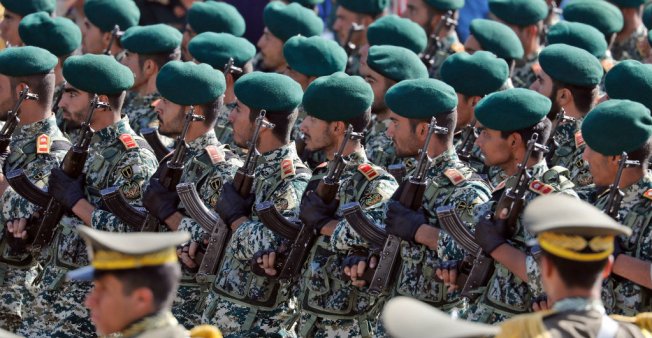
Militants attacked a military parade in southwestern Iran on Saturday, killing several civilians, state media reported.
A woman and a child were among at least 20 civilians wounded in the attack by a “group of assailants” on the parade in the city of Ahvaz, the official IRNA news agency reported.
The province’s deputy governor Ali-Hossein Hosseinzadeh said that at least eight members of the Revolutionary Guard were also killed in the attack.
“Eight to nine military personnel were martyred and more than 20 wounded,” the semi-official ISNA news agency quoted Hosseinzadeh as saying. “The wounded are in a critical condition.”
The rare attack targeted Khuzestan, a province bordering Iraq that has a large ethnic Arab community, many of them Sunni, and was a major battleground of the devastating 1980-88 conflict between Iran and Saddam Hussein’s Iraq.
Saturday’s rally was one of many in cities across Iran held to mark the anniversary of the launch of the war with massive Iraqi air strikes.
Attacks by Kurish rebels on military patrols along the border in mainly ethnic Kurdish areas further north are relatively common.
But attacks on regime targets inside major cities are far rarer.
On June 7, 2017, 17 people were killed and dozens wounded in simultaneous attacks in Tehran on parliament and on the tomb of revolutionary leader Ruhollah Khomeini, building — the first inside Iran claimed by the Sunni Muslim extremists of the Islamic Strate group.
Iran’s President Hassan Rouhani vowed earlier Saturday to boost his country’s ballistic missile capabilities despite Western concerns that were cited by his US counterpart Donald Trump in May when he abandoned a landmark nuclear deal with Tehran.
“We will never decrease our defensive capabilities… we will increase them day by day,” Rouhani said at a separate military parade in the capital.
“The fact that the missiles anger you shows they are our most effective weapons,” he said, referring to the West.
(AFP)
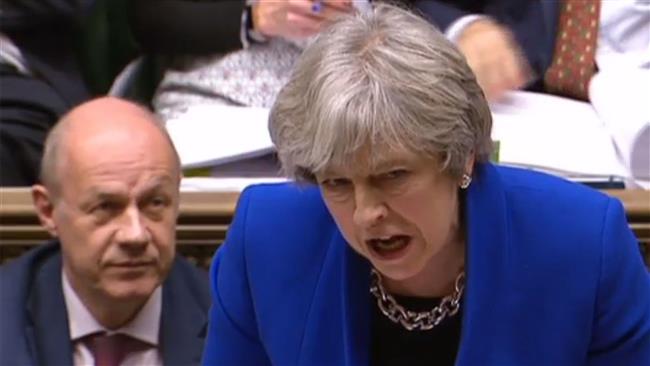
British Prime Minister Theresa May demanded new proposals from the EU in a pugnacious speech delivered a day after EU leaders rejected her Brexit blueprint at a summit in Austria.
“It’s not acceptable to simply reject the other side’s proposals without a detailed explanation and counter proposals,” May said in a televised statement.
“So we now need to hear from the EU what the real issues are, what their alternative is, so that we can discuss them. Until we do, we cannot make progress.”
May’s speech came a day after EU leaders meeting in the Austrian city of Salzburg dismissed her so-called Chequers Brexit plan, with French President Emmanuel Macron noting that the bloc would “never accept a deal which would damage the EU and its integrity”.
With British newspapers declaring that May had been “humiliated” by EU leaders in Salzburg, the prime minister used her televised statement, delivered from 10 Downing Street, to tell the bloc, essentially, to put up or shut up.
“I will not overturn the result of the referendum nor will I break up my country,” she asserted.
With Britain’s March 29, 2019 departure from the EU looming, there are growing concerns that a deal on the post-Brexit relationship may not be cobbled together in time to ensure a smooth and orderly British exit.
No ‘border down the Irish Sea’
At the Salzburg summit, May told EU leaders that she will not accept an EU proposal that would keep Northern Ireland in a customs union with the bloc if there is no other agreed plan to avert a hard border.
But Ireland has the EU’s backing for its drive to ensure that the border does not once again become a cause of the north-south tension that bedevilled it in the last century.
In her address Friday, May said she could not agree to any deal that treated Northern Ireland differently from the rest of the UK. Firmly rejecting an EU proposal to keep the UK in a customs union, May asserted that she would not accept a plan that would see her country “permanently separated economically from the rest of the UK by a border down the Irish Sea”.
She said no UK prime minister would ever agree to that: “If the EU believe I will, they are making a fundamental mistake.” Following the cool reception in Salzburg of her Chequers plan, May stuck by her position that “no deal is better than a bad deal” and blasted EU leaders for what she called “an impasse” in Brexit negotiations.
“Throughout this process, I have treated the EU with nothing but respect,” she said Friday. “The UK expects the same. A good relationship at the end of this process depends on it.”
‘Dreadful’ responds Sturgeon
May’s speech failed to impress her critics or the markets.
The British pound tumbled 1.5 percent as May addressed the nation Friday with the pound falling to as low as $1.3064, from an earlier level of around $1.3175 more than two cents below where it began the day.
Reacting to May’s speech, Scotland’s First Minister Nicola Sturgeon called it “dreadful”.
In a statement posted on Twitter, Sturgeon said, “The EU view was bluntly expressed yesterday but not new – she just hasn’t been listening. If her tactic now is to double down on the Chequers dead duck, and then blame EU for a no deal, she will do huge damage to all those she is supposed to serve.”
In a second tweet, Sturgeon added, “the only remotely workable way to do Brexit is to stay in the single market and customs union. If PM not prepared to do that, Brexit shouldn’t happen. ‘No deal’ or ‘no detail‘ Brexit simply not acceptable – especially for Scotland, where we did not vote for this.
The leader of Britain’s opposition Labour Party Jeremy Corbyn said the time for political games involving Brexit must end.
“The political games from both the EU and our government need to end because no deal is not an option,” Corbyn said in a statement. “Theresa May’s Brexit negotiating strategy has been a disaster. The Tories have spent more time arguing among themselves than negotiating with the EU.”
May faces a likely confrontation with angry Conservatives at her party’s conference in 10 days. They deride her willingness to bind Britain into much EU regulation in return for free trade, and some would prefer a no-deal “hard Brexit” in March, despite warnings that would ravage the British economy.
(FRANCE 24 with AFP, AP and REUTERS)
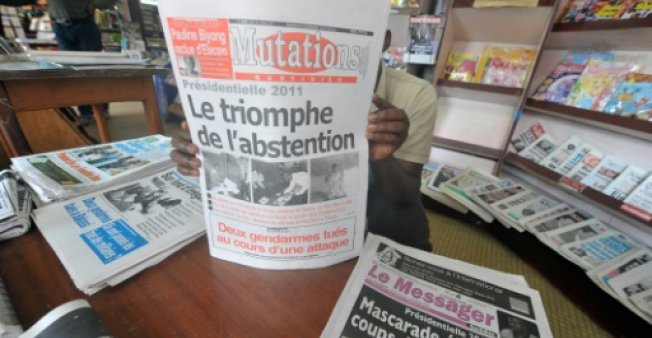
Footage of abuses published on Facebook, politicians tweeting their every move: for the first time, the West African state of Cameroon is heading into a presidential election in which social media is taking a central role.
Nine candidates are contesting the October 7 poll, including President Paul Biya, who has ruled the country for 35 years and is hoping to be re-elected for a sixth time.
But this time, the 85-year-old broke with media tradition by announcing his candidacy on Twitter.
One of Biya’s main challengers is Joshua Osih — head of the opposition Social Democratic Front (SDF) — who has taken to engaging with voters online.
When he came under fire for “unpresidential behaviour” after posting a picture of himself at the airport in Paris, he hit back immediately on Twitter, saying that was exactly the point.
“I want to break with protocol and everything to do with the myth around the presidency,” he wrote.
“I want to be close to the people I rule and not shut up in a palace.”
– ‘Much greater reach’ –
For candidates, going online offers far greater exposure than traditional forms of campaigning, explains Julie Owono, executive director of Internet Without Borders, an NGO.
“There is much greater potential in terms of reach than when their words are communicated through the written press or the radio,” she said.
For Owono, this increased presence online is the result of a significantly higher rate of internet connectivity in Cameroon.
Figures released earlier this month by the ministry of postal and telecomms services show connectivity jumped from a mere 0.24 percent of the population in 2011 to 35 percent last year.
“There has been a fall in the cost of internet access and network quality has also improved,” she said.
– ‘Disinformation’ –
Although the official launch of the election campaign is only due to start on Saturday, social media is already highlighting prominent topics, especially the security crisis in Cameroon’s English-speaking regions.
Blighted by armed conflict, the two regions have remained largely inaccessible to the media and NGOs but those involved in the fighting have used social media to expose purported human rights violations by the other side.
Since the conflict began at the end of 2017, footage of alleged abuses involving both anglophone separatists and Cameroonian soldiers have been doing the rounds almost every day on social media.
A military policeman with his head cut off, villages burnt by the army, and even scenes of torture: all these excesses caught on camera are used by both sides to try and discredit the enemy.
Faced with the surge of horrific footage spreading online, the government has called for calm, denouncing the “inappropriate use of the internet”.
Both the increase in hate speech and the proliferation of “fake news” are proving to be “a threat to our right to reliable information, above all in an election period,” said Communications Minister Tchiroma Bakary.
In July, the minister dismissed out of hand a video purportedly showing abuses by Cameroonian soldiers in the country’s Far North Region, where troops are deployed to root out Boko Haram jihadists from neighbouring Nigeria.
Several weeks later, an investigation was opened and several soldiers were arrested.
“The main challenge regarding the use of social networks is disinformation,” said Janvier Ngnoulaye, who heads an NGO called Internet Society Cameroon.
– Internet shutdown? –
With less than three weeks until the vote, Biya’s supporters — who see him as best placed to handle the separatist crisis and the threat posed by Boko Haram — maintain that footage of alleged abuses by the army was put online in order to sabotage his re-election bid.
“It’s all about harming Biya’s image,” a security source told AFP.
In fact, the campaign has sparked an online war of images: when one side posts pictures of roads in disrepair, the other responds with photos of huge construction projects, such as the motorway between Yaounde and Douala.
Earlier this month, a misleading rumour began circulating on social networks suggesting that Yaounde was going to shut down internet access during the vote, as happened in Mali in August.
“Fake news,” responded the communications minister.
But such fears are not entirely unfounded.
In early 2017, as the separatist protests multiplied in Cameroon’s English-speaking regions, Yaounde sought to stamp out the unrest by cutting off internet access in the two areas for over three months.
AFP
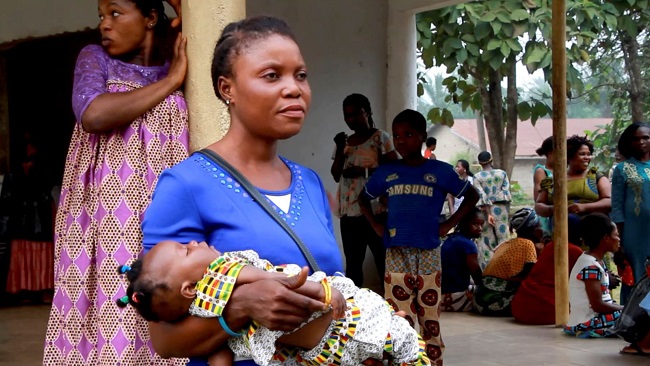
If Simon had the chance to tell his class about his summer holidays, the seven-year-old Simon would no doubt mention the large tarpaulin sack that for almost four months served as his sleeping bag and his magic carpet.
When the family fled their home in the town of Batibo, in Cameroon’s north west, his mother used grain bags to carry her two youngest children as Simon ran alongside. Later, out in the open jungle, all three children slept inside the bags.
“It protected them from the snakes and the mosquitoes,” says Rebecca, Simon’s mother, 25, her voice still sounding panicked as she describes the exodus and the stray bullets she feared could hit her children.
But Simon will not be telling any summer holiday stories this year. Like tens of thousands of other Cameroonian children, school has been suspended for yet another year.
The crisis in Cameroon’s two English-speaking regions – the north-west and south-west – began in October 2016 with peaceful protests by lawyers and teachers demanding the wider use of English, rather than French, in local courtrooms and schools, as well as more English-speaking school teachers, adherence to a dual legal system and a fairer allocation of resources.
But the situation has spiralled out of control amid a vicious war of kidnapping, decapitations and the burning of entire villages.
Classrooms have become part of the ongoing warfare between the government and separatist forces. School attendance is compulsory for all Cameroonian children until the age of 12, but gunshots on the streets and threats from separatist forces mean many are denied this right.
In recent months, teachers who dared to show up for work have been killed, and buildings burned. This week an unknown group of men stormed a school in Buea, capital of the south-west region, attacking students and teachers with machetes and guns. This followed reports that on 3 September, the first day of the academic year, gunmen attacked a secondary school in the town of Bafut, about 25km from Bamenda, the capital of the north-west region, kidnapping five pupils.
Condemning such incidents, Jacques Boyer, who represents Unicef, the UN children’s agency, in Cameroon, said: “All children in the north-west and south-west regions – like any other children across the country – must be able to go to school in peace.”
Unicef estimates published this month show that, of more than 300 million five- to 17-year-olds not in school worldwide, one-third live in conflict areas.
But Unicef is not providing any educational support for people living in the affected regions and there appears to be little help from other organisations. Cameroonians are being left to get on with things themselves.
The country’s two Anglophone regions are home to approximately a fifth of the country’s population, estimated at 23 million. More than 180,000 people have fled their homes in the Anglophone areas, and families are growing increasingly anxious about the impact of missed schooling on their children.
“Imagine five years from now, the children still not going to school – what will happen to them?” says Bridget, 50, a retired nurse who fled her north-west hometown. “They will become a terror group fighting the government.”
Such fears may already be a reality. Claire, 38, from Kumbo, north-west region, says children she used to see in her church now run around the neighbourhood with guns.
“One of their leaders is a girl whose grandmother was burned alive in her home [by government forces],” she says. “Now she’s one of the ones giving orders.”
Today, she can shoot a gun. “But what will happen to her when she is arrested?” says Claire.
There are also worries that lack of schooling will increase already high teenage pregnancy rates. According to the Cameroon Medical Council, one in four pregnancies in the country are among school-age girls.
Though there are no official statistics, parents from the north-west region who have fled to the capital, Yaoundé, say they have noticed more pregnant teenagers. With shops and businesses closed, schoolgirls are looking for cleaning or babysitting jobs, leaving them at risk to abuse.
More affluent families have sent their children to schools in the French-speaking parts of the country, and cities like Douala and Yaoundé are beginning to feel the squeeze.
Sandrine, 17, a student at Deido billingual high school in Douala, says class sizes have increased considerably. “In theory, there are supposed to be around 40 students in a classroom, but that’s a joke,” she said. “It’s more like a hundred.”
During last summer’s exams season, she said students had to turn up extra early to claim a desk or face being turned away.
For those stuck in the crisis-ridden regions, private education – which is becoming ever more expensive – is the only option, says Frances, a mother of one in Kumba.
“The teacher charges 30,000 [West African CFA] francs per month, so for nine months the fees will be 270,000 francs (£370), while school used to cost just 90,000 per year,” she says.
Organising home schooling is not always possible, adds Frances, since group gatherings of more than five people can attract the attention of the authorities.

“I haven’t got a job, and I can’t afford the school fees,” she says. She does not speak French, the working language in the capital. She is afraid people will turn on her when they realise where she is from.
“We are too afraid to even go outside and speak English,” she says. Other mothers nod in agreement. Surveying the calm Yaoundé traffic, Claire, about to return to Kumbo, says she fears young people in her hometown will be a lost generation. “You can sacrifice anything, but not the future of the children.”
*All names have been changed at the request of the interviewees, who feared repercussions if identified.
Source: The Guardian