
Monthly Archives: September 2018
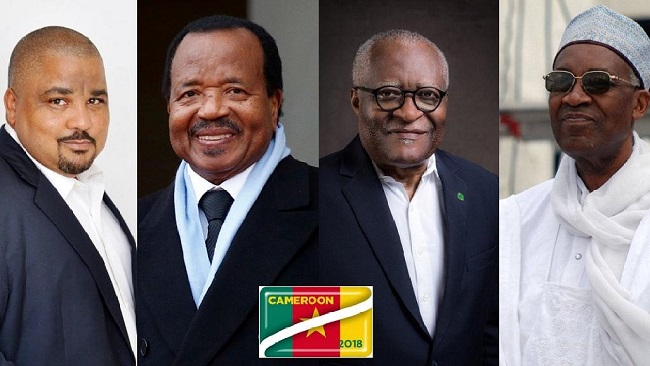
October 7: Biya facing political amateurs
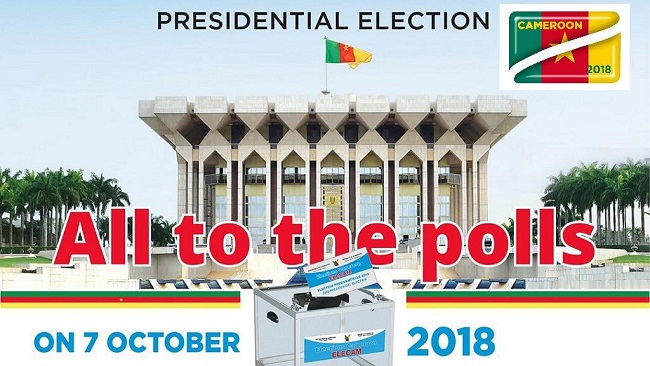
Cameroon will head to the polls on October 7, to decide who will captain the country for another 7 years. According to an official list published by Elections Cameroon, 28 candidacy files were received by the commission that was charged with receiving files at the ELECAM headquarters and in Regional Delegations.
The elections governing body, ELECAM, on August 7, 2018 published a list of 9 candidates including the incumbent president, Paul Biya who is seeking another 7 years term to continue his 35 years rule over the country.
This year’s presidential poll seems to be very different from previous elections the country has witnessed considering the reduced number of candidates to take part in the elections and the insecurity which has plagued the country for over two years.
Get to know the Presidential Candidates
Biya will be facing political amateurs in the upcoming elections and an opposition which has failed despite several attempts to present a united front to challenge his candidacy.
Joshua Osih was picked on February 24 as the flag-bearer of the main opposition party, the Social Democratic Front, to replace Ni John Fru Ndi who has over the years been the strongest candidate to face Biya.
Akere Muna, and a host of others; Libii Li Ngue Cabril, Matomba Serge Espoir, Kamto Maurine and Njifor Afamwi will also be testing the waters for the very first time.
Paul Barthélemy Biya’a bi Mvondo
Paul Biya, Cameroonian native who hail from the South was born on 13 February 1933, in the village of Mvomeka’a.
He studied at the Lycée General Leclerc, Yaounde and the Lycée Louis-le-Grand, Paris and went on to the Institut des hautes études d’Outre-Mer where he graduated in 1961 with a Higher Education Diploma in Public Law.
He became a bureaucrat in his late 20’s under President Ahmadou Ahidjo.
He was Chargé de Mission at the Presidency of the Republic upon his return from Paris in October 1962 and Director of Cabinet of the Minister of National Education, Youth Affairs and Culture in January 1964.
He was named Director of Cabinet of the Minister of National Education, Youth Affairs and Culture in July 1965 and later Director of the Civil Cabinet of the President in December 1967
While still serving as Director of the Civil Cabinet, Biya was appointed Secretary-General of the Presidency of the Republic in January 1968.
He gained the rank of Minister in August 1968 and the rank of Minister of State in June 1970, while remaining Secretary-General at the Presidency.
Following the creation of a unitary state in 1972, he became Prime Minister of Cameroon on 30 June 1975.
Ahidjo unexpectedly announced his resignation on 4 November 1982, and Biya accordingly succeeded him as President of Cameroon on 6 November.
Joshua Osih
Joshua Osih joined the Social Democratic Front (SDF) in March 1991 in Douala.
In 2002 he was elected regional chairman of the Social Democratic Front for the South West region.
In 2006, he was elected 2nd Vice Chairman of the party.
In 2012 and 2018 he was voted in both instances as 1st Vice Chairman of the party. At the 2018 Extra-ordinary convention of the party that concludes the party’s primaries, he was chosen as the SDF’s presidential candidate for the 2018 presidential election of Cameroon to be held in October 2018.
Osih holds an MBA in Leadership and Sustainability, and has more than 25 years of experience in the aviation industry, notably in operations and management.
His is an established entrepreneur in Cameroon and is the founder and managing director of the notable companies including Camport PLC and Africa Travel Management.
Osih is a Member of the Cameroon Parliament for the Wouri Centre constituency in Douala.
He serves both as Vice President of the Finance and Budget Committee of the National Assembly, and Special Rapporteur for the National Assembly.
He is Deputy General Rapporteur in charge of state income, Vice Coordinator of the Hope for the Youth caucus, and a member of multiple parliamentary friendship groups.
Born on 9 December 1968, the 49-year-old lawmaker and native of the South West Region is married to Tina Osih with 3 sons.
Akere Muna
Akere Tabeng Muna is a Cameroonian lawyer who was born on August 1952 in the North-West region of Cameroon.
He obtained a Bachelor of Science degree in International Relations in 1975 from the American University in Washington, D.C. and later moved to England, where he joined the Honourable Society of Lincoln’s Inn.
After he was called to the Bar in England in 1978, he returned to Cameroon, and joined the legal practice of his brother, Bernard Muna. In 1984, the legal practice was converted into a law firm called Muna, Muna & Associates.
In 1997, he assumed the presidency of the Cameroon Bar Association after a landslide victory.
In 2000, Akere Muna founded the Cameroon chapter of the anti-corruption watchdog, Transparency International.
In 2004, Akere was elected to the Board of Directors of Transparency International and was later designated as the Coordinator of the Coalition of African Chapters of TI.
In 2005, he was elected Vice-Chair of the Board of Directors of TI and he stepped down in 2014, after serving the maximum number of terms.
He was thereafter appointed by the Board of Directors of TI as Chair of the International Anti-Corruption Conference (IACC) Council.
Akere Muna was a founding member of the Pan African Lawyers Union (PALU), and in July 2005, he was unanimously elected president of the organisation by the heads of the various African bar associations.
In September 2008, Akere Muna was president of ECOSOCC and in 2012, he became a member of the High Level Panel on Illicit Financial Flows from Africa, a body established by the United Nations Economic Commission for Africa
On February 11, 2013, the Board of Directors of the African Development Bank (AfDB) approved the appointment of Akere Muna as Sanctions Commissioner of the African Development Bank.
Akere Muna is married to Beverly Bird, and a father of two daughters, Lydia Muna and Kandi Muna.
Adamou Ndam Njoya
Adamou Ndam Njoya is a Cameroonian politician, lawyer, author, and professor.
He is the President of the Cameroon Democratic Union (UDC), an opposition party
He served as the Minister of National Education from 1977 to 1980, and has been the Mayor of Foumban since 1996.
From 1997 to 2007 he was a Deputy in the National Assembly.
He became Secretary to the Minister of Foreign Affairs from 1969 to 1970 and joined the faculty of law at the University of Yaoundé in 1970.
Njoya worked for the Carnegie Endowment for International Peace in Cameroon as director of the diplomatic training program from 1970 to 1972.
He was instrumental in the creation of the International Relations Institute of Cameroon (IRIC) where he served as its first director from 1972 to 1975.
He became a member of the Economic and Social Council of Cameroon in 1974, and he was then appointed as Deputy Minister of Foreign Affairs on 30 June 1975.
In December 1977, Ndam Njoya was appointed Minister of National Education. In July 1980, he was appointed Minister Delegate at the Presidency for General Inspection of State and Administrative Reforms.
Dismissed from government in 1982, Ndam Njoya focused on his writing and teaching as well as donating his time to philanthropic endeavors.
He later served as a member of the Executive Bureau of UNESCO from 1985 to 1989, and was the President of the Jury of the Grand Prix of Literary Associations 2014.
Ndam Njoya was born at Njika, Foumban, West Province, Cameroon, on 8 May 1942.
He is a holder of an MA and a PhD degree in public international law and political science at the University of Paris (Panthéon).
He studied diplomacy at the Institut International d’Administration Publique (IIAP), followed by three internships, with the French Ministry of Foreign Affairs, with the French Embassy in London, and with International Organizations at the United Nations European office in Geneva.
Culled from Africa News
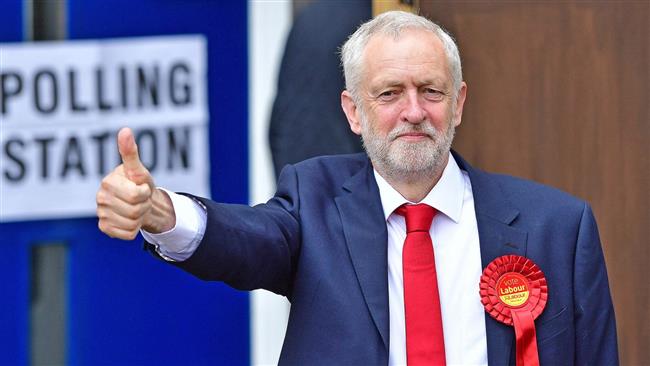
UK’s divided Labour ponders second Brexit vote at party conference
Britain’s Labour Party is facing a huge choice at its annual conference – whether or not to back a new referendum that could halt the country’s impending departure from the European Union. Support from the main opposition party would be a major boost to campaigners for a second vote on Brexit.
Ever since Britain voted in 2016 to leave the EU, Labour’s leadership has said it will respect the result. Now, with divorce negotiations with the EU stuck and Britain due to leave in March, many members think the party must change its course.
More than 100 local Labour associations have submitted motions to the conference, which starts Sunday, urging a new vote. Labour leader Jeremy Corbyn told the Sunday Mirror newspaper that if the party “makes a decision I will not walk away from it.”
Most of Corbyn’s MPs and younger supporters are in favour of the EU, but many voters in the party’s working-class heartlands back Brexit.
Corbyn has so far tried to avoid the divisive subject, instead sticking to promoting a domestic social agenda that helped him upset the odds at last year’s general election and strip Prime Minister Theresa May of her parliamentary majority.
But with Brexit negotiations due to come to a climax before the end of the year, party members look set to force a debate and a vote on the conference floor pushing for a second referendum – an issue on which Corbyn has tried to stay as ambiguous as possible.
Experts therefore expect Corbyn to try stick to his tried-and-tested method when he delivers his keynote speech on Wednesday, prioritising efforts to bring down the government rather than trying to stop Brexit.
“It’s going to be a very interesting conference,” Denis MacShane, a former European Affairs minister, told FRANCE 24 in an interview.
“In the last two years, Jeremy [Corbyn] has on the whole been in the same place as [Theresa] May. But now there’s a real debate after the very inefficient way she’s handled things,” the veteran Labour member said. “People – with all the new facts, all the new evidence and all the new details, and particularly the very real worry of an economic disaster by the possible breakup of the United Kingdom – [feel] that we should have a second consultation, just as they’ve had in France, Denmark and Switzerland, when referendums don’t turn out to be as productive as people hope.”
He added: “There are so many new facts that we now know […] Britain can’t survive when a thousand Japanese firms are told ‘you’ll lose all access to the single market, now relocate’. […] Banks are already doing that […] This isn’t good for British finances, for the City for the industrial economy, or for the working class jobs – everybody knows this. So now the question is: how do we get out of it?”
Tim Bale, chair in politics at University of London Queen Mary, said he expected party leaders to try to “preserve the ambivalence that we have seen so far” on Brexit.
“Whether they would be able to, in the face of the crushing coming from below, would be an interesting thing to watch,” he told AFP.
Pro-EU supporters are due to hold a large march as the conference opens on Sunday, calling for a second vote.
Anti-Semtism row
Another potential issue hampering Corbyn’s designs on power is the anti-Semitism row that has dogged the party since he took over in 2015.
He recently admitted the party had a “real problem” with the issue, leading veteran MP Frank Field to quit last month. Field said the leadership was becoming “a force for anti-Semitism in British politics”.
The National Executive Committee (NEC), the party’s ruling body, agreed this month to adopt in full an international definition of anti-Semitism for its code of conduct, but only after fierce opposition from those in the party who believe it will limit criticism of Israel.
Labour’s polling numbers have remained relatively stable in recent months, although analysts say the chaos in the Tory party could mask any impact of the row, which continues to roil the party.
A group of Labour campaigners will hold a rally on Sunday to protest against Corbyn’s handling of the scandal. “The sheer levels of animosity that exists between Corbyn and his opponents is quite remarkable,” Anand Menon, political professor at King’s College London, told AFP.
“If they want this conference to work they are going to have to deal with anti-Semitism, rather than pretending that they have dealt with it already,” he added. The row has deepened the divisions between Corbyn’s far-left supporters and the more centrist faction of MPs who held power in the party after Tony Blair took charge in 1994.
Centrist MPs now find themselves on the sidelines and battling for their political lives in the face of aggressive attempts by Corbyn’s supporters to de-select them, another issue that could raise tensions during conference. “The leadership might try and persuade Momentum activists not to make it (de-selection) a central plank of conference but the language is getting very, very abrasive,” said Menon.
(FRANCE 24 with AP, AFP)
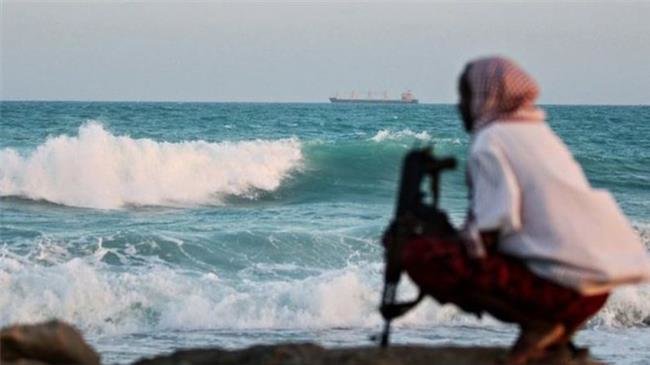
Pirates kidnap 12 crew from Swiss ship off Nigeria
A gang of pirates took hostage 12 crew members of a Swiss cargo ship they attacked in Nigerian waters on Saturday, the vessel’s operator has said.
Massoel Shipping said its bulk carrier MV Glarus, with 19 crew, came under attack early Saturday morning as it transported bulk wheat from Nigeria’s commercial capital Lagos to the southern oil hub of Port Harcourt.
During the attack, around 45 nautical miles southwest of Bonny Island, “the pirate gang boarded the Glarus by means of long ladders and cut the razor wire on deck to gain access to the vessel and eventually the bridge,” the company said in a statement sent to AFP.
“Having destroyed much of the vessel’s communications equipment, the criminal gang departed taking 12 of the 19 crew complement as hostage,” it added.
The Geneva-based shipping company said “all the appropriate authorities have been notified” and specialists have been called in to “secure the speedy and safe release of those being held.”
“Families are being kept closely informed of the situation,” it said, without providing details on the nationalities of the kidnapped crew members.
Switzerland’s foreign ministry said it “has been informed of the attack on Glarus, a vessel sailing under a Swiss flag along the Nigerian coast.”
The Swiss Maritime Navigation Office was in contact with the vessel’s operator, it added.
(Source: AFP)
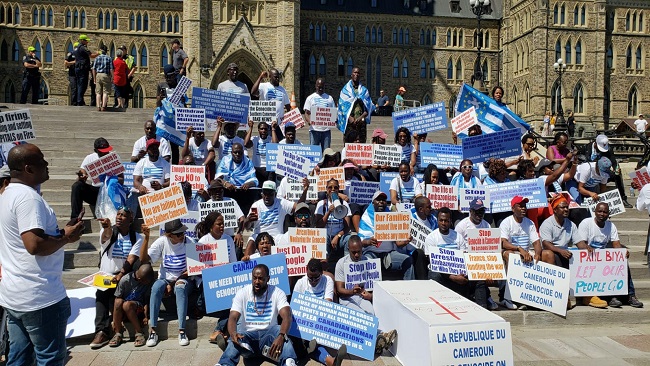
Understanding Southern Cameroons vicious war of secession
A vicious war of secession has ravaged the two Anglophone regions of Cameroon since January 2018. Non-state militias warring with the government aim to create an independent Ambazonian state. While central Africa has seen its share of wars of secession (the majority of which culminate in an agreement between the parties), aspects of Cameroon’s secessionists distinguish them, and this war, from others.
To refer to the group in public by the wrong name amidst the wrong strangers could invite a beating or even one’s murder. Therefore, in public civilians refer to secessionists as the Amba, or the Amba Boys. Privately, those who support the secessionists refer to them as freedom fighters, restoration forces, or, the army. Those who oppose them refer to them as the boys, the Ambazonians, and the terrorists.
But Anglophone Cameroonians overwhelmingly view secessionists positively. This is so even when they object to their tactics. For instance, secessionists call for Ghost Towns, or city-wide strikes every Monday. They call, too, for boycotting all primary and secondary schools. A secondary school teacher in the Southwest Anglophone capital region of Buea noted, “I don’t agree with preventing children from going to school, but I support the secessionists’ aims. Therefore, I tolerate it.” Others, like this 35-year-old entrepreneur in Buea, say, “I completely support all actions the freedom fighters take, and I am honored to keep my daughter from school. Students are just pawns of the Cameroonian president.” When asked whether targeting children and teachers was legitimate he added, “Yes, they are supporting the Biya regime.”
This perspective is not limited to the Anglophone regions. Anglophones in Francophone Cameroon like this cab driver in the country’s largest city, Douala, say, “Francophone Cameroonians do not understand the Anglophones’ plight. They assume everything the freedom fighters do is bad. They never listen to us, and cannot be trusted, so, independence is our only option.”
During the first few months of the conflict, the secessionists generally targeted only those who disobeyed their orders, or who they suspected had government affiliations. This has changed drastically in recent months. In villages and cities spanning both Anglophone regions, the secessionists extort, kidnap, and rape civilians. Public opinion seems increasingly impervious to such offenses. The secessionists lack a central command, and so when rape or extortion occurs people are quick to pin it on imposters, not the real secessionists.
Such deflections are not entirely without merit. There are more than 20 secessionist groups fighting in the two Anglophone regions at the time of this writing in September of 2018. The majority of these arose during the summer, correlating directly with the violence spike against civilians. Additionally, the so-called interim Ambazonian government has condemned all attacks and denied all responsibility. Such refutations are near impossible to verify given the informal secessionist structure which often as not is controlled from outside Cameroon.
Interestingly, purported, legitimate secessionists have punished others for abusing civilians. In August, secessionist leaders in Buea apprehended, publicly beat, and disposed of four people. The four were extorting locals supposedly on behalf of the secessionists. At the same time, however, individuals claiming separatist affiliations continue extorting civilians without punishment.
Which brings us to this tale’s central oddity: Anglophone Cameroonians attribute magical powers, or juju, to those who they believe to be legitimate secessionist fighters. They believe secessionist fighters adhere to strict codes of conduct that abhor rape, murder, and extortion. They believe in return for abiding by these rules the secessionists can shapeshift and are impervious to bullets and knives. The Cameroonian military has repeatedly turned its weapons over to secessionist fighters without a fight. Secessionist fighter deaths fail to dispel the illusion. They are proof that the fighters broke the conduct code or were illegitimate secessionists in the first place. As Cameroon’s crisis worsens, understanding the socio-cultural underpinnings of the conflict remains critical.
Source: Modern Ghana
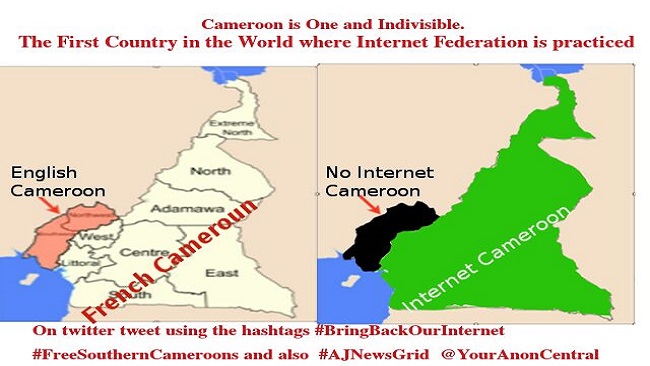
Cameroon’s first ‘social media election’
Activity on Cameroon’s social media space has intensified ahead of the October elections as users share footage of abuses and politicians tweet their every move in a bid to engage voters.
Nine candidates are contesting the October 7 poll, including President Paul Biya, who has ruled the country for 35 years and is hoping to be re-elected for a sixth time.
But this time, the 85-year-old broke with media tradition by announcing his candidacy on Twitter, a key indicator that social media is taking a central role in this year’s presidential election.
There is much greater potential in terms of reach than when their words are communicated through the written press or the radio.
‘Breaking with protocol’
During the last election in 2011, only a handful of candidates were using social media. Today, almost all of them have a dedicated team to ensure they are very much present online.
One of Biya’s main challengers is Joshua Osih, head of the opposition Social Democratic Front (SDF), who has taken to engaging with voters online.
When he came under fire for “unpresidential behaviour” after posting a picture of himself at the airport in Paris, he hit back immediately on Twitter, saying that was exactly the point.
“I want to break with protocol and everything to do with the myth around the presidency,” he wrote. “I want to be close to the people I rule and not shut up in a palace.”
Why social media?
For candidates, going online offers far greater exposure than traditional forms of campaigning, explains Julie Owono, executive director of Internet Without Borders, an NGO.
“There is much greater potential in terms of reach than when their words are communicated through the written press or the radio,” she said.
For Owono, this increased presence online is the result of a significantly higher rate of internet connectivity in Cameroon.
Figures released earlier this month by the ministry of postal and telecoms services show connectivity jumped from a mere 0.24 percent of the population in 2011 to 35 percent last year. “There has been a fall in the cost of internet access and network quality has also improved,” she said.
Risk of fake news?
Although the official launch of the election campaign is only due to start on Saturday, social media is already highlighting prominent topics, especially the security crisis in Cameroon’s English-speaking regions.
Blighted by armed conflict, the two regions have remained largely inaccessible to the media and NGOs but those involved in the fighting have used social media to expose purported human rights violations by the other side.
Since the conflict began at the end of 2017, footage of alleged abuses involving both anglophone separatists and Cameroonian soldiers have been doing the rounds almost every day on social media.
A military policeman with his head cut off, villages burnt by the army, and even scenes of torture: all these excesses caught on camera are used by both sides to try and discredit the enemy.
Faced with the surge of horrific footage spreading online, the government has called for calm, denouncing the “inappropriate use of the internet”.
Both the increase in hate speech and the proliferation of “fake news” are proving to be “a threat to our right to reliable information, above all in an election period,” said Communications Minister Tchiroma Bakary.
In July, the minister dismissed out of hand a video purportedly showing abuse by Cameroonian soldiers in the country’s Far North Region, where troops are deployed to root out Boko Haram jihadists.
Several weeks later, an investigation was opened and several soldiers were arrested. “The main challenge regarding the use of social networks is disinformation,” said Janvier Ngnoulaye, who heads an NGO called Internet Society Cameroon.
Will gov’t shutdown social media?
With less than three weeks until the vote, Biya’s supporters, who see him as best placed to handle the separatist crisis and the threat posed by Boko Haram, maintain that footage of alleged abuses by the army was put online in order to sabotage his re-election bid.
“It’s all about harming Biya’s image,” a security source told AFP. In fact, the campaign has sparked an online war of images: when one side posts pictures of roads in disrepair, the other responds with photos of huge construction projects, such as the motorway between Yaounde and Douala.
Earlier this month, a misleading rumour began circulating on social networks suggesting that Yaounde was going to shut down internet access during the vote, as happened in Mali in August.
“Fake news,” responded the communications minister. But such fears are not entirely unfounded. In early 2017, as the separatist protests multiplied in Cameroon’s English-speaking regions, Yaounde sought to stamp out the unrest by cutting off internet access in the two areas for over three months.
AFP
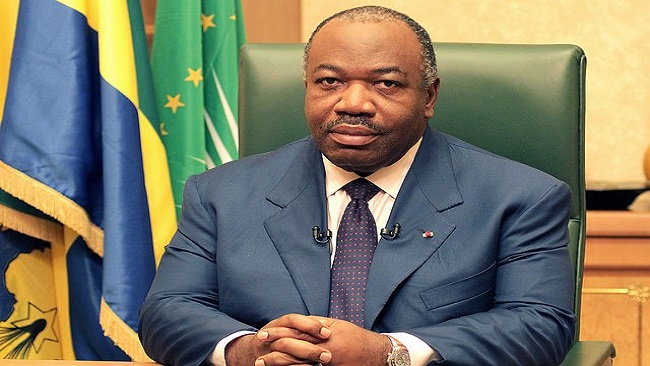
ICC will not investigate post-election violence in Gabon
The International Criminal Court will not open a formal investigation into claims of post-election violence following the disputed 2016 presidential election, the ICC’s chief prosecutor said Friday.
“There is no reasonable basis to believe that the acts allegedly committed in Gabon in the context of the 2016 post-election violence” amounted to crimes against humanity that the court is mandated to investigate and prosecute, Fatou Bensouda said in a statement.
“The legal requirements for opening an investigation into the situation in the Gabonese Republic (“Gabon”) have not been satisfied,” the statement concluded.
There is no reasonable basis to believe that the acts allegedly committed in Gabon in the context of the 2016 post-election violence” amounted to crimes against humanity that the court is mandated to investigate and prosecute.
The re-election of President Ali Bongo in August 2016, by just a few thousand votes, led opposition leader Jean Ping to accuse the administration of electoral fraud.
Violence broke out days after the vote, and opposition figures say that dozens were killed in the ensuing clashes. The official toll was only four dead according to the earlier ICC report.
Ping and 15 non-governmental organisations had complained about the violence and Bensouda’s office carried out a preliminary examination into the accusations.
The prosecutor said Friday that the court’s decision “by no means diminishes the seriousness of the violent acts and human rights violations that appear to have occurred in Gabon in the course of the post-election crisis”.
Should new information come to light “warranting the reconsideration of my Office’s conclusions, the preliminary examination could be re-opened.” legislative elections in Gabon are scheduled for October, 2018.
AFP
Campaigns Start in Cameroon’s Presidential Poll
Campaigning for Cameroon’s October 7 presidential election officially begun Saturday. Opposition parties have failed to agree on a single candidate to face incumbent President Paul Biya and are suspicious of each other as they maneuver to unseat the man who has ruled Cameroon since for more than three and a half decades.
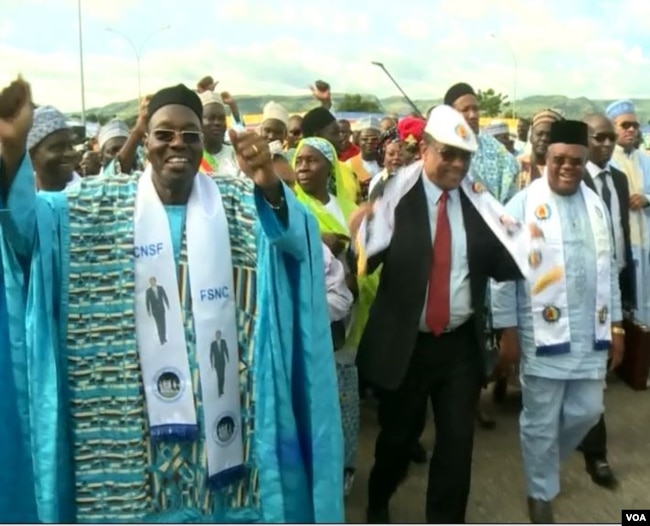
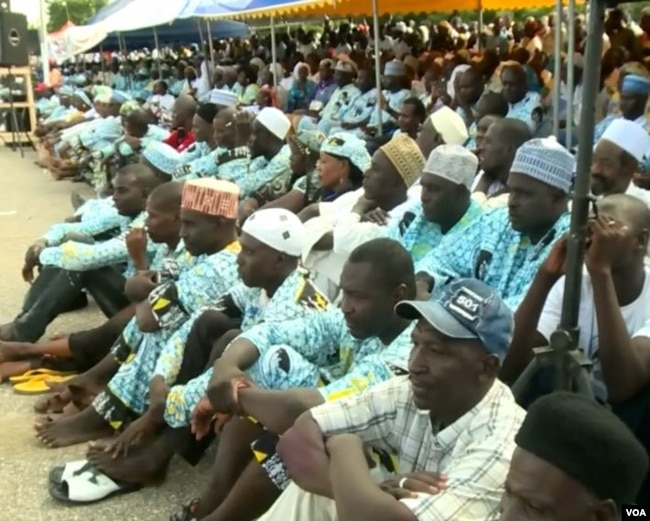
Thousands of people march through the streets of the northern Cameroon town of Garoua, singing and pledging their support for Paul Biya as campaigns for the October 7 presidential election begin. The people are from the ruling Cameroon People’s Democratic Movement (CPDM), and 20 other political parties whose leaders, last July, announced that they had endorsed the candidacy of Biya and had asked their supporters to vote for him.
The National Salvation Front party of Cameroon’s communication minister, Issa Tchiroma, is one of the parties that stands strong in support of Biya. Tchiroma says Biya is the only one seen as protecting Cameroon’s interest.
He says people are against Paul Biya and criticize him daily or attack his policies simply because he has been protecting the country’s riches from foreign predators. He says people are offering their unconditional support to Biya because he has pledged that as long as he lives and as long as he has the support of the Cameroonian people, he will protect all natural resources and riches for future generations.
Tchiroma spent 6 years in prison after he was arrested on 16 April 1984 for involvement in a coup attempt against Biya. When he regained freedom in 1990, he campaigned against Biya, but surprisingly Biya appointed him minister of transport in 1992 in what was viewed as a way of dividing and weakening the opposition.
Since then, the country’s opposition has remained fractured, with eight candidates running against Biya in the presidential poll.
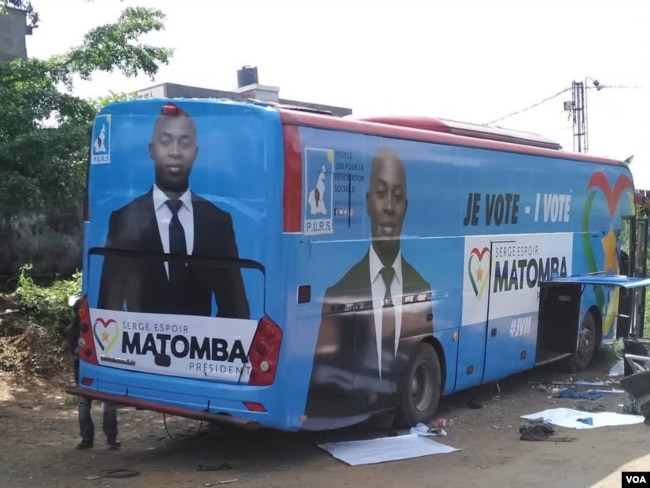
Serge Espoire Matomba, candidate of the P.U.R.S. party, says even though campaigning has started, he still hopes, in talking with other contenders, the opposition will agree on a single candidate.
“I speak with Professor Maurice Kamto, I speak with Akere Muna, I speak with Osih Joshua, I speak with Cabral Libi. That means we are still working on it.”
Maurice Kamto of the Cameroon Renaissance Movement party says he will not agree to surrender his candidacy to someone else.
“Why should I abandon my candidacy and line up behind another one, no. I am a leader of a political party, I am not standing on my own.”
Twenty-eight candidates filed to compete in the presidential election. Cameroon’s elections management body ELECAM accepted nine, including Biya’s candidacy.
Party leaders have traded blame for their failure to unite.
The main opposition candidate Joshua Osih says he suspects some of the candidates are sponsored by Biya to keep the opposition fractured.
The 85-year-old Biya, who has led the central African country since 1982, is favored to win another seven-year term. That would take his rule 2025.
Culled from the VOA
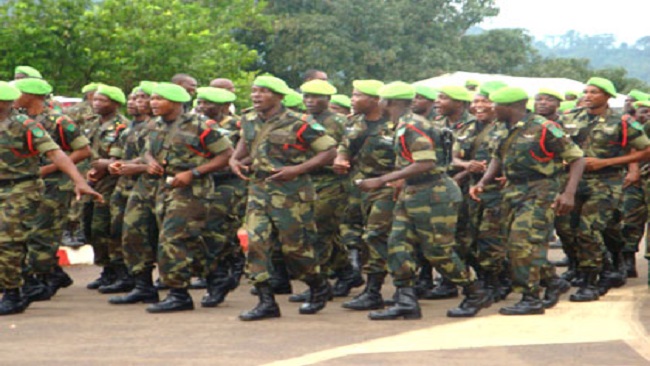
Deployment of troops in Anglophone neighbourhoods in Yaounde, an intimidation of Ambazonians
Cameroon’s Defence Minister, Joseph Beti Assomo has reportedly issued a ministerial order requesting the Francophone dominated Secret Service and the army to place all Anglophone neighborhoods in Yaoundé under surveillance. The directive was detailed in a confidential memo bearing the signature of the French Cameroun politician.
Local media houses in Yaoundé have also reported that Minister Joseph Beti Assomo made the decision following intelligence that Southern Cameroons secessionists had taken up residence in some neighbourhoods in the nation’s capital.
Joseph Beti Assomo cited popular Anglophone residential areas such as Obili, Biyem-Assi and Etoug-Ebe in the ministerial order. Cameroon Concord News understands Yaounde is now struggling with an influx of Southern Cameroons civilians who are fleeing the war.
Ever since the crisis in Southern Cameroons started, the Biya regime has raided Anglophone settlements in Yaoundé several times and carried out massive arrests of many without identification papers. Many of those arrested have never been seen or heard again.
Minister Beti Assomo says the security alert and deployment of troops in Anglophone areas in Yaounde will run from October 1st to 7th, after the Presidential election.
By Rita Akana
Scores of French Cameroun soldiers killed in deadly wave of violence in Bafut
Scores of French Cameroun soldiers were killed and many others injured in an overnight attack by Ambazonian Restoration Forces in Bafut. Our chief intelligence officer in Bamenda reported that the onslaught against the Francophone government army soldiers was staged by Bafut 7 Kata Boys on Thursday.
A Cameroon government provincial security source who confirmed the news to us but sued for anonymity observed that troops loyal to the Biya Francophone regime in Yaounde were returning from the Menchum County when the convoy of 8 trucks, an armoured vehicle and a caterpillar were ambushed at Mile 24.
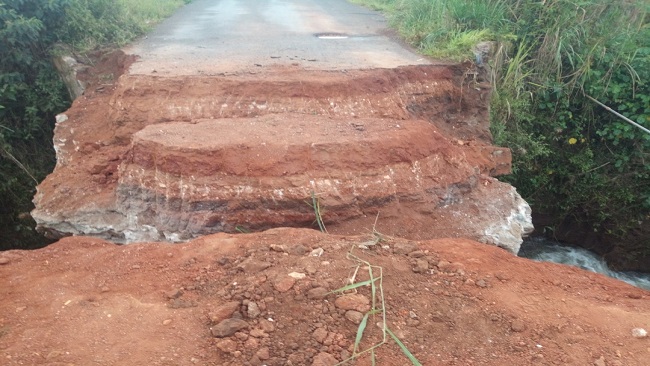
We gathered that fierce clashes erupted when the Southern Cameroons militants attacked the army convoy. Late night reinforcement troops arrived the area but could go across as the Bafut 7 Kata Boys had destroyed the main bridge seen here on photo attached to this report.
The soldiers attempted to repel the attack and wounded some of the attackers, but their number is not known as the militants evacuated their casualties when they withdrew from the scene.
The rugged area leading to Wum has long been a hot bed for Southern Cameroons Resistance forces despite repeated operations by the French Cameroun security forces to hunt them down. Major Key settlements in Southern Cameroons are now without administrative heads.
By Asu Vera Eyere