
Yaoundé says electricity fraud costs Cameroon CFA60 billion a year
The Cameroonian government plans to make the fight against electricity fraud a central pillar of the 2026-2028 restructuring plan for Socadel, the electricity distribution company created after the state took control of former utility Eneo.
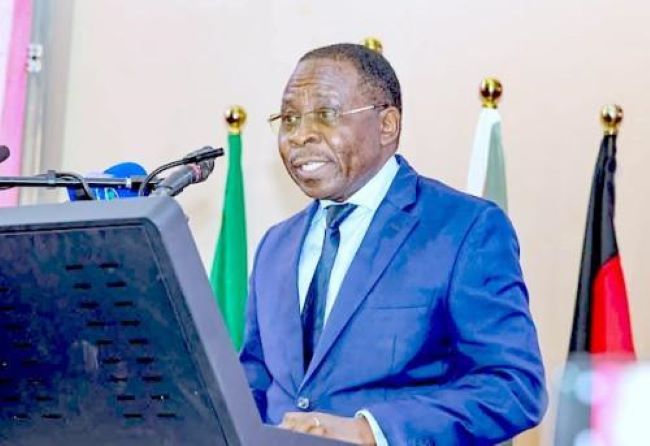
Speaking during a government briefing in Yaoundé on June 18, Water and Energy Minister Gaston Eloundou Essomba said the company will launch an aggressive campaign against electricity theft during its first 100 days of operation.
“Socadel will conduct an intensive fight against fraud through targeted operations in neighborhoods across the country, both day and night, to identify and prosecute offenders,” the minister said. According to government data, field inspections carried out in Yaoundé and Douala uncovered about 3,000 cases of electricity fraud in just three weeks.
“These findings show the scale of the problem. Recovering lost revenue through stronger enforcement has become a key part of efforts to restore the sector’s financial health,” Eloundou Essomba said. “Electricity theft and illegal connections have become a major financial drain that must stop if future investment programs are to be protected.” The government estimates that electricity fraud causes direct losses of about CFA60 billion each year.
That figure now sits at the center of Socadel’s recovery strategy, particularly as the distributor is expected to finance a significant share of the investments needed to improve service quality. The scale of the losses is substantial. According to company documents, former Eneo invested CFA53 billion in 2024, up from CFA33.3 billion in 2023. In other words, annual losses attributed to fraud exceed the utility’s 2024 investment budget and are nearly double its 2023 spending.
Beyond Electricity Theft
The government says tackling illegal connections alone will not be enough. In Cameroon’s Energy Compact, a policy framework developed with international partners, authorities acknowledge that the distribution network continues to suffer from both technical and non-technical losses. These include electricity theft, unmetered consumption, billing errors, and weak revenue collection.
Reducing those losses will require broader investment in network infrastructure, metering systems, and commercial operations. To support the effort, Eloundou Essomba called on consumers to comply with regulations and announced plans to create a national anti-fraud unit.
“It is now imperative for every customer to regularize their situation and contribute to the sustainability and improvement of the energy sector,” he said. “The government will support this effort through the creation of a national anti-fraud brigade whose mission will be to pursue offenders wherever they operate.”
Public-Sector Unpaid Bills Remain a Major Burden
The government also intends to address another longstanding challenge: unpaid electricity bills owed by public institutions. While less visible than illegal connections, these arrears place significant pressure on the distributor’s cash flow and affect the financial stability of the entire power sector. According to Eloundou Essomba, discussions are already underway with the Ministry of Finance to prioritize the payment of electricity bills by government entities in the same way salaries are treated.
The Energy Compact outlines several measures designed to guarantee regular payment by public institutions. These include improving invoice validation procedures, installing smart meters at government facilities, establishing a plan to settle cross-debts between the state and the utility, and introducing regulations governing payment obligations for central government agencies.
The document estimates that central government agencies owe about CFA10 billion in unpaid electricity bills, while other public entities account for an additional CFA72 billion. Together, those arrears total at least CFA82 billion.
The impact extends beyond the distributor itself. Under Cameroon’s electricity market structure, the distribution company collects most revenues from consumers and redistributes funds across the value chain, including independent power producers, the transmission company, fuel suppliers, and technical service providers.
As a result, delays in payment affect the financial health of the entire sector. For the government, the restructuring of Socadel will therefore require more than anti-fraud operations. It will also depend on stronger payment discipline by public institutions, measurable reductions in network losses, and improved management of financial flows throughout the electricity industry.
Without those reforms, the CFA60 billion lost annually to fraud may remain only one symptom of a much deeper financial imbalance.
Source: Business in Cameroon


