
U.S. Forces return to Cameroon
The United States military is finalizing plans to redeploy troops to Maroua, the capital of Cameroon’s Far North Region, ending a roughly 7-year absence and filling a critical surveillance gap left by the 2024 closure of its drone hub in Agadez, Niger. The move, first reported by Africa Intelligence on 5 June 2026 and confirmed by the Cameroon News Agency, marks a strategic pivot for U.S. Africa Command (AFRICOM).
The Salak base in Maroua, home to Cameroon’s elite, Bataillon d’Intervention Rapide (BIR), has undergone refurbishment and is now ready to receive American personnel under the local command of Colonel Albert Bias, with General François Pelene coordinating at the BIR level. The incoming U.S. contingent will focus exclusively on intelligence, surveillance, and reconnaissance (ISR) support, real-time aerial and electronic intelligence fed to Cameroonian units tracking fighters from the Islamic State West Africa Province (ISWAP) and the Jama’atu Ahlis Sunna Lidda’awati wal-Jihad (JAS), the Boko Haram faction that split from the main movement. American troops will not engage in direct combat.
THE NIGER EFFECT
The immediate driver behind the Cameroon redeployment is the loss of Air Base 201 in Agadez, Niger. The $110 million facility, once the largest U.S. Air Force construction project in history, was shuttered on 5 August 2024, after Niger’s military junta expelled nearly 1,000 American personnel following the July 2023 coup. The base had served as AFRICOM’s primary ISR node for the entire western Sahel, flying armed drones over vast stretches of Mali, Burkina Faso, and the Lake Chad Basin. Its closure left a surveillance gap that adversaries quickly exploited. Washington responded by negotiating basing access in several coastal West African states, including the Ivory Coast and Benin, and by strengthening partnerships further east. The Cameroon slot had been occupied by British military personnel since 2021, due to cooperative friction with the BIR command, which led to British forces departing in early 2024, opening the position for American forces to reclaim.
The U.S. history at Salak stretches back to the peak of the original Boko Haram campaign. In October 2015, President Barack Obama authorized the deployment of up to 300 troops to Cameroon. The American forces established and operated a drone base in Garoua, where unarmed MQ-1C Gray Eagle drones (an army-specific variant of the Predator line) were used to maximize 24-hour regional surveillance coverage, track militant movements, and feed targeting data to the Multinational Joint Task Force. U.S. forces withdrew from Salak around late 2019, partly as a result of systemic torture and illegal detentions conducted by the BIR at Salak.
The U.S. has simultaneously established operations at Bauchi Airfield in northeastern Nigeria, deploying around 200 personnel alongside MQ-9 Reaper drones, a platform with roughly four times the payload and twice the endurance of the older Predator in March 2026. The drone hubs operating from Bauchi and the refurbished base in Salak can provide overlapping coverage of the Lake Chad Basin without either platform needing to fly from a distant coastal base. Electronic intelligence gathered at Salak feeds Cameroonian units directly, reducing the time between detection and action, a gap that has historically allowed ISWAP units to dissolve before conventional forces can respond. Nigeria’s National Security Adviser, Mallam Nuhu Ribadu, followed with a 3-day working visit to Washington in early May 2026, cementing the parallel Nigeria partnership at the senior political level.
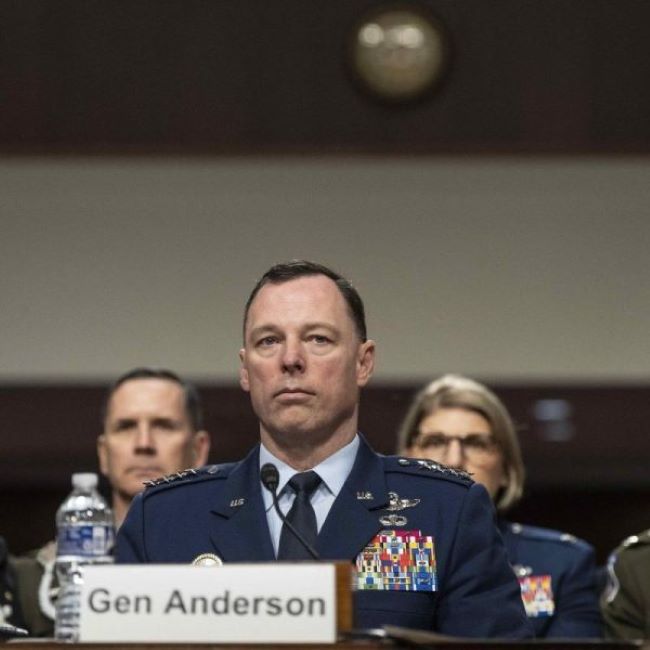
AFRICOM Commander General Dagvin Anderson visited Yaoundé, Cameroon, in September 2025. He held meetings with Cameroon’s President Paul Biya and Defence Minister Joseph Beti Assomo, reinforcing what AFRICOM described as Cameroon’s status as “a key security partner”. The 2026 U.S. Counterterrorism Strategy, which underpins both deployments, moves away from large independent footprints toward a model built on partner-force development, intelligence sharing, and capacity building under host-nation command authority.
The Cameroon footprint fits within a larger, coordinated AFRICOM push across the Lake Chad Basin. The ISR architecture now taking shape treats the region as a single operational theater. The redeployment gives AFRICOM a wider aperture to watch that economy move and, in time, to help Cameroonian and Nigerian forces interdict it.
Culled from Military.Africa


