
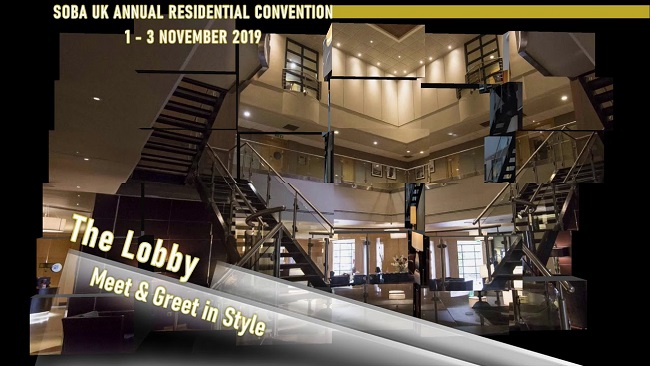
UK: SOBA Residential Convention 2019 kicks off in grand style in Colchester
Hundreds of people including leaders, proprietors, media gurus from across the world have converged on the Five Lakes Resort in Colchester for the SOBA Annual Residential Convention 2019.
This item is still developing!
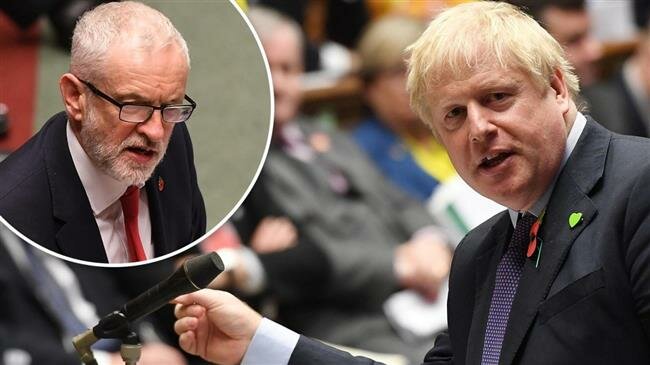
UK: Brexit Party’s ultimatum to PM may help Labour’s run in election
The Brexit Party leader’s election ultimatum to the prime minister has enough momentum to place Labour leader, Jeremy Corbyn as the next premiere.
Nigel Farage on Friday criticized Prime Minister Boris Johnson’s new Brexit deal as nothing but a surrender treaty originally penned by former Prime Minister, Theresa May, while giving the PM a 14 November deadline to agree on a new “Leave Alliance”.
The alternative would be to unleash Brexit Party candidates in every seat in England, Scotland and Wales, he warned.
The move would produce a split in the Conservative vote at the snap poll on 12 December, Mr. Farage said.
Recent surveys have speculated that after the general election, no single party will hold a majority of seats in parliament.
The Conservatives are projected to fill 35% of seats in parliament after the general election, while the Brexit Party is projected to win 13% of seats, according to a recent YouGov survey.
If the Brexit Party splits the Leave vote, Labour leader, Jeremy Corbyn, could end up as the new prime minister. Mr. Corbyn is hoping to curry support from the Scottish National Party and Liberal Democrats, who may be able to act as a “kingmaker” when the final results come in.
On Tuesday, UK lawmakers unanimously agreed to hold a December general election in a bid to resolve the Brexit paralysis. The motion was subsequently approved by the House of Lords and then the Queen.
The last national vote in 2017 ended in a “hung Parliament”, making it difficult for the government to pass legislation.
The ruling Conservatives hope to improve their current Brexit fiasco by gaining a clear majority in the upcoming election.
The EU has imposed a 31 January deadline for Boris Johnson to hammer out a divorce deal.
Source: Presstv
Has Biya’s National Dialogue delivered solutions to the Ambazonia crisis?
One month after Cameroon’s hyped Grand National Dialogue, the prospect of peace in the country’s Anglophone regions is still distant.
President Paul Biya called for national dialogue, and his government organised talks that took place from September 30 to October 4, leading to the adoption of dozens of recommendations to restore peace.
The five days of talks were boycotted by most separatist leaders, but gathered more than 1,000 participants. They recommended “special status” for the North West and South West regions, home to most of the anglophone minority that makes up 16 percent of Cameroon’s population.
What the dialogue achieved
Biya, who has maintained authoritarian rule since 1982, hailed the resolutions from the dialogue as “rich and varied”. He promised that they will be “the object of attentive and diligent examination with a view to implementing them.”
George Ewane, the spokesman for the national dialogue said that 58 fighters had laid down their arms in the South West earlier this month.
“The situation gets better by the day… The grand dialogue has brought much comfort to people’s hearts.”
An expert group is currently working on “the content of the special status” and the government is drawing up legislation to give shape to such status in practice, Ewane said.
“We would like the bill to be put to parliament during the next parliamentary session,” he added, which is in November.
Absent from the dialogue amid talk of his failing health, Biya surprised many by ordering the release of 333 detainees linked to the crisis, as well as 102 opposition activists arrested during peaceful protests against his re-election in 2018.
Those freed included the president of the Movement for the Renaissance of Cameroon (MRC), Maurice Kamto, who challenged Biya at the polls and was released after eight months in jail.
What the dialogue is yet to achieve
According to Blaise Chamango, an activist in Buea, the capital of the South West region, schools in some districts “remain closed and inaccessible,” while “dead city” protest strikes imposed every Monday by separatist forces have not stopped.
“The population in the crisis zones is still confronted with the same realities as prevailed before the dialogue,” he said.
Several attacks by armed groups have been reported in the past weeks, notably in the North West, reputed to be the more rebellious.
“Atrocities have resumed strongly in Bamenda,” the North West regional capital, Cameroon state radio declared last week.
The anglophone population remains “rather sceptical”, said Chamango, “because they no longer have confidence in the government.”
The country’s opposition leader Kamto argued that peace required “direct talks with the political representatives of the armed groups that control the terrain”.
“The grand national dialogue does not seem to have brought a new and lasting solution to the demands of the anglophones regarding the shape of the state,” Kamto said as he came out of prison.
At the end of August, the most influential separatist chief, Julius Ayuk Tabe, was given a life jail term by a military court in Yaounde, with nine of his supporters. From jail, he dismissed the dialogue as a “non-event”.
But government spokesman Rene Emmanuel Sadi has said: “We don’t envisage any dialogue more inclusive than the one… that just took place in Yaounde.”
The Anglophone crisis
Armed anglophone separatist forces have clashed with government troops almost daily over two years of escalating conflict in the North West and South West regions of the central African country.
The population has been hostage to the violence, which has claimed more than 3,000 lives in English-speaking parts of the mostly francophone country, according to the International Crisis Group. More than half a million people have abandoned their homes.
The language split is a vestige from federation in 1961, a year after independence, when a British-ruled territory on the Nigerian border joined with the former French Cameroons.
The federal system was replaced in 1972 by a united republic. Some separatists have long argued that centralised francophone power neglected the anglophone regions. In 2017, the tension erupted into violent conflict.
AFP
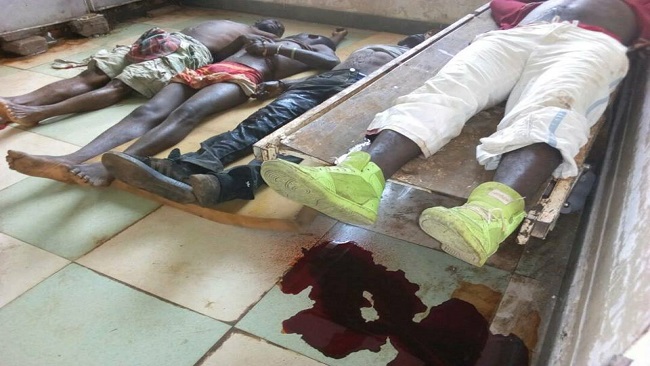
Death toll in French Cameroun war on Southern Cameroons hits 20,500
The French Cameroun-led war on Southern Cameroons has killed more than 20,500 people since the Francophone leader Paul Biya declared war on the 30th of November 2017, an Ambazonia Interim Government (IG) database project that tracks La Republique du Cameroun violence in the Federal Republique of Ambazonia has revealed.
The Ambazonia leader President Sisiku Ayuk Tabe earlier made a similar revelation during a conversation with the Paris-based Jeune Afrique, saying that as a result of the on-going genocide in the Southern Cameroons (Ambazonia), an estimated 20,000 people have been killed, over 280 towns and villages have been burnt down, over 120,000 people are seeking refuge in Nigeria and further afield, over 1million people are internally displaced or living in bushes and over 3,000 persons incarcerated in prisons and detention facilities.
The Southern Cameroons Interim Government also noted that over 4.5. Million Southern Cameroonians are at risk of famine. The IG report said the well documented statistic has made the Southern Cameroons conflict the deadliest ever since the genocide in Rwanda.
A spokesperson for the exiled Ambazonia Vice President Dabney Yerima was quoted as saying that the post Major National Dialogue period remains the most lethal month, with over 500 reported killed in Menchum, Bui and Bali.
Immediately after his meeting with French President Macron in Lyon, France, French Cameroun head of state President Biya ordered the Francophone dominated army to carryout raids in Mezam, Manyu and Ndian counties.
The Ambazonia Interim Government also said French Cameroun soldiers from Beti-Ewondo and Bulu extractions were directly responsible for more than 19, 000 Southern Cameroons civilian deaths over the past three years.
The IG data which was handed to Vice President Dabney Yerima by the department for Homeland Security last week, covers everything from shelling and ground battles involving elements of the French Cameroun’s Rapid Intervention Battalion (BIR) and the French Cameroun gendarmerie.
Cameroon Intelligence Report understands that the figures do not include Southern Cameroonians who have died in the humanitarian disasters caused by the Biya war, particularly those living in the bushes.
US President Donald Trump on Thursday wrote to congress about his decision in accordance with section 506A(a)(3)(B) of the Trade Act of 1974, as amended (19 U.S.C. 2466a(a)(3)(B)) to terminate the designation of La Republique du Cameroun as a beneficiary sub-Saharan African country under the African Growth and Opportunity Act (AGOA).
“I am taking this step because I have determined that the Government of Cameroon currently engages in gross violations of internationally recognized human rights, contravening the eligibility requirements of section 104 of the AGOA” President Trump said.
The Biya war has also taken a heavy toll on Southern Cameroons infrastructure, destroying hospitals, schools, and agro-industrial plants.
France and the Buhari administration in the Federal Republic of Nigeria are the main supporters of the Biya regime with the French government providing Yaounde with money, training and logistical support.
By Asu Isong with additional reporting from Chi Prudence Asong
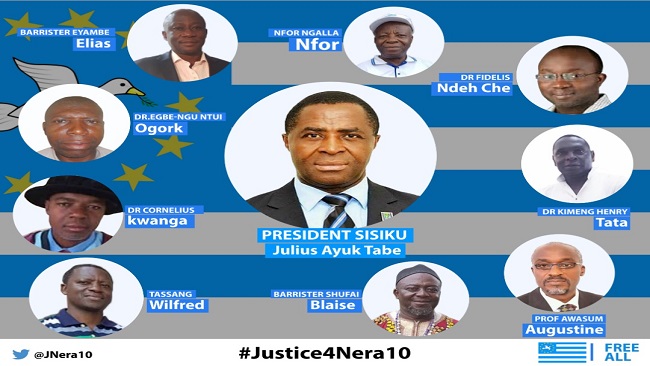
Nera 10: Biya’s selective amnesty dashes hopes of lecturers’ release
Observers of Cameroonian politics and higher education are baffled and disappointed by President Paul Biya’s decision not to include the six university teachers abducted from Abuja, Nigeria, and deported back to Cameroon in 2018 in his recently-granted amnesty for political prisoners.
Biya’s general amnesty announced in early October saw the unconditional release of 333 political prisoners, including Maurice Kamto, a professor of public law and former dean of the faculty of law at the University of Yaoundé and later faculty of law at the University of Ngaoundéré. He was jailed in January 2019 along with about 200 of his supporters because he contested last year’s presidential elections and claimed to have won.
Academics in the faculty of law at the University of Nice in France, where Kamto is an alumnus, and others at the Sorbonne and in Yaoundé universities as well as influential international jurists mounted pressure on both the French and Cameroonian governments to effect the unconditional release of Kamto.
“High profile colleagues in law circles both in Cameroon and France had to mount a lot of pressure on Paul Biya that he should use the opportunity of the flexible amnesty umbrella to free Maurice Kamto,” a professor of international relations at the University of Yaoundé who requested anonymity told University World News.
National dialogue
The amnesty came after Biya’s “National Dialogue Conference” which started on the last day of September and which brought together representatives of political parties and members of civil society organisations to discuss the demands emanating from the English-speaking part of the country for a return to the 1961 Constitution which guarantees federalism and equality between English- and the French-speaking regions.
It is this same protracted conflict that led to the detention of the forementioned academics in a hotel in Abuja, Nigeria, where they had apparently gathered to discuss the humanitarian situation facing Anglophone Cameroonian refugees in Nigeria.
Among those deported was Dr Sisiku Julius Ayuk Tabe of the American University of Nigeria in Yola, who is reportedly the first self-proclaimed president of ‘Ambazonia’, a breakaway state declared in October 2017 in two English-speaking regions of Cameroon.
The academics were among 47 separatists arrested at the same time. They were deported to Yaoundé where they were tried by a military tribunal, despite their civilian status, and sentenced to life imprisonment. The move prompted a flurry of appeals from within Cameroon and abroad.
Hopes for the release of the academics were high after National Dialogue participants recommended to Biya that all political prisoners should be unconditionally pardoned and released under the amnesty to allow wounds to heal.
Reasons for exclusion
In an exclusive interview via WhatsApp from Yaoundé, Barrister Shufai Blaise, the legal counsel for the university teachers, explained what he believed were the technical reasons for the government’s exclusion of the teachers from the amnesty.
“Those released from detention were either awaiting trial or their matters are pending in court. Thus President Paul Biya’s amnesty decree is a type of ‘nolle prosequi’ – in other words an order to stop further prosecution. Most of those released, if not all, were being prosecuted for misdemeanours,” he told University World News.
“These university teachers were tried and sentenced. This places them as a very special case. The president, if he so wishes, may make a separate and distinct amnesty order to release them. However, those five lecturers are considered what I called important bargaining chips for future negotiations. President Paul Biya is not in a hurry to release them now. They would be relevant in future negotiations,” he said.
Blaise described the academics as core members of a bigger political organisation fighting for, at the very least, the revival of the 1961 Constitution whose principles are those of federalism and equal rights between Anglophone and Francophone Cameroon.
He said there was enormous pressure from international organisations not only to release the lecturers but also to get the two parties to the negotiating table with a view to finding a permanent solution to the crisis.
Fear and uncertainty on campuses
Meanwhile, the continued detention of the academics has created an atmosphere of uncertainty and fear at the two Anglophone universities in Cameroon. At the universities of Buea and Bamenda there is a palpable air of fear developing because of the presence of security agents on the two campuses.
“Many of the university teachers in these two universities have taken refuge in Nigerian universities near the border where they have compassionate colleagues. Many Anglophone Cameroonian students have sat for admission examinations into Nigerian universities because of disruption of academic programmes in these two Anglophone universities in Cameroon,” said Dr Johnson Akpan, a physics lecturer who fled the University of Bamenda and is now resident in Calabar, a university town in neighbouring Nigeria.
The National Executive Council of the Academic Staff Union of Universities (ASUU) in Nigeria is considering a petition to the African Commission on Human and People’s Rights on the unlawful abduction from Nigeria of the university teachers.
The union is also planning to protest to the African Union the refusal of the Cameroonian government to obey a court order issued by a Nigerian court demanding the return of those abducted lecturers back to Nigeria.
Culled from University World News
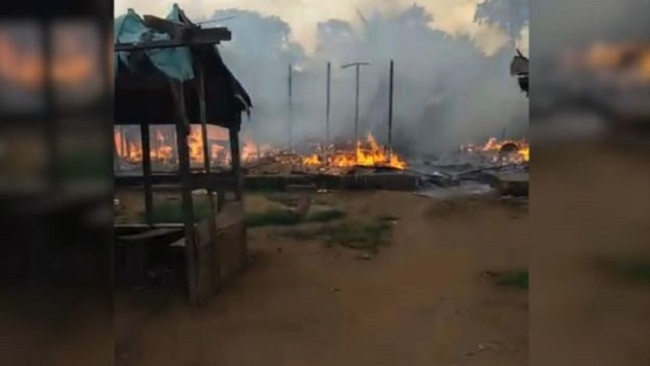
Cameroon is still a far cry from peace
Anglophone fighters have clashed with government security forces almost daily in the past two years of the conflict in the English-speaking Northwest and Southwest regions of Cameroon, a mostly Francophone country.
A month after the government called a five-day National Dialogue to try to stop the violence, it appears the violence is intensifying rather than abating.
“Just this week, there were several accounts of attacks on government installations and police and soldiers being killed by ‘Ambazonia’ fighters,” reported DW journalist Eyong Blaise, referring to the Anglophone seccessionist forces named after their self-proclaimed independent state, Ambazonia.
Blaise also said, there were reports of Cameroonian soldiers burning homes and villages in the Northwest region.
“In terms of security, from both the side of the government forces and the Ambazonian fighters, nothing has changed since the dialogue ended,” Blaise said on the phone from Buea, the capital of the Southwest region.
Talks fails to deliver
The government of President Paul Biya invited more than 1,000 participants, including lawmakers, priests, teachers and civil society, to a National Dialogue held between September 30 and October 4.
Dozens of recommendations were adopted.
However, rebel leaders have criticized the resolutions as being decided without the presence of key stakeholders. Anglophone separatist leaders living outside of Cameroon refused to attend the talks amid fears they would be arrested on terrorism charges if they entered the country. They had called for such negotiations to be held in a foreign country with UN mediators.
“At the end of the day, [the National Dialogue] was more of a smokescreen gathering put together by members of the [CPDM] ruling party and it did not represent the aspirations of the people on the ground,” journalist and political analyst Fah Elvis Tayong told DW on the phone from Douala, Cameroon’s commercial capital.
Although the government has said it is working on implementing the resolutions to restore peace, nothing concrete has yet been announced.
Suffering population
“Before the dialogue, people on the ground — taxi drivers, shopkeepers and market women — thought it was going to be a platform where change was going to come. … But it hasn’t profited them so far,” DW journalist Blaise said.
The Anglophone population has been suffering the brunt of the conflict.
Around a third of the Anglophone population need urgent humanitarian assistance and a tenth (some 536,000 people) have been internally displaced, according to the United Nations, since the violence erupted in late 2017.
80% of schools are still shuttered as a result of a ban on education imposed by militia groups and an estimated 40% of health care centers in the Southwest region aren’t functioning.
Desperate to leave
Cameroon has seen an unprecedented increase in the number of people asking for passports.
According to the Delegate General for National Security, Martin Mbarga Nguele, so many people are applying for the document that processing time has soared from one week to one to two months.
Foreign embassies in the country are also being overwhelmed by Anglophone Cameroonians requesting visas.
The ambassador of France to Cameroon, Christophe Guilhou, for example, recently told journalists that in the past five months, visa applications had soared from several hundred a month to several thousand.
One of the some 300 people waiting outside the German embassy in Yaounde this week, 41-year-old Damian Che says he wants to leave Cameroon because he doesn’t believe the separatist crisis will end soon.
Che’s wife and two daughters were killed in the conflict and his compound was burnt down by the military.
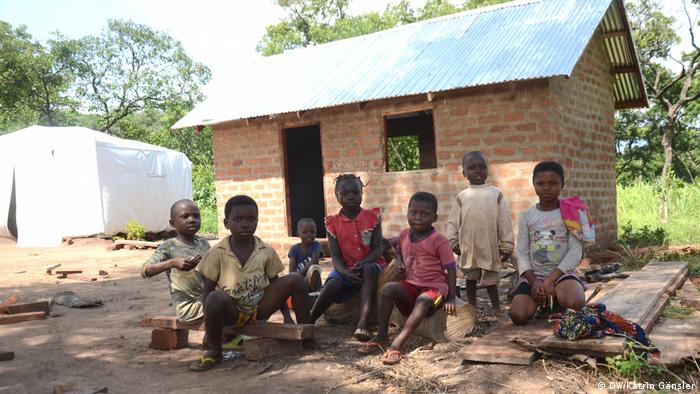 Tens of thousands of Cameroonians have fled to Nigeria to escape the violence in the English speaking regions
He says people were “so happy” when President Biya first announced the dialogue because they hoped it would bring an end to the war.
“But unfortunately, the dialogue did not yield fruits,” he told DW.
For some, the situation is so bad they are even considering attempting the dangerous trek to Europe and enter illegally.
“If you are a detained in Europe, you are better off than someone who in the Southwest or Northwest regions of Cameroon because you can be killed there at any moment,” 19-year old Sylvie Kalga told DW. “So I prefer to take the chance to go to Europe and be detained rather than to stay in Cameroon and be killed.”
The numbers of those fleeing over the border to Nigeria to seek refuge have also jumped with UNCHR counting 42,600 refugees there.
Release of detainees
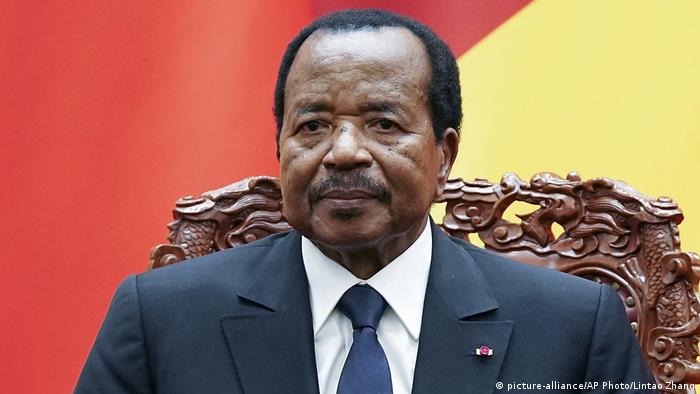 Cameroon President Paul Biya, the world’s longest serving elected leader, spends months at a time vacationing in Switzerland
Biya, who has ruled Cameroon for 37 years, has struggled to contain the conflict. The 86-year-old rarely speaks in public or meets his government and spends months each year retreating and living in the luxury five-star Intercontinental Hotel in Geneva, Switzerland.
Absent from the dialogue amid talk of his failing health, Biya announced during the talks that 333 detainees arrested in connection with the crisis would be released.
Analyst Fah Elvis Tayong dismissed the announcement as a “cosmetic solution, which is far from resolving the conflict.”
He said Biya’s government currently needed to release hundreds of others held in prison,including 10 leaders who were sentenced in August to life in prison on terrorism charges, Biya should also create an environment where Anglophone diaspora leaders are able to attend talks.
“A proper dialogue still needs to take place if the government wants to bring an end to the bloodshed,” he said.
Culled from DeutscheWelle
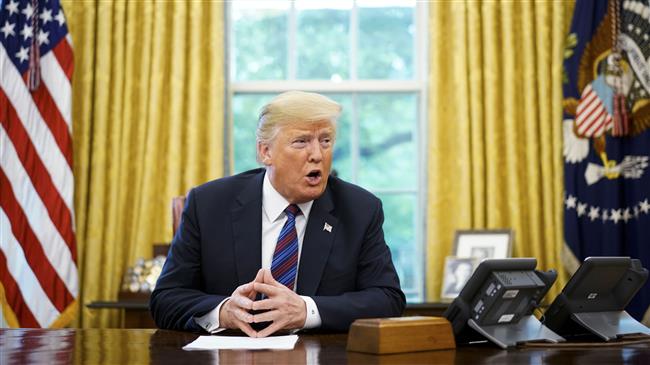
President Trump terminates the designation of Cameroon as a beneficiary under AGOA
US President Donald Trump has sent a letter to congress in which he expressed his administration’s decision to terminate the designation of La Republique du Cameroun as a beneficiary nation under the African Growth and Opportunity Act. Below is the full text:
In accordance with section 506A(a)(3)(B) of the Trade Act of 1974, as amended (19 U.S.C. 2466a(a)(3)(B)), I am providing notice of my intent to terminate the designation of the Republic of Cameroon (Cameroon) as a beneficiary sub-Saharan African country under the African Growth and Opportunity Act (AGOA).
I am taking this step because I have determined that the Government of Cameroon currently engages in gross violations of internationally recognized human rights, contravening the eligibility requirements of section 104 of the AGOA.
Despite intensive engagement between the United States and the Government of Cameroon, Cameroon has failed to address concerns regarding persistent human rights violations being committed by Cameroonian security forces. These violations include extrajudicial killings, arbitrary and unlawful detention, and torture.
Accordingly, I intend to terminate the designation of Cameroon as a beneficiary sub-Saharan African country under the AGOA as of January 1, 2020. I will continue to assess whether the Government of Cameroon engages in gross violations of internationally recognized human rights, in accordance with the AGOA eligibility requirements.
DONALD J. TRUMP
THE WHITE HOUSE,
October 31, 2019.
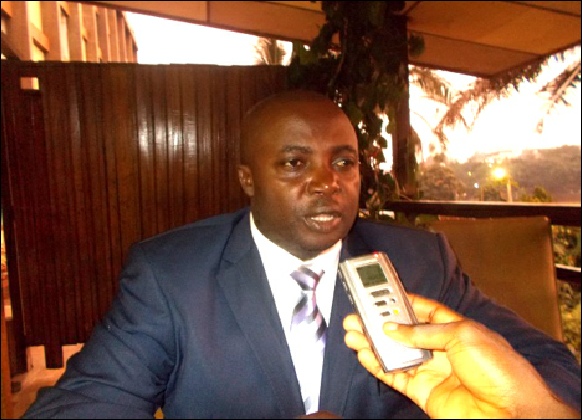
Federal Republic of Ambazonia: Death of Patrick Ekema, tough S.Cameroons opponent
The controversial mayor of the regional capital of the Southwest, Patrick Ekema, died at the age of 46 on Sunday, 27 October in a private clinic in Douala, following a heart attack.
The mayor of Buea was one of the pillars of the struggle against the “Ambazonian” independence fight.
The news of his death, which began circulating in the morning, was confirmed at midday by the public broadcasting office. According to reports, Ekema was rushed to a clinic in Douala’s Bonapriso district early on Sunday morning.
His death marks the departure of one of the major actors in the crisis that has been shaking the English-speaking regions of Cameroon since the end of 2016.
As mayor, Ekema was a fervent supporter of the struggle against the Ambazonian independence movement. He built a reputation as a breaker of the Ambazonian supporters “ghost city” policy, usually imposed every Monday by armed Ambazonian militias.
Radical and controversial
In his drive to thwart the Ambazonian movement, he spared no effort to restore order in his city, to the point of taking controversial measures. His decision to permanently seal shops and stores that remained closed on the days of “ghost cities” was widely criticised and eventually repealed.
Throughout his life, Ekema paid a heavy price for his radical stances. In September 2017, the residence of the municipal magistrate was attacked by angry demonstrators. The mayor managed to save the magistrate’s life by firing warning shots to disperse the crowd.
Following this episode, he found it necessary to acquire a close-knit guard detail, often numbering ten people.
In September 2018, it was reported security forces alerted to the presence of armed individuals in the Sawa Hotel in Douala, stormed the establishment, causing panic in the city, before realizing that they were the bodyguards of the Mayor of Buea.
Ekema was renowned for his shock statements. At one point, he announced he wanted to kidnap the relatives of the independence fighters to force the resumption of school in the English-speaking area.
Patrick Ekema made his last public appearance during the Grand National Dialogue initiated by Paul Biya, at the end of September.
Source: The Africa Report
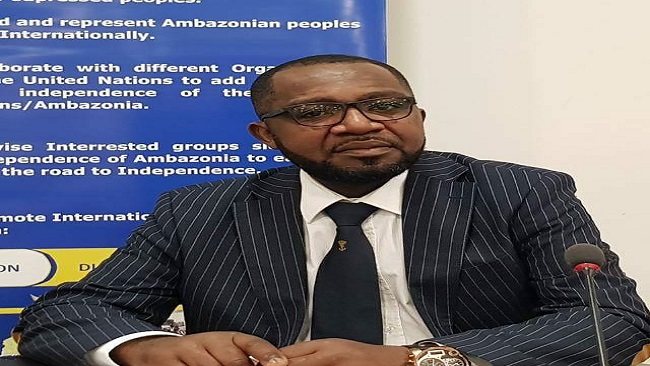
French Cameroun military attacks, Atanga Nji Militia atrocities make us stronger: Ambazonia Vice President
Vice President Dabney Yerima has slammed the Biya Francophone regime over deploying of additional troops to Southern Cameroons, stressing that Yaoundé’s genocidal measures and campaign to exterminate the people of the Federal Republic of Ambazonia is simply solidifying Southern Cameroonians and their Interim Government’s resolve.
Comrade Dabney Yerima noted during this week’s revolutionary updates to the people of Southern Cameroons that the assault against Ambazonians by the French Cameroun government is on-going. He added that the so-called Major National Dialogue was designed for French Cameroun to continue to impose its will on Ambazonians.
“Southern Cameroons deputies serving in French Cameroun and political elites have blatantly refused to go back home and are now pretentiously waiting for the head of state of a foreign country to give them his definition of Special Status or anything that will continue to enslave them” he said.
The Ambazonia exiled leader was also full of praise for the Restoration Forces saying that Southern Cameroons Self-Defense groups have been able to score many victories against the French Cameroun army without support from outside.
Dabney Yerima concluded, “Without the sacrifices that you Ambazonians in Ground Zero are making and support from your fellow countrymen and women in the diaspora, the Ambazonia resistance would not have been able to emerge victorious in many Southern Cameroons counties. The Ambazonia Interim Government and its entire leadership are indebted to you people in Ground Zero.”
By Soter Tarh Agbaw-Ebai