
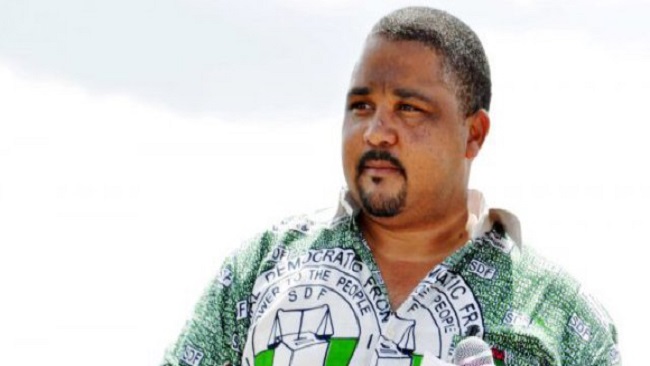
Facing electoral decline, SDF looks to 2027 for a political comeback
The Social Democratic Front (SDF) returned to its historic stronghold of Bamenda on June 13 as the opposition party seeks to rebuild its political base ahead of the 2027 legislative and municipal elections.
The meeting of the party’s National Executive Committee (NEC), chaired by SDF President Joshua Osih, carried both symbolic and strategic significance.
It marked the party’s return to Bamenda after years of disruption caused by the security crisis in Cameroon’s English-speaking regions. It also came at a critical moment for a party struggling to reverse a prolonged period of electoral decline. Founded by the late Ni John Fru Ndi, the SDF is facing one of the most difficult periods in its history. In the October 2025 presidential election, Osih recorded the party’s weakest result to date, confirming a downward trend that had already become evident in previous elections.
Once the country’s leading opposition force, the SDF has also seen its influence shrink at the local and parliamentary levels. The party, which traditionally enjoyed strong support in the Northwest, Southwest, West, and Littoral regions, now holds only a small number of seats in both the National Assembly and the Senate.
Against that backdrop, Osih used the Bamenda meeting to urge supporters to reengage with the party. Addressing a turnout that appeared lower than expected, he warned party members who have remained on the sidelines that they should not expect to secure nominations for mayoral or parliamentary positions under the SDF banner if they fail to participate in the party’s activities.
Osih also framed the return to Bamenda as a political statement. Speaking at the Ntarikon residence of the late Fru Ndi, he argued that fear of returning to Bamenda reflected broader concerns about confronting both the ruling Cameroon People’s Democratic Movement (CPDM) and future elections.
Beyond electoral mobilization, the SDF leadership is also trying to address internal tensions that have weakened the party in recent years. Since taking over as party leader in 2023, Osih has faced criticism from some members over his leadership, electoral performance, and management of internal affairs. Those tensions intensified after the 2025 presidential election, with some party members openly calling for his resignation.
In Bamenda, Osih adopted a conciliatory tone, extending an olive branch to former members and internal critics. He said the party was willing to forgive past disagreements and welcomed the return of former members, arguing that the SDF’s future should take precedence over personal disputes.
The challenge facing the SDF extends beyond internal reconciliation. The party must also redefine its role within an opposition landscape that has changed significantly over the past decade. Some critics accuse the SDF of adopting an overly cautious approach toward the government, making it harder for the party to distinguish itself from other opposition movements.
The 2027 legislative and municipal elections are therefore shaping up as a crucial test. For the SDF, the elections will determine whether it can regain relevance as an organized political force, particularly in its traditional strongholds.
For Osih, the stakes are equally high. His ability to maintain his leadership of the party will depend in large part on whether the SDF can reverse its electoral decline and deliver stronger results at the polls.
Source: Sbbc


