
Breaking News
UN appeals for $184m for Southern Cameroons displaced
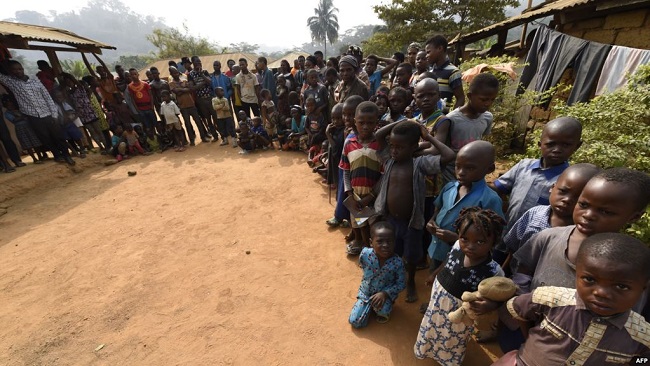
The United Nations on Tuesday called for $184 million (163 million euros) to help more than 400,000 people displaced by the separatist conflict in western Cameroon. “Violent clashes in Cameroon between the military and armed separatists over the past 13 months have forcibly displaced thousands, including across the border into Nigeria,” the UN refugee agency (UNHCR) said in a statement.
“The humanitarian situation continues to deteriorate. And there are fears now that more people will become displaced over the coming months.” The UN estimates that 437,000 have been displaced in Cameroon itself, while over 35,000 have fled across the border into Nigeria — a number that is expected to rise as fighting continues. Of the estimated aid needs, $35.4 million is needed urgently, “for critical life-saving assistance,” the UNHCR said.
The Northwest and Southwest Regions of Cameroon are in the grip of an armed campaign launched by anglophone separatists in October 2017. At least 500 civilians and more than 200 members of the security forces have died in clashes, attacks and a government crackdown, the International Crisis Group (ICG) says. Around a fifth of Cameroon’s population of 24 million are English-speakers. Their presence can be traced back to the colonial era.
After World War I Germany surrendered Kamerun, its principal colony in West Africa, which was then taken over by Britain and France. France was given the greater part of the territory, which became independent in 1960. A year later, the British colony also gained independence. Some of the English-speaking areas opted to join newly-formed Nigeria, while others chose to join the federation of Cameroon.
English-speakers have chafed for years at perceived discrimination in education, law and economic opportunities at the hands of the francophone majority. In 2017, as the authorities refused demands for greater autonomy for the Northwest and Southwest Regions, the anglophone movement radicalised. We must tackle HIV holistically for economic prosperity— Prof Babatunde Salako, Director General of NIMR On October 1 that year, separatists declared the creation of the “Republic of Ambazonia” in the two regions, named after the local Ambas Bay. The declaration has not been recognised internationally.
Source; www.vanguardngr.com
The seven longest-serving African presidents are proof enough that absolute power corrupts absolutely
- They say power corrupts and absolute power corrupts absolutely.
- Some of the world’s longest-serving leaders reside in Sub-Saharan Africa.
- Here are the seven longest-serving African presidents.
They say power corrupts and absolute power corrupts absolutely.
The saying is especially true in Sub-Saharan Africa where some of the world’s longest-serving leaders reside and continue to extend their rule to date using hooks and crooks.
Here are the seven longest-serving African presidents.
1. Teodoro Obiang Nguema – 39 years
Equatorial Guinea’s President Teodoro Obiang Nguema is currently the world’s longest-serving president, with 39 years under his belt since he came into power in 1979 after he toppled his uncle.
2. Paul Biya – 36 years
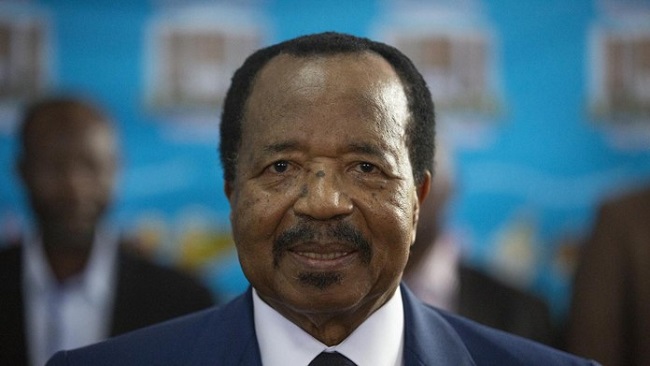
Cameroon’s President Paul Biya’s re-election in 2018 saw him extend his 36-year rule by seven years, effectively making him one of Africa’s longest standing leaders.
The 85-year-old president has been ruling the French West African nation since 1982.
3. Denis Sassou – 34 years
Congo-Brazzaville President Denis Sassou Nguesso has spent 34 years in office, but not in one go.
He first served from 1979 to 1992 and returned in 1997 at the end of a civil war.
He was re-elected again in March 2016 and chances are he could run again when his current term expires.
4. Yoweri Museveni – 33 years
Uganda’s President Yoweri Museveni first took office in January 1986 after winning the war that ousted brutal dictator Idi Amin Dada and since then he has been in power.
He was elected to a fifth term in February 2016 and early this year he was cleared to vie for another term by Members of Parliament from Uganda’s ruling party.
A victory at the next election, in 2021, could extend the 74-year-old Museveni’s rule to 40 years.
5. Omar al-Bashir – 30 years
Sudan’s President Omar al-Bashir has ruled the vast East African country for 30 years after staging a coup in June 1989.
His tenure might, however, be fast approaching its end.
Omar al-Bashir is currently facing his biggest anti-government protests since he came to power which has seen declared a one-year state of emergency and dissolve the parliament.
Last December, mass protests against his three-decade rule erupted in Khartoum over the country’s spiralling economic woes that have over the past year seen inflation rates spike to the third highest in the world.
6. Idriss Deby – 28 years
Chad’s President Idriss Deby took over the northern nation in 1990, giving him nearly 28 years in power.
He won a disputed fifth term in April 2016.
7. Isaias Afwerki – 25 years
Eritreans have not known any other president since the tiny African nation gained independence.
The Eritrean leader Isaias Afwerki has been in power since independence in April 1993, making 25 years.
Source: Pulse.ng
UK: Lawmakers vote to take control of Brexit process
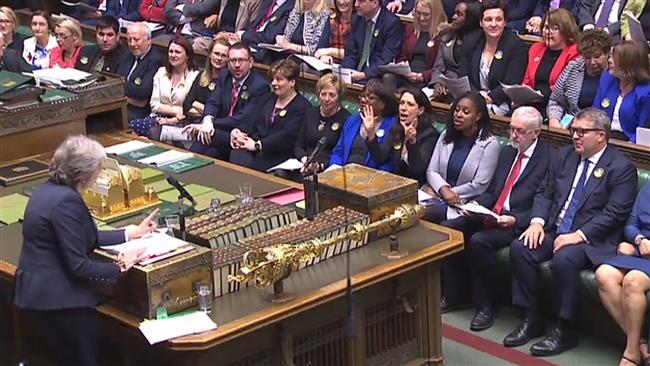
British MPs voted on Monday to play a bigger role in Brexit, giving themselves the power to express their preference for different options in an unprecedented move that the government called “dangerous”.
MPs won a vote that will allow them to seize control of parliamentary business on Wednesday by 329 to 302, with three junior ministers quitting after voting against the government.
Foreign Office minister Alistair Burt and health minister Steve Brine resigned, a government source told AFP, while business minister Richard Harrington announced his decision to leave government on Twitter.
In his resignation letter, Harrington said the government’s approach was “playing roulette with the lives and livelihoods of the vast majority of people in this country”.
But the Brexit ministry said in a statement it was “disappointed” by the vote, adding that it “upends the balance between our democratic institutions and sets a dangerous, unpredictable precedent”.
Three years after Britain voted to leave the European Union, Monday’s vote sets up a potentially crucial clash between government and parliament on the best way of ending a bitter political crisis.
MPs will now have the chance to vote on various options, such as revoking Article 50 and cancelling Brexit, holding another referendum, a deal including a customs union and single market membership or leaving the EU without a deal.
But even if MPs decide a majority course of action, the government is not legally bound to follow their instructions.
“The government will continue to call for realism — any options considered must be deliverable in negotiations with the EU,” the Brexit ministry said.
The prime minister earlier said she was “sceptical” about the process, saying similar efforts in the past “produced contradictory outcomes or no outcomes at all”.
‘National embarrassment’
May admitted Monday she had still not secured the votes needed to get her own, twice-rejected Brexit deal through parliament, raising again the prospect that Britain could crash out of the European Union in just over two weeks’ time.
Anxious at the deepening crisis in London, EU leaders last week agreed to postpone Brexit to avoid a potentially catastrophic “no deal” divorce on March 29, when 46 years of ties were formally scheduled to end.
But they warned that unless May can persuade MPs this week to support her withdrawal deal, Britain must come up with a new plan by April 12 — or leave its closest trading partner with no deal at all.
Opposition Labour leader Jeremy Corbyn said the government was a “national embarrassment”, adding: “We will still face the prospect of a disastrous no-deal Brexit.”
The EU had earlier ramped up the pressure by announcing its full readiness to deal with the “increasingly likely” event of a no-deal Brexit in three weeks’ time.
‘Chicken who bottled Brexit’
The British parliament remains deeply divided over Brexit, reflecting the sharp divisions in the country.
MPs have already voted against a “no deal” Brexit but this remains the default legal position unless they agree an alternative.
May went over her own Brexit scenarios at an emergency cabinet meeting earlier Monday.
It followed a weekend of media reports that her own ministers were trying to oust her.
Most of the alleged plotters are Brexit backers who fear the terms of Britain’s departure will be watered down or even reversed.
“Theresa May is the chicken who bottled Brexit,” former foreign minister Boris Johnson wrote in a weekly column for The Telegraph.
“It is time for the PM to channel the spirit of Moses in Exodus, and say to Pharaoh in Brussels – LET MY PEOPLE GO,” he wrote, leaving some room however for possibly supporting her deal.
What happens to her premiership if parliament favours a more EU-friendly Brexit alternative that contradicts her policies is unclear.
Parliament is thought most likely to rally around the idea of keeping Britain in a customs union with the European Union or its single market.
Both of those policies contradict May’s position.
A customs union would keep Britain from striking its own trade agreements with non-EU countries.
A single market would require the government to go back on May’s promise to regain control of Britain’s borders and migration policy.
(AFP)
Mali: Ethnic violence kills 136, army generals sacked
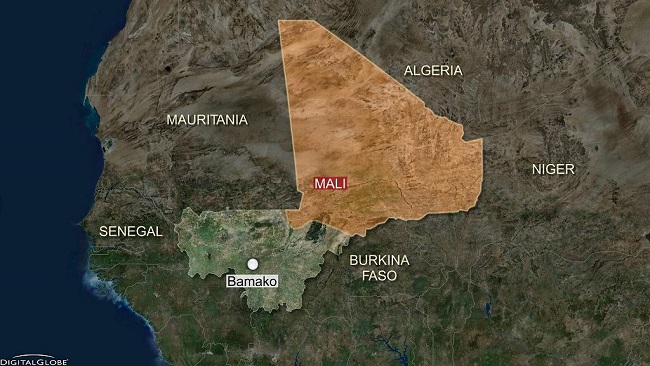
Mali’s government on Sunday announced the sacking of senior military officers and the dissolution of an ethnic militia, a day after the massacre of more than 130 Fulani villagers, including women and children.
Survivors of the attack said ethnic Dogon hunters carried out the deadly raid a day earlier in Ogossagou, a village in central Mali inhabited by the Fulani community.
At least 136 men, women and children were killed in the attack, according to a “provisional toll,” public television ORTM said late Sunday. The television showed images of burned huts and livestock and shell casings in the village.
In the wake of the violence, the army chief of staff General M’Bemba Moussa Keita was removed and replaced by General Abdoulaye Coulibaly, while chief of land forces General Abdrahamane Baby was replaced by Brigadier-General Keba Sangare.
Mali’s Prime Minister Soumeylou Boubeye Maiga said in a statement after an emergency cabinet meeting that President Ibrahim Boubacar Keita had also ordered the dissolution of an anti-militant vigilante group called Dan Na Amassagou.
Some of the group’s ethnic Dogon fighters were suspected of being behind the attack.
The dissolution of the militia was to send a clear message, Maiga told journalists: “The protection of the population will remain the monopoly of the state.”
While local attacks are fueled by accusations of Fulani herders grazing cattle on Dogon land and disputes over access to land and water, the area is also troubled by Takfiri influence.
The Takfiri militants active in the region have consistently tried to exploit a sense of persecution among the Fulani, whose semi-nomadic, pastoral way of life sometimes brings them into conflict with more settled farmers like the Dogon, by arming and training them. Some Dogon traditional hunters in turn took up arms to protect themselves.
The ethnic bloodshed took place less than a week after a deadly assault by Takfiri terrorists on an army post killed at least 23 soldiers, also in Mali’s central region. That attack was claimed by an al-Qaeda affiliate.

A government delegation led by Justice Minister Tiena Coulibaly went to the site of the latest massacre Sunday. They were sent by the president to “tell the people of Ogossagou that what happened here is unacceptable and that it will not go unpunished,” Coulibaly said.
Malians have grown increasingly frustrated by the failure of government forces to protect them from both Takfiri militant onslaughts and ethnic reprisals. But the massacre of civilians at the villages of Ogossagou and Welingara on Saturday, which left the charred bodies of women and children smoldering in their homes, has shocked a population long inured to gratuitous killing.
UN, EU react
The UN Children’s Fund said, “Malian children are paying a heavy price for the intensification of violence.”
“Growing insecurity since 2017 has led to an increase in murders, mutilations and the recruitment of children,” UNICEF said.
For its part, the European Union called for “immediate steps (including) the disarmament and dismantling of all militias” in Mali.
It was the deadliest attack since the end of the 2013 French-led military intervention in the country.
The massacre took place as a delegation from the UN Security Council visited the Sahel region to assess the threats being posed by the Takfiri militants there.
“The secretary general is shocked and outraged” by the bloodshed, Antonio Guterres’s spokesman said in a statement late Saturday.
The UN chief called on the Malian authorities “to swiftly investigate it and bring the perpetrators to justice,” the statement added.
Guterres’s spokesman said the UN mission in Mali, MINUSMA, provided air support to deter further attacks and assisted with the evacuation of the injured.
The attack was launched at dawn on Saturday in the village near the border with Burkina Faso, in a district that has seen frequent inter-communal violence.
(Source: Agencies)
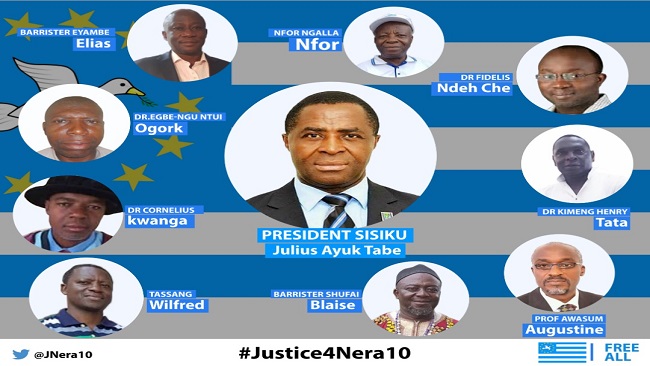
Ambazoniagate: Academics hail court rulings on deported lecturers
Nigerian Academics have welcomed the judgement by the Federal High Court sitting in Abuja ordering the repatriation of six academics from the former British Southern Cameroons (Ambazonia) and four other refugees who were all in Nigeria and who were abducted and illegally deported from Nigeria on January 5th 2018, on frivolous allegations of plotting to destabilize the government of La Republique du Cameroon (LRC) President Mr. Paul Biya. Two separate judgments were handed down by presiding judge, Justice Anwuli Chikere, on 1st March 2019 in connection with the matter.
In the first case – brought by a group of human rights lawyers against the National Security Advisor and Attorney General – the judge ruled that the arrest of 5th January 2018 and subsequent detention of the academics at the National Defence Intelligence Agency(DIA) was illegal and unconstitutional. In the second case – brought by the deportees – the judge ruled that the deportation on 26th January 2018 was illegal and violated the deportees’ rights as guaranteed by the Nigerian Constitution.
Power of the courts
The court ruling has been hailed by the university community and staff unions as a sign that the courts can still protect and defend the rights of foreign nationals and citizens who are either working, residing or are refugees in Nigeria. The Academic Staff Union of Universities (ASUU) has promised to ensure that the judgement is enforced. The academics are part of a larger group of 57 Cameroonian refugees and asylum-seekers who are Anglophone restorationists. Some of them have been living in Nigeria for decades and at least one has a Nigerian wife and children. The university lecturers are: Professor Augustine Awasum, Faculty of Veterinary Surgery & Diagnostic Imaging at the Ahmadu Bello University(ABU) Zaria; Dr. Henry T.Kimeng, Associate Professor of Civil Engineering also at the Ahmadu Bello University(ABU) Zaria; Sisiku Julius Ayuk Tabe, Assistant Vice President and Pioneer Head, Information and Technology, American University of Nigeria in Yola; Dr. Fidelis Ndeh, Assistant Professor and Director, Academic Planning, American University of Nigeria in Yola; Dr. Cornelius N.Kwanga, Senior Lecturer, Department of Economics, Umaru Musa Yar’adua University in Katsina; and Dr. Egbe Ogork, Associate Professor of Structural Engineering, Bayero University, Kano. On the issue of their illegal arrest and detention, the judge ordered the state to pay damages of NGN5 million (US$13,800) to each detainee “as general and aggravated damages for illegal violation of their fundamental rights to life, dignity of person, fair hearing, health, freedom of movement and freedom of association”. On the issue of their deportation, the court ordered the state to pay damages of NGN200, 000. The judge also ruled in both cases that the Nigerian state was under perpetual injunction restraining it from further violation of fundamental rights without lawful justification. She also ordered that the deportees should be returned to Nigeria as soon as possible.
Solitary confinement
Since their deportation from Abuja to the Cameroon capital Yaoundé in January 2018 at the hands of Nigerian and Cameroonian security forces, the deportees were initially kept in solitary confinement at a maximum-security prison facility without access to sunlight, family, lawyers or specialized medical care for 11 months after which they were moved to another maximum – security prison facility with some limited access to family and lawyers. They are yet to be charged or arraigned for any crimes because lawyers in Cameroon have consistently challenged the jurisdiction of the Military Tribunal in LRC to try scholars who faced a death penalty if eventually the ‘kangaroo military tribunal’ brings them to trial. The lawyers argue the composition, jurisdiction, language and historical precedence which makes the court incompetent to hear the case or guarantee a free and fair trial of the academics. As refugees who were abducted, their lawyers have persistently insisted that the national and international laws should be respected and the scholars be returned to Nigeria from where they were kidnapped.
Soon after their deportation, a team of human rights lawyers led by Barristers Femi Falana(SAN) and Abdul Oroh filed a case in the Federal High Court in Abuja challenging their detention and deportation. In their submission they rejected the allegation that the groups were terrorists bent on overthrowing the LRC government. In July 2018, University World News reported that Oroh, who is representing the detainees, said the deportees were members of a political organisation demanding a complete restoration of their homeland, the British Southern Cameroons to complete independence and be free from the annexation by the La Republique du Cameroun.
In an exclusive interview with University World News following the 1st March 2019 judgments, Oroh said he had written to Nigeria’s Attorney General Abubakar Malami, informing him of the judgments.
“In my official letter to the attorney general, I attached a certified copy of the two court rulings on this subject matter. I received a call from the attorney general acknowledging the receipt of my letter. He assured me that my letter was receiving urgent attention and that his ministry would soon comply with the court ruling,” said Oroh. Nigeria’s academic community has welcomed the rulings and hopes are high that the repatriation will be expedited as quickly as possible.
‘The world is watching’
Professor Caleb Abraham from the Faculty of law at the University of Uyo said both Nigeria and Cameroon are signatories of the United Nations Universal Declaration of Human Rights and the African Charter on Human and Peoples’ Rights. “In the light of these rights, the arrest and deportation of our colleagues is illegal and unconstitutional. Therefore, both the Nigerian and Cameroonian governments should implement this court ruling by ensuring these teachers and others are repatriated to Nigeria and their rights in Nigeria are enforced. The entire world is watching,” he said. Professor Adekunle Akinlaja from the Faculty of Law at Ambrose Alli University, Ekpoma, said both President Muhammadu Buhari of Nigeria and President Paul Biya of Cameroon may find it difficult to explain and rationalise their actions on this matter within the provisions of the African Charter on Human and Peoples’ Rights and the UN’s Universal Declaration. “However there is still room to rectify these wrongs,” he declared. Highlighting the lack of irrationality in the government’s actions, Dr Muktar Ismail, based in the Sociology Department at the University of Jos, said Dr Egbe Ogork was married to a Nigerian. “By right they are Nigerians. How would the Nigerian government rationalise its actions against those who by marriage are now Nigerians? Dr Kolawole Akomolafe from the Economics Department of the Federal University Oye-Ekiti, noted that the list of the “alleged plotters” included names of responsible scholars and teachers. “These are scholars and teachers who have dedicated their lives to the development of Nigeria. I have known them for over 20 years,” he declared.
Source: The Guardian
Southern Cameroons War: Citizens are losing hope that their country can remain united
For the past three years, civil strife has been tearing Cameroon apart. New public opinion data from Afrobarometer suggest serious — and widening — rifts in fundamental perceptions and attitudes between the country’s Anglophone and Francophone regions.
A snapshot of Cameroon’s turmoil
For more than half a century after independence in 1960, Cameroon’s Francophone majority (formerly ruled by the French) and Anglophone minority (ex-British colonial subjects) lived in uneasy, but largely peaceful, union.
In 2016, occasional protests against what many English-speaking citizens see as discrimination and exclusion intensified and turned violent. Now, militant Anglophone separatists skirmish with government forces almost daily. Human Rights Watch and other observers have accused both sides of killings, kidnappings and other abuses.
According to the United Nations, the violence has displaced hundreds of thousands of people, including thousands who have fled to neighboring Nigeria. In October, English-speaking Cameroon boycotted the presidential election en masse; Paul Biya, who has held that position since 1982, won — but many observers declared the election marred by irregularities and violence.
How deep is the divide between English- and French-speaking Cameroon?
Pulling farther apart on fundamental questions
Public-opinion data show that the Anglophone and Francophone regions have moved quite far from each other since 2016 on fundamental questions of democracy, trust in the state and national identity.
Afrobarometer has interviewed nationally representative samples of 1,200 adult Cameroonians in 2013, 2015, and May-June 2018, producing results with a margin of error of plus or minus three percentage points at a 95 percent confidence level. We did our analysis based on region, rather than primary language.
Here’s what we found. Most Cameroonians living in Anglophone regions no longer view their country as a functioning democracy. That’s a drastic shift from four years ago — and contrasts sharply with the views of their compatriots in Francophone regions. The proportion of Anglophone residents who consider Cameroon “a full democracy” or “a democracy with minor problems” dropped from more than half (52 percent) in 2015 to just 1 in 8 (12 percent) in 2018. Among those living in Francophone regions, the proportion of those who agree has slowly increased from 36 percent in 2013 to 45 percent, as you can see in the figure below.
Cameroon is a democracy | Anglophone vs. Francophone | Cameroon | 2013-2018

Respondents were asked: In your opinion, how much of a democracy is Cameroon today? The graph shows the percentage who say “a full democracy” or “a democracy with minor problems.” (Mircea Lazar /Mircea Lazar)
Similarly, as you can see in the figure below, satisfaction with the way democracy is working in Cameroon has plummeted among Anglophone citizens, from 43 percent who said they were “fairly” or “very” satisfied in 2015 to just 7 percent in 2018. Among Francophones, meanwhile, satisfaction remains low but fairly steady, at 33 percent.
Satisfied with democracy | Anglophone vs. Francophone | Cameroon | 2013-2018

Respondents were asked: Overall, how satisfied are you with the way democracy works in Cameroon? The graph shows the percentage who say “fairly satisfied” or “very satisfied.” (Mircea Lazar/Mircea Lazar)
Fewer than half (45 percent) of Anglophone Cameroonians now say they prefer democracy to any other political system, a sharp drop from 64 percent in 2015. Among Francophones, support for democracy has remained steady at two-thirds, or 66 percent. Popular support for elections as the best way to choose leaders shows a similar pattern.
Political scientists often consider popular trust in the police and the army to be a core indicator of broader support for the state — and so here, too, our survey findings may trouble policymakers. As you can see in the figure below, almost 6 in 10 Anglophone citizens, or 58 percent, say they do not trust the police “at all,” up from 39 percent in 2015 and more than double the proportion of absolute distrust among Francophones, at 24 percent. The divide is even greater when it comes to the army: The proportion of Anglophones who say they don’t trust the military “at all” has nearly tripled since 2015, from 22 percent to 62 percent, compared to just 13 percent of Francophones who say the same thing.
Don’t trust police and army ‘at all’ | Anglophone vs. Francophone | Cameroon | 2013-2018

Respondents were asked: How much do you trust each of the following, or haven’t you heard enough about them to say: The police? The army? The graph shows the percentage who say “not at all.”
Another key indicator of a growing chasm is identity: Do citizens identify more with their nation or with their ethnic group? If it’s the former, a fundamental national unity may exist that can help prevent civil conflict. Until recently, in Cameroon only small minorities — between 6 percent and 12 percent — of both Anglophone and Francophone citizens identified more closely with their ethnic group than with their nation. But as you can see below, since 2015, the proportion of Anglophones who identify more strongly with their ethnic group than their nationality has quadrupled, to almost one-third (31 percent). Among Francophones, the increase was from 7 percent to 13 percent.
Ethnic over national identity | Anglophone vs. Francophone | Cameroon | 2013-2018

Respondents were asked: Let us suppose that you had to choose between being a Cameroonian and being a ________[respondent’s ethnic group]. Which of the following statements best expresses your feelings: I feel only [ethnic group]? I feel more [ethnic group] than Cameroonian? I feel equally Cameroonian and [ethnic group]? I feel more Cameroonian than [ethnic group]? I feel only Cameroonian? The graph shows the percentage who say they feel “only [ethnic group]” or “more [ethnic group] than Cameroonian.. (Mircea Lazar/Mircea Lazar)
The results reveal that Cameroon’s national unity is fragmenting
These growing divides between Anglophone and Francophone Cameroonians suggest that beyond the headlines, some citizens may be starting to abandon a belief in the country’s unity. Despite Cameroon’s long history of individual English and French speakers living peacefully as friends and compatriots, these tears in the national fabric will take both time and skilled and inclusive political leadership to mend.
Culled from The Washington Post
Côte d’Ivoire: A beacon of hope
While many people across the globe hold that French-speaking countries in Africa may never make giant economic development strides because of their affinity to France, Côte d’Ivoire is debunking that myth one project at a time. The country that many had written off in the mid-nineties due to its political conflict is gradually positioning itself as a leader in the West African sub-region.
Sound policies and commitment to reforms have helped the country secure good terms on its Eurobonds issued in 2017 and 2018. External public debt is projected to reach nearly 30 percent of GDP in 2018 and is currently assessed to be sustainable in the medium-term. However, higher reliance on international market financing may raise rollover risks and reduce policy space to buffer future shocks.
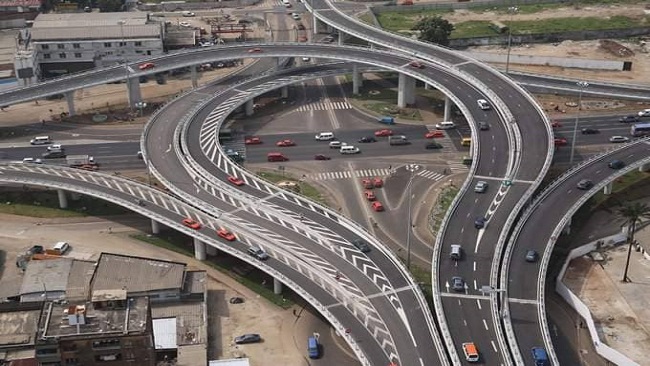
Over the last six years, this West African country has undertaken major development projects and infrastructure development seems to be the government’s focus. The government is currently working with the private sector to modernize the country’s infrastructure and this has caught the attention of foreign investors who want to be part of this success story that is being written with a golden pen and which is making the country a beacon of hope.
The government is working on improving market access for crops by upgrading transportation infrastructure, extending electricity provision, and developing strategies to enhance value-added from cocoa and cashews.
Today, the country’s capital, Abidjan, has become a vast construction site with storey buildings popping up like mushroom in all the city’s neighborhoods. Côte d’Ivoire has made significant progress in reducing processing time for building permits and has introduced a new system for electronic payment of taxes and a credit bureau. There is scope for catching up with sub-Saharan African frontier market countries by improving credit access through stronger legal rights for borrowers and creditors and deeper credit information on borrowers.
Foreign capital is heading to Cote d’Ivoire and the government’s determination to place the country on the map as the most modern in West Africa is paying off big time. Even international organizations are noticing the efforts by the country’s government and their reports on the country are boosting the country’s image.
According to the African Development Bank (AfDB) Group, the country’s macro-economic performance has been encouraging. The continent’s leading development finance institution reported that despite many and major economic challenges in 2018, the country’s real GDP growth reached an estimated 7.4% in 2018, down from 7.7% in 2017, supported by external demand for agricultural and oil products and stronger domestic demand resulting from major investment projects and households consumption.
The AfDB report points out that the country’s economy faced several shocks in 2017, including a sharp decline in cocoa prices, higher oil prices, and social tensions. As a result, the budget deficit increased to 4.2% of GDP, but it improved to an estimated 3.8% in 2018. Public debt increased to 48.2% of GDP in 2018, driven by Eurobond issuances in 2017 and 2018. The risk of debt distress remains moderate. Inflation was low, at an estimated 0.5% in 2018, down from 1.0% in 2017. The current account deficit widened to an estimated 2.7% of GDP in 2018 from 1.8% in 2017.
The AfDB holds that the country’s economic outlook remains favorable, with real GDP growth projected at 7.0% in 2019 and 6.9% in 2020. A good performance in the agricultural sector will keep inflation below the 3% convergence threshold for the West African Economic and Monetary Union (WAEMU). The current account deficit is projected to stabilize at 2.8% in 2019, in connection with sustained imports of capital goods related to infrastructure projects.
The economy remains vulnerable to external shocks that may stem from unfavorable evolution of commodity prices (mainly cocoa and oil) and adverse climate conditions. Another pressing challenge is to sustain economic growth and ensure a more balanced distribution across sectors, with a view to achieving a structural transformation of the economy. This would require improving the quality of agricultural products and upgrading the industrial sector toward higher value added and high–job creation activities.
Regarding reforms, Côte d’Ivoire has implemented many reforms as part of its 2016–2020 National Development Plan. In energy, reforms have focused on ensuring the sector’s financial sustainability, clearing arrears for independent producers, and investing in supply capacity. As a result, installed capacity increased by 56% between 2011 and 2018 to 2,200 MW. Rural electricity coverage has also expanded from 33% of the rural population to 54%. In agriculture, reforms have focused on accelerating the development of value chains and increasing local processing for major agricultural products, including cocoa, cashew nuts, palm oil, and rubber. Investment has also improved the quality of and access to basic education and health services. But poverty and inequality reduction remain a challenge.
Côte d’Ivoire is party to most of the relevant continental institutions dedicated to regional integration. The country has historically been an important destination for immigration and remains at the center of one of the continent’s most dynamic migration routes. Côte d’Ivoire is also an important transit corridor for its landlocked neighbors, thanks to its ports in Abidjan and San Pedro. It is a key partner in the regional electricity market and is part of an electricity interconnection network with Benin, Burkina Faso, Ghana, Togo, and soon Mali, as well as to the Mano River Union countries (Guinea, Liberia, and Sierra Leone). Côte d’Ivoire is the major player in WAEMU’s financial markets and hosts the regional securities exchange. Côte d’Ivoire has also increased investment in regional energy, road, and air infrastructure and telecommunication networks.
For the seventh consecutive year, the country’s economic growth was projected to exceed 7% and reach 7.4% in 2018, despite the country’s vulnerability to external shocks and political uncertainty in the run up to the presidential elections in 2020. This was the verdict of the Eighth Economic Update for Côte d’Ivoire published today by the World Bank. The country, therefore, continues to have one of the most dynamic economies in the world, boasting the highest growth rates in the West African Economic and Monetary Union (WAEMU), despite a slight drop of 0.3% in relation to its performance in 2017 (7.7%).
According to a World Bank report entitled “Que la route soit bonne, améliorer la mobilité urbaine à Abidjan,”the country has witnessed some decline because of the fact that the public and external sectors have been less supportive of growth and the contribution of the private sector has been more uneven.
The short- and medium-term outlook however remains favorable. The growth rate over the next few years is expected to be roughly 7%, provided that the global environment remains fairly stable and the Government continues its efforts to promote the private sector and foster more inclusive growth.
The report also devotes an entire section to the challenges of urban mobility in this country where the rate of urbanization soared from 17.7% in 1960 to over 50% in 2018. Today, 80% of economic activity in the country is concentrated in Abidjan, the economic capital of Côte d’Ivoire and home to over 5 million people.
“Urbanization, once it is well planned and managed, can help the country’s businesses become more productive and improve households’ living conditions by offering them jobs, schools for their children, and better health care than in rural areas,” explains Jacques Morisset, World Bank Program Leader in Côte d’Ivoire and lead author of the report.
Given that by 2050, nearly two out of three Ivorians will be living in an urban center, over 10 million of whom will settle in Abidjan, urban mobility challenges will intensify if no action is taken, and solutions will become increasingly difficult to implement. The report analyzes the daily mobility constraints faced by commuters and proposes several avenues for improving urban transport and ensuring the success of the Greater Abidjan project adopted in 2016.
“There are approximately 10 million trips taken every day in Abidjan and each household spends close to CFAF 1075 (about US$1.80) and loses over three hours a day in commuting time,” explains Anne Cecile Souhaid, Senior Transport Specialist and co-author of the report. “That is equivalent to nearly 5% of the national GDP in 2017. However, a 20% improvement in urban mobility in Abidjan could generate gains of almost 1% of annual GDP growth.”
Since achieving independence in 1960, Côte d’Ivoire has managed to maintain broadly friendly relations with its neighbours, its French former colonial ruler, and within a continental and multilateral context. Côte d’Ivoire has long been a player in ECOWAS, which ties the country to 14 other nations in the region. Eight countries also share membership of the West African CFA franc zone, the central bank of which is headquartered in Abidjan.
Recently, after a decade-long political crisis ended in 2011, Côte d’Ivoire’s economy has bounced back to become one of the fastest-growing in Africa. Between 2012 and 2016 the country’s GDP grew by an annual average of 9%, with the IMF forecasting annual GDP expansion of at least 6.5% through to 2023. This recovery was supported by rising international commodity prices, as well as substantial public sector funding to rebuild and upgrade infrastructure that had suffered from years of under-investment. At the same time, the country has sought to diversify its agriculture-focused economy by developing the mining and oil and gas sectors.
The IMF recently completed its annual health check of the Ivoirian economy. Political normalization and good implementation of reforms have contributed to the country’s strong economic performance since 2012. Going forward, bold structural reforms are needed to sustain the pace of development, and ensure that the benefits are shared by all. The current government is committed to keeping the economy dynamic while ensuring that growth is shared and pro-poor.
By Bamba Gaoussou
Cameroon Concord News Group correspondent in Abidjan
UK: Prime Minister Theresa May’s allies rush to her support amid ouster plot reports
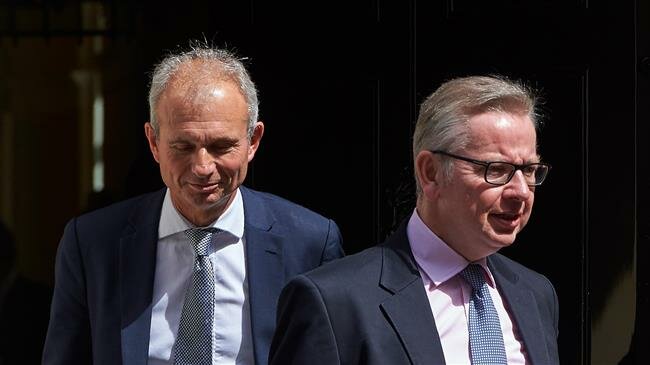
Members of British Prime Minister Theresa May’s cabinet are rushing to her defense following reports by several outlets that a group of minister have drawn up plans to topple her for chaotic handling of the country’s exit from the European Union (EU).
The Sunday Times reported that at least 11 unidentified senior cabinet ministers had agreed that the embattled premier should stand down because she had turned into a toxic figure with a judgment that had “gone haywire.”
The newspaper claimed that the rebelling cabinet ministers were going to confront May on Monday and would resign together if she refuses to resign.
According to the report, possible options to replace May as interim prime minister included Cabinet office minister David Lidington, who is widely viewed as her de-facto deputy. Environment Secretary Michael Gove and Foreign Secretary Jeremy Hunt were also high on the list, the report stated.
Lidington rejected the allegations and said he had no plans to succeed her. He commended May for her job so far.
“I don’t think that I have any wish to take over from the PM, I think (she) is doing a fantastic job,” Lidington told reporters outside his house. “One thing that working closely with the prime minister does is cure you completely of any lingering shred of ambition to want to do that task.”

Theresa May
Gove went on record on Sunday to express his full support for May, adding that it was a time for “cool heads” to focus on getting the premier’s twice-rejected Brexit agreement approved in the House of Commons.
“I think it is not the time to change the captain of the ship, I think what we need to do is to chart the right course, and the prime minister has charted that right course by making sure that we have a deal that honors the referendum mandate,” he said.
Finance minister Philip Hammond also dismissed the report and said ousting May was not the right thing to do given the current situation.
“Changing prime minister wouldn’t help us,” Hammond said. “To be talking about changing the players on the board, frankly, is self-indulgent at this time.”
“I’m realistic that we may not be able to get a majority for the prime minister’s (Brexit) deal and if that is the case then parliament will have to decide not just what it’s against but what it is for,” he said.
Brexit Secretary Steve Barclay said May’s deal was the best option and urged people to support the prime minister.
“The government and the prime minister is in charge,” he said.
Source: Presstv
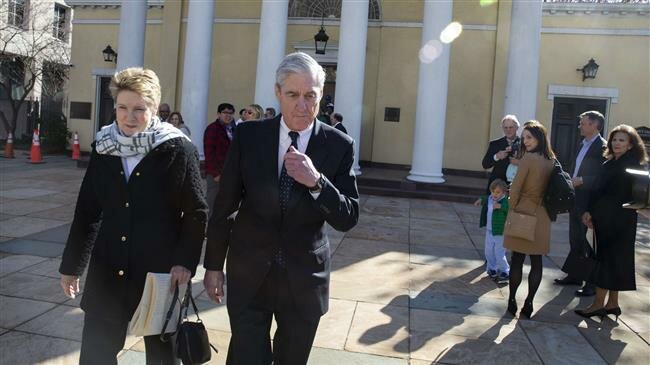
US: Mueller issues equivocal report, concludes Russia probe
Special counsel Robert Mueller’s findings have failed to implicate US President Donald Trump in collusion with Russia during the 2016 presidential campaigning.
The so-called Russia probe came to an end following the release of a summary of findings by Trump–appointed Attorney General William Barr on Sunday.
“The Special Counsel’s investigation did not find that the Trump campaign or anyone associated with it conspired or coordinated with Russia” regarding the 2016 election, according to the letter.

The special counsel had 19 lawyers, the assistance of about 40 FBI agents and issued over 2,800 subpoenas to investigate alleged Russia intervention in the 2016 presidential election and the Trump team’s collusion with the Kremlin.
The report was vague in handling allegations of obstruction of justice by the president, neither exonerating him nor holding him accountable. As a result, Barr and Deputy Attorney General Rod Rosenstein concluded that the “evidence developed…is not sufficient to establish that the president committed an obstruction of justice offense.”

Therefore, Trump appeared before the reporter ahead of boarding Air Force One in Florida, boasting that he has been given “a complete and total exoneration.”
White House Deputy Press Secretary Hogan Gidley also appeared before reporters in Washington to announce that Trump is “in a really good mood.”
“He’s just very happy with how it all turned out,” Gidley said of the president, who has been calling the investigation a “witch hunt” from the get-go.

In Russia probe, Kushner plays ‘the hero’
The president’s friends in Congress rushed to his support after the report failed to draw any practical conclusions after 22 months.
“Attorney General Barr’s statement today should end the debate,” said North Carolina Republican Representative Mark Meadows on Capitol Hill. “There was no collusion. There was no obstruction. It’s over.”
Democrats, who had been waiting for the investigation to conclude, were quick to announce that they will continue with their own probe, conducted as they hold the majority of the seats in the US House of Representatives.

Clintons
According to top Democrats, Nancy Pelosi and Chuck Schumer, the report “raises as many questions as it answers,” adding that Mueller “determined not to make a traditional prosecutorial judgment.”
They concluded that Mueller “did not draw a conclusion — one way or another — as to whether the examined conduct constituted obstruction.”
Democrats had stalled impeachment proceedings, hoping that the probe would endanger Trump’s tenure.

“Impeachment is so divisive to the country that unless there’s something so compelling and overwhelming and bipartisan, I don’t think we should go down that path, because it divides the country,” said Pelosi earlier this month.
That means Democrats will have to wait until the 2020 presidential election to take on Trump.
Source: Presstv