Russia 2018: France plays out dreary scoreless draw with Denmark
The France and Denmark men’s national football teams have played out an uninspiring goalless draw in their final 2018 Fédération Internationale de Football Association (FIFA) World Cup Group C match.
French and Danish soccer players rarely threatened each other’s goalposts during the fixture at the Luzhniki Stadium in the Russian capital city of Moscow on Tuesday as chances for either side were few and far between.
Both teams were just happy to sit back and earn the point as they had already advanced to the knockout stage.
It was the first scoreless match of the tournament after 36 games.
The France men’s national football team, nicknamed Les Bleus (The Blues), will take on the runner-up of Group D in the round of 16, while Danish Dynamite will next face that group’s winner.

During the official 2018 FIFA World Cup draw ceremony at Kremlin State Palace in the Russian capital city of Moscow on December 1 last year, the host nation, Saudi Arabia, Egypt and Uruguay were put in Group A in the preliminary round of the tournament.
The Iran men’s national football team, nicknamed Team Melli, has joined Portugal’s A Selecção, Spain’s La Furia Roja and Atlas Lions of Morocco.
France is drawn in Group C, and is pitted against Australia, Peru and Denmark.
Argentina, Iceland, Croatia and Nigeria are drawn in Group D.
Group E consists of Brazil, Switzerland, Costa Rica and Serbia.

While the 2014 FIFA World Cup champion Germany, Mexico, Sweden and South Korea shape Group F, Belgium, Panama, Tunisia and England are in Group G.
Group H has Poland, Senegal, Colombia and Japan.
The 2018 FIFA World Cup will take place from June 14 to July 15. Russia opened the event against Saudi Arabia in a Group A fixture at Luzhniki Stadium. The hosts won the match 5-0.
A total of 64 matches will be played in 12 venues located in 11 cities. Source: Presstv
UK: EU Withdrawal Bill officially becomes law
The speaker of Britain’s House of Commons has announced that the government’s flagship Brexit legislation allowing the country to leave the European Union has become law.
Speaker John Bercow told MPs on Tuesday that the EU Withdrawal Bill received royal assent from Queen Elizabeth II, resulting in the bill becoming an Act of Parliament.
The EU Withdrawal Act, as it is now known, enables EU law to be transferred into British law in an attempt to ensure a smooth Brexit, and it enables EU law to be transferred into UK law in an attempt to ensure a smooth withdrawal from the EU, and it also repeals the 1972 European Communities Act, which made Britain a member of the union.
British Prime Minister Theresa May called the bill’s approval a “historic moment for our country, and a significant step towards delivering on the will of the British people.”
Members of parliament who are in favor of Brexit also hailed the development.
“The legal position is now so much stronger for a clean Brexit,” Conservative MP Jacob Rees-Mogg said. “Crucially this makes the prime minister’s negotiating hand much stronger.”
The legislation was first introduced in July 2017 and has faced a number of hurdles in both Houses of parliament. In April, Lords inflicted an embarrassing defeat on the May government by voting against it.
The May government had argued that remaining in the customs union would bar Britain from signing third-party trade agreements with other countries.
Prime Minister May has admitted that there are “hard facts” Britain should be ready to face about the economic consequences of leaving the EU.
She has said the UK would leave the EU’s single market and customs union after Brexit in March 2019, noting the country may suffer new trade barriers as a result of her move.
May has also said that any customs union deal with the EU would keep London from striking new trade deals with fast-growing economies like China and India.
In Britain’s 2016 referendum, 52 percent, or 17.4 million people, voted to leave the EU while 48 percent, or 16 million, voted to stay.
May insists Britain will leave the EU as planned and there will be no rerun of the Brexit referendum.
Southern Cameroons War: The silence of Ambassador Peter Barlerin is deafening
Ever since he returned from his holiday, His Excellency Peter Barlerin current US ambassador to Cameroon has been everything but vocal. Before travelling to the US recently, Ambassador Barlerin had commented on a whole host of matters including President Biya’s continued stay in power. To be sure, most of Peter Barlerin’s verbal missiles have targeted matters which are domestic in nature. They range from the issue of ageing leadership, corruption, bad governance, press freedom, and the list goes on.
In recent times, there have been two very significant issues which concern the US-Cameroon relations, but on neither matters we have not heard the customary loud and emphatic pronouncements coming from ambassador Barlerin. They are the fake aid package announced by Prime Minister Philemon Yang for Southern Cameroons refugees and internally displaced persons and the refusal of US visas to the Cameroon women military team.
We understand the United States has reacted positively to the Biya regime initiative to address the problem of humanitarian assistance and access in Southern Cameroons. Ambassador Peter Barlerin was quoted as saying “We will be examining the proposal closely with a view towards considering how we may be able to support it. We call on both sides to renounce further violence and urge broad-based dialogue with no pre-conditions.”
The so-called Cameroon government humanitarian aid package will be paid for through the state budget, a national solidarity fund that has seen barons of the ruling crime syndicate donating millions of FCFA and contributions from international partners such as the USA.
The package includes 7.6 million Euros for reconstruction, 5.7 million Euros for food and 4.7 million Euros for basic necessities such as blankets and mattresses. Southern Cameroonians are happy that the US Chief diplomat spoke of “examining the proposal closely.” Ambassador Peter Barlerin should not put his name on the Honor Roll of Shame in Cameroon. We of the Cameroon Concord News Group are saying that there is really no honour among thieves. The US should start refusing visas for Cameroon government officials including top military officers and visas already issued should be revoked.
The Biya regime has released a list of highly placed Cameroon government officials and members of the Yaounde consortium of crime syndicates who reportedly raised FCFA 230 million to complement Biya’s FCFA 12.7 billion Relief fund for victims of his genocidal war against Southern Cameroonians. Ambassador Peter Barlerin must really wonder where these public servants got the money to make such contributions. If you divide FCFA 12.7 billion by an estimated 200,000 displaced victims, it means every Ambazonian will get approximately FCFA 63,500 to rebuild their homes and businesses that have been destroyed by nihilistic Francophone soldiers. Ambassador Barlerin should not be absolutely silent on the matter. It is part of the function and duty of Mr. Barlerin to stand in support of the people of Southern Cameroons. To the ambassador we say, your silence is deafening on the Southern Cameroons war.
By Soter Tarh Agbaw-Ebai
Victoria Oil & Gas forms compressed natural gas partnership in Cameroon
Cameroon-focused producer Victoria Oil & Gas said subsidiary Gaz du Cameroun had entered into an exclusive agreement to partner with European compressed natural gas supplier Naturelgaz Sanayi ve Ticaret.
Naturelgaz is a subsidiary of Turkey-listed Global Investment Holdings.
The partnership would involve the construction of compressed natural gas infrastructure and solutions for customers needing mobile energy, initially in Cameroon, with the intention of rolling out to other African countries.
‘The agreement brings together GDC’s upstream gas capabilities and experience of the Douala energy market with Naturelgaz’ proven track record of delivering CNG solutions,’ chief executive Kevin Foo said.
‘We are excited to be adding CNG to our product mix.’
Source: sharesmagazine.co.uk
The Holy Father receives French president Macron at the Vatican
French President Emmanuel Macron made his first official visit to the Vatican on Tuesday where he held an unusually long meeting with Pope Francis.
The tete-a-tete between the Argentine pontiff and Macron in the Vatican’s ornate library lasted 57 minutes — the longest between Francis and a head of state.
Past talks between the pope and a president have never exceeded 50 minutes.
Francis spoke with former US president Barack Obama for 50 minutes and with his successor Donald Trump for 30 minutes.
Faith and the sensitive subject of the role of the church in French society were thought to be among the topics for discussion, as was the thorny issue of migration, currently casting deep divisions within the European Union.
Macron made the visit after deciding to accept being made an honorary canon of St John Lateran, the cathedral of Rome, a tradition dating back to the 15th century when the French state and church were indistinguishable.
Several of Macron’s predecessors have declined the title, including socialists Francois Mitterrand and Francois Hollande, in order to avoid associating themselves with religious imagery.
France is strictly secular under a landmark 1905 law that separated the state from the church.
Macron’s decision to accept the title has drawn particular scrutiny at home following comments in April in which he said he wanted to “repair” the “bond” between church and state.
Francis and the French president smiled and embraced each other as they left their meeting.
The French president offered the Pope a 1949 edition in Italian of “The Diary of a Country Priest” by French Catholic writer Georges Bernanos.
Francis presented Macron with a bronze medal of Saint Martin, a fourth century symbol of generosity, and the main texts from his papacy.
Giving the medal to Macron, the Pope said it was the “vocation of those in government to protect the poorest”.
Source: AFP
Online sports betting booming in soccer-mad Nigeria
Online sports betting is booming in soccer-mad Nigeria largely thanks to payment systems developed by homegrown technology firms that are starting to make online businesses more viable.
For years, mobile payments failed to take off in Nigeria as they have in countries such as Kenya, where Safaricom’s M-Pesa money transfers have fostered a culture of cashless payments.
Fear of electronic fraud and slow internet speeds have held Nigerian online consumers back but betting firms says the new, fast digital payment systems underpinning their websites are changing attitudes towards online transactions.
“We have seen significant growth in the number of payment solutions that are available. All that is definitely changing the gaming space,” said Seun Anibaba, CEO of Lagos State Lotteries Board, gaming regulator in Nigeria’s commercial capital.
“The operators will go with whoever is faster, whoever can connect to their platform with less issues and glitches,” he said, adding that taxes from sports betting in Lagos State rose 30 percent to 40 percent in 2017 from 2016.
That growth has been matched by a rise in web payments, according to data from the Nigeria Inter-Bank Settlement System (NIBSS), which is owned by the central bank and licensed banks.
In 2016, there were 14 million web payments worth a total 132 billion naira ($420 million). Transactions leapt to 29 million worth 185 billion in 2017 and in the first quarter of 2018 there were nearly 10 million worth 61 billion.
With a young population of nearly 190 million, rising mobile phone use and falling data costs, Nigeria has long been seen as a great opportunity for online businesses – once consumers feel comfortable with electronic payments.
Betting firms cashing in on the soccer frenzy whipped up by Nigeria’s participation in the World Cup say they are finding the payment systems created by local startups such as Paystack are proving popular online.
Local startups power online payments
Paystack and another local startup Flutterwave, both founded in 2016, are providing competition for Nigeria’s Interswitch which was set up in 2002 and was the main platform used by businesses operating in Nigeria.
“We added Paystack as one of our payment options without any fanfare, without announcing to our customers, and within a month it shot up to the number one most used payment option on the website,” said Akin Alabi, founder of NairabBET.
He said NairaBET, the country’s second biggest betting firm, now had 2 million regular customers on its website, up from 500,000 in 2013, and Paystack remained the most popular payment option since it was added in late 2017.
Paystack was set up by two Nigerian computer science graduates, Shola Akinlade and Ezra Olubi, who received early stage funding in Silicon Valley’s Y-Combinator programme.
In December 2016, it raised $1.3 million from investors including China’s Tencent and Comcast Ventures in the United States.
Paystack, based in the frenetic Ikeja district of Lagos, said the number of monthly transactions it processed rose from about 8,000 in early 2016 to more than 900,000 as of June 2018.
“In early 2016 we were processing about $3,000 a month. Today we process well over $11 million every single month,” said Emmanuel Quartey, Paystack’s head of growth.
He said an ecosystem of developers had emerged around Paystack, creating software to integrate the platform into websites. “We have seen a growth in that community and they have carried us along,” said Quartey.
Paystack said it enables payments for a number of betting firms but also a wide range of businesses, from utility services to transport companies to insurer Axa Mansard.
Flutterwave, co-founded by Nigerian entrepreneur Iyinoluwa Aboyeji, is also backed by the Y-Combinator programme as well as venture capitalists Greycroft Partners and Green Visor Capital and the Omidyar Network. It raised $10 million last year.
REUTERS
Iran coach slams VAR as Ronaldo escapes red card
Iran coach Carlos Queiroz said Portugal captain Cristiano Ronaldo was fortunate to escape a red card despite a VAR review following an elbow in Monday’s 1-1 draw at the World Cup.
Portugal will face Uruguay in the last 16 after advancing as runners-up of Group B, but Queiroz insisted Ronaldo deserved to be sent off for catching Iran defender Morteza Pouraliganji with an elbow to the face.
“I don’t want to talk too much, it’s about my country and a player. I know it’ll be a war against me,” said Queiroz, who coached his native Portugal at the 2010 World Cup. “But the reality is you stopped the game for VAR, there is an elbow. An elbow is a red card in the rules. In the rules it doesn’t say if it is (Lionel) Messi or Ronaldo…”
It was a busy evening for the video assistant referee in Saransk as two penalties were awarded upon review, on top of the Ronaldo altercation.
“We accepted human mistakes before, that was part of the game. Players make mistakes, coaches make mistakes and referees make mistakes,” said Queiroz. “But now you have one system that cost a fortune. It’s high-tech with five, six people inside and what happens? Nobody takes responsibilities.”

He further said, “We need to be like rugby. When there is a decision by VAR I need to know what the referee is saying to them, people need to know what is going on.”
“So in my opinion, Mr. Infantino and FIFA, everybody agreed that VAR is not going well,” he added. “That’s the reality, there’s a lot of complaints.”
Ricardo Quaresma struck a brilliant opening goal with a trademark curling effort using the outside of his right foot on the stroke of half-time.
Ronaldo had the chance to double the lead with a penalty five minutes into the second half after he was upended by Saeid Ezatolahi, but his effort was save by Iran goalkeeper Ali Beiranvand.
Portugal defender Cedric was then penalized in stoppage time for a handball, and Karim Ansarifard converted from the spot to give Iran a lifeline.

Mehdi Taremi nearly snatched a dramatic winner after a deflected shot rolled into his path, but he fired into the side netting as Iran were eliminated in agonizing fashion.
Ronaldo cut a frustrated figure after failing to add to his four-goal tally at the Mordovia Arena, suffering the same penalty misfortune as Lionel Messi earlier in the competition.
“I understand, it’s normal. The best players in the world face that when there isn’t an opportunity to really make it happen,” said Portugal boss Fernando Santos. “That hurts a lot more to them than to other players. They always want to win. They want to be the best and refuse to fail, and when they fail they get very upset.”
Santos said he thought the referee made the right decision in terms of the Ronaldo flashpoint.

“No I wasn’t concerned (about a red card), it seemed like a normal thing in the match. The referee did what he had to do,” he added. “He went to the VAR twice or three times, he considered two penalties and one yellow card. I’d have to watch it again to talk about it, but I think the VAR did its job.”
A late equalizer from Iago Aspas that earned Spain a 2-2 draw with Morocco pushed the European champions down into second place.
“To us what is important is to be in the last 16 and we want to carry on in this tournament,” Santos said. “Uruguay have high quality and top-notch players. They’re excellent but Portugal are too and we’re going to try and find a way to win.”
- (Source: AFP)
Cameroon’s Anglophone crisis threatens national unity. The time for change is now
Cameroon’s governance and security problems have historically attracted little outside attention. But this seems likely to change, for two reasons. The first is the growing political crisis in the Central African nation’s English-speaking region. The second is a presidential election scheduled for October 2018.
Roughly 20% of the country’s population of 24.6 million people are Anglophone. The majority are Francophone. The unfair domination of French-speaking politicians in government has long been the source of conflict.
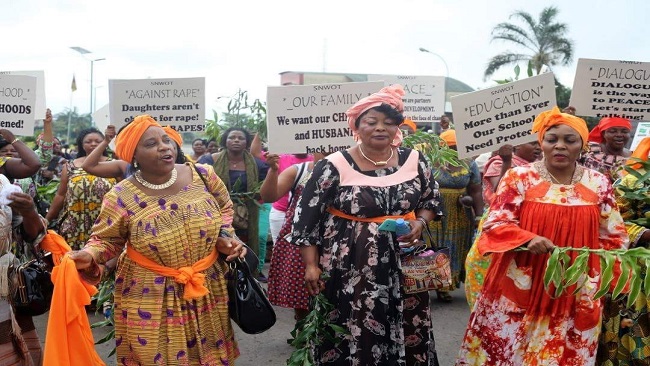
Activists in the country’s Anglophone western regions are protesting their forced assimilation into the dominant Francophone society. They argue that this process violates their minority rights, which are protected under agreements that date back to the 1960s. Anglophone political representation and involvement at many levels of society has dwindled since the Federal Republic of Cameroon became the United Republic of Cameroon in 1972. There are growing calls for the Anglophone region to secede from Cameroon.
This festering conflict represents a major test as Cameroonians prepare for the October elections.
Three things are urgently needed now in Cameroon. The first is to understand the origins of the crisis. The second is to support an inclusive national dialogue. And the third is to ensure that the 2018 elections are free and fair for all.
Growing crisis
Before 1961, the Anglophone territories were part of Eastern Nigeria. They elected to join the Republic of Cameroon by plebiscite at the time of decolonisation.
A power-sharing agreement was reached: the executive branch of government was meant to be shared by Francophones and Anglophones. But that agreement has not been upheld and, over the years, Anglophone political representation has been steadily eroded.
The crisis came to a head in late 2016 when lawyers, joined by teachers and others with similar grievances, led protests in major western cities demanding that the integrity of their professional institutions be protected and their minority rights respected.
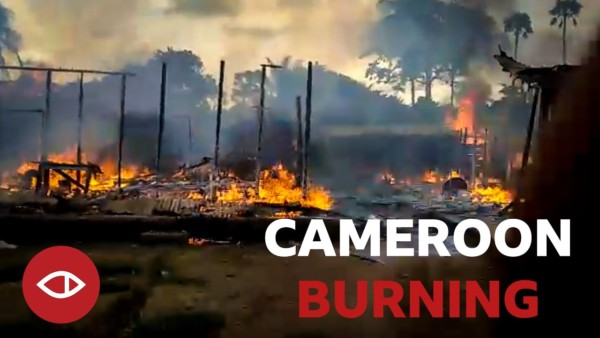
President Paul Biya responded by deploying troops to the region and blocking internet access. When peaceful demonstrations were met with violent repression it exacerbated tensions and escalated the conflict to a national political crisis.
On 12 June 12 2018, Amnesty International issued a report documenting human rights violations in Cameroon. The International Crisis Group says that at least 120 civilians and 43 members of security forces have been killed in the most recent waves of violence.
More than 20,000 people have fled to neighbouring Nigeria, and an estimated 160,000 are displaced within Cameroon.
Some human rights activists worry that Cameroon could be the site of Africa’s next civil war.
Agbor Nkongho, an Anglophone human rights lawyer and director of the Center for Human Rights and Democracy in Africa, told the Washington Post:
We are gradually, gradually getting there (civil war). I’m not seeing the willingness of the government to try to find and address the issue in a way that we will not get there.
Another issue is that there are diverse views even within the Anglophone and Francophone communities about what would be best for Cameroon going forward.
Obstacles to national unity
In October 2017 the separatist leader Julius Ayuk Tabe declared the independence of the Republic of Ambazonia. His interim government laid claim to a territory whose borders are the same as the UN Trust Territory of Southern Cameroons under British rule (1922-1961).
The interim government’s spokesman, Nso Foncha Nkem, invited Francophones to leave the region and called on Anglophones in Biya’s “rubber-stamp” government to return to Ambazonia and support the movement. He also pleaded for unity, asking that Anglophones speak in one voice.
However, that call has not overcome the challenges posed by diverse viewpoints within the Anglophone population itself. Some favour secession. Others want to return to the 1961 federation and the power-sharing agreement. There are those who prefer decentralisation that would devolve power to regional leaders, and some who simply want an administrative solution that would leave the Republic of Cameroon as it stands.
And among the Francophone population, there is some support for the radical separatists, while some see the Anglophone situation as a general crisis of governance and others deny any problem exists.
Mongo Beti, a Francophone novelist and activist who spent 30 years in exile, observed after returning home in the 1990s that a general absence of identification with a viable, unified nation due to various divisions had frayed Cameroon’s social fabric and was a significant impediment to progress.
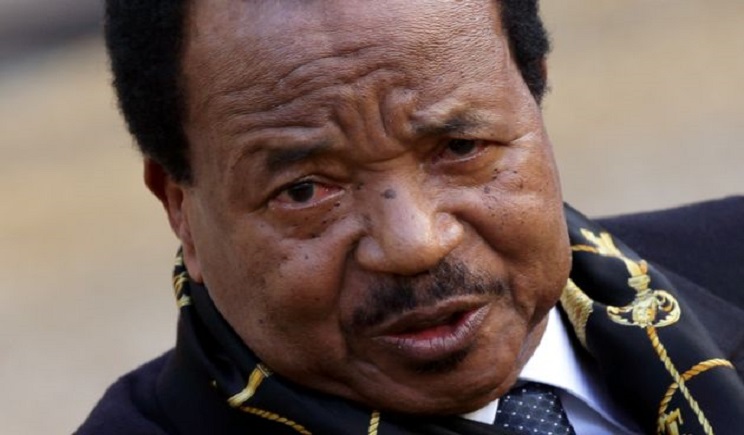
It is unclear whether Biya, who is 85 and in power since 1980, will run for re-election. His 38 years in office as a corrupt, absent leader have left the nation in tatters. The vast majority of Cameroonians, whether Anglophone or Francophone, are hungry for change.
The way forward?
There is an urgent need for an inclusive national dialogue to harness this desire for change.
The government must recognise that it faces a substantive national crisis and take extraordinary steps. A general conversation about governance in all its regions is also necessary. Given the depth and severity of people’s grievances, a holistic approach is needed that would address issues of governance, security, and civic engagement to mend the bonds that have been broken.
This is necessary if the current crisis it to become an opportunity to develop a new road map for the future that could empower citizens.
Source: Reliefweb
Turkey: ‘I accept these election results,’ says Erdogan rival Ince
The main rival of Turkish President Recep Tayyip Erdogan in a weekend presidential election said Monday he accepted defeat in the first round. However, OSCE observers said the ruling party had enjoyed undue advantages.
“I accept these election results,” said Muharrem Ince of the Republican People’s Party (CHP) who came second to Erdogan in the polls but had launched an energetic challenge in the campaign.
However, on Monday, the Organization for Security and Cooperation in Europe (OSCE) said opposition parties were denied equal conditions for campaigning and that the incumbent president and ruling party enjoyed undue advantages, including in the media.
“The restrictions we have seen on fundamental freedoms have had an impact on these elections. I hope that Turkey lifts these restrictions as soon as possible,” said Ignacio Sanchez Amor, head of the OSCE short-term observer mission in Turkey.
But Ince, who had faced limited airtime on television in the campaign, also said the run-up to the election had been unfair.
“This election was unjust until the results were announced,” he told a news conference at CHP headquarters.
He thanked party observers who had watched a tense count to ensure no foul play. “There were votes played with, our friends who saw this fought against this… In my name and in Turkey’s name, I thank them.”
“We will continue our fight until Turkey is a Turkey for everyone.”
“There’s a 10 million difference here, friends”
OSCE observers praised the high participation of Turkish citizens in the elections, saying they had demonstrated their commitment to democracy. Turnout in Sunday’s polls was around 87 percent.
With Erdogan polling 52.6 percent against his 30.6 percent, Ince acknowledged that the Turkish strongman had won over 10 million more votes than him.
“There is a 10 million difference here, friends. We are not running away, we have not been threatened, this is not true.”
“Did CHP have mistakes? Yes there were,” adding: “I will not enter into these issues.”
Ince defended his decision – which disappointed many at the CHP – not to comment on the results when they were first issued on Sunday night.
“I wanted the results to be certain, that’s why I did not come out,” he said, admitting he had targeted 35 percent to help push Erdogan to a second round.
He urged Erdogan to be a leader of all Turks adding that Erdogan should “represent 80 million” and telling him: “You are the president for us all.”
(FRANCE 24 with AFP, REUTERS)