
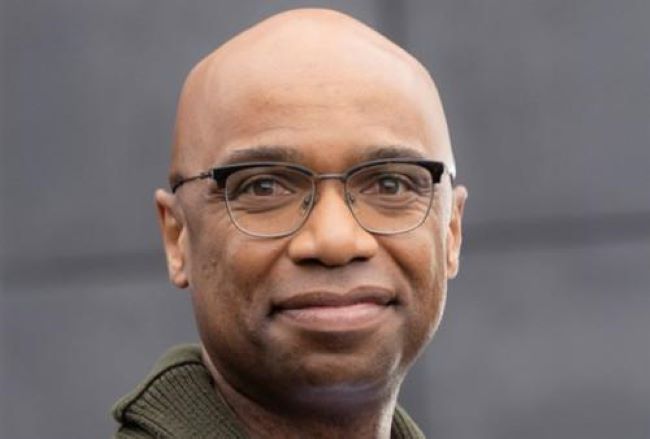
Mercedes appoints Cameroonian to drive autonomous technology strategy
Mercedes-Benz has appointed Cameroonian engineer Georges Massing as Vice President of MB.OS Automated Driving, Powernet and E/E Integration. The appointment places him at the centre of the German carmaker’s software and autonomous driving strategy as global competition in intelligent vehicle technology intensifies.
Massing now oversees key aspects of the Mercedes-Benz Operating System (MB.OS), the software platform designed to power automated driving, digital vehicle functions and integrated electronic systems across future Mercedes models. The position is central to the company’s efforts to strengthen its presence in the fast-growing software-defined vehicle market, where automotive manufacturers are investing heavily in artificial intelligence and connected mobility solutions.
A graduate in aerospace engineering from the Technical University of Berlin, Massing joined Mercedes-Benz in 2016 as Director of User Interaction and Software. Before joining the German carmaker, he held senior engineering and technology leadership roles at Magna Electronics Europe and BMW AG, where he worked on advanced driver assistance systems, vehicle electronics and digital driver experience technologies.
He later served as Vice President Digital Vehicle and Mobility at Mercedes-Benz Research and Development between 2019 and 2021 before moving into the MB.OS programme, where he now leads automated driving and electric and electronic integration.
His current role places him at the centre of the development of Drive Pilot, Mercedes-Benz’s Level 3 automated driving system. The technology has already secured certification in Germany and selected United States markets, including Nevada and California, making Mercedes-Benz one of the first global manufacturers to deploy certified automated driving systems for passenger vehicles.
In a recently published article, Massing explained that Mercedes-Benz’s automated driving programme is focused on improving safety while giving customers greater flexibility during travel.
Explaining the company’s vision, he added Mercedes-Benz is pursuing zero-accident mobility while redefining how drivers use their time.
“The second vision driving us is how can we give back time to customers. As soon as we move to an automated system, the driver gives control back to the car and can do much more,” Massing said.
For Mercedes-Benz, the strategy is part of a broader shift towards vehicles defined as much by software capability as by mechanical performance. Massing’s promotion highlights the company’s focus on scaling autonomous technology while maintaining safety, regulatory compliance and product reliability in an increasingly competitive global market.
Source: Business in Cameroon


