
50 Boko Haram fighters killed in Nigeria attack
More than 50 Boko Haram fighters have been killed in an attack on a multi-national force in northeastern Nigeria, a military spokesperson said Wednesday.
Source: AFP
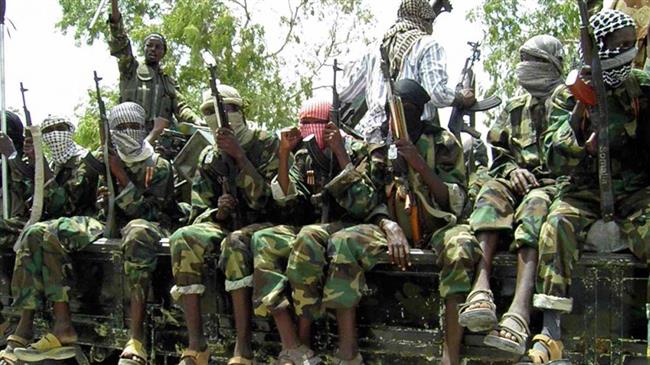
More than 50 Boko Haram fighters have been killed in an attack on a multi-national force in northeastern Nigeria, a military spokesperson said Wednesday.
Source: AFP
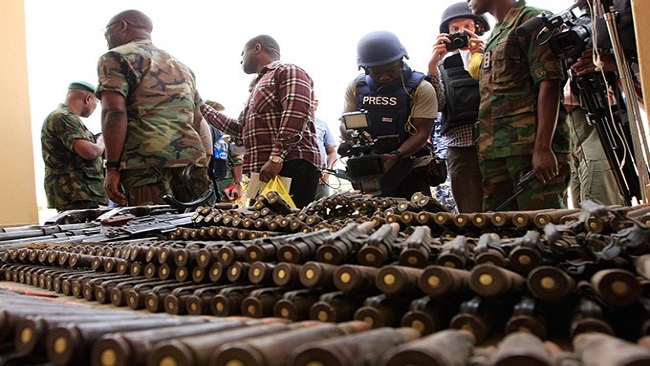
About 565 people might have been killed by the explosive remnants of the militant group Boko Haram in Nigeria’s restive northeast region in 2018, according to a report by the United Nations anti-mine agency released on Thursday.
Lionel Pechera, a program coordinator of the United Nations Mines Action Service (UNMAS), disclosed this at a campaign to mark the International Day for Mine Awareness and Assistance in Mine Action in the northeastern city of Maiduguri, the birthplace of Boko Haram.
Pechera said the presence of explosive hazards was a barrier to accessing the majority of land for agricultural activities, which in turn increased food insecurity in the northeast area.
Some of the internally displaced persons (IDPs) areas were highly contaminated by explosives, indiscriminately injuring, maiming and killing civilians, said Pechera.
The given figure was believed to represent only a portion of the actual number of incidents, he noted, saying that a large part of the territories in the country’s northeast region was inaccessible.
The mine awareness and assistance in mine action campaign has become imperative to protect lives and property as well as support the voluntary return of the IDPs to their homes, the UN official said.
The long-term impact of the mine threats could jeopardize efforts of the Nigerian government and humanists to return the IDPs to their communities, he said, adding that there is a need to expand humanitarian mine action operations.
Boko Haram’s insurgency has killed more than 20,000 people since 2009 and left over 2.6 million people homeless.
The extremist group, which is also active in Chad, Niger and northern Cameroon, announced its allegiance to the Islamic State group in 2015.
Xinhuanet
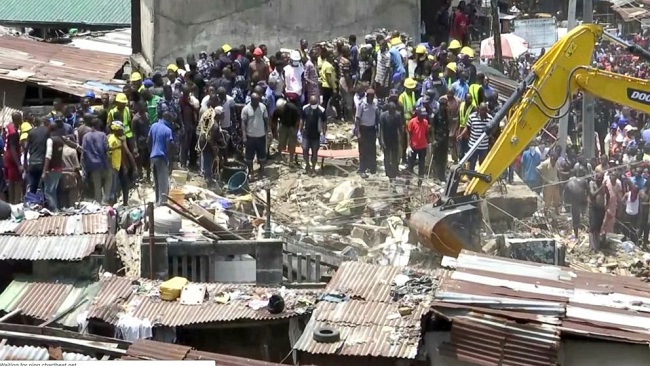
At least 10 people have been killed and many others still trapped after a building housing a school and apartments collapsed Wednesday in Lagos, Nigeria.
The three-story building collapsed in a place called Ita Faji, a densely populated area, around 10:00 local time. Shocked residents, onlookers and parents raced to the site to initiate rescue efforts before emergency workers had arrived.
The school had 172 registered pupils. Local officials said it was difficult to give accurate casualty figures as the rescue operation was still ongoing. Rescued victims were sent to The Lagos Island General Hospital for treatment where 41 people were confirmed to be in a stable condition.
The building had been marked three times for demolition, according to Lagos state building officials. The exact cause of the collapse is yet to be ascertained. A government official said a thorough investigation into the incident will be launched.
Building collapses often occur in Lagos as some property developers fail to adhere strictly to building laws and regulations. In most cases, heavy loads are placed on buildings and inferior materials often used in construction work.
(Source: Reuters)
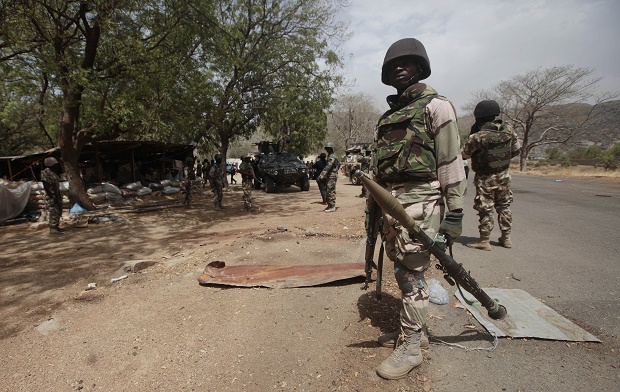
Five civilians were killed in fighting between government troops and Boko Haram militants in northeastern Nigeria, locals and civilian militia said Sunday. The deaths happened in the town of Buni Yadi, in Yobe State, on Saturday, in an attack that the military said also killed five militants and four soldiers.
Army spokesman Sagir Musa said five militants “met their Waterloo” as they attempted to overrun a military base at about 6:00 pm (1700 GMT) on Saturday. At about the same time, there were attacks on military positions in Gajibo and Gajiganna, north of the Borno State capital, Maiduguri, security sources in the city said.
In Buni Yadi, local resident Aisami Lawan told AFP, “The attackers came around 5:30 pm. The fighting lasted more than two hours. A stray projectile hit one of the houses nearby, killing all five occupants. Eleven people were also injured from stray bullets and shrapnel.”
The five civilians who were killed were buried on Sunday morning, he added. A member of the Civilian Joint Task Force militia assisting the military with security confirmed the account and said Boko Haram militants were killed after the attack.
“When the terrorists turned back, a detachment of CJTF was waiting and laid ambush to them,” he added. “An officer and three soldiers have lost their lives during the encounter,” he said, adding that five others were wounded.
Musa said the heavily-armed militants were in four gun trucks and two armored vehicles. Troops seized weapons and ammunition, he added. The military base in Buni Yadi has been targeted before in the conflict.
(Source: AFP)
…Be Neutral, APC urge INEC
…Resign immediately, PDP tells INEC chairman
…Buhari planning to disenfranchise Nigerians, Atiku says
The Independent National Electoral Commission (INEC), postponed the general elections by a week, less than five hours to the start of the polls on Saturday.
INEC Chairman, Professor Mahmood Yakubu, who announced the decision at a press briefing held at 2:44 am on Saturday morning in Abuja, explained that the decision to postpone the polls followed a careful review of the implementation of the logistics and operational plans put in place for the exercise.
The INEC boss reiterated the commitment of the electoral body to conducting a free, fair and credible exercise.
According to him, the postponement of the elections would afford them the opportunity to address issues raised, adding that “although the decision was a tough one to make.”
Professor Yakubu revealed that the commission will meet with key stakeholders to update them on this development at 2pm today, at the Abuja International Conference Centre.
Announcing the new dates scheduled for the general elections, the INEC boss stated: “Following a careful review of the implementation of its logistics and operational plan, and the determination to conduct free, fair, and credible elections, the commission came to the conclusion that proceeding with the elections as scheduled is no longer feasible.
“Consequently, the commission has decided to reschedule the Presidential and National Assembly elections to Saturday, 23 February 2019.
“Furthermore, the Governorship, State House of Assembly, and Federal Capital Territory Area Council elections are rescheduled to Saturday, 9 March 2019.
This will afford the commission the opportunity to address identified challenges in order to maintain the quality of our elections.”
However, reacting to the postponement of the general elections, the All Progressives Congress (APC), said they “received the news of INEC’s decision with great disappointment and disillusionment.”
Faulting the decision by the electoral body in a statement on Saturday by the spokesperson for the APC Presidential Campaign Council, Festus Keyamo, said
the party “condemn and deprecate this tardiness of the electoral umpire in the strongest terms possible.”
He stated: “President Muhammadu Buhari had since cooperated fully with INEC by ensuring everything it demanded to conduct free and fair elections were promptly made available to it.
“We do hope that INEC will remain neutral and impartial in this process as the rumour mill is agog with the suggestion that this postponement has been orchestrated in collusion with the main opposition.”
Also reacting to the postponement of the general elections, the National Chairman of the Peoples Democratic Party (PDP), Prince Uche Secondus has said that the ‘shoddy’ arrangements for this election by INEC, is a deliberate predetermined agenda of President Muhammadu Buhari to cling on to power.
Prince Secondus stated that the postponement which is part of a grand design by APC to thwart the will of Nigerians at all cost, “clearly exposes INEC as a failure” and called on the Chairman of the Commission, Prof Mahmood Yakubu, to resign immediately.
The PDP leader warned that the party will not accept anything short of a well organized electoral process devoid of manipulation, harassment and intimidation of voters and the opposition particularly members of the PDP.
According to Secondus, “having failed in all their nefarious options to enable them to cling on to power, the APC and the INEC came up with the idea of shifting election, an action that is dangerous to our democracy and unacceptable.”
On his part, The presidential candidate of the Peoples Democratic Party (PDP), Atiku Abubakar has said that the postponement of elections in Nigeria by INEC, is a move by President Muhammadu Buhari to disenfranchise the Nigerian people.
Atiku in a statement on Saturday, February 16, alleged that President Buhari instigated the move to postpone the elections by the electoral umpire.
He said: “There was no reason for the postponement of the elections. The Buhari administration has had more than enough time and money to prepare for these elections, and the Nigerian people were poised and ready to perform their civic responsibility by voting in the elections earlier scheduled for Saturday, 16 February 2019.”
According to him, President Buhari instigated the postponement because it was obvious he had fallen out of favour with the people.
He stated: “Knowing that the Nigerian people are determined to reject them, they are desperate and will do anything in their power to avoid their rejection by the Nigerian people.”
Atiku urged Nigerians to frustrate all plans aimed at disenfranchising them, by coming out in even greater numbers on Saturday, 23 February and Saturday, 9 March respectively, to vote.
Per Second News
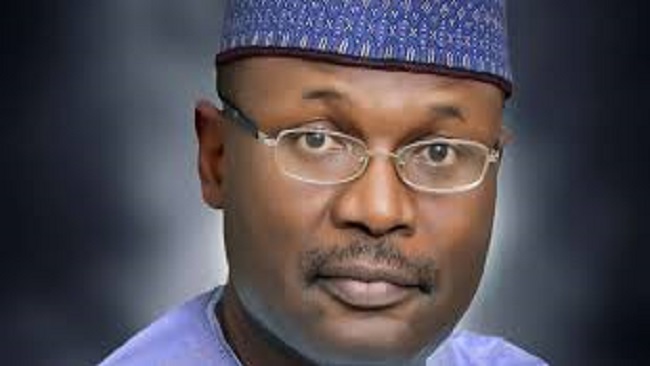
The Independent National Electoral Commission has announced the postponement of the Presidential and National Assembly elections earlier scheduled for (Saturday) by one week.
The commission rescheduled the Presidential and National Assembly Elections to Saturday, February 23, 2019 while the governorship, State Houses of Assembly and Federal Capital Territory Area Council polls earlier fixed for March 2 would now be conducted on Saturday, March 9 2019.
“The Independent National Electoral Commission met on Friday, February 15, 2019, and reviewed its preparations for the 2019 General Elections scheduled for Saturday, February 16 2019 and Saturday, March 2 2019, said chairman of INEC, Prof. Mahmood Yakubu, early Saturday morning.
“Following a careful review of the implementation of its logistics and operational plan and the determination to conduct free, fair and credible elections, the commission came to the conclusion that proceeding with the elections as scheduled is no longer feasible.
“Consequently, the commission has decided to reschedule the Presidential and National Assembly Elections to Saturday, February 23 2019. Furthermore, the Governorship, State House of Assembly and Federal Capital Territory (FCT) Area Council Elections is rescheduled to Saturday, March 9 2019. This will afford the commission the opportunity to address identified challenges in order to maintain the quality of our elections.
“This was a difficult decision for the commission to take, but necessary for the successful delivery of the elections and the consolidation of our democracy.
“The commission will meet key stakeholders to update them on this development at 2pm on Saturday 16 (today) February 2019 at the Abuja International Conference Centre.”
Per Second News
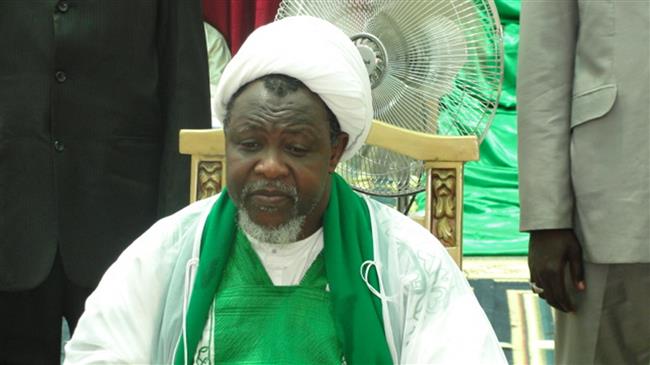
The Islamic Movement in Nigeria (IMN) says the country’s army is plotting to kill incarcerated top Muslim cleric Sheikh Ibrahim Zakzaky in a “staged” shootout.
In a statement on Wednesday, the IMN exposed a plan by the security agencies in Nigeria to kill Sheikh Zakzaky while in his detention facility.
The plot to kill the top cleric emanated from an exposed letter – titled ‘Plans by Islamic Movement in Nigeria to raid selected detention facilities in the country during the 2019 general election’ – sent to the office of the Inspector General of Police from the office of the National Security Adviser (NSA).
The IMN statement, signed by S. I. Shuaib on behalf of the Academic Forum of the IMN, said “on January 25, 2019, the office of National Security Adviser, wrote a letter to the Inspector General of Police, telling him some concocted lies that the Islamic Movement is planning to attack some selected detention facilities in the country during the 2019 general election.”
The IMN said in its statement that the army wants to stage the attacks via a fake Shia Muslim group against some detention centers including where they are keeping the prime target, Sheikh Zakzaky.
“That will give them the chance to frame a story that Shias attempted to forcefully free Sheikh Zakzaky and others, so there was an exchange of fire, and as a result they shot their leader,” the statement said.
The IMN stressed that it has always abided by law and will continue to do so.
The movement will only follow legal ways to secure Zakzaky’s release, it added.
The statement said all Nigerians and the rest of the world know that the Islamic movement is not armed, adding “this plot will fail.”
It also pointed to the killings of hundreds of IMN supporters by the army in 2015, and said at that time, the movement only filed a lawsuit against the perpetrators and never used violence.
Zakzaky, the leader of the Islamic Movement in Nigeria, has been held in detention since December 2015 and was charged just in April 2018 with murder, culpable homicide, unlawful assembly, disruption of public peace and other accusations. He has pleaded not guilty.
In 2016, Nigeria’s federal high court ordered his unconditional release from jail following a trial, but the government has so far refused to set him free.

The top cleric, who is in his mid-sixties, lost his left eyesight in a raid which was carried out by the Nigerian army on his residence in the northern town of Zaria in December 2015.
During the raid, Zakzaky’s wife sustained serious wounds too and more than 300 of his followers and three of his sons were killed. Zakzaky, his wife, and a large number of the cleric’s followers have since been in custody.
Source: Presstv
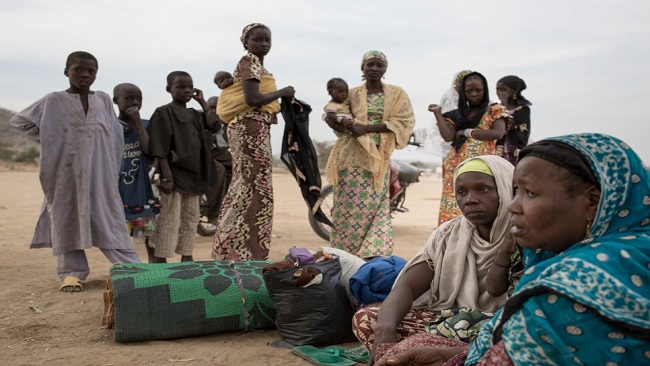
The Honourable Minister of Interior Lt Gen (rtd) Abdulrahman Bello Dambazau has said that Nigeria is collaborating with UNHCR through the Technical Working Group to actualize the voluntary repatriation of the refugees in safety and dignity. Gen. Dambazau disclosed this during the opening ceremony of the Technical Session of the Second Regional Protection Dialogue on the Lake Chad Basin holding in Abuja.
Represented by the Permanent Secretary of the Ministry, Dr Mohammed Bello Umar, the Minister said, in line with international best practices, biometric capturing of IDPs/Nigerian returnees from Chad, Cameroon and Niger was conducted before resettling them. While enumerating the Federal Government’s achievements on the 2016 action statement, Gen. Dambazau stated that government has ensured ongoing capacity building workshops on strengthening state actors’ response to sexual and gender based violence, sexual agencies in four states which are: “Adamawa, Bauchi, Borno and Gombe”.
He said further that a tripartite agreement for voluntary repatriation of Nigerian refugees in Cameroon was signed in March 2017. Adding that Nigerian military and para-military agencies have collaborated in providing escorts to and during relief material distribution in the affected areas. Gen. Dambazau emphasized that a lot was being done to provide care, maintenance and livelihoods support to refugees and Internally Displaced Persons (IDPs) in different parts of the country.
In her speech at the occasion, the Federal Commissioner for Refugees, Migrants and Internally Displaced Persons, Hajiya Sadiya Farouq said that the Commission have increased the pace of registration, documentation and addressing of nationality issues of affected persons, adding “especially the new arrivals from Cameroon”. Hajiya Farouq said “We have equally developed the Convention Travel Document for Refugees to take the routine refugees status determination to a higher level. We have established new field offices and expanded existing ones in the six geopolitical zones of the country in order to enhance our capacity to provide protection and support services to persons of concern wherever they may be in Nigeria,” she said. Mrs Farouq noted that significant progress has been made in ending the Boko Haram insurgency.
According to her, Nigeria had demonstrated its commitment to implementing the Abuja Action Summit. The Abuja Action Statement on Protection was declared and adopted in June 2016 Four nations in the Lake Chad Basin region namely: Nigeria, Niger, Chad and Cameroon Republics, under the technical facilitation of the UNHCR jointly agreed to address the needs of refugees. The four nations agreed to proactively enhance protection and respond to the urgent needs of refugees, IDPs and other affected populations in the region.

The Nigerian Bar Association, NBA, has directed its members to boycott courts across the country in protest of the manner in which the former Chief Justice was suspended by the president.
NBA in a circular directed that its members should stay away from all courts for two days (between 29 – 30 January 2019). The decision was taken after the NBA’s National Executive Committee, NEC, met on Monday.
The association joins a long list of groups – home and abroad that have criticized the manner in which President Buhari replaced ex Chief Justice Walter Onnoghen.
Buhari suspended Onnoghen last Friday and immediately replaced him with Justice Ibrahim Tanko Mohammed, being the next most Senior Justice in the Supreme Court. Tanko took the judicial oath as Chief Justice of Nigeria in an Acting Capacity.
Buhari cited an order from the Code of Conduct Tribunal, CCT, that asked that Onnoghen be suspended pending closure of a case of non-declaration of assets.
The suspension has however raised eyebrows in the political arena especially as it comes barely weeks to crucial general elections. The main opposition Peoples Democratic Party, PDP, suspended campaigns as a sign of protest.
The United States and United Kingdom also weighed in stressing their dissatisfaction with the move but the presidency fired back demanding that their allies desist from meddling in Nigeria’s internal affairs.
Source: Africa News
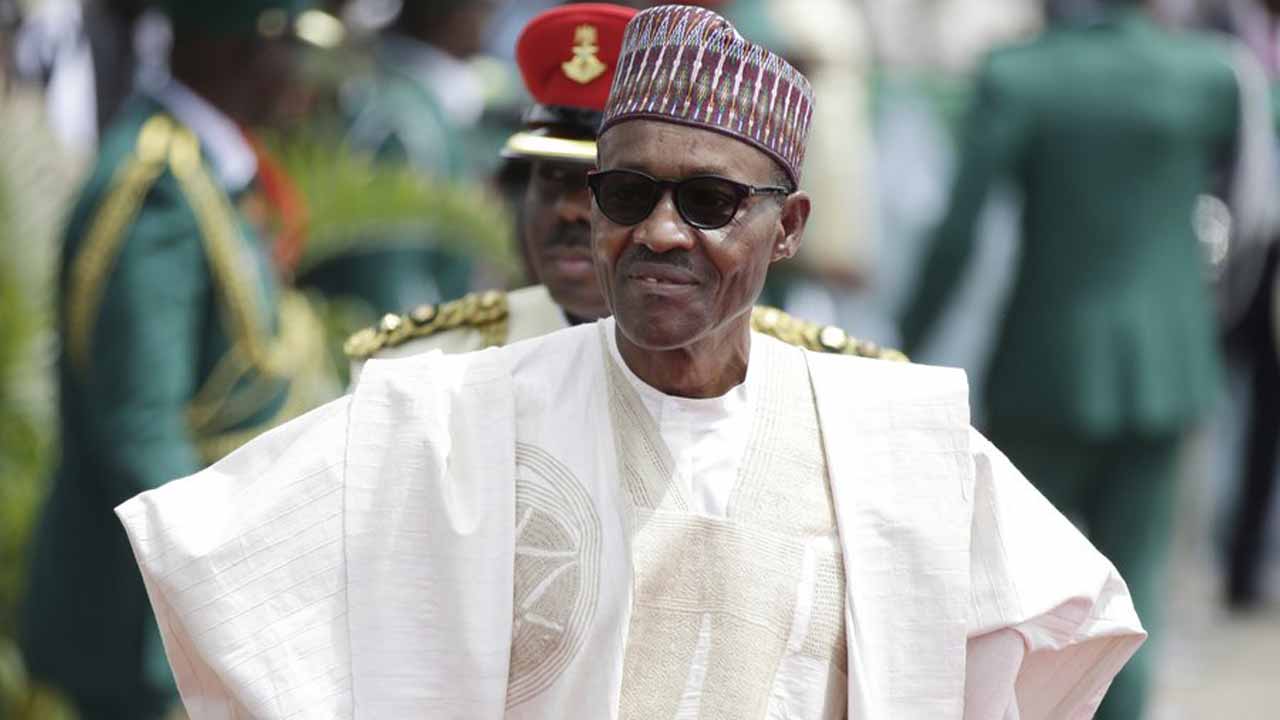
Nigeria’s president on Friday suspended the country’s chief justice, triggering protests from the opposition who described his actions as a ‘judicial coup’ and an ‘act of dictatorship’.
The former military ruler, 76, is seeking re-election at polls on February 16, against a backdrop of mounting concern about vote-buying and violence.
Chief Justice Walter Onnoghen, who heads the Supreme Court, would rule on any legal challenge to the result.
But on January 12 he was slapped with a six count charge relating to the non-disclosure of foreign currency bank accounts, in breach of rules for public officials.
The judge on Thursday secured an injunction ordering the Code of Conduct Tribunal hearing his case to halt proceedings pending his application to have the charges dropped.
But Buhari instead ordered his suspension and indicated he was forced to act because Onnoghen had not stepped down voluntarily himself.
The case was a distraction, he said, but added it was “no secret that this government is dissatisfied with the alarming rate” of acquittals in corruption cases under Onnoghen.
“With the directive of the CCT (Code of Conduct Tribunal) in a letter dated 23rd January, 2019, accordingly, I hereby suspend Hon Justice Walter Nkanu Samuel Onnoghen as the Chief Justice of Nigeria until the final determination of the case against him,” Buhari said.
The initial charges against Onnoghen, reportedly made by a former spokesman for Buhari, and the speed with which he was brought to court has dominated headlines in Nigeria for days.
On Friday, Buhari’s main challenger, Atiku Abubakar, of the Peoples Democratic Party, called the suspension a “brazen dictatorial act”.
It was “the latest action in the ongoing rape of our nation’s hard-earned democracy by those who dined with anti-democratic forces”, he said in a clear reference to Buhari’s army past.
Buhari seized power in December 1983 by overthrowing civilian president Shehu Shagari, ruling with an iron fist until he was ousted by general Ibrahim Babangida in August 1985.
He has since acknowledged he cannot change the past, calling himself a “converted democrat” but has struggled to shake off his autocratic reputation.
Abubakar, a former vice-president, said the suspension of Onnoghen was “symptomatic of the increasing desperation” of his rival to cling on to power.
“(I) call on Justice Onnoghen and the judiciary to resist with every legal and constitutional means that they can muster,” he said.
“This act of desperation is geared towards affecting the outcome of the 2019 Presidential elections,” said Atiku.
The Coalition of United Political Parties, an opposition grouping supporting Abubakar, meanwhile called it “a judicial coup that must be resisted by all lovers of democracy”.
“Buhari has finally overthrown constitutional governance. This factionalisation of the judiciary will not stand,” it added in a statement.
Under Nigeria’s constitution, a chief justice can be removed only if he is convicted of an offence or if the Senate upholds a presidential request to do so by a two-thirds majority.
“Onnoghen’s illegal removal was aimed at stopping the swearing in of members of the 2019 general election petition tribunal,” said CUPP spokesman Ikegna Imo Ugochinyere.
Buhari said he was acting on the recommendation of the Code of Conduct Tribunal.
Clement Nwankwo, executive director of the Abuja-based Policy and Legal Advocacy Centre, said Buhari had “violated the constitution”.
“Unless the president has decided to operate a dictatorship, he really must rescind this so-called decision,” said Nwankwo, who chairs the Situation Room, a group of more than 70 civic groups monitoring the electoral process.
He called on parliament to reconvene and review the decision.
Buhari initially delayed the appointment of Onnoghen, after he became acting chief justice in November 2016.
His appointment was only confirmed by parliament in March 2017, prompting speculation Buhari was not keen to endorse his candidacy.
Onnoghen has since criticised what he said was the politicisation of judicial appointments in Nigeria and cleared Senate leader Bukola Saraki on corruption charges.
Saraki has accused the government of targeting him because he was not its first choice as leader of the upper house of parliament.
Buhari has been accused of surrounding himself with ministers, advisors and officials from the predominantly Muslim north, his home region.
Onnoghen is from Cross Rivers state in the Christian-majority south, while Muhammad is from the northeastern state of Bauchi.
Source: Africa News