
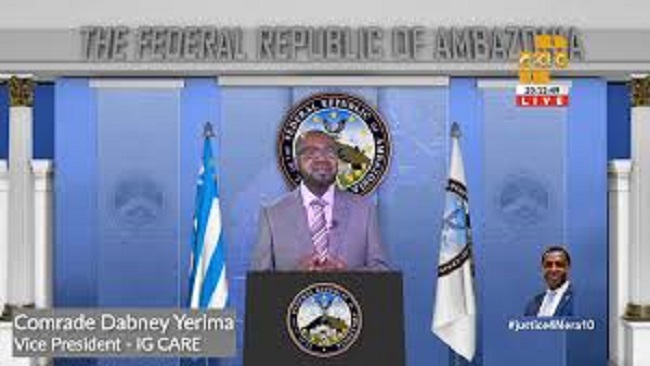
Ambazonia Interim Gov’t reacts to Pope Leo’s visit
The Visit of His Holiness the Pope to French Cameroun and Ambazonia
The people of the former British Southern Cameroons, now known as Ambazonia, take note of the visit of His Holiness, the Pope, to French Cameroun and Ambazonia in April this year, at a time when our land has endured nine years of a devastating and unresolved war of genocide.
As Head of the Roman Catholic Church, Sovereign of the Vatican City, and a global moral voice for peace and justice, the Pope carries not only spiritual authority but also a profound responsibility to stand with the oppressed, the suffering, and the voiceless.
Ambazonia holds the Church in deep respect. In our towns and villages, Catholic parishes have long been pillars of faith, education, healthcare, and community life. In times of fear and displacement, some Church leaders have kept the moral value of the church by speaking truth to power and the Church has often been a place of refuge. For this, we remain grateful.
We therefore call upon Roman Catholic faithful across Ambazonia to come out in large numbers to welcome the Holy Father warmly and peacefully. Let them receive him with dignity, and let them tell him their story firsthand. The widows, the orphans, the displaced, the imprisoned, and the silenced must have their voices heard. The Church must keep its moral standard and remain steadfast in truth.
For nine years, Ambazonia has witnessed a war of genocide ongoing, grave human rights violations, destruction of communities, displacement of civilians, and the imprisonment of political leaders and activists. Among those detained are the Nera-10 and many other political prisoners held in the prisons of French Cameroun. Amid this tragedy, the Catholic Church stands as one of the few moral institutions that has courageously attempted to chart a peaceful path toward justice and dialogue.
As far back as 2017, the Bishops of the Bamenda Ecclesiastical Province proposed a clear and constructive roadmap aimed at ending the escalating violence and opening a pathway for genuine negotiations between the government of French Cameroon and the people of Southern Cameroons (Ambazonia). Their proposal called for an immediate cessation of hostilities, sincere dialogue, and the addressing of the root causes of the crisis. Tragically, this well-intentioned and morally grounded initiative was ignored by the French Cameroun government.
Recognizing the urgency of the situation and the deepening humanitarian catastrophe, the late Cardinal Christian Wiyghan Tumi, a revered servant of God and respected national figure, took an even more courageous step. Determined to ensure that the voice of the people would be heard, Cardinal Tumi spearheaded a broad consultation among the people of Southern Cameroons to determine what they believed to be the most just and permanent solution to the conflict.
Despite numerous obstacles placed in the way of organizing the Anglophone General Conference by the French Cameroun Government, Cardinal Tumi and other religious leaders proceeded to conduct a wide consultation and survey among Ambazonians at home and in the diaspora. The results were clear and unmistakable: the overwhelming majority of respondents expressed their desire for complete independence as the only viable path to lasting peace, dignity, and justice.
This consultation represented one of the most credible and transparent attempts to democratically capture the aspirations of the people during the ongoing conflict. It was an effort grounded in moral authority, consultation, and peaceful resolution rather than violence. Unfortunately, these findings, like the earlier proposals of the Bishops, were largely ignored by the authorities of French Cameroun.
Today, as the war continues to claim innocent lives and devastate communities, it is important to remember that peaceful pathways were offered. The Church provided a moral compass and created opportunities for negotiations. The people themselves expressed their aspirations through consultation. The tragedy of this war of genocide is not only the violence we witness on a daily basis, but also the missed opportunities for peace that could have prevented years of bloodshed. Peace cannot be built on silence or denial. It must be built on truth, justice, and the freely expressed will of the people.
As Ambassador for Peace, the Pope speaks truth to power. We plead with him to address openly the realities of the war in Ambazonia and to call unequivocally for:
1. An immediate cessation of hostilities;
2. The release of the Nera-10 and all political prisoners;
3. Protection of civilians and respect for international humanitarian law;
4. A genuine, inclusive, and internationally mediated dialogue aimed at a negotiated settlement of the conflict.
The Holy See has historically played important roles in mediation and reconciliation across the world. We believe the Vatican can once again offer its high office as neutral ground for negotiations. We therefore call upon the Holy See to recognize the efforts that were made and to support renewed, credible, and inclusive negotiations that respect the clearly expressed will and dignity of the people of Southern Cameroons/Ambazonia.
Ambazonia stands ready and willing to meet with the Pope at the Vatican in Rome and to engage sincerely in any initiative undertaken by the Vatican to bring about peace, justice, and a sustainable political solution. Our people desire not perpetual conflict, but dignity, security, and the right to determine their future through peaceful means.
This visit can not be ceremonial alone. It must be prophetic. It must be courageous. It must reflect the moral clarity that the world expects from the Chair of Saint Peter.
May truth guide this moment.May justice anchor it.And may peace finally take root in our land.
Dabney Yerima
Vice President the Federal Republic of Ambazonia


