
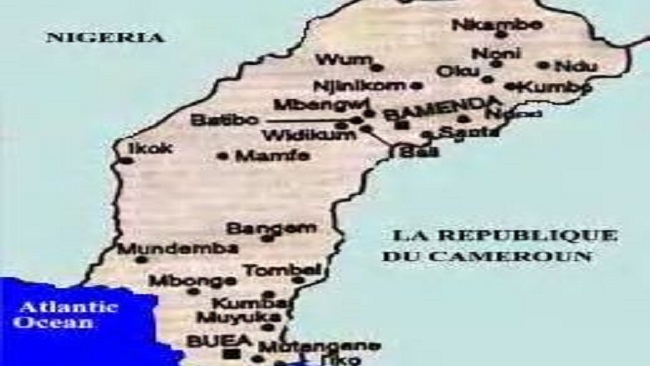
Southern Cameroons Crisis: UN situation report
Between January and December 2025, at least 269 access constraints were documented in the North-West and South-West (NWSW) regions, with two humanitarian workers injured during this period.
Humanitarian activities are not possible on Mondays, which are declared “ghost town” days, and during lockdowns imposed by non-State armed groups (NSAGs). NSAGs enforced several lockdowns across the NWSW regions, including one to disrupt National Day celebrations on 20 May, another to obstruct the start of the school year in September, and a third aimed at disrupting the October elections. Additionally, in July, localized lockdowns in Ngo-Ketunjia, Donga-Mantung, and Bui fur ther restricted humanitarian access to these divisions.
Particularly in the SW, humanitarian partners faced bureaucratic impediments, resulting in operational delays and some denials to implement humanitarian activities in cer tain areas. The most affected divisions remained Lebialem and Ndian.
Improvised explosive devices (IEDs) continued to be used by NSAGs, especially in the North-West (in particular in Bui and Momo), primarily to attack State security forces. Although humanitarian workers were not a direct target, the use of IEDs in highly populated areas and on main roads posed a risk for all civilians. At least 131 IED-related incidents were recorded, 97 in the NW and 34 in the SW.
Regarding attacks against education, 62 incidents were recorded in the NW and 19 in the SW. As for healthcare, 19 incidents were documented in the NW and one in the SW. Education-related incidents in the North-West remained consistently high throughout the year compared to the South-West, peaking sharply in the fourth quarter. In contrast, the South-West experienced fewer incidents overall, with occurrences more evenly distributed across all quarters.
A major challenge impacting the NWSW regions was persistent underfunding. This financial gap severely restricted the scale of humanitarian operations, hindering efforts to pre-position critical supplies, maintain sufficient staffing, and invest in the logistical and security measures required to overcome access constraints.
Culled from reliefweb


