
Unity Palace steps in over cargo scanning dispute at Douala port
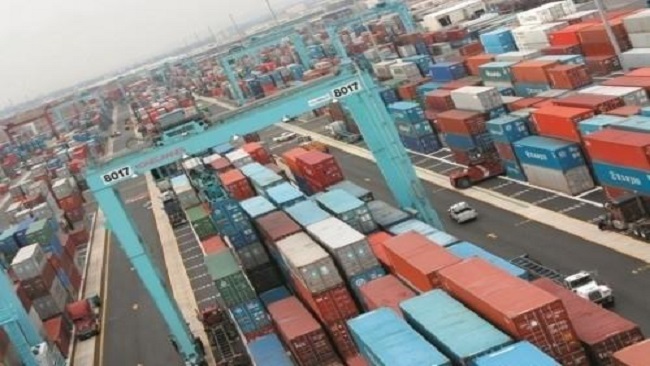
Cameroon’s presidency has stepped in to address growing tensions over cargo scanning operations at the Port of Douala-Bonabéri. According to an official document seen by Business in Cameroon, the secretary-general of the presidency, Ferdinand Ngoh Ngoh, convened a meeting on January 21, to discuss the “difficulties linked to the scanning of goods at the Port Authority of Douala (PAD).” No official information has yet been released on the outcome of the meeting, which was held at the presidency’s secretariat.
The intervention follows a dispute between the Ministry of Finance and the management of the PAD over the cargo scanning contract at the port. In a letter dated December 9, 2025, addressed to the secretary-general of the national port community (Port Synthèse), PAD Director General Cyrus Ngo’o announced that, effective January 1, 2026, scanning operations would be carried out by Transatlantic D SA.
The company replaces Société Générale de Surveillance (SGS), which had handled scanning services since 2015 under a public-private partnership with the Cameroonian state. The scope of operations has also expanded. While SGS was responsible only for container scanning, Cyrus Ngo’o said Transatlantic D SA now covers all cargo flows. “The scope covers all goods passing through the port, both imports and exports, regardless of the mode of packaging, in line with the government’s overall policy on securing borders and national territory,” he wrote in the December 9 letter.
The shift to 100% scanning and the change of operator have, however, met resistance within the government. In a letter dated December 29, 2025, to the PAD director general, Finance Minister Louis Paul Motazé voiced his opposition and called for the existing contractual framework to be maintained. He instructed the PAD to comply with the terms of the scanning inspection contract signed with SGS on March 2, 2015, stressing that the customs administration and all relevant finance ministry services had been directed to follow this position.
At the PAD, an authorized source argued that the move goes beyond customs revenue concerns. According to this source, the concession granted to the new operator is part of a broader project to secure the Douala-Bonabéri port area, rather than a measure focused solely on container scanning. Despite the finance ministry’s objections, Transatlantic D SA began operations on January 2, 2026.
The new operator has since highlighted what it describes as a smooth start. In a promotional message released on January 12, 2026, Transatlantic D SA said it had scanned 2,856 containers between January 2 and the initial rollout phase, with 2,455 inspections fully validated. The company also reported 1,682 usable images, covering both 20-foot and 40-foot containers, and said the results demonstrated “controlled operational capacity from the first days of operation.”
Transatlantic D SA also insisted that SGS no longer carries out any scanning activities at the port, stating that the former operator’s contract had expired and was not renewed. According to the company, since January 1, 2026, it has been the sole operator authorized to perform non-intrusive cargo scanning at the Port of Douala-Bonabéri.
Despite these assurances, confusion reportedly persists on the ground. In a notice published on January 19, 2026, the PAD director general reminded users that, since January 2, only payments made to Transatlantic D SA are valid for scanning fees. He urged administrations still applying the former payment system to deactivate it immediately to avoid double billing for port users.
The presidency’s expected arbitration aims to resolve what has become an administrative standoff, described as potentially damaging for users of the Port of Douala-Bonabéri.
Source: Business in Cameroon


