
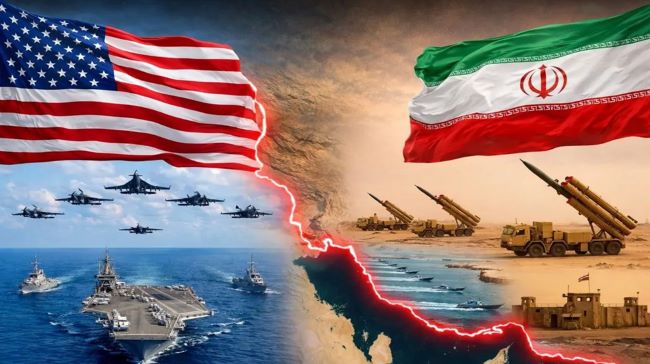
World leaders welcome MoU that ends US-Iran war
A chorus of international praise has greeted the memorandum of understanding (MoU) finalized between Iran and the United States, which brings an immediate and permanent end to the US‑Israeli war of aggression on Iran, lifts the naval blockade, and reopens the Strait of Hormuz.
UN Secretary‑General Antonio Guterres welcomed the agreement as a “critical step” toward resolving the conflict.
“The Secretary‑General hopes that the parties will build on this new momentum and redouble their efforts towards a final resolution of the conflict,” his statement read.
Qatari Prime Minister and Foreign Minister Sheikh Mohammed bin Abdulrahman Al Thani said Qatar “welcomes the agreement” and thanked Pakistan for its mediation, expressing hope that all parties will engage in future negotiations “in a positive and constructive spirit.”
Turkish President Recep Tayyip Erdogan said he views the deal as “an important development for establishing peace and tranquility in our region” and welcomed it with satisfaction. He called for avoiding any provocations that could escalate tensions before the signing and thanked Pakistan, Qatar and Saudi Arabia.
Britain, France, Germany and Italy issued a joint statement saying they are “prepared to lift relevant sanctions in response to clear, verifiable steps by Iran on its nuclear programme” and will work intensively with all sides to achieve a long‑term diplomatic settlement.
Japanese Prime Minister Sanae Takaichi said Japan “strongly hopes” that a final agreement on Iran’s nuclear issue will be reached soon.
Australian Prime Minister Anthony Albanese welcomed the agreement, noting that Australia has long called for de‑escalation and an end to the conflict.
New Zealand Foreign Minister Winston Peters called the deal “pivotal” and “constructive,” stressing that “dialogue and diplomacy remain the most effective means of resolving longstanding issues.”
The MoU, finalized late Sunday, will be signed on Friday in Switzerland.
Under its terms, the war and all military attacks, including in Lebanon, have ended immediately, and the US naval blockade of Iran has been lifted.
British Prime Minister Keir Starmer also welcomed the agreement reached between the United States and Iran, describing it as a step towards regional stability.
“I warmly welcome today’s agreement reached between the United States and Iran. This is a hugely important step forward in ending the war, ensuring regional stability and re-opening the Strait of Hormuz,” he said in a press release on Sunday.
Starmer then thanked the countries that had contributed to achieving this agreement, and added, “We have long urged de-escalation, and this is the progress we had hoped to see.”
French President Emmanuel Macron, also in a statement posted on X early Monday, welcomed the Iran-US agreement and called for its rapid and complete implementation.
“I welcome the agreement reached between the United States and Iran — an agreement that is the result of diplomatic efforts in which several partners have played a role,” he wrote.
The French President added that the agreement should pave the way for comprehensive negotiations in the service of peace and security for all in West Asia.
German Chancellor Friedrich Merz, in a message on X, congratulated both Iran and the US on the agreement and called for its decisive implementation.
“I welcome the agreement between the US and Iran and congratulate President Trump and the Iranian side on this diplomatic breakthrough. This can pave the way towards a reinvigorated global economy and a more secure Middle East. It is crucial to implement it with determination,” he wrote.
Merz stressed that the German government will continue to participate in and promote all diplomatic efforts to achieve the goals of this agreement, and that Berlin remains in close contact with the United States, European partners, and regional countries.
EU foreign policy chief Kaja Kallas described the deal as a “potential breakthrough” that could create space for further talks on Iran’s nuclear program and other key issues.
She said the European Union is ready to play an active role in the next phase of negotiations.
European Commission president Ursula von der Leyen also welcomed the agreement and urged all sides to implement it quickly.
She said the immediate reopening of the Strait of Hormuz was essential for regional stability and the global economy.
Von der Leyen added that the deal should lead to broader talks on peace and security in West Asia and help end Iran’s nuclear and ballistic programs.
Spanish Foreign Minister José Manuel Albares announced in a message on X that “dialogue and negotiation” can resolve “outstanding issues” and also guarantee a ceasefire, “including in Lebanon.”
While expressing gratitude for the “efforts of the mediators,” he stressed that “free and safe navigation through the Strait of Hormuz is essential.”
Source: Presstv


