
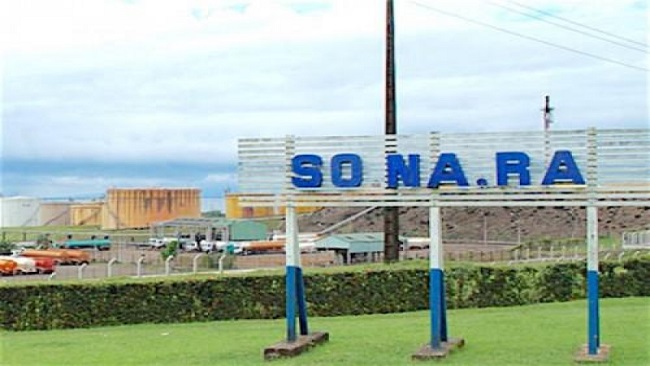
Sonara secures CFA6.5 billion insurance cover 7 years after refinery fire
Cameroon’s state-owned refinery, Sonara, has awarded more than CFA6.5 billion in insurance contracts to cover its facilities, operations and liabilities from 2026 to 2029. The contracts were awarded to a group made up of Sanlam, Royal Onyx, AREA and AFG, according to several decisions published on May 29, 2026.
In all, Sonara awarded four separate contracts for a three-year period. The largest covers the company’s assets, at CFA5.1 billion. The group will also provide civil liability cover for CFA706.8 million, transport risk insurance for CFA367.2 million and work-site insurance for CFA346.4 million. The total package amounts to about CFA6.52 billion.
Beyond the size of the contracts, the deal carries particular weight for the Cameroonian refinery. It comes nearly seven years after the May 31, 2019 fire that destroyed several key units at the Limbé industrial complex and halted the country’s refining activity.
The Lasting Shock of the 2019 Fire
The fire marked a turning point in Sonara’s history. A government-ordered administrative inquiry concluded that the blaze was accidental and ruled out sabotage. But the damage was extensive. Four of the refinery’s 13 production units were completely destroyed, three others were partly damaged and nearly 10 million liters of crude oil were lost in the fire.
Beyond the physical damage, the incident quickly raised questions about the refinery’s insurance cover. The issue continued to fuel debate in the years that followed, especially over the renewal of certain policies and the settlement of the claim.
In July 2022, Richard Lowé, chief executive of Activa Cameroon and chairman of the Activa Group, was summoned by investigators from the Special Criminal Court as part of a procedure linked to the Sonara fire. According to information available at the time, the investigation focused in part on suspicions of embezzlement of public funds and systematic negligence that may have contributed to the May 31, 2019 incident.
The exact reasons for the procedure were not officially detailed. Several sources said at the time that investigators were examining the terms under which Sonara’s insurance policy had been renewed. According to the same reports, Activa argued that the cover was no longer valid at the time of the fire because the required premium had not been paid. The insurer reportedly produced letters sent to Sonara before the fire that warned of the consequences of non-payment.
Against that backdrop, Sonara eventually canceled its tender for the 2019-2021 three-year insurance program. Management said the decision reflected changes to the company’s risk profile after the fire, as well as the dispute with Activa over the settlement of the claim.
Securing Reconstruction and Future Operations
That history gives the new insurance program particular importance. Although Sonara has lost part of its refining capacity since the 2019 fire, the company remains exposed to major industrial risks tied to hydrocarbon storage, port operations, fuel transport and reconstruction work at the Limbé site.
By covering its assets, civil liabilities, transport operations and work sites at the same time, Sonara is seeking to strengthen its overall risk management system. The goal is to limit the financial impact of any future incident on a company still weakened by the consequences of the fire.
For Cameroon’s insurance market, the operation ranks among the largest industrial coverage programs awarded in recent years. It also underlines the strategic importance of risk management in state-owned companies that operate in sensitive sectors, where a major incident can carry heavy industrial, budgetary and social costs.
Seven years after the fire that disrupted its business model, Sonara appears determined to draw lessons from an episode that still weighs on its future. More than a simple renewal of insurance contracts, the new program is an effort to provide lasting protection for the assets, liabilities and reconstruction work of a central player in Cameroon’s energy supply system.
Source: Business in Cameroon


