

British press ignores role of ethnic minority doctors in coronavirus fight
As Britain enters deep crisis zone in the battle against the cornavirus pandemic, the country’s health workers are expected to be hit hard in the coming days and weeks.
Indeed, at least four doctors and two nurses have already perished whilst serving on the frontlines of the fight against COVID-19, the disease caused by coronavirus. Incredibly all four doctors are of ethnic minority backgrounds. Even more remarkably all four also happen to be Muslim. Similarly one of the two nurses, Areema Nasreen, was also a Muslim of ethnic minority background.
The four fallen doctors – Alfa Sa’adu; Amged el-Hawrani; Adil El Tayar and Habib Zaidi – were Muslim and hailed from diverse regions including Africa, Asia and the Middle East.
Not surprisingly the British press has tried to “whitewash” the narrative on the struggle against coronavirus by ignoring the central role and unique sacrifice of these four Muslim doctors.
Culled from Presstv
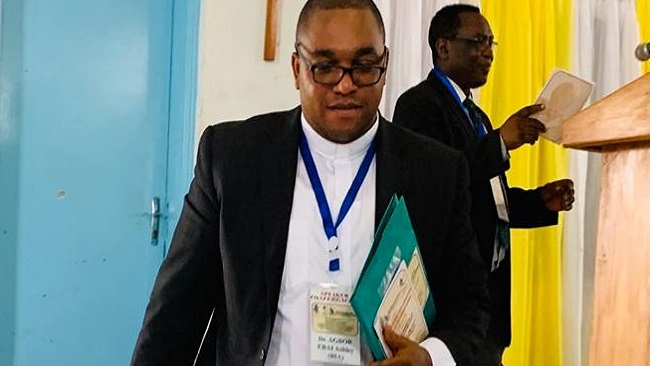
Holy Week and the Trajectory of World History
He had always loved those who were his in the world, but now he showed how perfectly his love was” (John 13:1)
Dear Holy People of God,
God is good, all the time, and all the time, God is good!
This Sunday, we celebrate what our Christian tradition calls Palm Sunday, which is the start of Holy Week. St Paul writes to us in his Letter to the Romans: “But what proves that God loves us is that Christ died for us while we were still sinners. Having died to make us righteous, is it likely that he would now fail to save us from God’s anger?” (Romans 5:8-9). Given the times that we are living in, it might be difficult for many to believe in the love of God. Even for the believer, it can be very tempting, a great trail of faith. But Holy Week has something to say, even to the perilous and precarious situation of a world plagued by COVID 19. Holy Week tells us that though we can humanly be paralyzed by fear, the fear of the unknown, the fear of the present and the future, the fear of death, as disciples in mission to the world, we have a message to the world of the Coronavirus. There is no denying that uncertainties leave us profoundly disturbed, especially the uncertainty of contracting a deadly virus. The Second Vatican Council (1962-1965) wrote these words that I find meaningful to us today, perhaps more so than when they were first written. Permit me make an extensive citation from the Pastoral Constitution of the Church in the Modern World, Gaudium et Spes:
“Nevertheless, in the face of the modern development of the world, the number constantly swells of the people who raise the most basic questions or recognize them with a new sharpness: what is the human being? What is this sense of sorrow, of evil, of death, which continues to exist despite so much progress? What purpose have these victories purchased at so high a cost? What can men and women offer to society, what can they expect from it? What follows this earthly life?
The Church firmly believes that Christ, who died and was raised up for all, can through His Spirit offer man and woman the light and the strength to measure up to their supreme destiny. Nor has any other name under the heaven been given to man and woman by which it is fitting for them to be saved. She likewise holds that in her most benign Lord and Master can be found the key, the focal point and the goal of man, as well as of all human history. The Church also maintains that beneath all changes there are many realities which do not change and which have their ultimate foundation in Christ, who is the same yesterday and today, yes and forever.
It is in the face of death that the riddle a human existence grows most acute. Not only is man tormented by pain and by the advancing deterioration of his body, but even more so by a dread of perpetual extinction. He rightly follows the intuition of his heart when he abhors and repudiates the utter ruin and total disappearance of his own person. He rebels against death because he bears in himself an eternal seed which cannot be reduced to sheer matter. All the endeavours of technology, though useful in the extreme, cannot calm his anxiety; for prolongation of biological life is unable to satisfy that desire for higher life which is inescapably lodged in his breast. Although the mystery of death utterly beggars the imagination, the Church has been taught by divine revelation and firmly teaches that man has been created by God for a blissful purpose beyond the reach of earthly misery.
In addition, that bodily death from which man and woman would have been immune had they not sinned, will be vanquished, according to the Christian faith, when man and woman who was ruined by his own doing is restored to wholeness by an almighty and merciful Saviour. For God has called man and woman and still calls them so that with their entire being they might be joined to Him in an endless sharing of a divine life beyond all corruption. Christ won this victory when He rose to life, for by His death He freed man and woman from death. Hence to every thoughtful man and woman a solidly established faith provides the answer to his anxiety about what the future holds for him. At the same time faith gives the human being the power to be united in Christ with his loved ones who have already been snatched away by death; faith arouses the hope that they have found true life with God. The root reason for human dignity lies in man and woman’s call to communion with God. (Gaudium et Spes, #10, 18, 19).
Dear Holy People of God, as we continue to live with hope during these uncertain times, let us remember that the Christian’s ultimate hope and meaning in life resides in Jesus Christ, who died and rose again from death, opening the possibility of eternal bliss with God for all humanity. Yes, it is human to fear death. But it is Christian to know that in Christ, the dead do not enter into nothingness, into extinction, but enter into what Gaudium et Spes calls the “blissful purpose beyond the reach of earthly misery.” And Holy Week teaches us that it takes a certain kind of people, a certain kind of life, to be able to enter into this blissful mystery at the end of our biological life here on earth.
St John gives us what that kind of life is: “It was before the festival of the Passover, and Jesus knew that the hour had come for him to pass from this world to the Father. He had always loved those who were his in the world, but now he showed how perfectly his love was” (John 13:1)! That is the message we Christians have for a frightened world, a world, perhaps, in need of a new soul, a new direction: That in spite of the global pandemic of Coronavirus, in spite of all the uncertainties marking life in the present, God loves the world (John 3:16), God has not abandoned the world, God will never abandon the world. In Jesus Christ, one of the human race, of us, a truly human being (Council of Chalcedon), has definitely responded to God’s love for the love, a love that binds God forever to the human condition. In Jesus, a human being has definitely committed humanity in a resounding YES to the God’s offer of love for the world. And because of this irrevocable commitment of a human being to the irremovable offer of love to the world by God, the believer, in Christ, with Christ and to Christ (Augustine of Hippo), brings this Divine love to the world. The believer offers the world the GPS of Love that reflects itself in love for other and prepares us for eternal bliss with God. Only a heart that loves can enter into the mysteries of Holy Week, the Week of God’s Total Love that changed the trajectory of world history from the human tendency to absolutize economics, politics, science, power, et cetera, to a civilisation of mutual love.
Fr Maurice Agbaw-Ebai
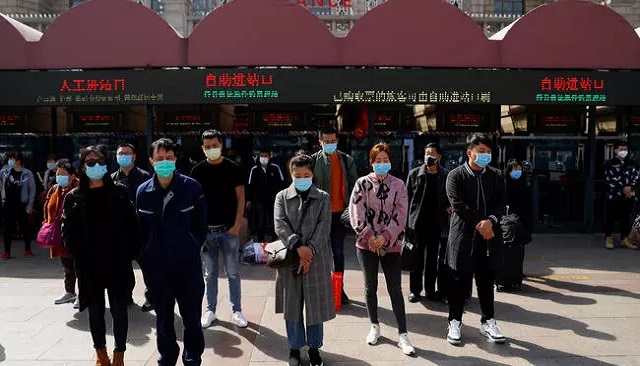
China holds vigil to mourn the thousands killed by the coronavirus epidemic
China on Saturday mourned the thousands of “martyrs” who have died in the new coronavirus outbreak, flying the national flag at half mast throughout the country and suspending all forms of entertainment.
The day of mourning coincided with the start of the annual Qingming tomb-sweeping festival, when millions of Chinese families pay respects to their ancestors.
At 10 a.m. (0200 GMT) Beijing time, the country observed three minutes of silence to mourn those who died, including frontline medical workers and doctors. Cars, trains and ships sounded their horns and air raid sirens wailed.
In Zhongnanhai, the seat of political power in Beijing, President Xi Jinping and other Chinese leaders paid silent tribute in front of the national flag, with white flowers pinned to their chest as a mark of mourning, state media reported.
More than 3,300 people in mainland China have died in the epidemic, which first surfaced in the central province of Hubei late last year, according to statistics published by the National Health Commission.
In Wuhan, the capital of Hubei province and the epicentre of the outbreak, all traffic lights in urban areas turned red at 10 a.m. and all road traffic ceased for three minutes.
Some 2,567 people have died in the city of 11 million people, accounting for more than 75% of the country’s coronavirus fatalities.
Among those who perished was Li Wenliang, a young doctor reprimanded by police in Wuhan for “spreading rumours” when he tried to raise the alarm about the disease.
Since then, the virus has spread to all corners of the globe, sickening more than a million, killing over 55,000 people and paralysing the world economy.
The overall number of confirmed cases reported in the United States now exceeds China’s official tally by threefold.
“Li Wenliang was a hero, he found out about it early…now it’s too late, but now our country is stronger than others,” said Gan Weineng, 78, a Wuhan resident.
Wuhan also banned all tomb-sweeping activities in its cemeteries until at least April 30, curtailing one of the most important dates in the traditional Chinese lunar new year calendar which usually sees millions of families travel to tend to their ancestral graves, offer flowers and burn incense.
They have also told residents, most stuck at home due to lockdown restrictions, to use online streaming services which will allow them to watch cemetery staff carrying out those tasks live.
Some resident burned joss paper, a tradition which they believe sends money and wealth to deceased relatives, on sidewalks and within the confines of their barricaded housing compounds.
Asymptomatic cases
Online, celebrities including “X-Men: Days of Future Past” star Fan Bingbing swapped their glamorous social media profile pictures for sombre photos in grey or black, garnering millions of “likes” from fans.
Chinese gaming and social media giant Tencent suspended all online games on Saturday.
As of Friday, the total number of confirmed cases across the country stood at 81,639, including 19 new infections, the National Health Commission said.
Eighteen of the new cases involved travellers arriving from abroad. The remaining one new infection was a local case in Wuhan, a patient who was previously asymptomatic.
Asymptomatic people exhibit few signs of infection such as fevers or coughs, and are not included in the tally of confirmed cases by Chinese authorities until they do.
However, they are still infectious, and the government has warned of possible local transmissions if such asymptomatic cases are not properly monitored.
China reported 64 new asymptomatic cases as of Friday, including 26 travellers arriving in the country from overseas. That takes the total number of asymptomatic people currently under medical observation to 1,030, including 729 in Hubei.
(REUTERS)
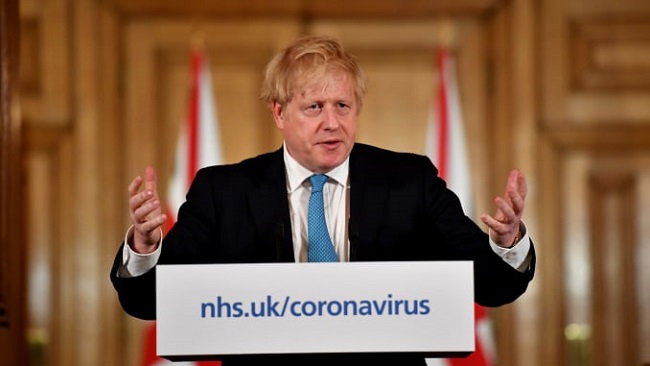
UK government accused of underestimating Covid-19 crisis
For the second time Britons have clapped in unison for doctors and nurses fighting to save Covid-19 victims. They also called for more people to be tested for the virus 3 weeks after the World Health Organization’s Director General spelt it out for everyone.
The UK government admits it did not enter into this crisis with a robust diagnostic industry. Health Secretary Matt Hanckock has promised 17.5 million antibody tests will be bought as soon as one is approved for use but some are proving unreliable.
At the moment around 10,000 people are being tested daily but Hankock has set an ambitious goal of 100,000 tests a day by the end of April. Unlike now, NHS staff and key workers as well as their families will be prioritized and then the wider public.
People are comparing the government’s handling of the crisis to the response of countries like Germany, which seems to be doing well despite having 2.5 times Britain’s confirmed cases.
Germany says it is testing half a million people displaying symptoms of coronavirus every week and has been monitoring the crisis and preparing for it since January, stocking up on testing kits and respirators.
Source: Presstv
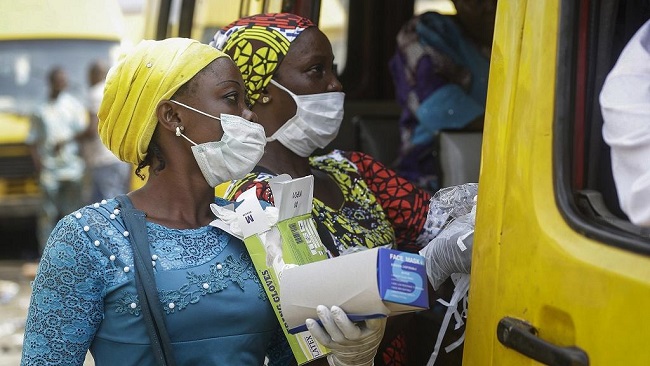
Cameroon records 203 new cases as COVID-19 tally hits 509
Cameroon’s coronavirus tally as of April 3 stood at 509, Health Minister Manaouda Malachie confirmed in his daily briefing posted on Twitter.
Of the current figure, 203 were new cases that came from tests run 800 travellers arrived in the country recently. Cameroon also has 17 recovered patients with eight deaths.
“Our active case finding strategy is starting to pay off. We did 800 tests (majority of travelers) 203 of them are positive but asymptomatic, that we must leave the community and treat,” the Minister wrote in his post.
Cameroon is the most impacted country across Central Africa. Only DR Congo have passed the 100 mark in the region with 134. Gabon, Equatorial Guinea, Congo Republic, Central African Republic and Chad have 21, 16, 22, 8 and 8 cases respectively.
The Minister in outlining government strategy to deal with the pandemic said six main measures were being implemented: massive and generalized testing, placement in immediate treatment of cases, active surveillance of suspect cases.
The remaining are awareness of the populations (hygiene, distance, etc.), border control and development of reliable local expertise for the response.
Source: Africa News
Americans told to wear masks over coronavirus breathing spread fears
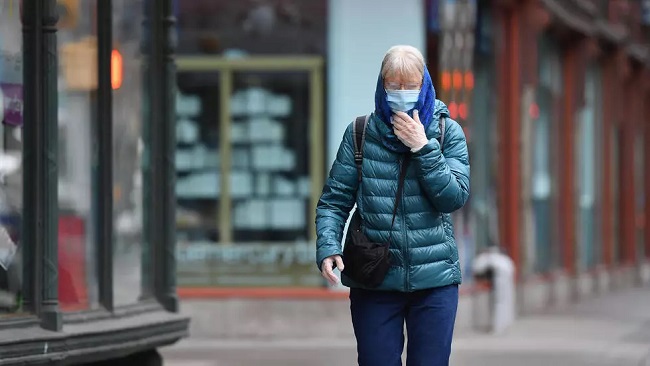
The US government has begun advising people to wear masks if they go outside, pointing to research that shows the coronavirus could be spread just by breathing.
The advice came as America logged another huge rise in its death toll — almost 1,500 in one day — and as new infections continued unabated.
It also came as China — the origin of the outbreak — held a national day of mourning for its citizens killed by the disease.
Since COVID-19 emerged late last year, around 1.1 million people have fallen ill. Almost 60,000 people have died.
Europe accounts for the lion’s share of the dead, with Italy and Spain bearing the brunt.
But the situation is rapidly deteriorating in the United States, and President Donald Trump’s administration on Friday suggested widespread use of simple masks or scarves might help stem the rocketing infection rate.
“It’s going to be really a voluntary thing,” he said. “You don’t have to do it and I’m choosing not to do it, but some people may want to do it and that’s okay.”
Anthony Fauci, head of infectious diseases at the National Institutes of Health, cited “recent information that the virus can actually be spread even when people just speak as opposed to coughing and sneezing.”
The World Health Organization has been more cautious, saying the airborne threat was only known to occur during certain medical treatments.
The US recommendation will likely worsen an already severe shortage of masks in the United States and Europe, which both rely heavily on imports from China.
Officials in New York, the worst affected part of the US, began advising people to wear masks some days ago, and there were signs on the streets that the advice was being heeded.
“I am trying to protect me and my family. If everybody protects themselves, it’s better for all of us,” Eddie Marrero, a 58-year-old handyman, told AFP.
Around 277,000 Americans have tested positive for the disease, and the infection curve shows no sign of flattening, despite nine in ten citizens living under some sort of lockdown.
Field hospitals are sprouting in convention centres, sports arenas and parking lots all over the country as states gird for an expected influx of patients.
China, which appears to be over the worst of its outbreak, on Saturday held a national day of mourning for its dead — well over 3,000 people have died in the country where the virus first emerged late last year.
Cars, trains and ships sounded their horns, and air-raid sirens wailed, as flags were flown at half staff from 10:00am (0200 GMT).
Beijing has said the observance is a chance to mourn virus “martyrs” — an honorific title bestowed by the government this week on 14 medical workers who died fighting the outbreak — including the man who was punished by officials for raising the initial alarm.
– Hope in Europe –
Europe’s awful death toll hit 40,000 on Friday, with Spain reporting more than 900 deaths in 24 hours.
Spaniard Javier Lara survived after being put on oxygen in an overcrowded intensive care unit — a shock to a 29-year-old who was athletic and doesn’t smoke.
“I was panicking that my daughter would get infected. When I started showing symptoms, I said I wouldn’t hold her or go near her,” he said, describing facing death with an eight-week-old as the “worst moment” in his life.
But there were also signs the peak may have hit on the continent.
Hardest-hit Italy recorded 766 new deaths but its infections rose by just four percent, the lowest yet, according to the civil protection service.
“It’s true that the latest figures, as high as they are, give us a little bit of hope, as the growth in new infections is slower than it was a few days ago,” said Chancellor Angela Merkel of Germany, where strict social distancing measures are credited with curbing the spread.
“But it is definitely much too early to see a clear trend in that, and it is certainly too early to think in any way about relaxing the strict rules we have given ourselves,” she added.
– ‘Worst yet to come’ –
There was, however, yet another warning over the fate of the less developed world, especially conflict zones or places with large refugee populations.
“The worst is yet to come,” UN Secretary-General Antonio Guterres said, referring to countries such as Syria, Libya and Yemen. “The COVID-19 storm is now coming to all these theaters of conflict.”
The world economy has been pummelled by the virus and associated lockdowns, with millions more people signing on for unemployment payments in the US.
Financial ratings agency Fitch predicted the US and eurozone economies would shrink this quarter by up to 30 percent and the Asian Development Bank warned the global economy could take a $4.1 trillion hit — equivalent to five percent of worldwide output.
Latin America is heading into a “deep recession” with an expected drop of 1.8 to 4.0 percent in GDP, according to the UN.
Source: AFP
West shields Biya from coronavirus, but not his CPDM regime
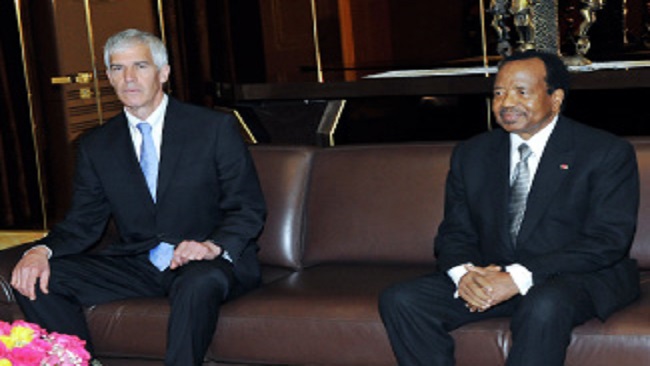
The West through the American ambassador to Cameroon, Peter Henry Barlerin moved decisively and cautioned the 87 year old Paul Biya of the dangers posed by the coronavirus to people of Biya’s age and advised the regime in Yaoundé to adopt a tough and more rigid response to the pandemic. Biya was rushed immediately to Mvomeka’a and since then nothing has been heard about the French Cameroun head of state.
Biya’s minister, Gregoire Owona and senior members of parliament reportedly mixed with the National Assembly Speaker, Cavaye Djibril who a well-placed source has revealed contracted the coronavirus in a hospital in France. Cameroon Intelligence Report understands that many of the ruling CPDM MPs who met Hon. Cavaye Djibril have isolated themselves raising questions about President Biya’s bill of health after a session with Minister Gregoire Owona who had met House Speaker Cavaye Djibril on camera after his reelection.
Parliamentarians and members of the so-called House of Senate have been meeting in Yaoundé but it is President Biya from his self isolating fortress in Mvomeka’a who announced the government’s solidarity fund to combat the spread of the virus. The CPDM plan that was made public by Prime Minister Dion Ngute did not take into consideration Cameroonians forced out of work and their means of livelihood because of the virus.
The Cameroon government plan does not also include ways to escalate social distancing strategies for tackling the virus. Thousands are busy going about their daily activities and in rural areas; large-scale gatherings are still the order of the day making the coronavirus pandemic to look like a joke and above all, a Sino-US-Europe affair.
As the total number of confirmed cases in Cameroon rose to 509, the CPDM regime with no aggressive plan and a failed public-health system has carried its begging bowl to the World Health Organization. Biya and his CPDM crime syndicate are holding on to nothing-not even the social distancing measure which has been very successful in European countries such as Ireland and Germany. We of the Cameroon Concord News Group can now reveal that the Biya-CPDM strategy is no longer to contain the spread of the coronavirus but to propagate its spread in Cameroon and collect millions of US dollars from the World Health Organization and other Cameroonian donors.
So far, the Minister of Communication who himself is not in President Biya’s inner circle has carefully regulated the flow of information on Biya’s health to the Cameroonian public. People all over the country are now focused on what might come next if Biya dies than the deadly coronavirus. The situation in Cameroon has been made more intractable with news of the arrival of French soldiers into the country from Gabon.
Cameroon Intelligence Report is yet to confirm this latest French deployment to Cameroon but what we do know is that the Prime Minister and Head of Government is still pursuing a Francophone policy in Southern Cameroons and has recently appointed Minister Paul Tasong and Njong Donatus as National Coordinator and deputy national coordinator of the presidential plan for the reconstruction and development of the North West and South West regions.
Cameroon government officials have avoided any situation that highlights President Biya’s health and the coronavirus and they have continued to be low key about the dangers of Biya’s passing to eternity. Biya cannot fly abroad and does not plan to be tested by any Cameroonian medical practitioner. He is very frail and there are reports that those who claim to be custodians of power in Yaoundé are taking measures ahead of the game to ensure a smooth transition and continuity with the status quo.
Now, however, some Cameroon political commentators are calling on the regime barons to shift course — from begging and borrowing to sustain the regime and contain the coronavirus to sitting down with the Ambazonian leader, President Sisiku Ayuk Tabe in a transparent forum and discuss the future of both British and French Cameroun. A stitch in time saves nine
But there has been palpable alarm in Etoudi ever since Biya started his self isolating process in Mvomeka’a. The coronavirus is already having a significant impact on the Cameroonian economy, which is now without support from the oil and gas sector. For 37 years as Head of State, Biya has done nothing to keep Cameroon and its people healthy and financially secure.
Consequently, the coronavirus is slowly but surely signaling the end of Mr. Biya-a monstrous liability of a head of state and a political disaster that has been around for decades.
By Soter Tarh Agbaw-Ebai
US and Spanish deaths surge as world virus toll breaks 50,000
The number of confirmed coronavirus deaths accelerated past 50,000 on Friday as the United States, Spain and Britain grappled with their highest tolls yet and the world economy took a massive hit.
The human scale of the pandemic has never been more stark — experts warning that more than one million cases of COVID-19 disease confirmed globally is probably only a small proportion of total infections as testing is still not widely available.
The United States accounts for around a quarter of confirmed cases but Europe is far from being out of danger — Spain reported more than 900 deaths in 24 hours on Friday, for the second day running.
The virus has now killed more 10,000 people across Spain, but not 29-year-old Javier Lara, who has just returned home after being treated in an overburdened intensive care unit.
“I was panicking that my daughter would get infected. When I started showing symptoms, I said I wouldn’t hold her or go near her, or change her nappies,” he told AFP, describing his fear for his eight-week-old after facing death at the “worst moment in his life”.
While Italy still leads the world in fatalities, France, Belgium and Britain have also been hard hit. The UK government is rushing to build field hospitals after a one-day toll of 569.
The battle waged by public health experts across the world ebbed and flowed on Friday, with German experts saying the rate of new infections is slowing thanks to lockdown measures, but Asian city-state Singapore confirming it would close schools and workplaces to fend off a possible upsurge in cases.
– China’s 14 ‘martyrs’ –
The world economy has been pummelled by the virus and associated lockdowns, with more than half the population of the planet under some kind of stay-at-home order.
Some 10 million people in the United States lost their jobs in the last two weeks of March, and economists warn it will get worse.
“No words for this,” said Ian Shepherdson of Pantheon Macroeconomics. “Total layoffs between the March and April payroll surveys look destined to reach perhaps 16 to 20 million, consistent with the unemployment rate leaping to 13 to 16 percent. In one month.”
Things were no better in Europe, where analysts from IHS Markit warned that business activity in the 19-nation eurozone had suffered its worst crunch ever recorded, and the central bank of eurozone member Ireland saying its output could be slashed by 8.3 percent this year.
Financial ratings agency Fitch predicted both the US and eurozone economies would shrink this quarter by up to 30 percent and the Asian Development Bank warned on Friday the global economy could take a $4.1 trillion hit — equivalent to five percent of worldwide output.
World leaders have announced huge financial aid packages to deal with the crisis and the World Bank has approved a plan to roll out $160 billion over 15 months.
The outbreak began last year in China, which announced a day of national mourning on Saturday for those who died fighting against the disease. Fourteen deceased frontline workers will be celebrated as “martyrs” of the epidemic.
In India, where more than a billion people are under lockdown, Prime Minister Narendra Modi called on Indians to hold candles and mobile phones aloft for nine minutes on Sunday to dispel the “darkness and uncertainty” of the pandemic.
Australia took the extreme step of declaring it would not allow the 15,000-strong crews of multiple virus-stricken cruise ships to disembark and ordering them out out of its waters — dealing the world’s teetering tourism industry another blow.
– ‘Really scary’ –
Even in the world’s richest country, health authorities are under pressure. New Yorkers like COVID-19 survivor Diana Berrent are donating blood plasma in the hope their hard-won antibodies can be used to help treat future victims.
“We can be superheroes,” the 45-year-old photographer told AFP. “These are unprecedented, frightening times where everything is beyond our control — except we as survivors can help.”
The virus has chiefly killed the elderly and those with pre-existing medical conditions, but recent cases of deaths among teenagers and of a six-week-old baby have highlighted dangers for people of all ages.
And in Spain, mothers like 34-year-old Vanesa Muro who gave birth while suffering from COVID-19 are warned not to touch their newborn without wearing gloves and masks.
“It’s hard,” she told AFP at her home in Madrid.
“He grabs your finger, the poor little thing and holds on to the plastic, not on to you. But at least that’s another day over, you have to think of it like that otherwise you get depressed.”
The personal strains of the virus have also not spared world leaders.
German Chancellor Angela Merkel left her Berlin home for the first time in almost two weeks on Friday after she was quarantined following contact with an infected doctor, but British premier Boris Johnson was still working in isolation after testing positive.
Politically, the virus deepened fault lines in the EU, with Italy’s Prime Minister Giuseppe Conte writing to European Commission chief Ursula von der Leyen to demand more ambition and courage from his partners, accusing her of peddling ideas “not worthy of Europe”.
Meanwhile, in northeast Nigeria, aid workers say the virus could rampage through sprawling camps for 1.8 million people displaced by a decade-long Boko Haram insurgency.
“There is no health system to contain that virus… it will spread like wildfire and affect all involved,” said one United Nations worker on condition of anonymity. “It is really scary.”
Source: AFP
Italy slams EU lack of unity as bloc offers apology over virus
Global coronavirus cases reached 1, 015,709 on Friday, along with 53,069 deaths, according to data collated by John Hopkins University.
The following is the latest on how the epidemic has been affecting Europe over the past 24 hours.
Italy severely criticizes EU for lack of unity after the bloc offers apology
Italian Prime Minister Giuseppe Conte on Friday extended his feud about coronavirus money with EU chief Commission Ursula von der Leyen in the pages of a Roman newspaper.
Conte wrote a letter to Italy’s La Repubblica in response to an apology that von der Leyen had published in the same paper on Thursday.
“I am sorry,” von der Leyen had told Italians. “The EU is with you now.”
Conte sounded unimpressed in his letter.
“Dear Ursula,” he wrote. “I hear ideas (from you) not worthy of Europe.”
He told her it was time for the EU “to show more ambition, more unity and more courage”.
At issue is billions of euros that Italy wants from the European Union to help fight the novel coronavirus pandemic that has killed nearly 14,000 people in Italy and shattered the country’s economy.
Conte wants the EU to start issuing lots of joint debt bonds — dubbed “coronabonds”— that could let countries such as Italy address the crisis more cheaply.
There has been widespread dismay in Italy over Europe’s response to the pandemic, starting with an initial failure to send medical aid, followed by a refusal by northern countries to endorse joint bonds to mitigate the cost of recovery.
The far-right League party has jumped on the discontent to call into question Italy’s continued membership of the 27-nation bloc, while even staunch pro-Europeans have expressed consternation at the lack of empathy and support by the EU.
 EU economy took record hit in March
Business activity in the 19-nation eurozone suffered a record fall in March and hit an historic low, according to the PMI index published on Friday by analysts IHS Markit.
The IHS purchasing managers index for the month was 29.7 — down from Markit’s first estimate for March of 31.4 and well below the level in February of 51.6 points, before the coronavirus epidemic crippled the European economy.
Spain
In hard-hit Spain, the death toll rose to more than 10,000 on Thursday after a record 950 people died overnight, but health officials were encouraged by a slowdown in daily increases in infections and deaths.
In hard-hit Spain, the death toll rose to more than 10,000 on Thursday after a record 950 people died overnight, but health officials were encouraged by a slowdown in daily increases in infections and deaths.
The total number infected people also reached 112,065 on Friday.
Germany
Germany has recorded 84,794 confirmed cases but has witnessed just 1,107 deaths, according to data from Johns Hopkins University.
The low mortality rate in Germany, at just over 1 percent, is far below its neighboring European countries.
France
The coronavirus death count in France surged to nearly 5,400 people on Thursday after the health ministry began including nursing home fatalities in its data.
The number of people diagnosed with COVID-19 also reached 59,929 on Friday.
 Britain
Britain’s health minister promised a tenfold increase in the number of daily tests, as a poll said more than a half of Britons think the government was too slow to order a lockdown.
The number of UK hospital deaths rose to 2,921 as a further 569 patients who tested positive for coronavirus lost their lives.
Russia
In Russia, President Vladimir Putin prolonged until April 30 a paid non-working period across the country, which has reported 3,548 cases and 30 deaths.
Russian army to send coronavirus help to Serbia
Russia will send 11 military planes carrying medical equipment to Serbia to help it fight the coronavirus outbreak, the Russian Ministry of Defense said on Friday.
Russia, which has so far recorded more than 3,500 cases of the virus, has already sent similar shipments to Italy and the United States.
 ADB: Global cost of coronavirus could top $4 trillion
The coronavirus pandemic could cost the global economy $4.1 trillion as it ravages United States, Europe and other major economies, the Asian Development Bank warned on Friday.
The estimated impact is equivalent to nearly five percent of worldwide output based on a range of scenarios, but the lender said losses from “the worst pandemic in a century” could be higher.
“The estimated impact could be an underestimate, as additional channels such as…possible social and financial crises, and long-term effects on health care and education are excluded from the analysis,” the ADB said.
The Manila-based bank said a shorter containment period could pare the losses to $2 trillion.
The crisis has sent equity markets spinning as traders fret over the long-term impact on the world economy, though governments and central banks have stepped in to ease the pain, pledging more than $5 trillion in stimulus and easing monetary policy.
(Source: Agencies)