
Ngarbuh Massacre: Yaoundé Military Court convicts soldiers
The Yaoundé Military Court in Cameroon’s political capital has delivered a landmark judgment in the long-running trial over the 2020 Ngarbuh massacre, finding three members of the Cameroonian armed forces and one local Fulani militiaman guilty of murder, arson and destruction of property.
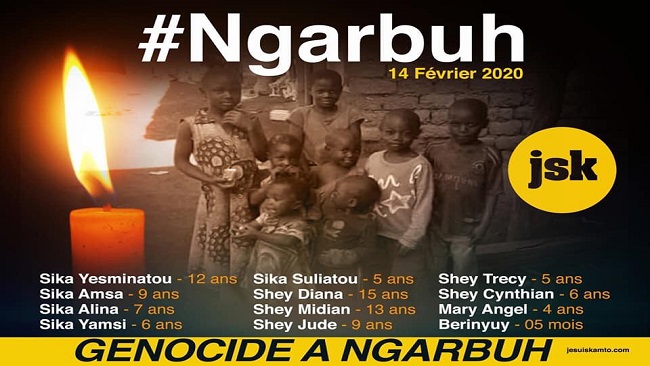
The verdict delivered on January 15, 2026, relates to the killing of 23 civilians, including 15 children and two pregnant women, during a military operation in the village of Ngarbuh, in Ntumbaw, Ndu subdivision of the North West Region. While the court has established the guilt of the accused, sentencing has been deferred to a later date.
The ruling is being widely described as historic, marking one of the rare instances in which members of state security forces have been held criminally responsible for grave human rights abuses committed during the Anglophone Crisis. For years, military operations and the actions of allied militias in separatist-affected areas have largely gone unpunished, fueling accusations of impunity.
The Ngarbuh massacre occurred on February 14, 2020, at the height of the conflict between government forces and English-speaking separatist groups seeking an independent state known as Ambazonia. According to investigations by human rights organisations, including Human Rights Watch, government troops accompanied by local Fulani vigilantes entered the village and deliberately targeted civilians.
Witnesses reported that homes were burned, property looted, and residents beaten, with no evidence of a significant clash with armed separatists at the time of the attack. The killings shocked both national and international opinion, drawing condemnation from rights groups, foreign governments and the United Nations.
Initially, Cameroonian authorities denied responsibility, claiming the deaths resulted from an accidental explosion during a confrontation with separatist fighters. However, mounting pressure forced President Paul Biya to establish a commission of inquiry, which later acknowledged that “uncontrolled” soldiers and local auxiliaries were responsible for the killings and had attempted to destroy evidence by setting houses ablaze.
The trial opened in December 2020 before the Yaoundé Military Court but was repeatedly delayed, raising concerns about the authorities’ willingness to fully address abuses committed by security forces. Proceedings were marked by slow progress, procedural concerns and limited involvement of victims’ families, prompting criticism from civil society groups and human rights advocates.
Despite these challenges, Thursday’s convictions have been welcomed as an important though incomplete step toward accountability. Many observers note that only low-ranking soldiers and a single militiaman were convicted, while questions remain about the role of senior commanders and the chain of command behind the operation.
Human Rights Watch reacted cautiously to the verdict, describing it as a partial advance toward justice while stressing that accountability should extend to all those responsible, including those who planned or authorised the operation. The organisation’s Central Africa researcher, Ilaria Allegrozzi, has consistently argued that justice will remain unfinished unless higher-ranking officials implicated in the massacre are also investigated and prosecuted.
For families of the victims, the judgment represents long-awaited recognition of the suffering endured by innocent civilians in the North West and South West regions.
Source: panafricanvisions


