
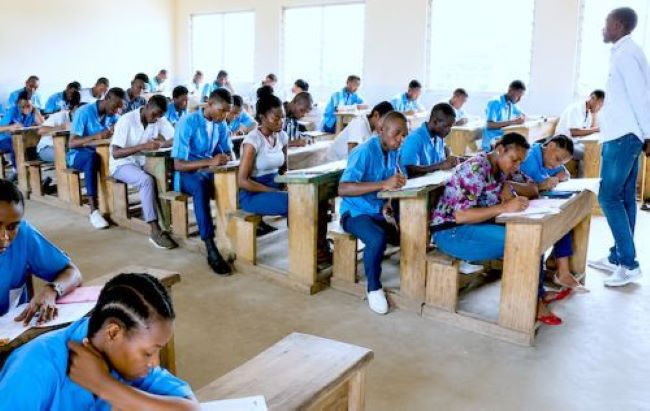
Exam leaks undermine confidence in Cameroon’s education system
Official examinations in Cameroon continue to face a credibility challenge despite tougher sanctions, administrative investigations, and repeated efforts to strengthen security.
The latest setback came with the postponement of the remaining 2026 General Certificate of Education (GCE) exams after confidential exam papers were leaked online. The decision, announced by the Ministry of Secondary Education, has renewed questions about the effectiveness of measures designed to protect the integrity of national examinations.
The affected exams, originally scheduled between June 8 and June 18, were rescheduled for June 22 to July 2 after exam papers circulated on social media and other digital platforms.
The ministry said the move was necessary to preserve the integrity of the examination process. However, the incident also exposed a deeper problem: the ability of organized cheating networks to bypass traditional security procedures.
Instant messaging applications, private online groups, and social media platforms have increasingly become channels for distributing supposedly confidential exam materials, sometimes even before candidates enter examination rooms.
The GCE leak highlights how examination fraud has evolved in recent years. What was once largely associated with unauthorized documents, candidate impersonation, or local collusion at examination centers has increasingly moved online. Once exam papers are shared digitally, authorities face significant challenges containing their spread and preserving equal conditions for all candidates.
The government now faces a dual challenge: identifying those responsible for the leaks while restoring confidence in the examination system. Postponing the exams may address the immediate crisis, but it does not solve broader concerns about the security of the processes used to produce, store, and distribute examination papers.
At the same time, authorities continue to project a tough stance against cheating. In November 2025, Secondary Education Minister Nalova Lyonga signed a series of disciplinary measures targeting 255 people, including 208 students and 47 teachers, for irregularities detected during examinations organized by the Cameroon Baccalaureate Board.
The penalties included cancellation of examination sessions, suspensions lasting until 2028 for some candidates, and three-year bans preventing several teachers from participating in examination administration.
The violations ranged from possession of unauthorized materials and the use of digital cheating networks to irregular registrations facilitated through internal collusion.
The sanctions demonstrate that authorities possess disciplinary tools to address misconduct. However, they also highlight the limits of a strategy focused primarily on punishment. Despite suspensions, exclusions, and investigations, fraudulent practices continue to evolve, increasingly relying on digital channels and, in some cases, weaknesses within the system itself. Beyond organized cheating, administrative failures continue to undermine confidence in the examination process.
Incidents reported at several examination centers have included confusion over answer scripts and errors involving the distribution of examination papers. At Bilingual High School Sodiko in Douala, for example, an exam intended for one stream was reportedly handed to a candidate from another stream because of an administrative error.
Such incidents may not constitute fraud, but they contribute to concerns about the overall reliability of the system. In an environment already marked by suspicions of leaks, even minor administrative mistakes can reinforce doubts about fairness and the ability of examination authorities to manage the process effectively.
The challenge is therefore not only a security issue. It is also logistical, administrative, and institutional. It involves candidate supervision, exam paper management, staff training, document security, and procedures for handling incidents.
Officially, authorities say they have strengthened controls and expanded security measures. Yet the recurring leaks, combined with administrative errors and internal irregularities, suggest that current mechanisms have yet to deliver lasting results.
Postponements and sanctions remain necessary corrective measures. They help address immediate problems, punish misconduct, and protect the validity of examination sessions. But they do not fully answer the central question: how can authorities prevent exam papers from being compromised before the exams begin?
The issue now extends beyond leaks alone. It touches on the ability of Cameroon’s education system to guarantee examinations that are secure, credible, and fair.
In a country where official diplomas play a critical role in access to higher education, competitive examinations, and employment opportunities, trust in the examination system remains a cornerstone of educational legitimacy.
As the remaining 2026 GCE exams move forward under a revised schedule, one question remains: how long can the system withstand a form of fraud that has become increasingly digital, organized, and, at times, enabled by its own internal weaknesses?
Source: Sbbc


