
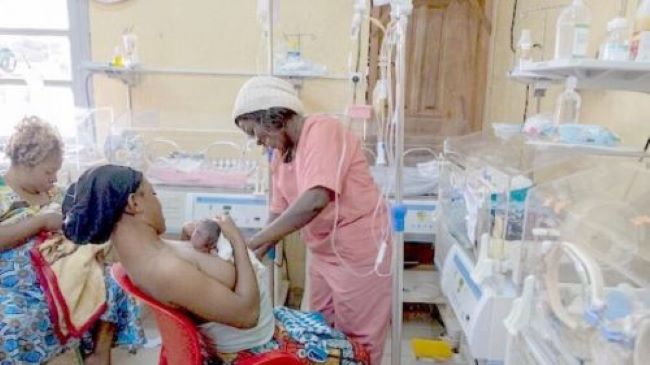
Cameroon still falls short on maternal care as 1 in 3 births go unassisted
Nearly one in three women in Cameroon still gives birth without the assistance of a skilled health worker, highlighting persistent gaps in access to maternal healthcare despite recent progress in reducing maternal mortality.
According to the United Nations Population Fund’s (UNFPA) 2025 annual report, published on July 13, only 69% of births in the country are attended by qualified health personnel. The figures point to continuing barriers to maternal care, particularly in rural, hard-to-reach, and conflict-affected areas.
The report also underscores the limited use of modern contraception. The modern contraceptive prevalence rate stands at 15.4%, while 23% of family planning needs remain unmet. UNFPA notes that these indicators do not necessarily reflect data collected exclusively in 2025. Rather, they represent the baseline health situation used to guide the agency’s programs in Cameroon.
Adolescent girls remain especially vulnerable. The country records 122 births per 1,000 girls aged 15 to 19, reflecting the persistence of teenage pregnancies and limited access to sexual and reproductive health information and services. UNFPA attributes the situation to recurring contraceptive stockouts, entrenched socio-cultural barriers, and geographic constraints that continue to limit access to healthcare.
Maternal Mortality Remains Well Above Global Target
Cameroon has made progress in reducing maternal deaths, with the maternal mortality ratio declining from 406 to 258 deaths per 100,000 live births. Despite that improvement, the country remains far from the Sustainable Development Goal of reducing global maternal mortality to fewer than 70 deaths per 100,000 live births by 2030. At its current level, Cameroon still records a maternal mortality rate nearly four times higher than that target.
UNFPA cites several factors behind the continued high mortality rate, including shortages of skilled healthcare workers, transportation challenges, recurring shortages of contraceptives and essential medicines, and unequal access to healthcare between urban and rural areas.
In 2025, the Cameroonian government allocated CFA181 million to help secure contraceptive supplies. UNFPA described the contribution as a step toward greater national ownership of reproductive health programs at a time when external funding is declining.
Violence and Child Marriage Continue to Affect Women and Girls
Health challenges are compounded by widespread gender-based violence and child marriage. According to figures cited in the report, 32% of women have experienced intimate partner violence, while nearly 30% of young women were married before the age of 18.
Early marriage increases the risk of adolescent pregnancy, school dropout, and economic dependence, while limiting young women’s ability to make decisions about their sexual and reproductive health.
UNFPA’s data portal reports that 30% of women in Cameroon were married before turning 18 and confirms the maternal mortality ratio of 258 deaths per 100,000 live births. However, the agency notes that these indicators come from different years and should not be interpreted as statistics produced solely in 2025.
Among the year’s notable achievements, UNFPA highlighted the opening of the Afiri Center, which provides support services for survivors of gender-based violence.
Funding Shortfalls Threaten Humanitarian Response
The country’s reproductive health programs continue to operate in a challenging humanitarian environment. About 3 million people in Cameroon required emergency assistance, including nearly 1.1 million internally displaced people, according to data cited by UNFPA.
In the Far North Region, flooding had affected more than 178,000 people by mid-2025, damaging health facilities, cutting off roads, and increasing the risks of gender-based violence, sexual exploitation, and child marriage in displacement sites. UNFPA estimated it needed $9 million to sustain its humanitarian operations in Cameroon in 2025 but had secured only $3.5 million, leaving a 61% funding gap.
The withdrawal of funding from the U.S. Agency for International Development (USAID) and its Bureau for Humanitarian Assistance added further pressure on the agency’s programs. UNFPA said it responded by diversifying its funding sources and strengthening cooperation with other United Nations agencies.
National Progress Masks Wide Regional Gaps
Cameroon’s Sustainable Development Goal score improved from 46.3 in 2016 to 57.3 in 2024, according to the report. However, UNFPA says national averages conceal major disparities across regions and population groups.
People living in rural communities, internally displaced populations, conflict-affected areas, and regions exposed to climate-related disasters continue to face greater barriers to maternal and reproductive healthcare. As the 2030 deadline for the Sustainable Development Goals approaches, the report suggests that Cameroon will need to expand access to underserved areas rather than focus solely on improving national averages.
Progress will depend on increasing the availability of midwives, ensuring reliable supplies of contraceptives and essential medicines, strengthening emergency obstetric referral systems, and maintaining health services in regions affected by insecurity.
Source: Business in Cameroon


