
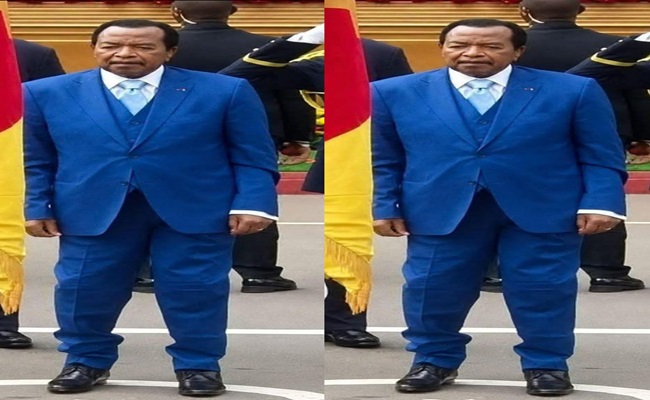
Biya’s absence in Yaoundé is testing the limits of the nation’s political system
President Paul Biya’s prolonged absence from public view has once again exposed a structural weakness at the heart of Cameroon’s governance: the concentration of decision-making in a single office.
As speculation over his whereabouts and health continues, Yaoundé appears to be operating in slow motion, with reports and widespread perceptions suggesting that major political and administrative decisions have been delayed while officials await direction from the presidency.
Whether every government function has stalled is open to debate, but the perception of institutional paralysis is itself significant. Investors, civil servants, political actors and ordinary citizens increasingly question how a modern state can remain so dependent on the availability of one individual.
The uncertainty has also revived an old constitutional and political debate. Cameroon has no vice-president. Under the Constitution, if the presidency becomes vacant, the President of the Senate assumes interim responsibilities until an election is held. Yet the absence of a permanently designated deputy means there is no clearly visible second-in-command to reassure the public during periods when the president is unavailable. The result is a leadership vacuum in the public imagination, even if constitutional mechanisms exist on paper.
This arrangement has fueled renewed calls from some analysts and opposition figures for reforms that would create the office of vice-president or otherwise clarify executive succession. Supporters argue that such a position could provide continuity and reduce uncertainty during periods of presidential absence, while critics contend that introducing a vice-president could create competing centers of power within the executive.
More broadly, the current situation underscores concerns about the resilience of Cameroon’s political institutions. A system that depends heavily on a single leader inevitably raises questions about succession planning, institutional autonomy and the ability of government to function smoothly under extraordinary circumstances.
Suggestions that the country is on the verge of a political rupture should, however be treated with caution. While prolonged uncertainty can heighten political tensions and deepen divisions among competing elites, predicting a rupture goes beyond the available evidence. What is clear is that sustained ambiguity over leadership risks eroding public confidence, encouraging speculation and increasing pressure for constitutional and institutional reforms.
Cameroon stands at an important moment. The issue is no longer simply the president’s absence, but whether the country’s institutions are sufficiently robust to ensure continuity, transparency and public confidence regardless of who occupies the highest office.
A stronger framework for executive succession and clearer communication during periods of presidential absence would not eliminate political uncertainty, but they would strengthen the credibility of the state and reduce the risks that uncertainty poses to governance.
Biya has been stuck in Geneva, Switzerland, for a month – alternating between a private clinic and his favoured suite at the InterContinental Hotel. This follows multiple false alarms about the 93-year old president’s declining health but the arrival of so many of his family and political associates in Geneva suggests that the concerns of those closest to him are mounting – leaving an ominous power vacuum in Yaoundé.
By Soter Tarh Agbaw-Ebai


