
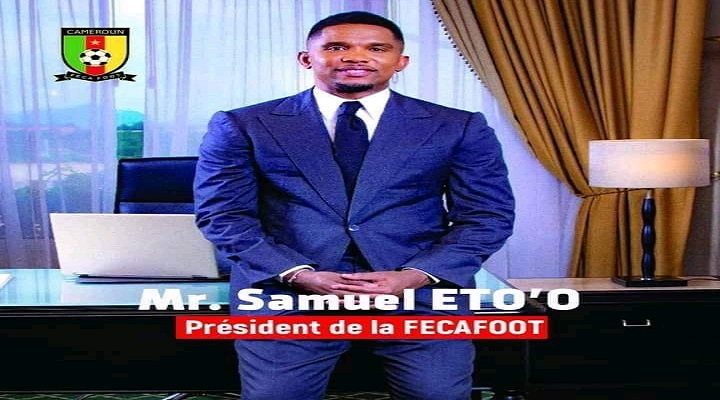
Samuel Eto’o: some critics only find their voice when they have someone to attack
The relentless attacks on the President of the Cameroon Football Federation (FECAFOOT) Samuel Eto’o have begun to resemble a familiar pattern: Cameroonians who seem to derive their relevance not from building something of their own, but from constantly tearing someone else down.
Recent scathing attacks on Samuel Eto’o remind one of those imaginary musicians who only found inspiration while Nelson Mandela was imprisoned. Every song they wrote revolved around his captivity. Every performance fed off that single story. Then, the day Mandela walked free, so did their creativity. Without that convenient subject, the music stopped because there was nothing genuine driving it.
That is how some of Eto’o’s loudest critics like Professor Owona Nguini and Dr Laziz Nchare appear. Their public identity has become so intertwined with criticizing him that one wonders what remains if President Samuel Eto’o is removed from the FECAFOOT equation. Would there still be speeches? Headlines? Interviews? Or would the silence be deafening?
As we of the Cameroon Concord Group noted earlier, constructive criticism is healthy and necessary in football business. No leader, be it in politics or in the entertainment industry should be beyond scrutiny.
But there is a profound difference between accountability and obsession. When every development—good or bad is filtered through the lens of attacking one individual, criticism loses credibility and begins to look like a personal campaign.
Cameroonian football deserves debates about infrastructure, youth development, governance, financial transparency, coaching standards and long-term planning. These are the conversations that move the game forward. Endless personal attacks do not.
Those who genuinely care about football should ensure that their legacy is measured by the solutions they offer, not merely by the names they oppose. Criticism should illuminate a path forward, not become a permanent performance sustained by hostility.
In both English and French Cameroun, history remembers builders longer than perpetual critics. That is why Cameroonians speak regularly of the late Samuel Eboa and not Joseph Owona (both men were Secretary General at the Presidency of the Republic) If someone’s political or public relevance depends entirely on Samuel Eto’o remaining the target, perhaps the problem is not Samuel Eto’o—it is the absence of an independent vision worth talking about.
By Soter Tarh Agbaw-Ebai


