
International Conference on the armed conflict in Southern Cameroons: Be the first to know the select guest speakers
|
||||||||||||||||||||||||||||||
|
|
||||||||||||||||||||||||||||||
|
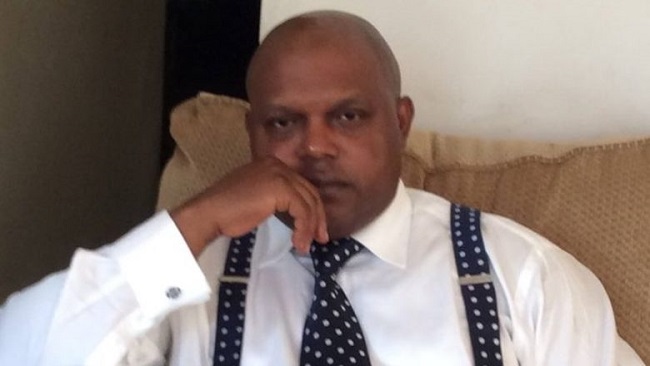
A day after the IMF/World Bank announced a $50 billion aid package to help poor countries contain the coronavirus outbreak; Cameroon confirmed its first two cases of the deadly virus; a 58-year-old French national and a Cameroonian who came in contact with him, after he arrived Yaoundé on Feb 24. The public health minister said in separate communiqués that both patients were isolated at the Yaoundé Central hospital where they are receiving “symptomatic treatment” (whatever that means). The Health minister also ask those who had contact with the index case to call a toll-free number to “receive appropriate care” while assuring public opinion that “everything is being done to contain this outbreak without undue delay, in conformity with the high instructions from the President of the Republic, HE Mr. Paul Biya.”The feudal deference to Mr. President aside, the health minister’s belated effort to calm frayed nerves cannot be taken to signify successful containment; rather, it is an expression of a luxurious desire which signposts the absence of an emergency healthcare plan that should have been activated to contain the virus. This unpreparedness is most pathetic and tragic and Cameroonians deserve better.
It is indeed embarrassing to note that this epidemic has taken Cameroon unawares. How can the government’s containment strategy be anchored on self-reporting using a toll-free number? What happens if someone calls and reports that he/she is witnessing symptoms of the coronavirus? Is there a team of trained health personnel with the appropriate test-kits, including an ambulance ready to take such a patient and all those who have been exposed to him to a quarantine facility, assuming such a facility even exists? Alternatively, will such a patient be ordered to self-quarantine at home; and how will the patient be monitored? Amid global warnings about the coronavirus that has claimed over 3,000 plus lives and infected no fewer than 100,000 people, the health minister’s verbal pugilism advertises in spectacular fashion, a certain poverty of ideas on the part of those who govern Cameroon even in matters that are supposedly routine; and is indicative of a failure of leadership in the country. This is a public shame to a nation that should have outgrown primary healthcare challenges.
As official rhetoric and public grandstanding drives fear into the complex matrix over the unfolding coronavirus crisis, the gravity of the epidemic demands an urgent, robust and holistic national response, beyond laconic press statements designed to aggrandize the president. Even more disheartening, there is still no concerted effort by competent health workers to screen passengers arriving at Cameroon airports to determine whether they are sick or exhibited any symptoms of the coronavirus. It is shocking that a country like Cameroon does not even have one facility that such patients can be isolated. The WHO representative in Cameroon told CRTV that the test of the infected French national was done at Centre Pasteur in Yaoundé. This begs the question: what is the capacity of Centre Pasteur to handle an epidemic in which thousands of people get infected through community transmission?
With a shambolic healthcare system, decrepit health infrastructure, acerbic poverty and political volatility, most hospitals lack isolation or quarantine units, personal protection equipment (PPE) and trained personnel to carry out the necessary care against the coronavirus. Does the Health Minister need any reminder that laboratory confirmation of coronavirus diagnosis requires equipment, test kits and trained personnel that most Cameroon hospitals don’t have? It is utterly ridiculous for the government to ask people who have had contact with the index case to self-report or self-isolate or self-quarantine. There is no beneficial value in government’s misplaced self-vindication, amid reports that the government was struggling to contact the passengers who were exposed to the Frenchman who brought the coronavirus to Cameroon. As an urgent public safety imperative, the government should publish the flight manifest to enable the public identify passengers on that plane who were exposed and might have been infected by the Frenchman.
The implications of the other passengers still roaming at large and interacting with the public is the potential infection of hundreds, if not thousands of other people, aggravating the risk of widespread infection given that every infected person is said to infect at least two other people. Because for each day a coronavirus patient stays at home, family and all contacts are endangered, it is, therefore, better left to the imagination, the terrible consequences, specifically on public health and on public psyche of what evidently is a disaster waiting to happen! Against the backdrop of this doomsday scenario coupled with the dire indicators on the state of official unpreparedness to handle the coronavirus crisis, the question must be asked: what is this nation ever prepared for? The world is on red alert over the deadly coronavirus, yet Cameroonians are left to the vagaries of life while their leaders do nothing. Not even an emergency budgetary allocation has been earmarked to contain the virus. This is unacceptable!
The coronavirus is sufficiently serious a disease as to warrant the declaration of a national emergency by the government, wherein all hospitals (public and private), and health personnel across the country are put on red alert. Unfortunately, corrupt Cameroonian government officials with their remarkable genius for travesty seem more interested in transforming the coronavirus epidemic into another cash cow to line their pockets; as some have done with the ongoing armed insurgency in the Anglophone regions. The rumor mill has also spun beyond reason, misinforming the public with all manner of unfounded cures and remedies with no scientific basis. It was claimed in some quarters that drinking beer and eating bitter kola was a potent remedy and Cameroonians promptly descended on beer and bitter kola, until the rumor was debunked; saving them from the tragedy of their ignorance. Some Cameroonians view the timing of the confirmed cases as inauspicious, believing it is just a ploy by the regime to attract a share of the promised $50 billion IMF/World Bank largesse to help poor countries contain the coronavirus outbreak. Be that as it may.
The coronavirus is a national crisis of monumental proportion as the World Health Organization (WHO) has all but declared it a global pandemic. The deadly virus can wipe out scores of people in a matter of days if unchecked. The disease is contracted by direct contact with an infected person and the virus can remain within an infected person for as long as three weeks after exposure before manifesting. The symptoms progress from fever to nausea, headache, sore throat, tiredness, muscle pain, vomiting, diarrhoea, coughing and neck-stiffness. So far, there is no vaccine or known cure as scientists are still working on a number of trial drugs that are expected to be ready not earlier than 18 months. Therefore, the government must continue to take coronavirus seriously and sustain public enlightenment through traditional as well as the now very popular social media, on measures to prevent or contain it. Scrupulous personal hygiene, avoidance of contact with suspected victims, and immediate report of suspected cases to health authorities, are just some of the steps the public should take.
The outbreak of the coronavirus in Cameroon, once again, presents a challenge to the authorities to address basic social amenities that make for improved living conditions for the average Cameroonian. While the world struggles to develop a potent cure, the best way out now is good hygiene. Keeping the living environment clean is essential. All must be careful, people should as much as possible avoid crowded areas, while churches, mosques and other religious houses should control meetings that bring too many people into contact with one another. The same goes for CPDM rallies. Commercial cyclists (Bendskin) could also be at risk of spreading the virus through body contacts. The times call for a rapid holistic response, targeting short-term measures and long-term improvement in human development indices, not slogans and empty bureaucratic noises and public grandstanding because one thing is clear – the coronavirus puts everybody at risk.
By Ekinneh Agbaw-Ebai
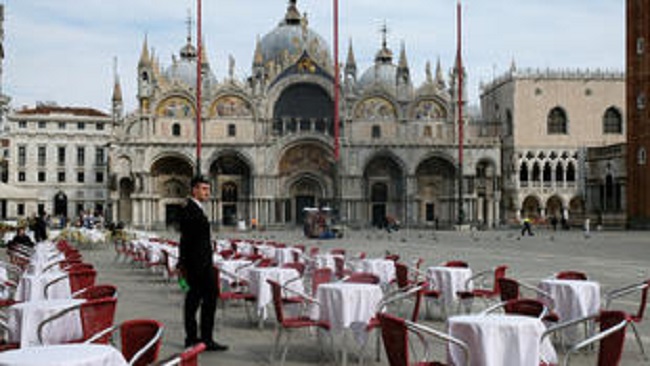
Global financial markets tanked, oil prices crashed and Italy extended strict quarantine measures across the whole country on Monday as the deadly coronavirus disrupted economies and societies across the world.
WHO chief Tedros Adhanom Ghebreyesus warned “the threat of a pandemic has become very real,” but stressed that “it would be the first pandemic in history that can be controlled”.
The death toll from the novel coronavirus has now passed 4,000, with more than 114,000 cases recorded in over 100 countries since the epidemic erupted in December in Wuhan, China. It has disrupted global travel, and cancelled conferences and sporting events.
In Italy – Europe’s hardest-hit country – Prime Minister Giuseppe Conte issued unprecedented nationwide measures, telling his citizens to “stay home”, banning public gatherings and suspending all sporting events, including Serie A football matches.
“The whole of Italy will become a protected zone,” he said, extending measures that had already been put in place in the country’s most affected northern regions – mimicking a lockdown at the disease’s epicentre in China – across the whole country.
The Lombardy region, which is one of the Italian regions most affected by the virus outbreak, has started to run out of hospital beds.
Under the decree, all swimming pools, spas, sports halls and ski resorts have been shut, along with museums and cultural venues. Bars and restaurants are only allowed to open between 6am and 6pm, and only if it is possible to keep a distance of at least a metre between customers.
Schools and universities have also been closed, and all exams cancelled.
Religious institutions will stay open, as long as people can stay a metre from one another – but ceremonies such as marriages, baptisms and funerals are banned.
Tens of millions of people are now in quarantine worldwide but there are fears that the disease will spread further and force several economies into recession.
The number of cases in Europe passed 15,000 on Monday as Germany and Canada reported their first coronavirus deaths, but the vast majority of fatalities have been in China, where there are signs the outbreak has peaked.
Ireland meanwhile announced that it was cancelling the annual St. Patrick’s Day Parade in Dublin.
France’s Culture Minister Franck Riester became the latest high-profile official to test positive.
It was also revealed that two US lawmakers with recent close contacts with President Donald Trump are in self-quarantine after being exposed to the virus.
Republican Representative Doug Collins, who shook hands with Trump on Friday, and Matt Gaetz, who travelled with the president on Air Force One on Monday, said they came in close contact with an infected person at a conference 11 days ago. Neither have reported any symptoms, and both are awaiting test results.
‘Black Monday’
Coronavirus fears and the steepest fall in oil princes since the 1991 Gulf War sent markets into a tailspin, wiping hundreds of billions of dollars from exchanges and prompting analysts to dub it “Black Monday”.
Major US indices plunged more than seven percent – with the Dow Jones finishing more than 2,000 points lower in its worst session since 2008 – following a 15-minute halt to trading early in the session triggered by a plunge.
Brazil’s Sao Paulo exchange also suspended trading briefly, and plummeted more than 12 percent.
European stock markets slumped dramatically, following a downturn in Asia, with indexes in London, Paris and Frankfurt falling by seven percent or more.
Millions of people have seen daily life disrupted by school closures – with those announced Monday in Greece and Spain – as well as runs on basic household goods and travel restrictions.
Italy reported 97 more deaths on Monday, bringing its toll to 463 and pushing Europe’s total past 500.
Italian officials faced a further headache after prisoners fearful of infection protested or rioted in 23 jails across the country – leaving several dead.
Conte said “it is our darkest hour but we will make it.”
Sporting events continue to be severely disrupted, with the Indian Wells tournament in California cancelled.
Top-flight football matches across Europe were being played behind closed doors, and international rugby matches have also had several postponements.
US cases surge
There are mounting concerns that the United States – the world’s largest and most connected economy – could be the next COVID-19 hotspot.
At least 22 people have died in the country and the number of cases has passed 500 as Trump’s administration struggled to deal with a virus-hit cruise ship stuck off the California coast.
The Grand Princess docked in Oakland on Monday with 21 confirmed infections among its 3,500 passengers.
The president has been accused of peddling misinformation on the outbreak, but he hit back on Sunday, accusing the media of trying to make his government “look bad”, tweeting that the White House had a “perfectly coordinated and fine tuned plan”.
Spread slowing in China
Some forecasters are painting a doom-laden picture for the global economy, and several central banks have already intervened to prop up faltering economies.
The International Monetary Fund called on governments worldwide to join forces and roll out aggressive financial supports, including direct payments to workers and businesses.
European Union leaders will hold an emergency videoconference on Tuesday aimed at coordinating their response to the outbreak.
But there were signs that the peak may have been reached in both China and South Korea.
China said it had closed most of the makeshift hospitals opened to receive coronavirus patients in the epidemic’s epicentre around Wuhan, as the number of new infections in the country hit a record low.
There were 40 new cases nationwide, the lowest number of fresh cases since it started reporting the data in January. China has seen almost 75 percent of the global coronavirus cases.
The WHO reported that 70 percent of the people infected with the virus in China had recovered.
South Korea, which has one of the largest coronavirus totals outside China, reported its smallest daily rise in cases for two weeks.
But Iran announced 43 new deaths on Monday, bringing its toll to 237, and supreme leader Ayatollah Ali Khamenei cancelled an annual speech marking the start of the Persian new year.
Israel announced a two-week quarantine for all travellers entering the country.
(FRANCE 24 with AFP)
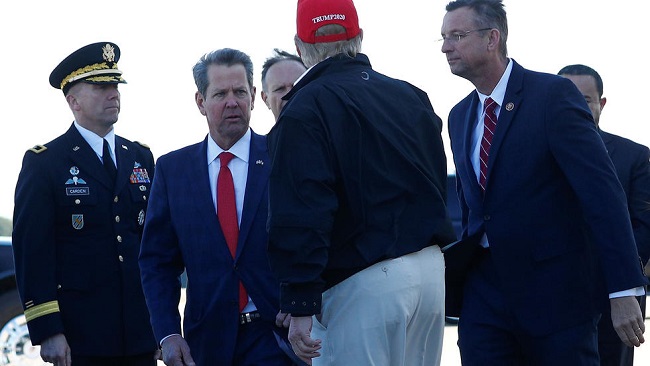
Two US lawmakers with recent close contacts with President Donald Trump announced Monday that they were in self-quarantine after being exposed to the new coronavirus at a late-February conservative conference.
Republican Representative Doug Collins, who met and shook hands with Trump last Friday at the headquarters of the Centers for Disease Control, said he had been informed he had been in contact with a person who tested positive for the new coronavirus at the conference last month.
A second representative, Matt Gaetz, who travelled with Trump on Air Force One on Monday, likewise announced his self-quarantine after being notified that he too had come in close contact with the infected person at the Conservative Political Action Conference (CPAC) 11 days ago.
Neither Collins nor Gaetz reported any symptoms of the virus.
“I have decided to self-quarantine out of an abundance of caution,” Collins said.
“He received testing today and expects results soon,” Gaetz’s office said on his Twitter account.
Collins was with Trump last Friday visiting the Atlanta, Georgia CDC headquarters where they were briefed on the virus’s spread.
A photograph published by the Atlanta Constitution-Journal shows the two shaking hands at what appears to be an airport during the visit.
The newspaper said Collins was also in close contact with the state’s governor, Brian Kemp, and Georgia Senator Kelly Loeffler — who Collins is challenging for election in November.
There was no immediate comment from the White House.
Five US lawmakers have now said they are distancing themselves from others after coming in contact with coronavirus-infected individuals.
The other three are Republican Senator Ted Cruz and Republican Representative Paul Gosar, both of whom also were exposed at the CPAC conference, and Democratic congresswoman Julia Brownley.
Earlier Monday Trump downplayed the threat of the disease, which has recorded more than 600 cases of the COVID-19 virus in the US, and 26 deaths.
“So last year 37,000 Americans died from the common Flu. It averages between 27,000 and 70,000 per year. Nothing is shut down, life & the economy go on. At this moment there are 546 confirmed cases of CoronaVirus, with 22 deaths.
(AFP)
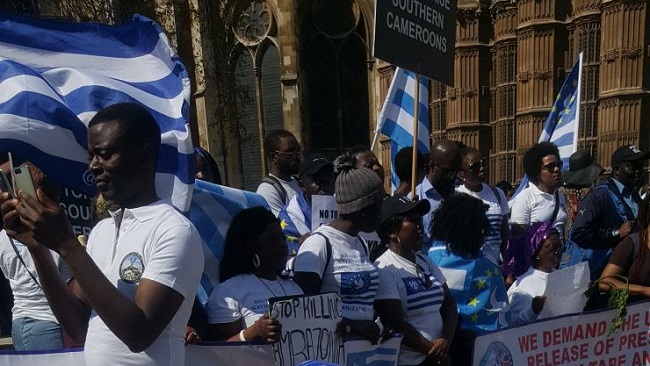
Southern Cameroons protesters could be seen charging police officers in Westminster in an attempt to break fences built to protect the Royal Family ahead of the Commonwealth Service procession. Queen Elizabeth II was moments away from arriving to celebrate the annual event at Westminster Abbey with the rest of the Royal Family.
City of Westminster Police released the following statement: “As part of the policing operation for Commonwealth Day celebrations, officers arrested 2 men at approx 2.20pm in Victoria St, SW1 for breach of Anti-Terrorism Road Traffic Regs (ATTRO). Both are in police custody. An operation remains in place whilst the celebrations are ongoing.”
The Commonwealth Service at London’s Westminster Abbey is an annual event that this year brings together Harry and Meghan with Queen Elizabeth, his elder brother William and wife Kate, and father Prince Charles and his wife Camilla, for the first time in public since the couple thrashed out an exit deal from their royal roles in January.
“It will be fascinating to see how it plays out,” said royal biographer Penny Junor. “I imagine everybody will be on absolutely best behaviour. But goodness knows what they will all be thinking privately.”
The January agreement, which comes into action at the end of the month, will see the couple – the Duke and Duchess of Sussex – seek to carve out “a progressive new role”, mainly based in North America, that they aim to finance themselves.
Harry, 35, and Meghan, 38, will stop using their HRH titles – His or Her Royal Highness, will not use “royal” in their branding and Harry, who will remain a prince, will relinquish his military titles.
Source: express.co.uk
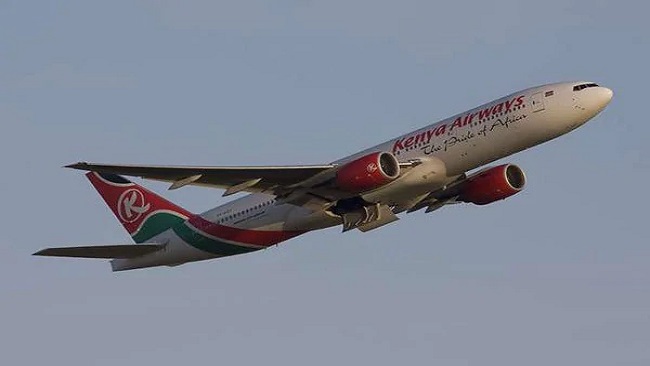
A freshly released investigative report has revealed that the May 5, 2007, crash involving a Kenya Airways (KQ) plane in Douala Cameroon was caused by an easy to correct mistake made by the crew at the helm of the routine flight.
The investigation conducted by a joint team of aviation experts from Africa, US and Europe and aired on National Geographic Channel said the pilot and the first officer failed to turn on the autopilot as they climbed to their cruising altitude from Douala International Airport.
Flight507 left the airport at midnight on May 5, 2007 but crashed in a swamp south of the facility after flying for one minute and 30 seconds. All the 114 lives aboard the modern breed of Boeing 737-800 were lost. It was expected to land at Nairobi’s Jomo Kenyatta International Airport (JKIA) on the same day at around 6.15am.
Before the Douala-Nairobi haul, Fligh507 had flown from Abidjan, Ivory Coast and landed at Douala at around 10pm on May 4, 2007. According to the investigation, Flight507 was behind schedule by about an hour due to a big storm that was brewing above the skies of Douala.
After about 20 minutes of waiting, Captain Francis Mbatia, 52, informed the control tower that his onboard weather radar indicated the storm had calmed. He then requested to be granted take off permission. He told traffic controllers that he planned to take a right turn after liftoff to avoid the storm. “Tower…Kenya507, it looks like there is a break in the weather, requesting take off,” said captain Mbatia whose voice was captured by the Cockpit Voice Recorder (CVR).
Air traffic controllers cleared him for take off and directed to use runway 12. Events recreated from the flight show the pilot giving his first officer Andrew Kirui other sets of instructions and the plane later achieved liftoff speed and departed.
Data from the Flight Data Recorder (FDR) shows that despite having planned to fly right of the airport to avoid the storm, Captain Mbatia turned his control column on the left before he released it to allow the autopilot to kick in. This, according to investigators, was supposed to correct some lift problem since the plane had a tendency of generating more lift on the left wing.
Mbatia expected the autopilot to fly the plane using coordinates and headings it was fed with earlier but unknown to him, First Officer Kirui, 23, had not turned it on. UGC Aviation sleuths think the youngster was preoccupied with trying to navigate the plane safely around the heavy storm. “Should I remain on this heading,” Kirui asked Mbatia who gave him an okay he (Kirui) failed to turn the autopilot on. The flight computer would have flown the plane through the preselected flight path. The plane was now being pushed to the limit since it was flying itself at a very dangerous angle.
A few seconds later, Flight507 started banking to the right and the angle kept increasing and later crossed 35 degrees which is considered as critical. Pilots can, however, recover from it by allowing the autopilot to fix it as long as they still have the advantage of altitude. For the case of Flight507, the plane was flying with its left wing pointing almost directly to the sky at 90 degrees and the right wing nearly pointing directly to the ground.
UGC Investigators say when the crew realised all was not well, Captain Mbatia erratically performed manoeuvres on the control column to try and fix the situation. At this time, the plane was flying about 2,400 feet above the ground. Mbatia, however, learnt that the plane was not responding to his inputs. He quickly figured out that the autopilot was off and swiftly turned it on to enable the plane to recover from the critical angle it was flying. What, nevertheless, puzzles investigators is that instead of Captain Mbatia allowing the autopilot to kick in, he started fighting with the control column again with more erratic movements. He overrode the autopilot since he felt it had taken long before correcting the dangerous bank to the right. This allowed the brand new Boeing 737 to continue spiralling out of control.
In about a minute and a half, the plane slammed in a swamp south of the airport killing all 114 souls on board. It was located by rescuers two days later after it was reported missing. Detectives dug into Captain Mbatia’s training and assessment history and found that despite accruing over 8,500 flying hours under his belt, he had serious issues with practice. He was poor at system knowledge and also had poor cockpit skills.
– Flight507 was scheduled to arrive in Nairobi on the early morning of May 5, 2007, from Douala, Cameroon, but this never happened
– The plane only flew for one minute and 30 seconds before it crashed in a swamp south of Douala airport and rescuers located it after two days
– Detectives say the two pilots failed to turn on the autopilot while plane climbed to its cruising altitude and this saw it fly on its own
– Flight507 kept flying at an extreme bank angle of up to 45 degrees (right wing pointing down and the left one point to the sky)
– The 52-year-old pilot Francis Mbatia who commandeered the routine flight earlier served as a flight attendant at KQ but became pilot after training
– Detectives say he was an authoritarian man who shouted at his co-pilot and this saw 23-year-old Andrew Kirui (first officer) assume a passive role
Culled from Tuko.co.ke
Amnesty International is launching a new campaign urging Cameroon’s authorities to investigate the enforced disappearance of more than 130 men and boys, who were rounded up from their villages more than five years ago and have not been heard from since.
On 27 December 2014, Cameroonian security forces arbitrarily arrested over 200 men and boys in Magdémé and Doublé, two villages in the Far-North region, during a violent raid in which eight people were killed including a child and more than 70 buildings burned down. At least 130 of them are still missing.
The campaign, “Where are they? Accountability for victims of human rights violations in the villages of Magdémé and Doublé in Cameroon’s Far-North is launched on 10 March 2020. It aims to urge the authorities to provide answers for the families of those who are missing and hold accountable the security forces responsible for the human rights violations committed during the raid and the subsequent enforced disappearances.
“For five years, life has been on hold for the relatives of the men and boys who disappeared on that terrible day in 2014. We want to show them that they have not been forgotten, and that we will continue to pressure the Cameroonian authorities until the truth is uncovered for each one of the 130 men and boys,” said Samira Daoud, Amnesty International West and Central Africa Regional Director.
“President Paul Biya’s government must break the deafening silence surrounding these enforced disappearances, give answers to the families of victims and allow justice to be served.”
On 27 December 2014, security forces sealed off the villages of Magdémé and Doublé, in the Mayo Sava department in the Far-North of Cameroon, to conduct a cordon and search operation following repeated attacks by Boko Haram in the area. Eight people, including a child, were killed, and homes were burned and looted.
Cameroon’s authorities have stated that only 70 men were arrested during the roundup. They acknowledge that 25 died on their first night in custody, but have not disclosed the location of the bodies, or even identified the victims. They have denied that more than 200 were arrested that day and that 130 forcibly disappeared since.
The authorities have also confirmed that 45 people were transferred to Maroua prison the day after their arrest. Of those 45 people, three died due to dire detention conditions and the 42 others were released in July 2017.
In 2015, a presidential decree dismissed a top army official, Colonel Zé Onguéné Charles, who was the head of the gendarmerie in the Far-North at the time of the raid. An investigation was opened into his responsibility in the events of the 27 December 2014 and he was charged with negligence and breach of custody law, which are infractions of ‘correctional nature’ – offenses of less gravity than criminal ones-. To date, the outcome of this judicial proceeding against him remains unknown. In March 2019 he was named Advisor at the Ministry of Defense.
“The suffering of the victims’ families is exacerbated by the authorities’ refusal to tell the truth or even acknowledge that their loved ones are missing,” said Samira Daoud.
“We are calling for an immediate investigation into these disappearances and other human rights violations which took place in Magdémé and Doublé. The perpetrators must be brought to justice.”
Background
The people of Cameroon’s Far-North have been caught in the middle of fighting between Boko Haram and the security forces for more than five years now.
There was a clear resurgence of attacks by Boko Haram in 2019. This was largely overshadowed in the media and authorities’ attention by the crisis in Cameroon’s Anglophone regions, leaving people in the Far-North feeling abandoned.
The Cameroon military has the right and duty to protect people against human rights abuses committed by Boko Haram, but in doing so they must not violate human rights themselves.
Culled from Amnesty International
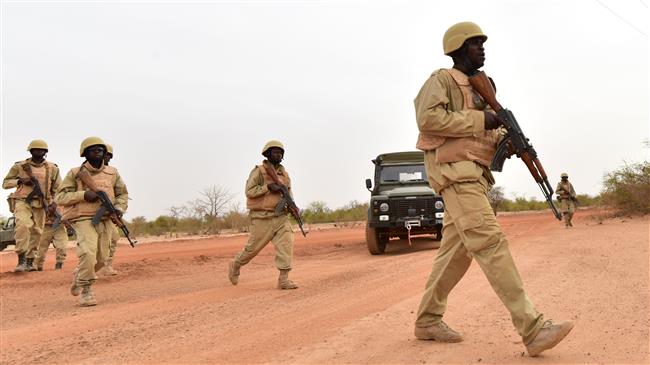
Unidentified assailants killed at least 43 people in raids on villages in northern Burkina Faso on Sunday, in one of the deadliest such attacks of the past year, the government said.
The attackers targeted at least two villages in the North region, near the border with Mali, the government said in a statement on Monday.
No claim was immediately made for the attack. Jihadist groups with links to al Qaeda and Islamic State, and ethnic militias, have repeatedly targeted civilians in the area, part of spiraling violence in Burkina and its neighbours Mali and Niger.
The violence killed hundreds of civilians last year across the Sahel, a semi-arid strip of land beneath the Sahara Desert, alarming Western powers who have poured money and troops to combat the Islamist groups. It comes as the United States considers a drawdown of troops in the region.
Sunday’s attacks targeted villages inhabited by Fulani herders, a second government statement said. Tit-for-tat reprisal killings between the Fulani and rival farming communities have surged over the past year, compounding the destruction wrought by the jihadists.
Two attacks in northern Burkina Faso in January killed 36 and 39 people, respectively. The violence has forced more than half a million from their homes and made much of the north ungovernable.
Source: REUTERS
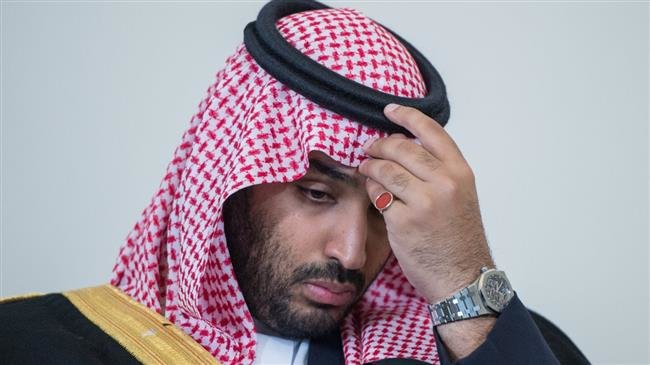
Saudi Arabia’s ambitious Crown Prince Mohammed bin Salman is trying to become king before a G20 Summit planned for November in Riyadh, which he intends to use as a stage for his succession, the Middle East Eye reports.
The heir to the throne, who is also known as MBS, has already launched a purge of senior members of the royal family to pave the way for the succession.
On Saturday, The Wall Street Journal said Saudi Arabia had detained a fourth prince in a new purge of royal family members over an alleged coup attempt to unseat King Salman and his son.
Two Saudis close to the royal family said Nayef bin Ahmed bin Abdulaziz had been arrested on Saturday, the newspaper reported.
He was the fourth prince taken into custody after the detention of his father Ahmed bin Abdulaziz, along with former Crown Prince Mohammed bin Nayef and his half brother Nawaf on Friday.

According to London-based Middle East Online, bin Salman would not wait for his father King Salman to die. Instead, the crown prince would force his father who suffers from dementia to abdicate.
“He wants to be sure while his father is there, he becomes the king,” one source said.
The sources said Prince Ahmed had been asked to back bin Salman’s succession, which he refused.
Ahmed did not plan a coup — an apparent reason given for his arrest — and was apprehended right after entering the palace, where he had been told that an audience with King Salman awaited him. “He did not see the king. It was total betrayal,” one source said.
Back in 2017, bin Salman ordered a purge of dozens of Saudi royal figures, ministers, and businessmen in an “anti-corruption” campaign, which was seen as an attempt to muffle dissent to his potential enthronement.
Sources told the Middle East Online that bin Salman had launched the crackdown because he feared that Donald Trump, who is one of his biggest supporters, might not be elected US president again.
Trump and US Secretary of State Mike Pompeo have consistently refused to hold the crown prince accountable for the murder of Saudi journalist Jammal Khashoggi, who was dismembered at the Saudi consulate in Istanbul in 2018 reportedly under the crown prince’s direct orders.
Trump and Pompeo have blocked calls for a criminal investigation by the US Federal Bureau of Investigation or the United Nations.
Under Trump, Washington has also generously aided the Saudi-led war on Yemen, orchestrated by MBS.
Source: Presstv
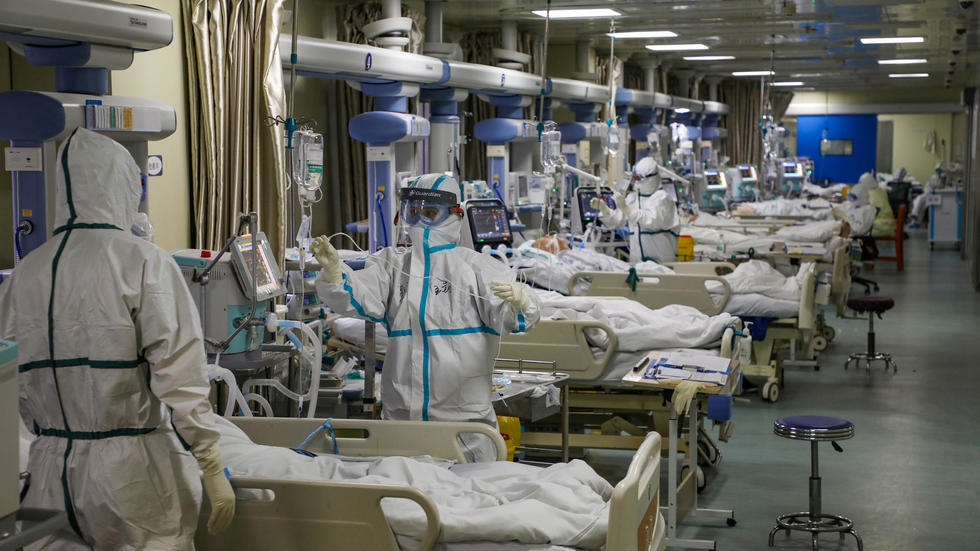
China has reported zero cases of infections with the new coronavirus Covid-19 outside Hubei Province, the epidemic’s epicenter, for the first time since the outbreak started in December 2019 and later reached other world continents, where the disease continues to infect more people and take more lives.
The novel coronavirus, which first emerged in the city of Wuhan in Hubei, has killed more than 3,800 people and infected over 108,000 in at least 95 countries — the majority in mainland China.
The country’s National Health Commission on Sunday recorded 40 new cases, down from 44 a day earlier, the lowest since Beijing first began to release data on January 20.
Of the new infections, 36 were in Wuhan and the remaining four had been imported from Iran, one of the worst-hit countries.
On Sunday, China also reported 22 new deaths — which were all, except one, in Hubei, bringing the toll to 3,119.
More than 80,700 people have in total been infected in mainland China.
China closed several makeshift hospitals for coronavirus patients and some schools reopened on Monday as normality slowly returns to the country after weeks of battling the epidemic.
Last week, a top government official said that a lockdown imposed on some 56 million people in Hubei since late January could soon be lifted.
On the contrary, the global fight against the outbreak has been stepped up since the weekend as more people are contracting Covid-19.
Italy
Italy, which has stood alone as a hot zone in Europe, placed a quarter of its population on lockdown on Sunday.
Health officials reported a huge jump in deaths from the disease on Sunday, with Prime Minister Giuseppe Conte saying that the country is “facing an emergency, a national emergency.”

Cases of coronavirus almost tripled from about 2,500 infections on Wednesday to more than 7,375 on Sunday across the country.
The death toll also rose from 233 to 366, a rise of more than 50 percent in 24 hours.
As part of effort to limit the transmission of COVID-19, Pope Francis recited the Angelus prayer via livestream on screens on Saint Peter’’s Square in Vatican City on Sunday.
The traditional Angelus normally attracts large numbers of people to Saint Peter’s Square.
“To recite the Angelus this way is a safety measurement to avoid overcrowding and the possible spread of the virus,” he said.
Meanwhile, the number of confirmed cases has also been on the rise in all of Italy’s neighbors.
French health authorities reported three new deaths on Sunday, bringing the toll to 19. The number of reported infections also rose to 1,126 cases.
The country, which is currently at a coronavirus alert level 2, has announced a ban on gatherings of more than 1,000 people.
In Germany, fears of the virus’ spread have prompted the government to call for the cancelation of large events.
As cases reached close to 850 in the country, Health Minister Jens Spahn said Sunday that gatherings of more than 1,000 participants should be scrapped.
In another development, Berlin and Paris withdrew their representatives from North Korea and closed their missions in Pyongyang on Monday, according to the British ambassador there.
North Korea has not confirmed any cases of the coronavirus, but it has made foreigners from any country that has reported a case spend 30 days in quarantine. It has also reinforced border checks.
Turning point nears in virus fight: South Korea
Across the North’s border, South Korea has reported 69 new cases.
The Korea Centers for Disease Control and Prevention (KCDC) said Monday the new cases brought the country’s total infections to 7,382, while the death toll rose by one to 51.
Authorities expressed hope on Monday that the country was nearing a “turning point” in the crisis as the rate of new infections fell to its lowest in 10 days on Sunday.
Vice Health Minister Kim Gang-lip, however, warned that it was premature to say the crisis was over.
“There are still many patients arising from Daegu and nearby regions … and sporadic infections continue to emerge elsewhere, though they’re not spreading as fast,” Kim said.
The South has imposed mutual travel restrictions with Japan in a move that has sparked a diplomatic and economic feud between the two.
Seoul suspended visas and visa waivers for Japan on Friday after Tokyo announced travel restrictions from South Korea.
According to data gathered by Japanese local governments, the viral infection has increased to 483 as of Monday, after three more cases were reported earlier in the day.
A total of 14 people have also died from the illness in the country.
Middle East
In the Middle East, Saudi Arabia has become the latest country to announce new cases of the disease.
The Health Ministry said on Monday there were four new cases of coronavirus, taking the total infections to 11 in the kingdom.
Kuwait said it had discovered one new case on Sunday, bringing the number of those infected in the country to 62, according to the Kuwaiti Health Ministry.
Meanwhile, the number of cases in Lebanon and Palestine stands at 22 each.
The total number of confirmed cases in Iraq climbed to 54 on Sunday, according to health officials, who also confirmed two further deaths due to the coronavirus. This took the total number of deaths in Iraq to six.
Iran has been the worst hit country in the Mideast, with a total of 6,566 infected cases and a total of 194 deaths on Sunday. At least 2,134 people have also been released from hospitals after recovering from the illness.

Egypt reports first death
Egypt’s Health Ministry reported the country’s first death from the coronavirus on Sunday.
It said that a 60-year-old German tourist, who had arrived in Egypt seven days ago and was taken to hospital in the Red Sea resort of Hurghada, passed away on Sunday.
The ministry said in a statement that officials registered seven new cases – four foreigners and three Egyptians on Sunday.
This brought the total number of confirmed cases to 55 in Egypt.
Source: Presstv