
Breaking News
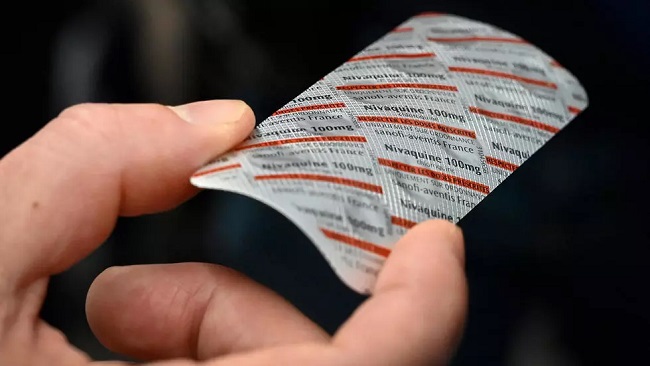
Will an old malaria drug help fight the coronavirus?
Hydroxychloroquine has been used for around 70 years to treat malaria, rheumatic conditions and other ailments. Now its potential use in the fight against coronavirus has become a source of hope for many, following encouraging results from a clinical trial in France on Monday. But experts caution that there is still uncertainty about its effectiveness.
A very old drug is coming back to the fore. The successful testing of hydroxychloroquine for use against the coronavirus in France’s second city Marseille on March 16 created high expectations amid this surging epidemic – especially in light of Donald Trump’s announcement on Thursday that the US Food and Drug Administration has approved its use for this purpose
Didier Raoult, director of a university hospital institute in Marseille, explained that he had conducted a clinical trial in which he treated 25 Covid-19 patients with hydroxychloroquine. After six days, he said, only 25 percent of patients who took this drug still had the virus in their body. By contrast, 90 percent of those who had not taken hydroxychloroquine continued to carry the Covid-19.
In the wake of this announcement, French pharmaceutical giant Sanofi offered to donate millions of Plaquenil (a trade name for hydroxychloroquine) to continue the tests, while the French government’s spokesperson Sibeth Ndiaye hailed the “promising results” and promised to expand clinical trials for this treatment.
Well-known and inexpensive
In France, some pharmacies have reportedly been overwhelmed by demand for the drug over the past few days. However, many voices soon pointed out that people should not jump to the conclusion that hydroxychloroquine is a proven miracle cure.
“This study seems promising, but we have to be really careful before raising hope when it comes to a virus as new as this one, for which we don’t yet have a lot of data,” said Sarah D’Alessandro, a professor of molecular medicine at the University of Milan and a malaria specialist who has worked on hydroxychloroquine.
This drug is regularly touted as a potential solution whenever a new virus appears. One “possibility is that chloroquine may alter the ability of the virus to bind to the outside of a host cell in the first place (which is an essential first step for entry) ”, noted Robin May, a professor of infectious disease at Birmingham University.
Seeing as it has been available and used for decades, hydroxychloroquine is “very well known, inexpensive and can be rapidly produced in large quantities”, D’Alessandro added. In light of these qualities, 25 clinical trials have been conducted or are underway in China to see whether or not this treatment should be used to treat Covid-19 patients. That’s while research was carried out into hydroxychloroquine’s effectiveness against SARS, MERS and Zika when these diseases first flared.
It was a Chinese study published on March 9 that first put the spotlight on this anti-malaria drug in the context of the current pandemic. Researchers at the University of Beijing demonstrated its effectiveness in an in vitro trial – that is to say, an experiment on cells in a laboratory.
‘Difficult’ to interpret results
But when it comes to human trials, the picture is foggier. “Tests on human patients [except for malaria] have so far produced contrasting results that are difficult to interpret,” D’Alessandro observed.
Hence the interest in Didier Raoult’s work in Marseille: he is the first scientist to have carried out trials with human patients that seem to have produced conclusive results. But there are still doubts: the precise data from the clinical trial have not yet been published in a scientific journal, and so have not yet been subject to peer review, noted MedScape, a specialist publication for healthcare professionals.
Another reason for caution is that the trial was “only carried out on a few patients”, D’Alessandro emphasised. The Chinese study on March 9 was criticised by many in the scientific community because it was carried out on a group of “only” 100 patients – four times more than the experiment conducted in Marseille. The French government’s spokesperson highlighted this point, stressing the importance of carrying out trials on a larger scale before trying to reach conclusions on hydroxychloroquine’s effectiveness.
A European programme of large-scale clinical trials was launched on March 12, aiming to test the effectiveness of four treatments that have already proven themselves against other viruses, such as Ebola. Hydroxychloroquine was not chosen.
A particular risk is that it does not work well with other medicines that may be necessary for certain patients with pre-existing health problems, particularly some autoimmune conditions. Hydroxychloroquine also presents risks of poisoning, and can be fatal if incorrectly dosed. Even if this danger is rigorously controlled in a hospital, the risk of an accident cannot be completely ruled out.
However, the French National Institute of Health and Medical Research, which is piloting the European clinical trial programme, has said that if there is additional proof in human patients of hydroxychloroquine’s effectiveness, it could be added to the list of drugs used in Europe’s large-scale clinical trials.
Culled from France 24
Paul Biya: Bullshitter-in-Chief
When the 87 year dictator President Paul Biya appointed Paul Atanga Nji as Minister of Territorial Administration, it was evidently clear that the onetime respectable African leader has lost everything and his utter ignorance of Cameroonian affairs was on display. And indeed, since then, the shallowness of Biya’s knowledge on the crisis in Southern Cameroons has been exposed further.
Declaring the war against English speaking Cameroonians four years ago and spending millions of US dollars to facilitate the arrest and forced extradition of the Southern Cameroons leader and his senior aides from Abuja to Yaoundé, the whole Francophone decision stands out now as deeply misguided as the crisis has grown.
Even then, the Biya Francophone regime’s obsession with the war in Southern Cameroons was just wrong. As the US Assistant Secretary for African Affairs, Hon. Tibor Peter Nagy Jr. had explained some times last year during a press conference in Paris, France, that Cameroon should not have gone down that road.
Today, the level of barbarism being perpetuated by the Cameroon government army soldiers supported by armed government militias as they pursue their genocidal war and scorch earth policy to completely annihilate the Southern Cameroons (Ambazonia) is frightening.
Human Rights Watch, Amnesty International and the International Crisis Group have all estimated that some 20,500 people have been killed, over 282 towns and villages burnt down, some 120,000 people are seeking refuge in Nigeria, over 1million people are internally displaced or living in bushes and 3,000 persons incarcerated in prisons and detention facilities in both French and British Southern Cameroons.
Local human rights groups have also reported that over 4.5. Million people are at risk of famine. Things are growing from bad to worse as the international community is now focused on the outbreak of the coronavirus.
However, one thing we of the Cameroon Concord News Group know for sure is that the 87 year old President Biya of French Cameroun and the Cameroon government army including the private militia sponsored by the regime in Yaounde will be held accountable for these crimes.
President Biya and the consortium of ruling CPDM crime syndicates have resisted all requests by independent humanitarian organizations to visit Southern Cameroons and establish the facts. The coming of the coronavirus is indeed a god-sent opportunity for Mr Biya as international pressure now seems washed away.
Cameroon government health officials have meticulously followed international trends by announcing some few coronavirus cases and reportedly quarantined Air France passengers clearly for PR reasons as just after the Governor of the Littoral Region left the Douala International airport, it was revealed that none of those passengers were detained in any hotel and none had the virus. The Francophone regime has also announced a lockdown of the country while its army soldiers continue to kill innocent Southern Cameroons civilians.
The coronavirus lockdown and Biya’s optimistic statement that compatriots should observe recommended hygiene rules have looked increasingly absurd. Cameroon has so far reported 7 cases as the virus continue to spread across the globe.
Living permanently in his palace at Mvomeka’a, Biya is wrong about exactly how big the coronavirus crisis could become in Cameroon. What his entire senior health officials picked from his clan have been doing in Yaoundé is simply providing the public with mistaken predictions. The problem is at 87, Biya seems to misunderstand entirely the nature of the various crises he is facing as head of state and the ways in which his administration has had an excellent backward approach in responding to them.
One of the biggest failings of the Biya administration is that it relies on old and inefficient men and women who are simply struggling to maintain a state apparatus designed to take care of the needs of the head of state, his family and closed collaborators. This is explains why Southern Cameroonians have opted to pullout of the failed union and set up their own country-the Federal Republic of Ambazonia.
The outbreak of the coronavirus and all its uncertainties simply provided Biya and his gang another golden opportunity to do what they have always done: lies. Misrepresenting figures and fabricating their own projection of how the number of cases was likely to rise to attract millions of dollars from the World Health Organization. Interestingly, all the coronavirus cases with French passports in Cameroon have been reported as fully recovered.
It seems pretty clear that what the regime in Yaounde has been trying to do with the virus pandemic is to divert attention away from the crimes its soldiers are committing in Southern Cameroons. But Biya’s words did nothing to calm the Ambazonia Restoration Forces. Biya is simply interested in putting on a happy one and indivisible Cameroonian face than grappling with reality.
Paul Biya is indeed-a Bullshitter-in-Chief
By Soter Tarh Agbaw-Ebai
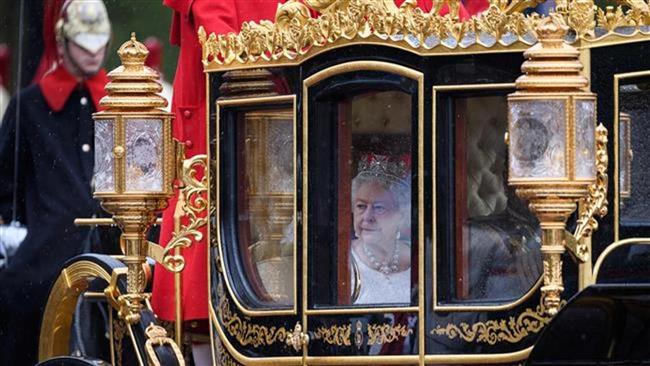
Coronavirus: UK puts army on standby, Queen Elizabeth leaves London for Windsor Castle
The United Kingdom put 20,000 military personnel on standby over the coronavirus crisis on Thursday as dozens of underground train stations closed across London and Queen Elizabeth left the city for Windsor Castle.
As the coronavirus outbreak sweeps across the world, governments, companies and investors are grappling with the biggest public health crisis since the 1918 influenza pandemic.
Against a background of panic buying in supermarkets and the biggest fall in sterling for decades, the 93-year-old queen issued a message to the nation as she relocated from central London to Windsor with her husband Prince Philip, who is 98.
“At times such as these, I am reminded that our nation’s history has been forged by people and communities coming together to work as one,” Elizabeth said.
“Many of us will need to find new ways of staying in touch with each other and making sure that loved ones are safe. I am certain we are up to that challenge. You can be assured that my family and I stand ready to play our part.”
In a sign of escalating fears about the impact of the crisis, the Bank of England cut interest rates to just 0.1%, its second emergency rate cut in just over a week, and promised an extra 200 billion pounds of bond purchases.
Prime Minister Boris Johnson said in a now-daily coronavirus news conference that Britain could turn the tide of the outbreak within the next 12 weeks.
“At the moment the disease is proceeding in a way that does not seem yet to be responding to our interventions,” he said.
“I believe that a combination of the measures that we’re asking the public to take and better testing, scientific progress, will enable us to get on top of it within the next 12 weeks.”
However, he said he could not assert that the outbreak would be on a downward slope by the end of June. It was possible but not certain.
Britain has so far reported 144 deaths from coronavirus and 3,269 confirmed cases, but UK scientific advisers say more than 50,000 people might have already been infected.
London lockdown?
Amid rumours that travel in and out of London would be restricted, Johnson’s spokesman told reporters there was “zero prospect” of restrictions being imposed.
But asked about London later at his news conference, Johnson said compliance with the social distancing recommendations made by the government was patchy and it might be necessary to do more in the capital, although he did not specify what.
The government said police were still responsible for maintaining law and order and there were no plans to use the military for this purpose, though it did put military reservists on formal notification.
London’s transport authority said it would close up to 40 underground train stations until further notice and reduce other services including buses and trains.
“People should not be travelling, by any means, unless they really, really have to,” London Mayor Sadiq Khan said.
As panic buying continued and supermarket shelves were being stripped bare, an industry source said retailers were expecting police support. The government announced it was relaxing competition laws to allow cooperation between supermarkets to ensure supplies to the public were adequate.
Britain faces a “massive shortage” of ventilators that will be needed to treat critically ill patients suffering from coronavirus, after it failed to invest enough in intensive care equipment, a leading ventilator manufacturer said.
Johnson said Britain was in talks to buy a coronavirus antibody test that could be a game changer if it works, and that scientists were already making progress in finding medicines to fight the disease.
Source: REUTERS
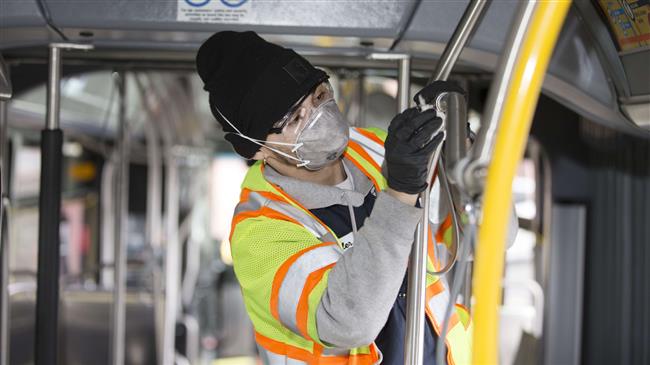
EU, UK combined have over 70,000 coronavirus cases: Report
The European Commission claims it is working around the clock to assist EU citizens stranded abroad who have requested repatriation. The Commission has announced it is creating a stockpile of medical equipment to try and meet demand created by the coronavirus pandemic.
Within the 27-nation EU there is a shortage of medical equipment and protective clothing to meet the needs of frontline public servants. The European Commission has just unveiled plans to facilitate the production and supply of ventilators, reusable masks and other essential items needed to try and deal with the coronavirus.
As more and more flights are cancelled and borders are closed, the European Commission says a huge number of EU citizens are stranded abroad, right around the world.
Because of the disruption to flights and the new border restrictions, movement within the bloc itself is becoming increasingly difficult.
The EU’s chief negotiator on future relations between the bloc and Britain, Michel Barnier, has confirmed he has tested positive for the disease.
EU leaders were scheduled to hold a summit in Brussels next Thursday and Friday. That has been postponed. They will take part in a videoconference instead. Combined, the EU and UK now have more than 70,000 confirmed cases. Aside from the health issue, concern is mounting over the financial impact. Right now the scale of that is incalculable.
Source: Presstv
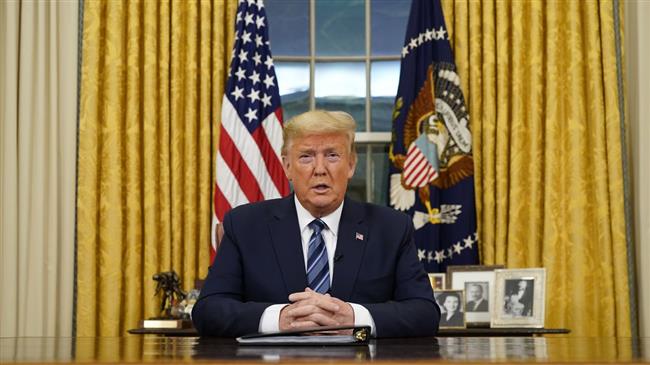
Coronavirus Outbreak: Trump cancels G7 at Camp David to hold video-conference instead
President Donald Trump will cancel an in-person meeting of G7 leaders at Camp David in June because of the coronavirus and will hold a video-conference instead, the White House said on Thursday.
The decision comes as nations around the world seal their borders and ban travel to stop the virus’ spread.
Trump held a video-conference with the leaders of the world’s major industrialized countries earlier this week and plans to repeat that in April, May and June, when the physical meeting at the presidential retreat in Maryland was scheduled to take place.
White House economic adviser Larry Kudlow, who also serves as Trump’s G7 “sherpa,” has informed his counterparts about the move.
“In order for each country to focus all of its resources on responding to the health and economic challenges of COVID-19 and at President Trump’s direction, National Economic Council Director and US Sherpa for the 2020 G7 Larry Kudlow has informed his Sherpa colleagues that the G7 Leaders’ Summit the US was set to host in June at Camp David will now be done by video-teleconference,” White House spokesman Judd Deere said in a statement to Reuters.
“The White House also informed the other G7 members that in order to continue close coordination, the President will convene the Leaders’ via video teleconference in April and May just as he did this week,” he said.
The White House views the change as part of mitigation efforts to fight the virus. Countries normally send large delegations with their leaders to G7 summits and journalists from around the world convene to cover their meeting as well.
Trump had intended to focus the G7 meeting on the economy, eschewing traditional topics that often top the agenda such as climate change. He initially planned to host the leaders’ group at one of his properties in Florida but canceled those plans after criticism that he would profit financially from the meeting.
The G7 is made up of the United States, Italy, Japan, Canada, France, Germany, Britain as well as the European Union. Trump irritated Europe by instituting a travel ban on its citizens without first alerting European leaders. Europe has become the epicenter of the coronavirus.
(Source: Reuters)
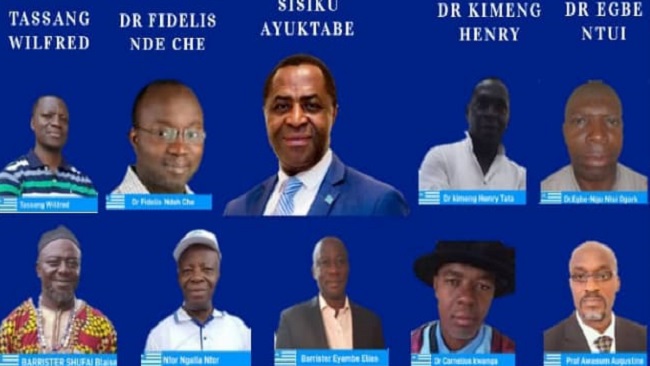
Ambazoniagate: First Yaounde Appeal Court trial postponed
Yaounde Appeal Court judges have postponed today’s opening of the trial of the Southern Cameroons leader, President Sisiku Ayuk Tabe and his senior aides due to the coronavirus.
The trial is set to be first in the Yaounde Appeal Court ever since the popular Ambazonia chief executive and his cabinet were given a life sentence.
The Biya Francophone regime judges will now decide on further steps following a decision by the CPDM government to lockdown the country.
President Sisiku Ayuk Tabe is challenging crimes allegedly committed by Cameroon government forces but labeled on him.
We understand the Yaounde regime cautioned the judges that no court room should host more than 10 persons. The Appeal Court hearing again has been delayed.
By Oke Akombi Ayukepi Akap in Glasgow with files from Rita Akana in Yaounde

Southern Cameroons Crisis: A war criminal Biya might be, but his regime’s propaganda campaign has basically worked
For French Cameroun barons of the ruling CPDM party, it helps if the Biya regime propaganda is not only delivered by the government spokesman and Minister of Communication but independent analysts, media practitioners, academics, and politicians.
From the very beginning of the Southern Cameroons war, the Biya Francophone regime, assisted by French diplomatic and business interest, has run a very elaborate media battle to portray itself as the victim of an international conspiracy, wherein its only opponents are Boko Haram terrorists from Nigeria and Southern Cameroons separatists who are being used by the Anglophone Cameroon diaspora in Europe, South Africa and United States to destabilize the country.
The most important part of this Biya regime strategic messaging supported by the French government of President Emmanuel Macron is aimed at Europe and the US that are habouring both the Southern Cameroons powerful diaspora and the French Cameroun’s Brigade Anti- Sardinards. They want the USA and Europe to continue to see Biya as the only alternative to stability in the CEMAC region. They constantly say that the West should support the 87 year old.
A war criminal Biya might be, but the ruling CPDM propaganda is telling the world that Biya will continue to protect all Cameroonian minorities – his role in endangering British Southern Cameroonians by starting a sectarian war against the English speaking people and his economic war against the Bamilekes notwithstanding – and that Biya has no immediate plans to turn to China.
For the Francophone dictator and barons of his ruling CPDM crime syndicate, it helps if this propaganda is not only delivered by the Cameroon government spokesman and other cabinet ministers but independent analysts, journalists, academics, and politicians.
Recently, the Minister of Territorial Administration, Paul Atanga Nji threatened to expel NGOs and media organizations that are reporting to the world the exact situation in Southern Cameroons. The Interior Minister launched a scathing attack on Equinox TV that has so far provided the most balanced and fair coverage of the Cameroon political story accusing the management of haven received 5 billion FCFA from donors abroad.
Correspondingly, the Yaoundé regime’s favourite media houses include Vision 4 TV owned by acolytes of the regime and which specializes in mixing together conspiracy theories, half-truths and outright lies.
The propaganda machinery has successfully put aside the firm position that was adopted earlier by the US ambassador to Cameroon, Peter Henry Barlerin that President Biya should think about his legacy and step aside.
The international community is yet to draw any red line around the killings currently going on in Southern Cameroons and now with the outbreak of the coronavirus, the United States government has no intention of enforcing regime change in Yaounde.
The Biya regime’s propaganda campaign has basically worked as the US Assistant Secretary of State Tibor Peter Nagy Jr. is now expressing misgivings about the Southern Cameroons revolution and Biya’s continued stay in power despite President Trump’s determined efforts to reduce US military and economic support for the corrupt government in Yaounde.
By ignoring the Cameroon government army atrocities in Southern Cameroons and only finding areas of common interest – such as fighting Boko Haram in the Far North of French Cameroun and encouraging democracy (even if such common interests are illusory) – the US State Department is slowly but surely turning its back against the Ambazonian people.
Consequently, the Southern Cameroons Interim Government should and must step up its game and proceed in taking the battle inside French Cameroun.
By Soter Tarh Agbaw-Ebai
Southern Cameroons deepening aid crisis: “They don’t want external eyes there to see what is happening”
Humanitarian organisations are struggling to keep pace with the increasing needs of civilians as conflict between the government and pro-independence groups escalates in Cameroon’s anglophone regions.
Limited access to those driven from their homes, low levels of donor funding, and what aid workers have described as government “obstruction” means the majority of the 1.3 million people affected by the violence cannot be reached.
Since November 2019, there has been a surge in violence in the Northwest and Southwest regions – referred to collectively by pro-independence fighters as the Southern Cameroons or the Republic of Ambazonia.
Growing humanitarian needs
Nearly 900,000 people have been made homeless, and an additional 60,000 have fled into neighbouring Nigeria. The four-year conflict, triggered by the perceived marginalisation of the region from majority French-speaking Cameroon, has left at least 3,000 dead.
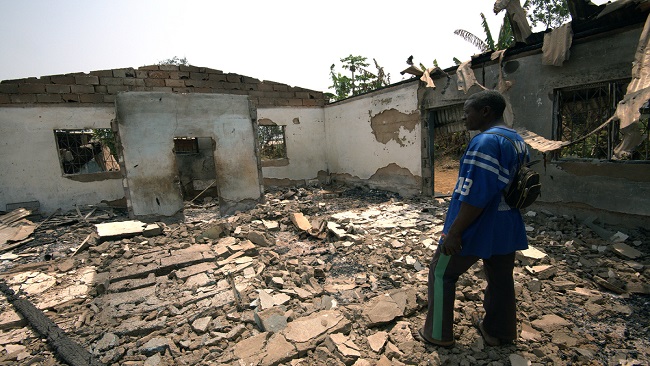
Needs include food, shelter, and psychosocial support as the government forces and pro-independence fighters routinely torch homes and, increasingly, entire villages, forcing people into the bush.

Residents of Bali waited for shelter kits from the UN after their homes were torched.
Over 600,000 children have been unable to regularly attend school following an education boycott ordered by the separatists to protest the creeping use of French in class and attacks on schools, teachers, and students to enforce the ban. As a result, just 19 percent of primary and secondary schools remain open in the conflict region.
The UN’s children’s agency, UNICEF, estimates that only 34 percent of health facilities are operating, causing a dip in life-saving immunisation and nutrition services.
Despite the humanitarian needs, the UN and its local partners were able to reach only 40 percent of affected civilians in 2019, Mobido Traore, head of the UN’s aid coordination body, OCHA, told The New Humanitarian.
Deepening insecurity
The insecurity, particularly in the Northwest – the centre of much of the violence – has had a significant impact on humanitarian operations.
In January, seven aid workers from two local NGOs – COMINSUD and the Martin Luther King Jr. Memorial Foundation – were kidnapped by pro-independence fighters. Although all staff were later released, the abductions resulted in several organisations restricting their area of operations.
Government security forces have also failed to respect humanitarian space. On 21 February, soldiers entered the St. Mary Soledad Hospital campus, a health facility supported by the medical charity Médecins Sans Frontières in the town of Bamenda, and shot and killed a civilian driver in his vehicle.
Stray bullets also hit an ambulance call centre, endangering the lives of patients and hospital staff, MSF said in a statement provided to TNH.
Aid agencies have increasingly relied on community and religious leaders to draw displaced civilians from their hiding places in the bush and to assemble them in “safe zones”, such as religious centres and former schools, where they can receive assistance.
But the military has raided “safe zones” and killed and arrested the displaced, and those who assisted in organising the aid distributions, according to internal incident reports by local aid NGOs seen by TNH, press statements, and interviews with several eyewitnesses and victims.
Government clamp down
The government has also clamped down more systematically on humanitarian access, imposing increasingly restrictive tracking and vetting procedures, aid workers say.
In June, it established Humanitarian Coordinating Centres in Bamenda and Buea – the capitals of the Northwest and Southwest regions – to assess incoming aid, provide guidance on distribution, and ensure traceability, government officials told local news media at the time.
All local and international aid organisations – including the UN – are required to apply to the coordinating centres for permission to carry out needs assessments and aid deliveries. Food and non-food aid must be hand inspected at the centres before delivery to beneficiaries.
“The process for vetting humanitarian assistance in Bamenda and Buea has been in place just to place more burden on humanitarian actors,” Traore said.
Local aid workers who asked to remain anonymous over safety concerns described the time-consuming procedures as a “crackdown on humanitarian organisations”.
Last week, the government moved the vetting process from the coordinating centres to the governor’s office in Bamenda.
It’s a step that not only politicises aid work, but will result in a “significant delay in aid reaching beneficiaries,” Traore said.
The governor’s office did not respond to requests from TNH to comment on the most recent developments.
Aid agencies accused of ‘collusion’
Government officials have also renewed their accusations that human rights and aid groups are colluding with the pro-independence groups, supplying them with weapons, and spreading false information that implicate the security forces in atrocities.
“Many NGOs have clearly revealed themselves as enemies of our country.”
In a televised press conference, the head of Cameroon’s Ministry of Territorial Administration (MINAT), Paul Atanga Nji, charged Human Rights Watch, Amnesty International, the think tank International Crisis Group, and OCHA – among other organisations – of working to “destabilise state institutions”.
“Many NGOs have clearly revealed themselves as enemies of our country,” Nji said. They have “become laboratories of fake reports with the sole objective to tarnish the image of the country’s defence and security forces.”
The government was particularly incensed by the reports of a massacre in the village of Ngarbuh on 14 February, in which the security forces and allied militia were accused of killing at least 21 civilians. The UN demanded an impartial inquiry into the incident.
Rights groups and aid organisations have all denied Nji’s accusations.
“The statement is just a new chapter of the government smear campaign against [Human Rights Watch], other human rights organisations, human rights activists, and journalists,” Lewis Mudge, Central Africa Director for HRW, told TNH.
“The government is trying to jeopardise our work and tarnish our image,” Traore said. “They don’t want external eyes there to see what is happening.”
Funding woes
A persistent lack of funding has also hamstrung the humanitarian response. Donors have provided just over 40 percent of Cameroon’s aid appeal, but in the Northwest and Southwest regions, the figure is far lower – just 18 percent of the budget has been financed.
As a consequence, the UN has only “limited capacity to respond timely to increasing needs,” said Traore.
A high staff turnover also means the UN has struggled to build trust with communities and representatives of both sides of the conflict, noted an OCHA official, who asked to remain anonymous.
Another UN staff member was more critical. “This situation is unique because [this UN operation] is not very functional”, the person said, referring to the UN’s inability to provide assistance to the majority of those in need. “The UN’s reputation is plummeting. There is a failure to deliver.”
As the conflict widens in 2020, the UN predicts its funding needs will rise. Local and international aid groups are working to build capacity, especially in the troubled Northwest region, but it is an uphill struggle, they say.
“It is not a good situation,” one local aid worker told TNH. “It is not looking good for us.”
Culled from The New Humanitarian
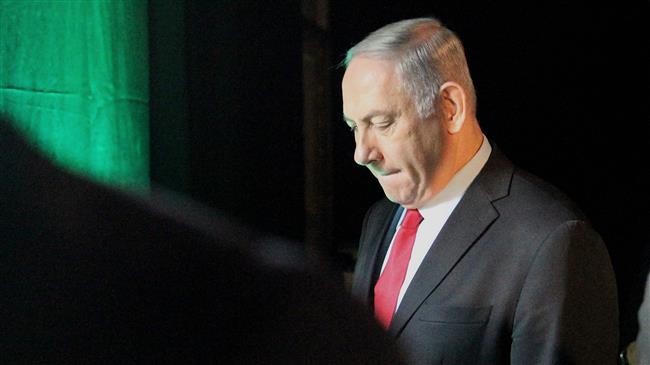
Former Israeli Prime Minister Ehud Olmert says ‘Benjamin Netanyahu has to go home’
In a wide-ranging interview in Tel Aviv, former Israeli prime minister Ehud Olmert discussed the country’s ongoing formation of a government and openly criticised his successor and rival Benjamin Netanyahu who, he says, is “not capable of continuing”. He also addressed the issue of Iran, which regularly threatens Israel.
Speaking in Jerusalem, former Israeli prime minister Ehud Olmert expressed hope that Benny Gantz, the centrist former army chief who was this week tasked with forming a government, would succeed and change the Israeli political landscape.
Olmert claimed it was “obvious” that his successor and rival Benjamin Netanyahu, whom he accused of wanting to stay in power “at almost any cost”, had to go: “A prime minister that failed three times, consecutive times, in one year to have enough support to form a government, he’s not capable of continuing. He has to go home.” Netanyahu’s Likoud party won the most seats in the March 2 election but fell short of a majority and he has since not managed to form a government.
The former Israeli premier also addressed the corruption charges against Netanyahu. Olmert himself resigned over corruption allegations back in 2008 and later spent 16 months in jail, which he contrasted with Netanyahu’s stance: “No one is above the law. I suffered from this but I bowed my head and I said the courts are above me. Netanyahu thinks that he is not only above the courts, but that he is above the country and this will not work.”
‘Iran is not an existential threat to the state of Israel’
Finally, Olmert addressed the issue of Iran – which regularly threatens Israel – calling it “a problem”. “But we have to deal with Iran”, he says. “I dealt with Iran for many years and I think that we can handle the threat of Iran. It is not an existential threat to the state of Israel”.
Olmert also accused Netanyahu of using “rhetoric” to exaggerate the threat posed by Iran to Israel.
Source: France 24