
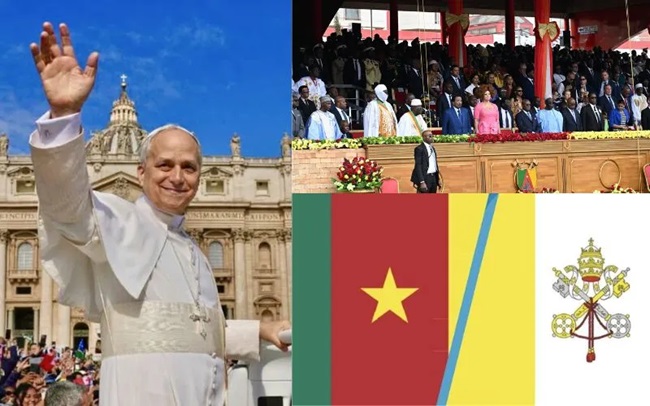
Archbishop Nkea says the Holy Father is coming as a Pastor, not a politician
Archbishop Andrew Fuanya Nkea, Archbishop of Bamenda and President of the National Episcopal Conference of Cameroon (CENC), has spoken to Vatican News about the upcoming visit of Pope Leo XIV to Cameroon, scheduled from April 15 to April 18, 2026.
Speaking from Bamenda, capital of the North West region and one of the main epicentres of the Anglophone crisis, the prelate said expectations surrounding the visit are high. The Pope is due to travel to Yaoundé, Douala and Bamenda. The city has been affected by violence since late 2016, when a separatist conflict emerged from professional grievances raised by teachers and lawyers.
Archbishop Nkea said the Pope’s decision to visit the region despite ongoing tensions carries strong symbolic significance. “It is significant that the Holy Father chose not to wait for tensions to subside but to come while the situation remains volatile,” he said, adding that the local Church has warmly welcomed the decision.
A tense sociopolitical climate
The visit comes against the backdrop of tensions following the October 2025 presidential election. It also takes place amid continuing secessionist demands in the North West and South West regions, as well as recurring attacks by armed groups in the Far North.
Addressing political interpretations prompted by the announcement, the Archbishop of Bamenda stressed the spiritual nature of the trip. He said the Pope is not coming as a politician or merely as a head of state, but merely as a pastor and a man of God.
Beyond the Catholic community, the visit is widely seen as a message to the nation at a time when efforts to ease sociopolitical tensions remain challenging. Archbishop Nkea described Pope Leo XIV as an ambassador of peace and an apostle of reconciliation.
In a context marked by continuing instability in the Far North, North West and South West, the papal visit is expected to serve as a pastoral gesture and a sign of solidarity with populations affected by the crises.
Source: Sbbc


