
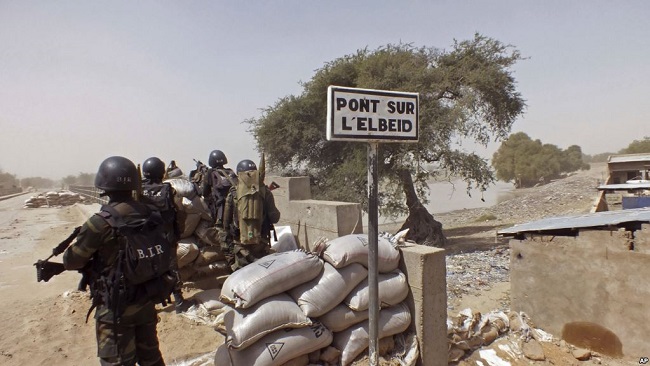
Boko Haram: Military setbacks fail to end raids in the Far North region
More than a decade after Boko Haram’s insurgency spread into Cameroon, the Far North remains one of the Lake Chad Basin’s main conflict zones. Cameroonian forces regularly report tactical successes but have yet to eliminate the armed groups’ ability to carry out attacks. No longer able to hold territory for long, Boko Haram and its breakaway faction, Islamic State West Africa Province, or ISWAP, now conduct rapid incursions against military posts, villages and key trade routes.
Overnight on July 6-7, 2026, an Operation Alpha post operated by the Rapid Intervention Battalion came under attack in Vreket, in Koza municipality, Mayo-Tsanaga Division. According to the state-run daily Cameroon Tribune, more than 100 Boko Haram fighters attempted to storm the unit’s command post near the Nigerian border.
The attackers failed to catch the soldiers off guard. Cameroon Tribune reported that the troops had received an early warning and immediately returned fire. “The vigilance of troops stationed at the base allowed them to contain the assault immediately,” the newspaper said. By the end of the fighting, more than a dozen militants had reportedly been killed, while the remaining attackers were driven back toward the border.
Weakened Groups Still Capable of Striking
The response in Vreket illustrates the ability of Cameroonian forces to react quickly. It does not, however, eliminate the threat. Although Boko Haram and ISWAP no longer control as much territory as they did at the height of the insurgency, they remain highly mobile in border areas and continue to adapt their tactics.
The fighters now favor hit-and-run attacks, ambushes, nighttime raids and improvised explosive devices. Their strategy focuses less on holding towns and villages than on keeping security forces under pressure, disrupting economic activity and sustaining insecurity across the region.
In a food security analysis published in December 2025, FEWS NET reported an increase in violence in the Far North. According to the organization, attacks against civilians and government forces in 2025 exceeded the levels recorded in 2023 and 2024. Mayo-Tsanaga, where Vreket is located, was among the divisions that recorded the sharpest increase in violence.
Civilians Remain the Main Victims
Beyond military confrontations, the continuing violence directly affects local communities. In a report covering Jan. 1 to March 31, 2026, the United Nations Office for the Coordination of Humanitarian Affairs said non-state armed groups continued to carry out raids in Mayo-Tsanaga, Mayo-Sava and Logone-et-Chari.
The attacks targeted villages, farms, fishing areas, grazing land and several roads, including National Road No. 1. Incidents were reported in Sandawadjiri, Warawide, Tolkomari, Gouzoudou, Kouyape, Maloumri, Amchidé, Vouzod, Waza and Darak.
According to OCHA, 104 people were killed, 123 wounded and 128 abducted in the first quarter of 2026. The organization also recorded nine incidents involving improvised explosive devices, as well as attacks on two schools and four integrated health centers.
The violence is deepening the hardship facing communities already affected by forced displacement, food insecurity, the destruction of livelihoods and limited access to healthcare and education.
The continuing attacks are also taking a heavy economic toll. In rural areas, fear of violence restricts access to farmland, grazing areas and fishing grounds. Abductions, looting and arson are weakening local trade networks, while insecurity along roads is raising transportation costs and delaying deliveries to markets.
Boko Haram is seeking to keep border communities and security forces under constant pressure without necessarily launching prolonged operations. This war of attrition requires the state to maintain a large military presence while also providing humanitarian assistance to communities whose living conditions continue to worsen.
Contained but Far From Stable
Cameroonian authorities maintain that the security situation remains “generally under control,” citing the sustained presence of security forces, Rapid Intervention Battalion operations and support from local vigilance committees. The military’s ability to repel attacks and inflict losses on armed groups demonstrates its superiority on the ground.
But the situation remains fragile. The porous border with Nigeria, the mobility of fighters, the circulation of weapons, the growing use of explosive devices and socioeconomic hardship continue to enable further attacks.
The thwarted assault in Vreket reflects the security paradox in the Far North: Cameroonian forces can contain attacks and inflict setbacks on Boko Haram, but the threat remains active enough to require a sustained military presence.
Victory in the region will therefore be measured not only by the number of attacks repelled or fighters killed. It will also depend on the government’s ability to provide lasting security for villages, restore economic activity and reduce the vulnerabilities that armed groups continue to exploit.
Source: Sbbc


