
Monthly Archives: April 2020
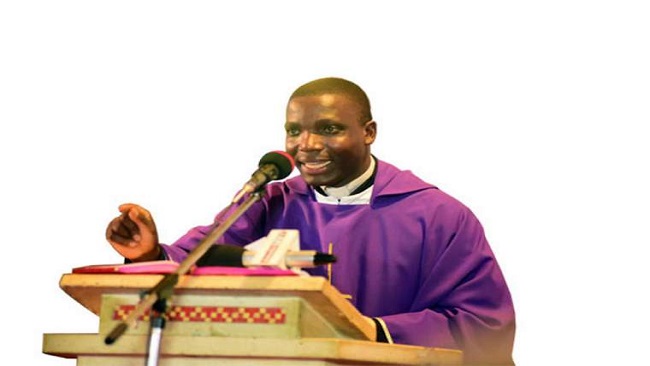
Priests arrested for public Mass celebrations during coronavirus shutdowns
Amid lockdowns responding to the coronavirus pandemic, at least three priests were arrested Sunday for celebrating Mass publicly, in alleged defiance of government orders banning religious gatherings during the pandemic.
In Uganda, Fr. Deogratius Kiibi Kateregga was arrested March 29 for celebrating Mass at St Joseph’s Catholic Parish in Mpigi, Uganda. There were reportedly at least 15 Catholics in attendance at the Mass.
The priest is well-known in Uganda, and came to national notoriety after a televised 2018 sermon at the memorial Mass for a Ugandan musician, Mowzey Radio, who died from injuries sustained in a bar fight.
Local officials said the priest was arrested along with seven other Catholics and was detained at the Mpigi police station.
“He was found preaching in the church in contravention of the presidential directives,” said Herbert Nuwagaba, the Mpigi District Police Commander.
“We want him to tell us why he is doing this,” Godfrey Matovu, the Mpigi District Internal Security Officer, told the Daily Monitor.
The priest was released after parishioners protested on his behalf at the police station, according to local media reports.
On March 18, Uganda’s President Yoweri Museveni suspended religious and cultural gatherings for at least 32 days in an attempt to stop the spread of COVID-19. Uganda currently has 30 cases of the coronavirus.
In India’s Kerala state, two priests, two seminarians, and three religious sisters were charged with violating government orders after a Mass celebrated in a chapel at the minor seminary of the Congregation of Missionaries of Faith in the Wayanad district of Kerala.
All seven were released after their arrest, according to UCA News, with a warning not to repeat their actions.
Father Manoj Kakkonal, a spokesman for the Mananthavady diocese, told UCA News that the arrest “seems to be a case of misunderstanding,” because the Mass in question was celebrated inside the seminary chapel. The priests and seminarians are residents of the seminary, UCA News reported.
The police were reportedly called after neighbors saw the religious sisters arrive at the chapel.
Indian prime minister Narendra Modi instituted a 21-day lockdown on March 24.
Another arrest took place in Kerala on March 23, when Fr. Paul Padayatti from Our Lady of Perpetual Help Church in Koodapuzha celebrated a requiem Mass at which more than 100 people attended. Kerala officials also said there have been two other incidents where authorities issued warning to priests conducting Mass.
As of March 29, India has reported 980 cases of COVID-19 and 24 deaths related to the outbreak, according to the New York Times.
Source: Catholic News Agency
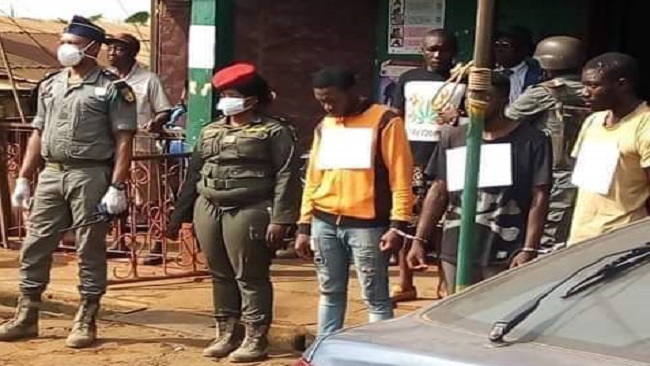
Coronavirus: Fake manufacturers of chloroquine nabbed in Bafoussam
A group of fake chloroquine manufacturers has been caught in the West regional headquarters of Bafoussam in Cameroon by the country’s forces of law and order.
The group, which wants to cash in on the desperation of the population, got to work once there were rumors that Chloroquine could help in the curing of people affected by the deadly Coronavirus.
As Chloroquine gets tested in the Western world, Cameroon’s fake drug manufacturers have decided to make hay while the sun shines by setting up shops and establishing marketing networks for their illegally produced medications.
The Coronavirus is spreading death and destruction across the world and anything that can bring some hope and reduce fear is very much welcome, especially in a third world country like Cameroon which lacks state-of-the-art laboratories and world-class law enforcement agents who can discourage irresponsible behavior.
With the dismantling of this group of dangerous crooks who are passing off as chemists and pharmacists, ordinary citizens in Cameroon must understand that the only place wherein they can get genuine medication remains government approved pharmacies and the medication should be consumed only when prescribed by a certified medical practitioner.
Currently, the insidious Coronavirus is rolling into many Cameroonian cities and town and many Cameroonians do not know where to turn to when it comes to obtaining medication.
So far, there is no definitive cure for the Coronavirus pandemic. Preventive measures remain the only steps that can help any society to check the spread of the pandemic.
National governments and the World Health Organization have issued guidelines which must be strictly followed by every citizen if the virus has to be booted out of this beautiful planet.
Rita Akana and edited by Dr Joachim Arrey
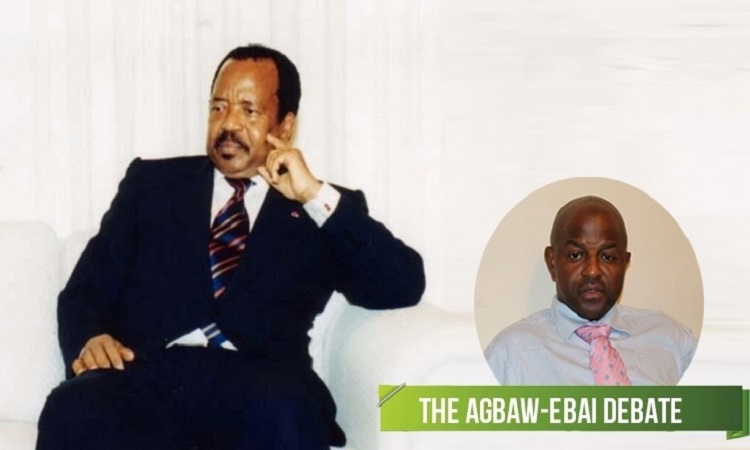
Where is President Paul Biya? Cameroon Concord News to put up an obituary announcement on him
Cameroon’s coronavirus problem is much greater than the Biya regime is acknowledging. The true number of cases is far greater than the tally from the Minister of Public Health. Senior CPDM officials are sick not only with the coronavirus but are HIV positive. More signs of uncontrolled infection in the cities of Douala, Yaoundé and Bafoussam have emerged and there are fears things are getting out of control.
Medics in the rural areas particularly in war ravaged Southern Cameroons have been incessantly flashing out signals to the World Health Organization that Southern Cameroons may run out of cemetery space if something is not done and done in a hurry. Last week, the Ministry of Public Health announced that some of the COVID-19 patients were recovering but Cameroon Intelligence Report sources in Douala and Yaoundé have all hinted that the deaths have started coming so fast.
A senior opposition figure in Yaoundé who hails from the Far North Region contacted by this reporter recently asks, reluctantly, whether both French and British Southern Cameroonians should in fact be relieved, because apparently even when a nation faces unrelenting misery—accelerated by the politics and policies of its government—it doesn’t necessarily break down as fast as Paul Biya’s Cameroon.
Biya and his ruling CPDM crime syndicate have turned Cameroon into a criminal wasteland, with French Cameroun political gangs in tricked-out. A nurse at the Yaoundé General hospital who spoke to our undercover reporter revealed that some senior army officials have secretly collected ventilators from the hospital citing orders from the presidency of the republic. And like the policy against the Nigerian Islamic sect, Boko Haram and Ambazonia Restoration Forces, the Biya Francophone regime is erecting roadblocks to prevent people fleeing the rural areas from bringing the coronavirus with them to Yaoundé. These efforts at containment will of course fail and coronavirus will definitely find its way to Mvomeka’a where the 87 year old President Biya is self-isolating!
Apart from Biya’s failed leadership, the CPDM government is another palaver. Many Cameroonians would celebrate its passing, and even its die-hard supporters are now seeing signs that the coronavirus is catalysing changes that Biya and his Francophone Beti-Ewondo acolytes resisted long ago.
Given how many people are dying now in Yaoundé and Douala and with Biya helpless and quarantined at his Mvomeka’a palace, it would be grotesque to think of coronavirus as a lucky break for Cameroonians in support of regime change. With COVID-19, the deep bench of the so-called CPDM Political Bureau and the House of Senate will be depleted.
National Assembly Speaker, Cavaye Djibril has blatantly refused to announce that he had contracted the coronavirus. He is 80 years old and a chief Biya acolyte to whom he speaks regularly and in person.
However, the center of all speculation is President Paul Biya himself. The dictator doesn’t appear in public often, even in the best of times, and you’d have to be fairly lucky to spot him in Yaoundé—except on a few occasions where his appearance is so customary that an absence would make Cameroonian allies and enemies, wonder if an illness must have felled him.
The world is already in the middle of the coronavirus season and Biya is yet to make a televise statement to the Cameroonian people. State radio and television recently reported that the Head of State has created a special fund to combat the virus. But rumours about Biya do not die so easily in Cameroon. Why can’t President Biya just give his speech from his sitting room at the Mvomeka’a palace? Is this not the ideal opportunity to discuss how the funds provided will be disbursed to fight the spread of COVID-19? Is this not also a good opportunity for Mr. Biya to speak of the process of renewal that Cameroon will have to undertake to Emergence 2035?
After his last meeting with the US ambassador to Cameroon, speculation has been rampant. Surely, say the rumours, Biya is dead—or he is self-isolating! These rumours aside, the perception of distance has made Mr. Biya, already a distant figure without charisma or warmth, seem superannuated and out of touch. We understand Biya is in a febrile delirium in Mvomeka’a but if he does not show up seven days after this editorial, Cameroon Concord News Group shall put up an obituary announcement on him.
What is keeping the ruling CPDM gang in power now is the simple fact that the whole Cameroonian nation French and British Southern Cameroons are suffering together and it is evidently clear that Biya deliberately weakened all state institutions and tribal zed the army making them unhealthy enough to rival his leadership, even in this diminished state. Today, police commissioners, army captains are dying of COVID-19, just as poor civilians too!
Coronavirus has exposed and confirmed the incompetence and malignance of the Biya regime, at the same time it has crippled the forces for change headed by Prof. Maurice Kamto. Popular protests in the streets of Douala and Yaounde simply cannot happen as long as the manpower for those protests remains sequestered at home, and as long as morale is utterly depleted by the task of burying one’s loved ones. Regime change in Yaoundé might have to wait. At least the coronavirus pandemic will eventually end, and with its end, change is one more thing to look forward to.
By Soter Tarh Agbaw-Ebai
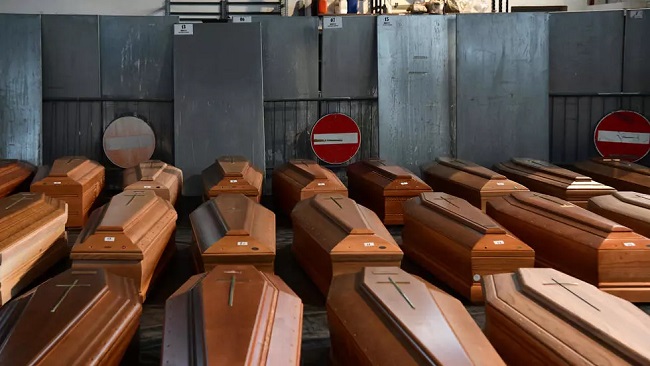
Coronavirus: Why do more men die of Covid-19 than women?
As the world faces the most serious public health crisis in a century, scientists and medical professionals are scrambling to understand who is most vulnerable to Covid-19 and why. But one clear trend is emerging: Men are much more likely to die from the disease than women.
It is a pattern occurring in almost every country as researchers frantically begin to collate data from national health authorities.
“We are seeing with every country that provides us with sex-disaggregated data that men are more likely to die from the virus, anything from 10 percent to more than twice as likely,” said professor Sarah Hawkes, the director of the UCL Centre for Gender and Global Health in the UK.
The centre is home to the independent Global Health 50/50 initiative, which has embarked on a project to collate data on gender and Covid-19 – the disease caused by the novel coronavirus – from across the globe.
While much emphasis was initially placed on the elderly or those who have pre-existing health conditions as being at risk of dying from the virus, it is now becoming clear that being male is also a factor.
Data from China first revealed a gender gap in deaths, with 64 percent of male sufferers dying compared to 36 percent of women, according to the Global Health 50/50 initiative.
Figures from France, Germany, Italy, South Korea and Spain have confirmed the pattern.
In the two hardest-hit European nations, 71 percent of the Covid-19 deaths in Italy were male while in Spain almost twice as many men as women have died.
“Undoubtedly, a part of this is biology but a large part of this difference is also driven by gender behaviour, such as far higher levels of smoking and drinking among men compared to women,” professor Hawkes told FRANCE 24.
In France, figures from the Public Health institute show that, from March 1 to March 22, 57 percent of Covid-19 deaths were men with the average age being 81 years old.
But Hawkes said that when it comes to contracting the virus, the gender gap is far more less noticeable – women are at just as much risk as men of being infected.
While it is still too early to determine why the gender gap is emerging, researchers point to several possible factors.
Data has already shown that other coronaviruses, such as SARS (Severe Acute Respiratory Syndrome) and MERS (Middle East respiratory syndrome), tend to affect men disproportionately.
Lifestyle choices and behaviours also play a part, with men less likely to seek medical help at the first signs of disease or to follow public heath advice. Studies show that men are also less likely to wash their hands or use soap.
They are also more likely to indulge in risky lifestyle behaviours such as drinking and smoking, which means men have a higher incidence of both pulmonary and cardiovascular disease.
Then there are the biological factors, with hormones, particularly oestrogen, playing a role in increasing women’s antiviral response. Genetic structure is another important factor, with a significant number of genes that regulate the immune response encoded on the X chromosome, of which women have two while men only have one.
“We know that women’s immune systems function differently to men’s – after all, women’s bodies are designed to host a foetus for nine months at a time without it being rejected as a foreign body,” professor Hawkes said.
Dr Sabra Klein, an immunologist and a specialist in gender and infectious diseases at the Johns Hopkins School of Public Heath, spoke to FRANCE 24’s The 51 Percent show earlier in March about the possible reasons for men being at more risk of dying from Covid-19.
“Generally speaking, women mount greater immune responses to a variety of viruses as well as other infectious agents than do men,” Dr Klein said.
“There are biological differences in the immune systems between men and women which impact our ability to fight an infection,” she said, pointing to blood samples from China collected from Covid-19 patients.
“[Those samples] suggest our blood chemistry and immune cell counts do, in fact, differ between men and women, which could be contributing to some of the gender differences that we’re observing in the severity of the disease.”
In the meantime, researchers are pleading with countries to provide specific data on gender and age differences when it comes to recording deaths, especially in the US and Britain.
“The Covid-19 crisis reveals, in stark terms, that in most countries, the data-for-decision-making process is broken,” said Dr Kent Bush, the co-director of Global Heath 50/50.
“We have the data, but too often we fail to analyse it and we fail to act on it. While it’s great to see some countries stepping up, too many still don’t, including those with the wherewithal to do better, such as the [United] States and the UK.”
Such data should be used to shape public heath messaging, said Dr Klein.
“This pandemic may end up being the defining moment for sex and gender in the way we view infectious diseases,” she said.
“I am disappointed that many of the public health officials around the world are not speaking out that being male is indeed a risk factor for a more severe outcome and, in particular, being an older male. I do think that there could be public heath messaging [that] could occur in that context.”
She later told FRANCE 24 that such public health advice is critical when there is no drug to prevent or vaccine to help cure the virus.
“So if more older-aged men knew this, or their spouses knew this, it may mean they would be more vigilant, and also taking advantage of healthcare while also practising good hygiene.”
Culled from France 24
French Cameroun: Violating COVID-19 Restrictions Can Get You Arrested
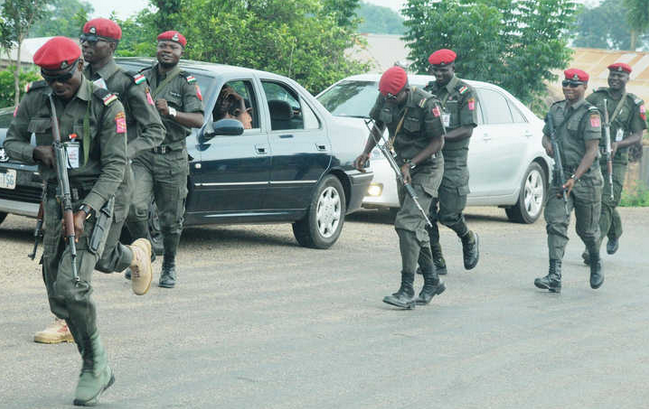
Police in Cameroon have begun arresting people who defy measures put in place to stop the spread of the coronavirus, which has so far has infected 139 people in the central African state. Police are sealing shops that exceed maximum numbers for customers, impounding vehicles that carry too many passengers, and this week arrested more than 50 prostitutes for sneaking into hotels used to isolate suspected cases.
Jean Claude Tsila, the top government official in Mfoundi Division, the administrative unit where Yaounde is located, said he was appalled to learn that people who have been isolated in hotels on suspicion of being carriers of COVID-19 are receiving nocturnal visitors.
Tsila said he ordered the arrest of 50 prostitutes, as well as 13 women and 6 men who sneaked into hotels to meet their spouses.
“We discovered that people put in quarantine were conniving with hotel agents [workers] to smuggle women into the hotel to sleep with them. We have arrested some of them. We have to work together to stop this virus,” he said.
Tsila said he ordered all of the arrested persons to be put in isolation, while the police have been instructed to find unauthorized hotel visitors who have been on the run.
Authorities in Cameroon recently isolated more than 500 citizens and 70 foreigners in an attempt to stop the spread of the coronavirus. All of those quarantined flew into the central African state on March 17th and 18th before the government closed the borders and suspended issuance of visas until further notice.
However, 150 of those quarantined escaped from their hotels. The government is searching for them, as well as another 186 people who returned home from France and Italy on March 17 and refused to be isolated.
Enforcing social distancing
Despite government warnings, officials say a majority of Cameroonians are not taking coronavirus seriously, and authorities are taking steps to enforce social distancing rules.
Troops have shut down stores for allowing in too many customers, closed markets for not respecting hygiene norms, and stopped buses that carried too many passengers.
Close to 400 taxis were ordered off the road in Yaounde alone for transporting more than the maximum three passengers per vehicle.
Taxi drivers union leader Ernest Verla said drivers will respect the restrictions if the government gives them subsidies, increases taxi fares or reduces fuel prices.
“They [the government] did not reduce the price of fuel, we are struggling, things are not moving and we are unable to make it. It is more than us. When you put [buy] fuel for 10 000 [francs] you are unable to work [raise] 3 000,” said Verla.
Cameroon’s first case of COVID-19 was confirmed on February 9. Since then, confirmed cases have increased to 139, with six deaths reported.
Source: VOA
Yaounde reports 51 new coronavirus infections
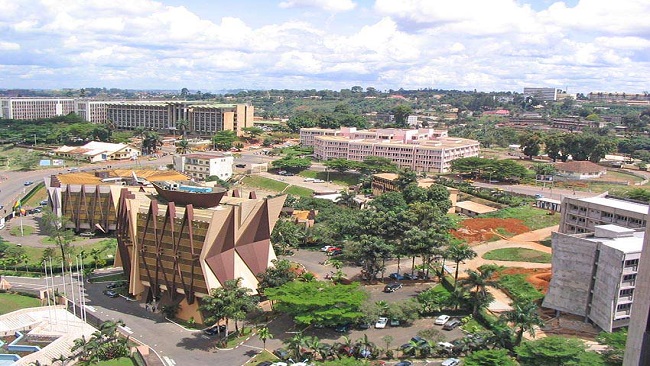
Cameroon has registered 51 new infections of the novel coronavirus, bringing the total to 193, Cameroonian Minister of Public Health Manaouda Malachie said in a tweet Tuesday morning.
According to the minister, these 51 new cases were diagnosed out of a total of 94 travelers quarantined in hotels in Yaounde, the Cameroonian capital. Twenty-four of them have tested negative, while 19 have a questionable result and will need to be tested again.
This is a new record of daily growth in the number of infections in Cameroon after 40 new cases were reported on a single day last Sunday.
Cameroon is now one of the countries most affected by COVID-19 in sub-Saharan Africa. The country currently has 193 confirmed cases, including six deaths and “a dozen” of cured, according to the health minister.
Most of the cases are in Yaounde and Douala, the country’s economic hub. Western city of Bafoussam and southwestern city of Limbe also have a few patients.
Source: Xinhuanet
Coronavirus: Discipline Courage will take us through the Pandemic
The world is facing a colossal crisis. Its biggest crisis in living memory and the future is bleak. The health and economic consequences are seismic. More than 41,494 people have died so far and these numbers are growing daily and alarmingly according to figures released by Johns Hopkins University. The experts say the peak of this pandemic is two weeks away.
Frightening!! Fear and apprehension have taken the place of calmness and confidence. Ghost towns, self-isolation and quarantine are now a norm in the world. Vibrant communities have been reduced to graveyards with little or no movement or people as all non-essential activities have ceased. The tension and anxiety in the air can be touched. Life isn’t the same and it will never be the same. Yesterday, Cameroon Concord News Group reported that over the last week, three members of the Southern Cameroons community in the UK have died due to the coronavirus. Our thoughts and prayers are with their families. Now, the penny has dropped that this is not a foreign illness; this is within our communities and families.
So far, the major economies have announced over $4.5 trillion in stimulus packages. These are astonishing and unprecedented figures. The approach from these governments is one of doing all they can to overcome this crisis. Millions of people have lost their jobs and millions more face uncertain futures. In the midst of this bleakness and uncertainty, Cameroon Concord News Group believes that there is hope for the future. If it’s bleak and uncertain now, so was it during many generations of the past. The great Ralph Waldo Emerson reminds us with these words “people wish to be settled; only as far as they are unsettled is there any hope for them.” These unsettling times should give us hope for the future. No great advancements have come from settled generations.
History reminds us that the Spanish flu pandemic of 1918, infected an estimated 500 million people worldwide, about one-third of the world’s population at the time, and killed an estimated 50 million. Looking at such figures, we must count ourselves fortunate to be living in the 21st century with unbelievable advances in medicine and technology. Cameroon Concord News Group trusts that as deadly as the coronavirus is, we shall emerge victorious from this pandemic just as our ancestors did with primeval medical standards over a century ago. The journey is uncomfortable and dreary but we shall conquer.
Cameroon Concord News Group recommends that its readers who are going through challenging and uncertain futures utilise these next few months for meditation and reflection. We believe that it’s only through calmness of body; mind and spirit could one tap into his inner powers. This too shall pass. To come out on the other side as winners, we need to cultivate courage within ourselves. Discipline courage is the resolution to be thoughtful and focused in the face of adversity. Discipline courage gives us great clarity on our dreams and requires fortitude. It’s not easy but we must develop this discipline if we are to emerge from this pandemic strong. We need discipline courage to analyse our lives and make the changes necessary for self-growth after the storm.
The history of the human race is a record of human challenges and victories. Our generation is no different. Europe and the United States have somehow emerged as the hub of this pandemic. For some of us living within these borders, the aftermath will undoubtedly challenge our foundations. Cameroon Concord News Group opines that we cultivate compassion and solidarity as companions of discipline courage. We of this media outlet believe fervently that with these qualities, victory will be ours and success will be yours in the years after this pandemic.
Isong Asu
London Bureau Chief