International Conference on the armed conflict in Southern Cameroons: Be the first to know the select guest speakers
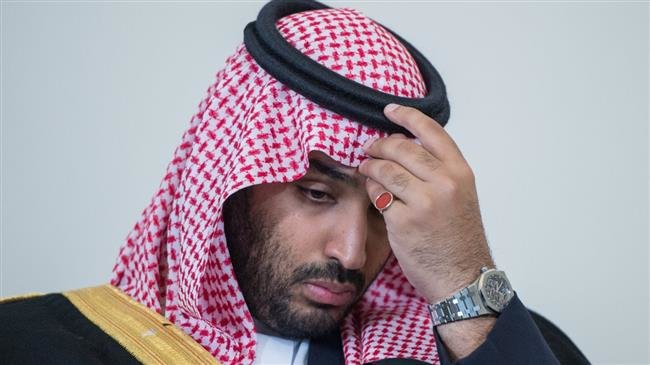
Saudi Arabia’s ambitious Crown Prince Mohammed bin Salman is trying to become king before a G20 Summit planned for November in Riyadh, which he intends to use as a stage for his succession, the Middle East Eye reports.
The heir to the throne, who is also known as MBS, has already launched a purge of senior members of the royal family to pave the way for the succession.
On Saturday, The Wall Street Journal said Saudi Arabia had detained a fourth prince in a new purge of royal family members over an alleged coup attempt to unseat King Salman and his son.
Two Saudis close to the royal family said Nayef bin Ahmed bin Abdulaziz had been arrested on Saturday, the newspaper reported.
He was the fourth prince taken into custody after the detention of his father Ahmed bin Abdulaziz, along with former Crown Prince Mohammed bin Nayef and his half brother Nawaf on Friday.
According to London-based Middle East Online, bin Salman would not wait for his father King Salman to die. Instead, the crown prince would force his father who suffers from dementia to abdicate.
“He wants to be sure while his father is there, he becomes the king,” one source said.
The sources said Prince Ahmed had been asked to back bin Salman’s succession, which he refused.
Ahmed did not plan a coup — an apparent reason given for his arrest — and was apprehended right after entering the palace, where he had been told that an audience with King Salman awaited him. “He did not see the king. It was total betrayal,” one source said.
Back in 2017, bin Salman ordered a purge of dozens of Saudi royal figures, ministers, and businessmen in an “anti-corruption” campaign, which was seen as an attempt to muffle dissent to his potential enthronement.
Sources told the Middle East Online that bin Salman had launched the crackdown because he feared that Donald Trump, who is one of his biggest supporters, might not be elected US president again.
Trump and US Secretary of State Mike Pompeo have consistently refused to hold the crown prince accountable for the murder of Saudi journalist Jammal Khashoggi, who was dismembered at the Saudi consulate in Istanbul in 2018 reportedly under the crown prince’s direct orders.
Trump and Pompeo have blocked calls for a criminal investigation by the US Federal Bureau of Investigation or the United Nations.
Under Trump, Washington has also generously aided the Saudi-led war on Yemen, orchestrated by MBS.
Source: Presstv
Saudi authorities have detained three princes including King Salman’s brother and nephew on charges of plotting a coup, the US media reported Friday, signalling a further consolidation of power by the kingdom’s de facto ruler.
The detentions cast aside the last vestiges of potential opposition to Crown Prince Mohammed bin Salman and come as the kingdom limits access to Islam’s holiest sites in a highly sensitive move to contain the fast-spreading coronavirus.
Prince Ahmed bin Abdulaziz al-Saud, a brother of King Salman, and the monarch’s nephew Prince Mohammed bin Nayef were accused of treason and taken from their homes early Friday by black-clad royal guards, the Wall Street Journal reported citing unnamed sources.
The Saudi royal court has accused the two men, once potential contenders for the throne, of “plotting a coup to unseat the king and crown prince” and could face lifetime imprisonment or execution, the newspaper said.
The New York Times also reported the detentions, adding that Prince Nayef’s younger brother, Prince Nawaf bin Nayef, had also been detained.
Saudi authorities did not immediately respond to requests for comment.
The detentions mark the latest crackdown by Prince Mohammed, who has consolidated his grip on power with the imprisonment of prominent clerics and activists as well as princes and business elites.
Prince Mohammed has also faced a torrent of international condemnation over the murder of critic Jamal Khashoggi inside the kingdom’s Istanbul consulate in October 2018.
Already viewed as the de facto ruler controlling all the major levers of government, from defence to the economy, the prince is widely seen to be stamping out traces of internal dissent before a formal transfer of power from his 84-year-old father King Salman.
“Prince Mohammed is emboldened — he has already ousted any threats to his rise and jailed or murdered critics of his regime without any repercussion,” Becca Wasser, a policy analyst at the US-based RAND Corporation, said of the latest crackdown.
“This is a further step to shore up his power and a message to anyone — including royals — not to cross him.”
Rivals ousted
Prince Ahmed, said to be in his 70s, had returned to the kingdom from his base in London in the aftermath of the Khashoggi scandal, in what some saw as an effort to shore up support for the monarchy.
Just before his return in October 2018, the prince had courted controversy over remarks he made to protesters in London chanting against Saudi royals over the kingdom’s involvement in the ongoing conflict in Yemen.
“What does the family have to do with it? Certain individuals are responsible… the king and the crown prince,” he said, according to a widely-circulated online video of the incident.
The comment was seen by many as rare criticism of the kingdom’s leadership and its role in Yemen, but Prince Ahmed dismissed that interpretation as “inaccurate”.
Prince Mohammed had edged out Prince Nayef, the former crown prince and interior minister, in 2017 to become heir to the Arab world’s most powerful throne.
At the time, Saudi television channels showed Prince Mohammed kissing the hand of the older prince and kneeling before him in a show of reverence.
Western media reports later said that the deposed prince had been placed under house arrest, a claim strongly denied by Saudi authorities.
The detentions come at a sensitive time as Saudi Arabia bars Muslim pilgrims from Islam’s holiest sites to contain the novel coronavirus.
The kingdom has suspended the “umrah” year-round pilgrimage over fears of the disease spreading to Mecca and Medina, raising uncertainty over the upcoming hajj — a key pillar of Islam.
The oil-rich kingdom is also grappling with the plunging price of crude, its major source of revenue.
(AFP)
President Paul Biya of Cameroon is, in many ways, your bog-standard African “authoritarian ruler”, or, as diplomats don’t say, “dictator”. He has held on to power for almost forty years and is now in his seventh term as head of state, the oldest and longest-standing ruler in Africa. In 1983, as sole candidate, he won 99.98 per cent of the votes. He followed the example of other one-party states in the 1990s, allowing opposition parties to emerge and simply rigging subsequent elections.
At present, his troops are committing atrocities against an embattled English-speaking minority. They are rampaging through English-speaking villages in a French-speaking country whose economy is de facto controlled by French companies (over a hundred in almost all sectors including off-shore oil).
Cameroon has a civil war on its hands. Anglophone grievances came to a head in 2016, when the Francophone-dominated regime imposed French-speaking judges on Anglophone courts and Francophone teachers in Anglophone schools. Swiss and Commonwealth representatives have tried to mediate but President Biya thinks he can solve his problem militarily and has told both, in no uncertain terms, to go away.
Until 1960, there were two Cameroons. The larger territory was governed by France using the French legal and education systems and language. But in the smaller south and west territories, English common law took precedence, with English judges and English school exams. The present conflict dates back to decolonisation in 1961, when a UN-backed independence referendum offered the Anglophones the choice between joining Nigeria or joining French Cameroon. Thus 20 per cent of the population were not even offered the option of self-determination.
Under President Biya, the Francophone-dominated government, based in the capital of Yaoundé, has marginalised the mainly Anglophone northwest and southwest regions. Only one of 36 cabinet posts is held by an Anglophone. Since 2017, despite the constitution guaranteeing human rights, reputable human rights organisations have recorded the repeated use of force against Anglophone demonstrations. Journalists are arrested and tortured. Government troops, notably the Rapid Intervention Force, have been burning down English-speaking villages, with the result that 656,000 people have fled, between 35,000-50,000 of them into Nigerian refugee camps. Meanwhile, secessionist militias have become increasingly violent. Banditry is rampant. Civilians — including Catholic priests — have been kidnapped, some tortured. Catholic-run schools and clinics have closed, with 800,000 children deprived of schooling. Casualties on both sides have mounted: some 2,000-5,000 have been killed in the violence.
By October 2019, Biya was talking about a “major national dialogue”, but the Anglophone leadership was by now flying under the flag of a “Government Council of Ambazonia’, its name for the two secessionist regions. A paper promise of “special status” on the Quebec model for the two Anglophone regions was refused; few Anglophone leaders were willing to attend the talks while the repression continued, and “special status” left real power centred on the largely Francophone capital, Yaoundé. Biya is France’s man. He is housing 350,000 refugees from the Central African Republic and Nigeria, while deploying Cameroonian troops to fight Boko Haram. He is useful.
But what is France’s role? France never really left Cameroon. It has never shed a certain chauvinistic pride in the merits of its language, so Cameroon with a majority speaking French is an asset. The French Foreign Legion is dotted around the region.
I remember a high-level exercise in “entente cordiale” on Africa in the early 1990s when John Major was Prime Minister. It was held in one of the grand reception rooms of the Quai d’Orsay, resplendent with the decorative arts of the Second Empire, the ornate home of the French Ministry of Foreign Affairs. The British delegation comprised the FCO, Dfid and international developmental NGOs. We were duly impressed. The French fielded staff from quite different government directorates, notably their intelligence services and military plus a lonely anthropologist. That also spoke reams.
An international group of Catholic bishops, brought together by the Toronto-based — non-partisan — Global Campaign for Peace and Justice in Cameroon, has recently signed an open letter to President Biya. They call on the president to join Swiss-led negotiations to address Anglophone concerns and claims. Increased international pressure is necessary if this is ever to happen. But Biya rejects what he claims is foreign interference in a domestic issue, insisting on a “home-grown peace initiative only”.
As the bishops wrote: “When the international community ignores escalating atrocities of the kind happening in Cameroon, it often ends up paying a massive bill. Sooner or later, we must fund refugee camps and peacekeepers, host negotiations, accommodate thousands of migrants seeking asylum, and then help rebuild shattered nations. It makes more sense to use diplomacy to stop the violence at an early stage, finding a political solution to a political problem through inclusive peace negotiations”.
Europe, including Britain, remains distracted by Brexit, but the US has begun to apply pressure, distancing itself from the Biya regime by reducing military aid and removing favourable trade status. It is time for another visit to the Quai d’Orsay and for a little more entente cordiale.
Source: The article.com
Cameroon will hold a legislative election in parts of the country’s conflict-ravaged English-speaking regions on March 22 after the first attempt last month was annulled, the presidency said Friday.
Voting in 11 electoral districts in the anglophone North-West and South-West would be “convened on Sunday, March 22 in order to continue the election of MPs to the National Assembly,” a decree signed by President Paul Biya said.
The two anglophone regions have been rocked by deadly violence as armed separatists campaign for independence from the rest of Cameroon, which is majority French-speaking.
Separatist fighters had called on people in the two regions not to take part in nationwide municipal and legislative elections on February 9, issuing threats to anyone who planned to vote.
Clashes between the separatists and the army multiplied, according to several NGOs, though only one incident — in the North-West region — was reported on election day.
Cameroon’s constitutional council said on February 25 that the vote would have to be rerun in several parts of the two anglophone regions.
Results from the election released late last month showed Biya’s party retaining an absolute majority, winning 139 out of 167 seats on a turnout of almost 46 percent. Opposition candidates won only 16 seats, with the remainder going to allies of the ruling party.
The March 22 vote will determine who holds 13 outstanding seats.
The conflict in the Central African country’s English-speaking regions has killed more than 3,000 people and displaced nearly 700,000 in less than three years.
Source: AFP
Elizabeth Warren, who electrified progressives with her “plan for everything” and strong message of economic populism, on Thursday told her staff she was dropping out of the Democratic presidential race. The exit came days after the onetime front-runner couldn’t win a single Super Tuesday state, not even her own.
“I want to start with the news,” she said. “I want all of you to hear it first, and I want you to hear it straight from me: today, I’m suspending our campaign for president.”
She went on to acknowledge the personal sacrifices those on her campaign had made and to thank them “from the bottom of my heart”.
“I know how hard all of you have worked. I know how you disrupted your lives to be part of this. I know you have families and loved ones you could have spent more time with. You missed them and they missed you. And I know you have sacrificed to be here.”
Speaking to reporters later Thursday outside her home in Cambridge, Massachusetts, Warren said she’d likely endorse one of the two major candidates left in the race, Joe Biden or Bernie Sanders, but “not today”.
“I need some space and I need a little time right now,” she said, standing next to her husband, Bruce Mann.
Kethevane Gorjestani, FRANCE 24’s correspondent in Washington, DC, said that the big question on everyone’s lips is now whether she will choose to endorse Sanders – who she is closer to in terms of progressive policies – or not.
“Her voters don’t necessarily fall into the Bernie Sanders voter category and that’s because they are much more college-educated, and they like the approach of Elizabeth Warren, which was a little bit to the right of Bernie Sanders, a little bit more aggressive, more pragmatic, and [she was] clearer on her plans.”
Warren’s withdrawal from the race for the top spot on the Democratic ticket against President Donald Trump in November comes after she failed to win a single state on Super Tuesday, including her own, Massachusetts.
Her decision to drop out comes one day after that of billionaire former New York mayor Michael Bloomberg, who quit on Wednesday after a disappointing Super Tuesday performance and endorsed Joe Biden.
Trump responded to Warren’s withdrawal with a tweet mocking her and Bloomberg.
“Elizabeth ‘Pocahontas’ Warren, who was going nowhere except into Mini Mike’s head, just dropped out of the Democrat Primary…THREE DAYS TOO LATE,” Trump said.
“She cost Crazy Bernie, at least, Massachusetts, Minnesota and Texas,” the president said of three of the states at stake on Super Tuesday. “Probably cost him the nomination! Came in third in Mass.”
Warren led some national polls last summer but she never managed to build a broad coalition to carry her through to success in the primaries, finishing behind fellow progressive Bernie Sanders and the moderate Joe Biden in 14 states on Super Tuesday.
Warren finished third in Massachusetts behind Biden and Sanders.
(FRANCE 24 with AFP, AP)
As more and more civilians have been killed by the Cameroon government of Paul Biya, absentee president for 37 years, UN Secretary General Antonio Guterres has largely been silent.
Inner City Press was informed by sources in Guterres’ own 38th floor office that Guterres had made a deal with Biya’s UN Ambassador Tommo Monthe as chair of the UN Budget Committee for administrative favors in exchange for silence on the slaughter or “subduing” of the Anglophone minority.
Others are speaking up, in their way:
“The International Rescue Committee (IRC) and the Norwegian Refugee Council (NRC) call upon all parties to the conflict in the North-West and South-West regions of Cameroon to uphold international human rights and international humanitarian law and cease all attacks on civilians without delay. The crisis destabilizing the English speaking parts of Cameroon has taken a worrying turn, with an increasing number of reports of targeted attacks against civilians, property and violations of the humanitarian space.
More than 700,000 people are displaced, nearly 1 million children are out of school, and the humanitarian needs are mounting. Survivors have shared testimonies of gruesome attacks that have left children orphaned, people homeless, and limited or cut off access to public facilities such as hospitals and schools. “I have been out of school for two years. The boys stopped us from going to school. They would beat you if you tried,” said Charlene, a 23 year-old single mother. “My teacher wanted to give us private classes so we could sit our exams, but they took and tortured him”.
The conflict would take even more from Charlene when her home was burned down by the military. “There was fighting and the boys hid in our corridor. The military set fire to the house to catch them. We became homeless. We lost everything.”
Reports indicate that an incident on February 14 in Ngarbuh Village, North-West Cameroon, left 24 killed, most of whom were women and children. This is only one of several incidences of disturbing attacks, many of which remain undocumented and impact directly the civilian population. NRC, the IRC and partners have also witnessed attacks on civilians during humanitarian distributions.
“We cannot silently witness defenceless civilians, who are already suffering from extreme deprivation, being attacked while seeking lifesaving assistance,” said Maureen Magee, NRC Regional Director for Central and West Africa. “People in need of humanitarian assistance must be allowed to access necessary support, without having to fear for their lives.”
On February 16 Inner City Press from its sources in Cameroon reported on the killing of more than two dozen civilians including children in Ngar in NW Cameroon.
Before 10 am on February 17 Inner City Press in writing asked Guterres, his spokespeople Stephane Dujarric and Eri Kaneko about the killings.
There was no answer, and with Dujarric on vacation in Orlando, Florida, Eri Kaneko fielded only two questions at a ten minute long noon briefing on February 17 that Inner City Press was banned from entering and asking at. Since then Guterres, Dujarric and Melissa Fleming have refused to answer daily questions from Inner City Press on what has become their genocide in Cameroon.
Now one of the witnesses who exposed the Biya government’s mass killing at Ngarbuh, Mallam Danjuma has been killed and dumped in Bui by government forces in Kikaikelaki. And from the UN of Guterres? Nothing. This is Guterres’ genocide.
Source: Inner City Press
Billionaire Mike Bloomberg ended his bid for the Democratic presidential nomination on Wednesday and endorsed former Vice President Joe Biden. It was a stunning collapse for the former New York City mayor, who had his 2020 hopes on the Super Tuesday states and drained more than $500 million of his own fortune into the campaign.
Bloomberg announced his departure from the race after a disappointing finish on Super Tuesday in the slate of states that account for almost one-third of the total delegates available in the Democratic nominating contest. He won only the territory of American Samoa, and picked up several dozen delegates elsewhere. Biden, meanwhile, won big in Southern states where Bloomberg had poured tens of millions of dollars and even cautiously hoped for a victory.
Two of his former Democratic rivals, Amy Klobuchar and Pete Buttigieg, dropped out of the race and endorsed Biden as the moderate alternative to Vermont Sen. Bernie Sanders just the day before Super Tuesday.
Bloomberg ran an unprecedented campaign from the start. His late entrance into the race in November prompted him to skip campaigning in the first four voting states of Iowa, New Hampshire, Nevada and South Carolina. He hung his success on Super Tuesday, spending at least $180 million on advertising in those states, but had planned to continue deep into the primary calendar, already spending millions on advertising in states like Florida, Michigan and Pennsylvania. Before results poured in on Tuesday, he projected confidence while campaigning in Florida, only to have his aides say the campaign would reassess the next day.
Voters ultimately rejected Bloomberg’s argument that he was the candidate best poised to take on Republican President Donald Trump. The president, for his part, had paid close attention to the Democratic nominating contest and had been especially fixated on Bloomberg. Trump regularly railed against his fellow New Yorker on Twitter, mocking his short stature by calling him “Mini Mike” and claiming Bloomberg was the candidate he wanted to run against. On Tuesday, he called the results a “complete destruction” of Bloomberg’s reputation.
One of the world’s richest men
Bloomberg, 78, is one of the world’s richest men, worth an estimated $61 billion. His fortune flows from the financial data and media company that bears his name, which he started in the 1980s. In addition to serving 12 years as New York mayor, he endeared himself to progressive groups by pouring hundreds of millions of dollars into fighting climate change and curbing gun violence.
In the early weeks of his campaign, he used his vast fortune to introduce himself to voters outside New York on his own terms, and his rivals accused him of trying to buy the party’s nomination and the White House. As voting drew closer, the former Republican was forced to confront his Democratic rivals head on by appearing alongside them on a debate stage. His first performance was shaky and uneven and caused voters to view him with a more critical eye.
He proved unable to overcome consistent criticism of New York’s use of the stop-and-frisk police practice under his tenure as mayor, which disproportionately targeted young black and Latino men for searches aimed at finding weapons. The practice ended after a federal judge declared it unconstitutional, and Bloomberg apologized for using it weeks before announcing his presidential run.
He similarly faced pointed criticism — primarily from rival Elizabeth Warren — about the treatment of women at his company, Bloomberg LP. Under pressure from Warren, he said in mid-February he would release three women who sued him for harassment or discrimination complaints from confidentiality agreements. Women who worked for Bloomberg were featured in a commercial praising Bloomberg’s and the company’s treatment of women, and his longtime partner Diana Taylor defended him as a champion of women.
Bloomberg was dogged by accusations he was trying to buy the Democratic presidential nomination. His vast fortune proved a perfect foil for Sanders, who has said billionaires should not exist at all. Indeed, Bloomberg had a vast circle of influence from his spending on key causes like gun control as well as his philanthropic efforts to boost American cities and provide leadership training for mayors. Dozens of prominent mayors rallied behind his candidacy.
That, combined with Biden’s resurgence in South Carolina and the rallying of the party’s moderate wing behind him, doomed Bloomberg’s case that he was the best candidate to take on both Sanders and Trump.
What’s next for Bloomberg is unclear. He’d pledged to keep campaign offices open in key general election battleground states to help the Democrats defeat Trump even if he lost the party’s nomination. But Sanders’ campaign has said they do not want the help.
(AP)
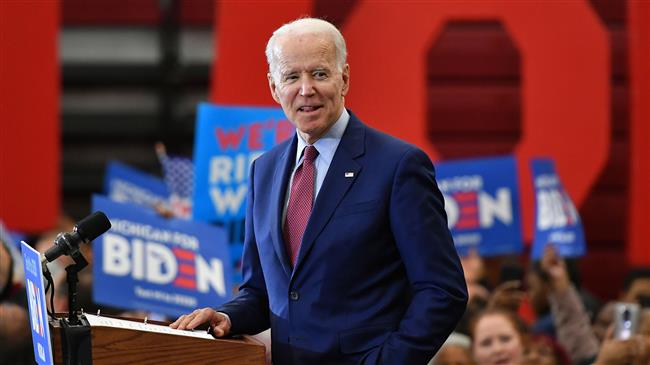
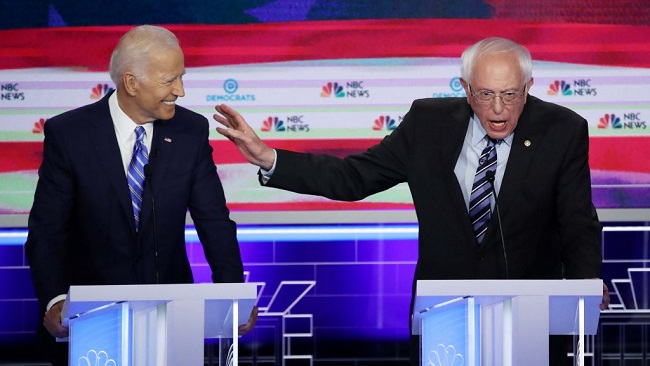
Former Vice President Joe Biden was projected to win at least eight states on Super Tuesday, with his main rival Bernie Sanders expected to pick up four, including California, the biggest prize of the night.
Super Tuesday, one of the more decisive dates in the US election calendar, is the day 14 US states, the territory of American Samoa, and Democrats abroad hold their primaries. Candidates need 1,991 delegates to make the democratic ticket. On Tuesday’s vote, a total of 1,357 delegate votes were in the offing – about a third of the national total.
With votes still being counted across the country, an AP projection has allocated 362 delegates to Biden, 285 to Sanders, 30 to Bloomberg, 20 to Warren and one for Rep. Tulsi Gabbard. The numbers are expected to shift dramatically throughout the night as new states, none bigger than California, report their numbers.
The evening showed that Biden was a formidable contender to Sanders. Until a week ago, Sanders was the star Democratic candidate. Then, after a much-lauded performance in the South Carolina debate, Biden caught his second wind, picking up 36 delegates to Sanders’ 11.
Biden gained even more momentum on the eve of Tuesday’s voting as moderate presidential rivals Pete Buttigieg, the former mayor of South Bend, Indiana, and Senator Amy Klobuchar of Minnesota, endorsed Biden after withdrawing from the race.
All eyes on California and Texas
California was one of the most closely watched states because of its 415 delegates. Sanders was hoping to drive up big margins and amass an unsurmountable lead in delegates, while Biden was hoping to remain close enough to prevent a blowout.
The polls closed at 11 pm EST (0400 GMT Wednesday) but voters who were in line were still allowed to vote. Sanders’ campaign requested an emergency injunction asking for polls in Los Angeles County to stay open for an extra two hours after reports of delays and long lines.
Meanwhile, Sanders and Biden were locked in a tight race in Texas, the night’s second-biggest prize, with votes still being counted early Wednesday.
Biggest surprises
Perhaps the first shock of the evening was Biden winning Minnesota, a state where Sanders had been expected to win easily. Then, defying even bigger odds, the former vice-president took Massachusetts, defeating both Sanders and the state’s own senator, Elizabeth Warren.
Biden, 77, was also projected to win in Virginia, North Carolina, Alabama, Oklahoma, Tennessee and Arkansas.
The 78-year-old Sanders, a self-described democratic socialist with a fervent voter base, who aims to reshape America’s economy, was projected to win as expected in his home state of Vermont, Colorado and Utah.
In a defiant speech, Sanders tore into Trump, calling him “the most dangerous president in the history of this country.” But he also tore into Biden for having voted in favor of the invasion of Iraq and painting him as tarnished by billionaire contributors.
“We’re taking on the political establishment,” he said. “You cannot beat Trump with the same-old, same-old kind of politics.”
Money doesn’t buy everything
There was good news for critics of America’s campaign finance regulations, who for decades have argued that endless money spent equaled endless political influence. So far in the 2020 Democratic campaign, money does not seem to translate into delegate votes.
Former New York Mayor Mike Bloomberg had made a calculated bet on going after the biggest bang for his buck by spending more than half a billion dollars in advertising and ground operations in an unorthodox and untested method of securing support from moderates. He didn’t even attempt to register for the four previous qualifying events in Iowa, New Hampshire, Nevada, and South Carolina.
Biden’s continued turnaround would be all the more surprising because Super Tuesday was supposed to be about monster fundraising and strong political organisation across such a large swath of the country. Biden largely had neither. He spent a mere $60 million on his campaign.
Sanders defiant
Sanders argued that the party’s elders were scrambling to block him from a nomination it appeared just last week he could run away with.
“The political establishment has made their choice: Anybody but Bernie Sanders,” Sanders campaign manager Faiz Shakir wrote in a fundraising message Tuesday.
“The truth is, we’ve always known we were taking on the entire damn 1 percent of this country,” Shakir added. “But we have something they do not have: People. Lots and lots of people.”
In the 2016 presidential campaign, Sanders had struggled to connect with black voters. During this 2020 campaign, Sanders has made a concerted effort to improve his standing with minorities nationwide.
According to Edison Research exit polling, African Americans, older people and college graduates largely supported Biden in the 14 nominating contests, helping him win at least eight states.
Latinos, millennials and white men largely backed Sanders.
The pace of the Democratic race begins to accelerate after Super Tuesday, with 11 more states voting by the end of March. By then, nearly two-thirds of the delegates will have been allotted.
(FRANCE 24 with AFP, AP, and REUTERS)
President Biya has reportedly ordered the Central Committee of his ruling CPDM crime syndicate to begin the process of replacing the Speaker of the National Assembly, Cavaye Yeguie Djibril who Cameroon Intelligence Report gathered is in a critical condition in a hospital in France.
The name Cavaye Yeguié Djibril is still on the list of 167 candidates proclaimed elected in the last counterfeit parliamentary elections of February 9, 2020. But with reliable information suggesting that his ancestors are calling, Biya has secretly informed the political bureau of the CPDM to look for a suitable replacement for the man who has led the so-called Lower House for 28 years as Speaker.
Our chief intelligence officer in Yaoundé hinted that Cavaye Djibril has been in intensive care for about a month. His supporters have been putting pressure on medics attending to him for Cavaye to be allowed to return home and seek re-election to the presidency of the National Assembly. That way, he could return for further treatment.
From every indication, a new speaker will be elected next week from the ranks of the ruling party. There are already under-the-table talks that the choice of a new speaker will pave the way also for a new prime minister and head of government.
By Rita Akana in Yaounde