
Cameroon and France: Telling the necessary truth
This was arguably the most glaring “memory gap” in French colonial history. Between 1955 and 1970, France waged war in Cameroon against independence and later opposition movements, resulting in the deaths of tens of thousands and helping to install an authoritarian regime loyal to Paris. The silence that surrounded this “dirty war” was both an insult to the victims and a historical failure, as well as a major unspoken issue in relations between the two countries.
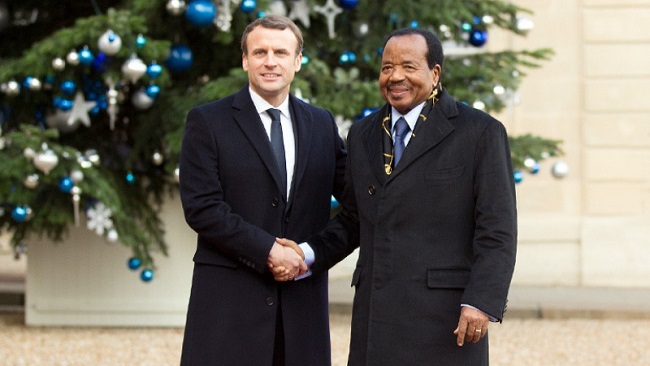
This is why we should welcome the move by French President Emmanuel Macron who, in a letter to his Cameroonian counterpart Paul Biya made public on August 12, acknowledged that a “war” had been waged in Cameroon by “the colonial authorities and the French army,” and stated that he acknowledged “France’s role and responsibility.”
It took many years before the reality of this brutal “pacification” carried out in secret, but long well-documented by writers, journalists and historians, was officially recognized. The “counter-revolutionary warfare” techniques first tested in Indochina and then in Algeria – destruction of villages, assaults on unarmed civilians, forced regroupment camps, torture, targeted assassinations – were used against supporters of the Union of the Peoples of Cameroon (UPC, a pro-independence party) and to crush the uprising of the Bamileke people. By delegating repression to local actors, France turned a colonial conflict into a civil war.
Macron’s initiative began in 2022 with the creation of a commission of French and Cameroonian historians tasked with “shedding light” on this chapter of history. The report from this commission, delivered in January 2025, found that the violence in Cameroon “transgressed human rights and the laws of war.”
While President François Hollande had merely referred in 2015 to “particularly violent repression,” Macron acknowledged, as the commission suggested, that France fought a true “war” in Cameroon. The president is thus continuing the necessary process of truth-telling that, from the genocide of the Tutsi in Rwanda to the Algerian War, must fill the gaps of amnesia – and even lies – that still weigh on French society and diplomacy, without any notion of “repentance.”
Of course, his gesture remains incomplete – the “violations of human rights” are not clearly defined – and ambiguous in form: It came as a letter addressed to Biya, who is himself the heir to autocrat Ahmadou Ahidjo (installed by France in 1960) and has ruled the country since 1982.
This is where the particular sensitivity of Macron’s attempted truth-telling operation regarding Cameroon lies. The “decolonization war” did not end with independence; Paris continued to repress opponents of the regime that had been put in place. Forgotten in France, this endless war continues to poison the political and social climate in Cameroon. As the end of Biya’s reign approaches – despite being 92 years old, he plans to seek an eighth presidential term in October – and as the demand for historical truth is stirring throughout Francophone Africa, it is time to put an end to the unspoken truths between France and Cameroon.
Source: Le Monde


