
Biya extends mandate of members of parliament to December 2026
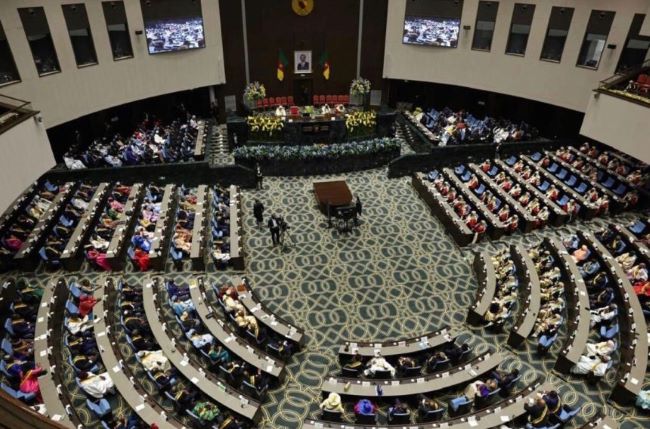
President Paul Biya has signed into law a measure extending the mandate of members of Cameroon’s National Assembly, further postponing legislative elections.
The new legislation, Law No. 2026/001 of March 25, 2026, prolongs the term of office of Members of Parliament (MPs) from March 31, 2026, to December 20, 2026. The extension takes immediate effect from the initial expiration date.
The National Assembly of Cameroon adopted the legislation after being submitted by the government. Lawmakers approved the bill during a parliamentary session, effectively authorising the continuation of their tenure pending the organisation of fresh elections.
This marks the second extension of the current legislature’s mandate. The MPs, who were elected in 2020 for a constitutionally defined five-year term, were initially expected to complete their tenure in 2025. However, that timeline was first adjusted, postponing elections to 2026. The latest law now further extends their stay in office until December 2026.
The decision reflects ongoing adjustments to the country’s electoral calendar, although authorities have not publicly detailed the specific factors behind the latest postponement. In similar contexts, such extensions are often linked to logistical, administrative, or political considerations surrounding the preparation and conduct of nationwide elections.
By extending the mandate, the government ensures continuity in legislative activities and avoids a potential institutional vacuum that could arise if the National Assembly’s term were allowed to lapse without new elections being held.
The National Assembly plays a central role in Cameroon’s governance architecture, with responsibilities that include passing laws, scrutinising government action, and representing the electorate. Maintaining its functioning is therefore seen as critical to the stability of the country’s institutional framework.
However, mandate extensions of this nature have historically generated public debate and political commentary. Some analysts view them as pragmatic solutions to complex electoral challenges, while others raise concerns about their implications for democratic processes, particularly with regard to the regular renewal of elected representatives.
The current extension also means that the MPs elected in 2020 will serve beyond their original five-year mandate, effectively prolonging their tenure by more than a year. The adjustment to the legislative calendar also comes within a broader political context, as Cameroon continues to navigate institutional and governance priorities. Ensuring that elections are conducted in a stable and orderly environment remains a key consideration for authorities.
Source: Pan African Visions


