Cameroon at stage 2 of coronavirus epidemic with 658 confirmed cases! Biya won’t talk
Cameroon is in stage 2 of the COVID-19 epidemic, with the main objective to curb the spread of the virus in the national territory, health minister Manaouda Malachie said Sunday evening.
“I am afraid that we are to this day, already in a community transmission therefore at stage 2 of the epidemic,” said on twitter the minister answering questions by netizens on the extent of local transmission in Cameroon.
The Central African country announced its first COVID-19 case on March 6, and a month later, counted until Monday morning 658 confirmed cases including nine deaths and 17 cured cases, according to the latest official report.
In epidemiology, stage 1 is where the priority is to stop the introduction of the virus, followed by stage 2 whose objective is to slow down the spread.
The peak of the epidemic is in stage 3 characterized by an active circulation of the virus, and the strategy becomes the mitigation of the effects of the epidemic before it ends at stage 4.
“Although (the number of cases are) growing, the situation remains under control because we are looking for cases and putting them in isolation,” reassured Manaouda via twitter.
Cameroon is currently the second country in sub-Saharan Africa most affected by the new coronavirus after South Africa, which has 1,655 cases, according to official statistics.
In the capital Yaounde, two new care centers are under preparation at the military stadium and in the old building of the Orca supermarket, which should make it possible to increase the reception capacity up to 3,000 beds, according to the health ministry.
Since March 18, a series of barrier measures have been put in place by the Cameroonian government. These include closing of borders, isolation of people at high risk, the restriction of mass gatherings and movement. However, these measures have not been scrupulously respected by the population.
“Some of our compatriots do not make our job easier, thus endangering the lives of others,” said Manaouda, calling on the populations to remain confined as long as possible, and to cover their noses and mouths when leaving their house.
Recently the wearing of a protective mask has become mandatory for all those wishing to approach certain hospitals and public services, like the General Hospital of Yaounde, and government bodies in the Cameroonian region of Southwest.
Source: Xinhuanet
Football: Mueller extends Bayern deal until 2023
Thomas Mueller looks set to spend his entire career at Bayern Munich, who he describes as his ‘passion’, after signing a contract extension until 2023, the reigning Bundesliga champions announced on Tuesday.
The 30-year-old joined the club as a schoolboy in 2000, making his debut for the Bavarians eight years later and has since racked up more than 500 appearances.
“I am really pleased that I have extended with Bayern Munich… and will continue to give everything for my club,” the 2014 World Cup winner said on Twitter.
“Because this club is not just an employer for me – it is a passion.”
Having risen up through the youth ranks, Mueller is a club icon who has won eight league titles, five German Cups and the 2013 Champions League.
“I’m happy that we’ve reached agreement with Thomas. Thomas is a special player for us, a figurehead for the club and our fans, a leader who shows the way on the pitch and has achieved a lot with FC Bayern,” sporting director Hasan Salihamidzic said in a statement.
The new deal comes after Mueller worked his way back into the side under coach Hansi Flick this season after being frozen out by previous boss Niko Kovac.
Flick himself signed a deal to make his contract permanent until 2023 after guiding his outfit back to the top of the German top-flight.
Mueller scored 38 goals for Germany in 100 internationals and was a key part of the team which won the World Cup in Brazil six years ago.
In the wake of Germany’s disastrous 2018 World Cup campaign, Mueller, Mats Hummels and Jerome Boateng were told the following March they were no longer in the plans of national head coach Joachim Loew.
However, Mueller could yet still feature for his country having been told he is the frame to be selected for the Tokyo Olympics, postponed until next year due to the coronavirus pandemic.
Source: AFP
African American communities hit hardest by coronavirus
Data from US states shows that the coronavirus is wreaking havoc in African American neighborhoods, highlighting disparities in health and inequalities in access to medical care.
African Americans make up just 14.6% of the Illinois’ population, however, the state’s public health agency says black people account for 30% of the state’s cases and about 40% of its coronavirus deaths, showing that African Americans are more likely to die from COVID-19.
In Chicago, black people account for half of all coronavirus cases in the city and more than 70% of deaths, despite making up 30% of the population.
Mayor Lori Lightfoot said the coronavirus was “devastating black Chicago”.
Public health commissioner Dr Allison Arwady said Chicago’s black residents already lived on average about 8.8 years less than their white counterparts.
In the state of Michigan, black people make up 14% of the population, but the state health department said they account for 33% of the coronavirus cases and 41% of deaths.
Figures from the state health department showed white residents account for about 23% of recorded cases in Michigan and 28% of deaths.
Also, African Americans in the New Orleans area, where the majority of residents are black, account for 40% of Louisiana’s coronavirus (COVID-19) deaths.
“We’re going to try to figure out what that is attributable to and what we can do about that is as quickly as possible,” Governor John Bel Edwards said.
In Milwaukee, Wisconsin, black people make up almost half of the nearly 1,000 cases of the coronavirus and 81% of its 27 deaths. This, as they account for 26% of the population there.
Wisconsin Governor Tony Evers says he wants to know why black communities seem to be hit so hard. “It’s a crisis within a crisis,” Evers said in a statement.
In Memphis, Tennessee, reports said that most coronavirus screening was happening in the predominantly white and well-off suburbs, not the majority black, lower-income neighborhoods.
The bio-tech data firm Rubix Life Sciences, based in Boston, Massachusetts, found that an African American with symptoms like cough and fever was less likely to be given one of the scarce coronavirus tests.
Dr Summer Johnson McGee, dean of the School of Health Sciences at the University of New Haven, said she was not surprised that the US black population is experiencing a worse outcome during the pandemic. Racism has led to a lack of investment in African American communities and worse health care for the population in general, McGee said.
“A pandemic just magnifies the disparities in healthcare that many communities of color face,” she said.
The World Health Organization has said that people with underlying symptom like asthma, diabetes and heart disease appear to develop serious illness after contracting the coronavirus.
McGee said, “That makes the COVID-19 particularly dangerous for African Americans, who because of environmental and economic factors have higher rates of those illnesses.”
Dr Cameron Webb, an African-American physician in the state of Virginia, told BBC News that US racial and economic disparities were being amplified by the pandemic.
“It really exposes our society’s fault lines,” he said.
Kristen Clarke, executive director of the National Lawyers Committee for Civil Rights Under Law, said race data was essential information for leaders to have so that federal, state and city resources can be distributed fairly, Reuters said.
There were over 367,000 confirmed coronavirus cases and more than 10,000 deaths in the US as of early Tuesday morning, according to Johns Hopkins University data. US officials warn this will be the toughest week yet.
Source: Presstv
Crowd in Ivory Coast destroys coronavirus testing centre in residential area
Ivory Coast police on Monday clashed with protesters who had begun dismantling a half-built coronavirus testing centre, afraid that people using the facility would spread the epidemic through their district.
More than 100 residents in Yopougon, a neighbourhood of Ivory Coast’s commercial capital Abidjan, started pulling apart the hanger-like structure on Sunday and built barricades out of burning tyres nearby.
A crowd returned on Monday, throwing rocks at police who dispersed it with tear gas.
“They want to kill us. We don’t want this centre here,” said protester Joel Blehi as he sheltered by a pharmacy after a gas canister was fired in his direction.
Police said the hostility arose from a misunderstanding that patients with Covid-19 would be treated at the centre.
“There’s been a lack of communication. It’s more like a testing centre for residents,” police spokesman Charlemagne Bleu said.
The centre is one of several being built in Abidjan for voluntary mass coronavirus testing, the health ministry said.
No protesters or police were harmed in the clashes, but four arrests were made, Bleu said.
State of emergency
The violence is the first sign of community resistance to the coronavirus response in Ivory Coast, where authorities have closed schools, places of worship and most shops and imposed a night-time curfew. The country has registered 261 confirmed cases and three deaths.
President Alassane Ouattara declared a state of emergency on March 23.
Abidjan has already been placed under quarantine, effectively cut off from the rest of the country.
On Saturday, senior health officials recommended that people wear masks in public places to try to slow the spread of the virus.
So far however, the government has not ordered a full lockdown.
Last Tuesday, the government announced a €2.6 billion plan ($2.8 billion) to tackle the economic and social effects of the pandemic, which is forecast to halve the country’s growth rate to 3.6 percent in 2020.
(FRANCE 24 with REUTERS, AFP)
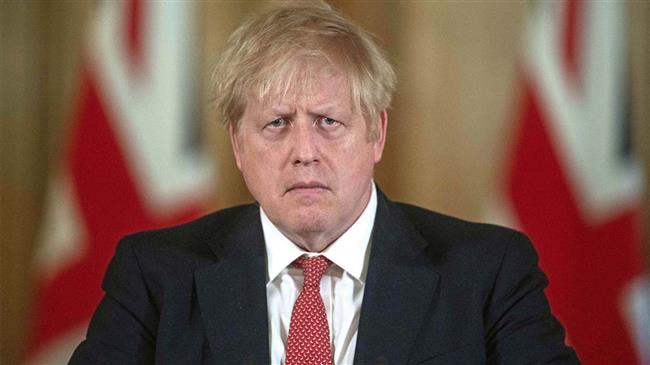
COVID-19: UK Prime Minister Boris Johnson taken to intensive care after health worsens
British Prime Minister Boris Johnson was moved to the intensive care unit of a London hospital after his coronavirus symptoms worsened Monday, just a day after he was admitted for what were said to be routine tests.
Johnson was admitted to St. Thomas’ Hospital late Sunday, 10 days after he was diagnosed with Covid-19.
Johnson had been suffering from persistent coronavirus symptoms, including a high temperature.
Downing Street had said he was in good spirits and still in charge, though his condition deteriorated in the early evening and he was transferred at about 1800 GMT to an intensive care unit – where the most serious cases are treated –at St Thomas’ hospital in central London. Johnson received oxygen, a source said.
“Over the course of this afternoon, the condition of the Prime Minister has worsened and, on the advice of his medical team, he has been moved to the Intensive Care Unit at the hospital,” his office said in a statement.
Downing St, said Johnson was conscious and does not require ventilation at the moment, but was in the intensive care unit in case he needed it later.
It said Johnson has asked Foreign Secretary Dominic Raab to deputise for him.
Routine tests
Earlier in the day, Johnson sent out a tweet thanking the National Health Service for taking care of him and others in this difficult time.
“On the advice of my doctor, I went into hospital for some routine tests as I’m still experiencing coronavirus symptoms,” Johnson said in the tweet. “I’m in good spirits and keeping in touch with my team, as we work together to fight this virus and keep everyone safe.”
Johnson’s spokesman, James Slack, refused to say what kind of tests Johnson was undergoing. He insisted that “the PM remains in charge of the government.”
“He is receiving updates in hospital and is continuing to receive a (ministerial red) box” of files and briefing papers, Slack said,
The 55-year-old leader had been quarantined in his Downing Street residence since being diagnosed with Covid-19 on March 26 — the first known head of government to fall ill with the virus.
He continued to preside at daily meetings on the outbreak until Sunday and has released several video messages during his 10 days in isolation. Raab chaired the meeting Monday. Britain has no official post of deputy prime minister, but Raab has been designated to take over should Johnson become incapacitated.
‘He’s in charge’
Speaking at the government’s daily coronavirus press briefing, Raab said Johnson was being “regularly updated,” but admitted he had not spoken to him since Saturday.
“He’s in charge, but he’ll continue to take doctors’ advice on what to do next,” Raab said.
Johnson was admitted to the hospital as a message to the nation from Queen Elizabeth II was being broadcast Sunday evening. The 93-year-old monarch urged the public to show resolve and follow advice to stay inside.
Concerns had been growing about Johnson’s welfare ever since he posted a message Friday saying that he was feeling better, though was still feverish.
The virus causes mild to moderate symptoms in most people, but for some, especially older adults and the infirm, it can cause pneumonia and lead to death.
The government said Monday that 51,608 people had been confirmed to have the coronavirus in Britain, 5,373 of whom have died.
Cases ‘not yet fully understood’
One of the advantages of being in the hospital is that it will allow doctors to directly monitor Johnson’s condition.
Derek Hill, a professor of medical imaging science at University College London said that since Covid-19 causes difficulty breathing, one test performed on people with the disease is lung imaging with ultrasound or CT scans to see how badly they might be affected.
“Some people are rapidly discharged,’’ he said. “Some others can quickly deteriorate and need help breathing. We have no reason to believe the PM needs such help.‘’
Hill said there are various types of breathing help, depending on the person and the difficulties.
“The reasons some people get seriously ill with Covid-19 while others have minor symptoms is not yet fully understood,″ Hill said.
“But doctors managing these patients report that more men than women have serious problems, and patients who are overweight or have previous health problems are at higher risk.”
(FRANCE 24 with AP)
Social media attack on Bafaw royal family blamed on the Ambazonia Interim Government
The Bafaw royal palace in the city of Kumba is a plain white bungalow with a corrugated roof, surrounded by a chicken-wire fence. Built at the more affluent end of K-town behind the renowned Metropole Hotel, the house is used by the Bafaw monarch, Nfon V.E.Mukete, whenever business brings him to the city.
It was there late on Monday night that Chief Mukete started his own self-isolation due to the coronavirus and immediately read news of his demise on social media.
Although the Bafaw royal family have yet to reveal a motive for the numerous fake news attack on the King, palace sources now say it is been carried out by supporters of the exiled Southern Cameroons Interim Government led by Vice President Dabney Yerima. Many Ambazonians feel that the king has betrayed them and drifted towards French Cameroun.
Nfon Mukete is reported to have received numerous death threats since he joined the Senate and supported the one and indivisible Cameroon doctrine of President Biya.
Cameroon Intelligence Report correspondent in Kumba revealed that Chief Mukete is simply respecting government’s instructions that everyone should stay at home and now spends his day in the palace.
His first son, Hon. Abel Mukete who also spoke to our undercover reporter observed that “Pa is currently writing a new book. He is doing extremely fine.”
By Soter Tarh Agbaw-Ebai with files from Kingsley Betek in Kumba
Cameroon Clears its Streets of Abandoned Kids
The coronavirus outbreak in Cameroon, with over 655 confirmed infections, has accelerated a government plan to remove thousands of homeless children from the streets. About 3,000 street children are to be reunited with their families or receive job training, including orphans and asylum-seekers from the neighboring Central African Republic.
Henri Nyambi Dikosso, director of national solidarity at Cameroon Ministry of Social Affairs is leading a group of social workers and hospital staff removing hundreds of children from streets in the capital Yaoundé this Monday morning. Dikosso says they are making sure they screen against COVID-19, which has been spreading in the central African state.
He says they are taking body temperatures so that the Ministry of Health, which is their partner in the operation to clear children from the streets, can start taking care of suspected COVID-19 cases. He says they are also making sure that street corners where the children lived are disinfected and the children are washed to stop the risk of infections.
Safia Djamila, 17, is among the children who have agreed to leave the streets. She says she has been on her own for three years, living on donations from well-wishers and on leftover food from restaurants. Djamila says she escaped from their family home in the northern town of Mokollo when she lost her mother, and her father brought in another wife who molested her and refused to send her to school.
She says she is leaving the streets because she wants to learn how to cook, sew dresses and do embroidery. She says her dream is to raise money to attend literacy classes so she can read and write.
Ten years ago, Cameroon said it had counted a thousand street children with ages from 4 years to 17 years in the towns of Yaoundé and Douala. The figures increased to over 10,000 when the separatist crisis broke out in the country’s English speaking north west and south west regions, and Boko Haram terrorism intensified on Cameroons northern border with Nigeria.
Many asylum seekers also came from the troubled Central African Republic.
Cameroon had plans to clear at least 3,000 children from the streets before the end of this year, but the spread of COVID-19, confirmed in 655 of its citizens in about a month, has forced officials to begin removing them from the streets earlier than planned.
Marie-Therese Abena Ondoua, Cameroon minister of Women’s Empowerment and the Family says parents in particular and communities in general should save the lives of the children by clearing them off the streets.
She says they are asking parents who want their children back home to assume their responsibilities by assuring that there is family stability and rigor. She says the government will be giving either education or job training to orphans, asylum seekers and those who refuse to be reunited with their families. Ondoua said high levels of poverty, conflict, family disunity and a high rate of divorce, illiteracy, rural exodus and early marriage were responsible for the increasing number of street children.
Source: VOA
Biya under fire for criminal silence as pandemic looms
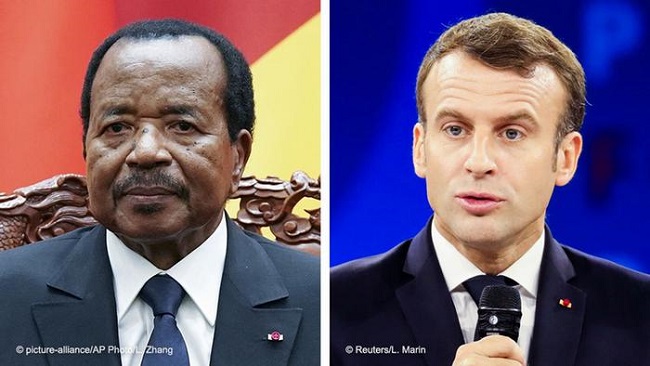
Cameroon’s aged president is coming under fire for his absence from the national stage as the central African country faces a burgeoning coronavirus crisis.
A month after the first case of COVID-19 was recorded, 87-year-old Paul Biya has yet to address the nation — a silence that for supporters is a sign of gravitas but for critics one of failure.
According to official figures posted early Monday, Cameroon has 658 cases of the virus, with nine deaths, making it the second most-affected country after South Africa in sub-Saharan Africa.
Cameroon is already waging two violent conflicts, one against Boko Haram jihadists in the north, the other against English-speaking separatists in the west.
The fighters in the new front are doctors and nurses who are woefully lacking in masks and breathing equipment.
In his 37 years in power, Cameroonians have become accustomed to Biya’s long absences, mainly because of poor health, but his silence over the pandemic is raising sharp questions.
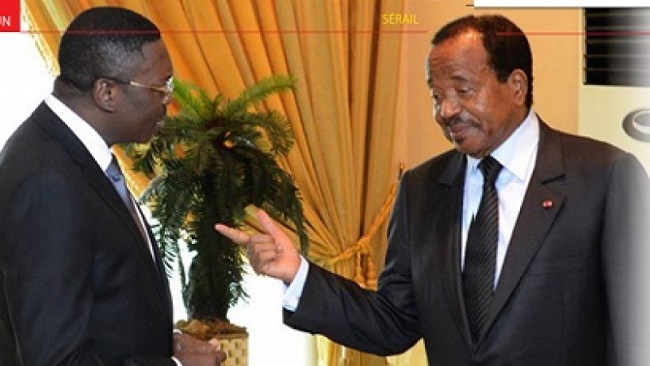
He posed for the cameras after talks with the US ambassador on March 11, but did not speak to the press.
Six days later Biya urged Cameroonians on Facebook to “respect” measures taken to combat the virus, but since then there has not been so much as a whisper from a leader who has overseen many crises since he took power in 1982.
– Biya ‘cannot be pinned down’ –
Biya’s track record suggests he is not a major communicator in the best of times, making just three or four appearances a year. But for researcher Stephane Akoa, “In a context like this, the presidential message is important.”
Last week, speculation mounted on social media that Biya could be dead, prompting a formal public denial by Communications Minister Rene-Emmanuel Sadi, who insisted that Biya was “going about his official business as normal”.
But there was no word from the president himself, provoking a sharp attack from main opposition leader Maurice Kamto, the runner-up to Biya in 2018 elections.
On Friday, Kamto demanded that the president address the nation within seven days, otherwise “the people… will inevitably see his failure”.
Biya’s silence “is becoming criminal,” he added.
Labour Minister Gregoire Owona snapped back, saying Kamto wished to politicise the crisis, calling it “shameful”.
Oswald Baboke, the president’s deputy chief of staff, commended Biya’s “wisdom… (and) restraint,” writing in the press that “the President’s Time cannot be improvised and cannot be pinned down.”
Thus far the youthful health minister, Malachie Manaouda, has been the point man for the coronavirus crisis, tweeting out frequent updates and detailing the government’s response.
But criticism has grown louder with the rise in known cases from 142 to 658 in a week.
– ‘Lack of coordination’ –
“Government communication is weak, its response was late and in some respects poorly prepared,” said Stephane M’Bafou, a consultant in public management and governance.
“There is an obvious lack of coordination,” said economist Albert Ze.
Prime Minister Joseph Dion Ngute on March 13 announced measures such as closing borders and a ban on rallies, which have been extended.
The one new step since then, attributed to Biya but announced by Ngute, has been the creation of a solidarity fund worth one billion CFA francs (1.5 million euros / $1.65 million).
Others say the response does not go nearly far enough.
“We must quickly declare a curfew, isolate the cities where cases are confirmed and move towards a general containment regardless of the socio-economic cost,” said M’Bafou.
Source: AFP
COVID-19: Sick Cameroon Travel Professional roaming the world trying to get home
Some in the global travel and tourism world call her Miss Cameroon. Francoise Kameni is not only the Vice President of Baseball and Softball Federation of Cameroon and a member of the International Softball Federation, but she is also one of the most prominent leaders in Cameroon in the African tourism industry. Francoise is an ambassador for the African Tourism Board and has been the eTurboNews brand ambassador for Cameroon for 20 years.
For many years Francoise has been seen at travel industry events around the globe.
She left Cameroon in early March for Berlin, Germany to attend the ITB trade show. Unfortunately, ITB was canceled due to Coronavirus on the day she left Douala.
Francoise stayed 2 days in Berlin and continued for New York to assist the Cameroon Embassy in a project. She was booked to fly back to Cameroon on March 19. Her flight was canceled due to COVID-19 and she was stuck in New York for more than 2 weeks.
Listen to the incredible story Francoise is telling to eTurboNews while wondering the transit area at FRAPORT.
The Cameroon Embassy arranged a rescue flight for its citizens from Paris to Douala on April 17. Francoise spent hours on the phone every day while in New York. Finally, United Airlines booked her on a Lufthansa flight from New York to Paris via Frankfurt on April 4.
Lufthansa boarded her in New York when Francoise presented a valid multiple-entry Schengen visa issued by the French Embassy in Douala.
When she landed at 9.30 am in Frankfurt on Sunday morning and wanted to transfer to her Lufthansa flight to Paris Charles de Gaulle Airport, the German Federal Police refused her entry due to Coronavirus border restrictions.
German Police checked with French authority and did not get clear guidance, so they ordered Ms. Kameni to spend 23 hours in a deserted transit area of Frankfurt Internation Airport. There was no food but she managed to get a glass of water for her 24-hour airport stay
A German Federal police officer told eTurboNews: “I feel very sorry for the lady, but my hands are tied. Our borders are closed, and Lufthansa should have never accepted her to board in New York on Friday. Lufthansa flights are only one-way rescue flights for Germans to come home.”
eTurboNews reached out to Lufthansa, but there was no response so far.
Francoise started to feel sick while at FRAPORT and asked to see a doctor on Sunday. There was no doctor available and she struggled to stay alert.
Finally at 10 am Monday morning she was escorted by German Federal Police to United Airlines flight 691 and left Frankfurt at 11.20 am for Newark, New Jersey.
It’s not clear if she will be admitted to the United States in Newark. Since she wasn’t asked for her health status when leaving the U.S on Friday, she wasn’t asked after landing in Frankfurt, and again wasn’t asked when boarding her flight to Newark it should be hoped Francoise is not carrying COVID-19.
eTurboNews called United Airlines prior to her departure to alert the airline of this possible threat. The agent in the Chicago call center told eTN there is nothing she can do.

Information provided to Francoise by German Federal Police at Frankfurt International Airport. Francoise was forced to sign the document. The document is in German, but the passenger speaks no word of German.
The Cameroon Embassy provided confirmation to German and French authorities about the rescue flight asking to accept her to travel to France, so she could catch that flight

Currently, Francoise is onboard to United Airlines heading from Frankfurt to Newark, New Jersey to be stranded again in the United States.
She was able to alert the foreign ministry in Cameroon to assist with U.S. authorities.
Culled from eTurboNews