World facing off against killer pathogen: Countries report more coronavirus infections, deaths
The outbreak of COVID-19 continues to expand in different countries around the world, although to varying degrees.
Here are the latest:
The number of infections reported in the six Arab countries of the Persian Gulf region has exceeded 16,500, with more than 100 deaths.
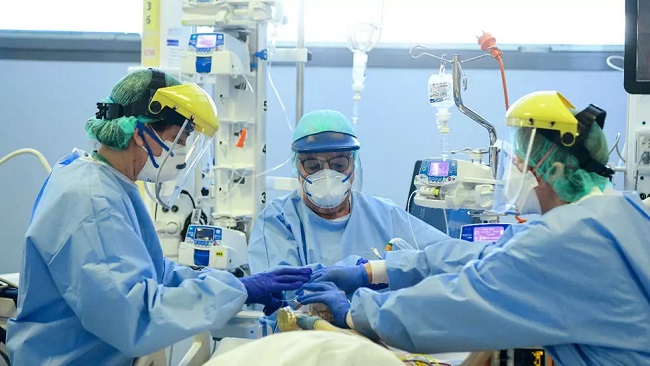
Bahrain converts car park into temporary hospital
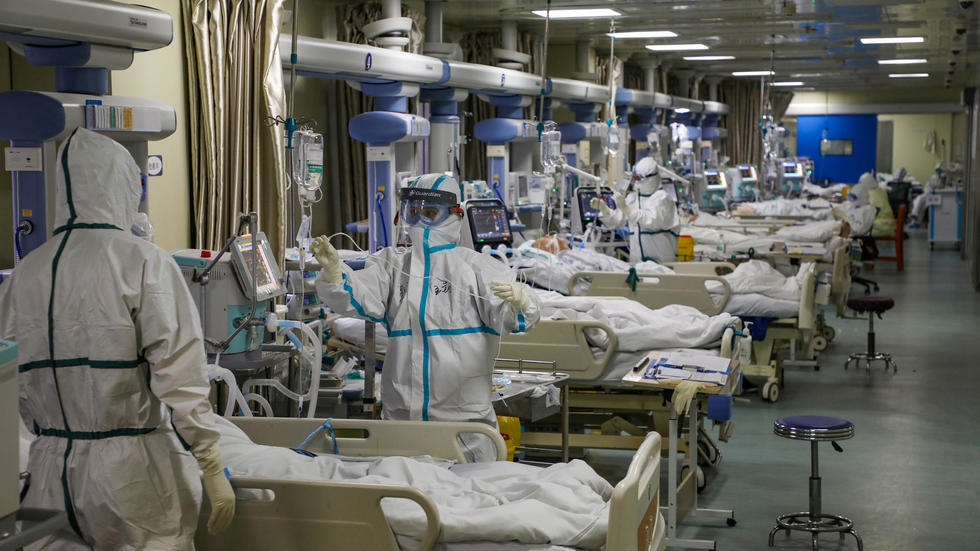
Bahrain has turned a multi-story car park at a military hospital into an intensive care unit for patients with COVID-19. The 130-bed unit was set up at the car park of the Bahrain Defense Force Hospital in Riffa, south of the capital, Manama.
Bahrain recorded 161 new coronavirus cases, most of them among foreign workers, the country’s Health Ministry said on Tuesday, bringing its total number of infections to 1,522, with seven deaths.
UAE’s Sharjah suspends intercity public transport
Sharjah, one of the emirates of the United Arab Emirates, has halted public transport between cities as of Tuesday until further notice.
The UAE has 4,933 cases and 28 deaths.
Jordan to ban mosque prayers during Ramadan
In a bid to contain the spread of virus, Jordan, which has registered 391 cases and seven deaths, announced a ban on public worship in mosques during the Islamic holy month of Ramadan that begins next week.
Jordan has shut down mosques and public places of worship as part of a ban on gatherings to contain its outbreak.
Chile to free 1,300 prisoners
The Constitutional Court in Chile on Tuesday approved a special law sent by the government of President Sebastian Pinera that would grant amnesty to about 1,300 prisoners at high risk of contracting the coronavirus.
The amnesty is aimed at easing pressure on the country’s prisons, which, according to a Supreme Court report, are a “time bomb” with some 42,000 inmates.
Two Brazil governors contract coronavirus
Two Brazilian state governors said on Tuesday that they had been diagnosed with COVID-19.
Governors Wilson Witzel of Rio de Janeiro and HelderBarbalho of the northern state of Para both took to Twitter to announce their diagnoses and call on people to stay home to prevent the spread of the disease.
Brazil, Latin America’s worst hit country, has reported 1,532 deaths so far.
Germany records 2,486 new cases, 285 deaths
Meanwhile, the number of confirmed coronavirus cases in Germany jumped by 2,486 to 127,584, data from the Robert Koch Institute (RKI) for infectious diseases showed on Wednesday.
The new figure marked an increase after four days of decline.
The country also registered 285 new deaths, taking the total number to 3,254, according to the tally.
South Koreans head to polls despite pandemic
South Koreans headed to the polls on Wednesday for parliamentary elections that are taking place amid the coronavirus epidemic, while many other countries have delayed votes.
The voters were wearing masks and plastic gloves as part of strict safety measures. Early voting also took place last weekend to reduce the number of voters crowding polling stations on Wednesday.
South Korea initially had the second highest number of coronavirus cases in the world behind China, but its massive testing campaign and intensive contact tracing has largely helped the country bring its cases under control.
The Korea Centers for Disease Control and Prevention on Tuesday reported 27 new cases, bringing the total number to 10,564. The country has registered 225 deaths.
Japan calls on people to limit interactions
Japanese government spokesman Yoshihide Suga on Wednesday urged the Japanese people to do everything in their power to limit interactions with others by 70% to stem the spread of the virus.
He added that the government would consider the request from coalition partner Komeito to give 100,000 yen (933.45 dollars) cash handouts to individuals to help cushion the impact of the outbreak.
Footage shows mass graves being dug in Ecuador
Drone footage filmed on Tuesday appeared to show excavators digging mass graves in the city of Guayaquil in Ecuador.
It also showed containers believed to be holding the bodies of deceased COVID-19 patients, stationed at Guasmo Sur hospital.
According to the Johns Hopkins University, Ecuador has reported around 7,600 confirmed coronavirus cases and nearly 370 deaths.
Thailand prolongs ban on passenger flights
Also on Wednesday, Thailand’s aviation body extended a ban on incoming passenger flights until the end of April as part of efforts to curb the coronavirus.
A government spokesman said that 30 new infections and two deaths had been reported in the country on Wednesday.
Thailand has registered a total of 2,643 cases and 43 deaths since its outbreak escalated in January.
(This item is updated as new information is received.)
Culled from Presstv
Trump orders halt of US funding to World Health Organization
President Donald Trump said on Tuesday he would halt funding to the World Health Organization over its handling of the coronavirus pandemic while his administration reviews its response to the global crisis.
Trump, at a White House news conference, said the WHO had “failed in its basic duty and it must be held accountable.” He said the group had promoted China’s “disinformation” about the virus that likely led to a wider outbreak of the virus than otherwise would have occurred.
The United States is the biggest overall donor to the Geneva-based WHO, contributing more than $400 million in 2019, roughly 15% of its budget.
The hold on funding was expected. Trump has been increasingly critical of the organization as the global health crisis has continued, and he has reacted angrily to criticism of his administration’s response.
Condemnation of Trump’s decision
The decision drew immediate condemnation. American Medical Association President Dr. Patrice Harris called it “a dangerous step in the wrong direction that will not make defeating COVID-19 easier” and urged Trump to reconsider.
Democratic Representative Nita Lowey, who heads the US House of Representatives Committee that sets government spending, said Trump was making a mistake.
“The coronavirus cannot just be defeated here in the United States, it has to be defeated in every conceivable location throughout the world,” she said in a statement.
“Not the time” to reduce funding
United Nations Secretary-General Antonio Guterres said in a statement on Tuesday that it was “not the time” to reduce resources for the World Health Organization, after President Donald Trump halted US funding over the body’s handling of the coronavirus pandemic.
“Now is the time for unity and for the international community to work together in solidarity to stop this virus and its shattering consequences,” Guterres said.
Trump finds a scapegoat
The Republican president recently accused the WHO of being too lenient with China in the earliest days of the crisis, despite having himself praised China in January for its response and transparency.
Trump has made frequent use of scapegoats during his short political career. He often lashes out at the media, Democrats, or others when he feels attacked or under pressure.
Trump said the WHO failed to investigate credible reports from sources in China’s Wuhan province that conflicted with Beijing’s accounts about the coronavirus’ spread and “parroted and publicly endorsed” the idea that human to human transmission was not happening.
“Had the WHO done its job to get medical experts into China to objectively assess the situation on the ground and to call out China’s lack of transparency, the outbreak could have been contained … with very little death,” Trump said.
Trump said the US review of the WHO was likely to take 60-90 days.
Illness, death and economic chaos
The US death toll from COVID-19, the highly contagious respiratory illness caused by the virus, topped 25,700 on Tuesday, out of more than 600,000 known US infections, according to a running Reuters tally.
Millions of Americans have lost their jobs, and the national economy has been crippled as citizens have stayed home and businesses closed, casting a shadow over Trump’s hopes of being re-elected in November.
Dr. Amesh Adalja, a senior scholar at the Johns Hopkins University Center for Health Security, said the WHO does make mistakes and may need reform, but that work needs to take place after the current crisis has passed.
“It’s not in the middle of a pandemic that you do this type of thing,” he said.
Adalja said the WHO collects information about where the virus is active in every county in the world, which the United States needs to help guide decisions about when to open borders.
The WHO has been appealing for more than $1 billion to fund operations against the pandemic. The agency needs more resources than ever as it leads the global response against the disease.
Trump said Washington would discuss with global health partners what it will do with the millions of dollars that would normally go to the WHO and said the United States would continue to engage with the organization.
Trump has long questioned the value of the United Nations and scorned the importance of multilateralism as he focuses on an “America First” agenda. Since taking office, Trump has quit the UN Human Rights Council, the UN cultural agency UNESCO, a global accord to tackle climate change and the Iran nuclear deal.
Under the WHO’s 2018-19 biennium budget, the United States was required to pay $237 million – known as an assessed contribution, which is appropriated by Congress – and also made some $656 million in voluntary contributions that were tied to specific programs.
Voluntary US funding for the WHO has been used to address such health issues as polio eradication, vaccines, combating HIV, hepatitis and tuberculosis and the health of women, newborns and children.
(FRANCE 24 with AFP and REUTERS)
Macron pushes Africa debt relief, seeks Putin’s backing for UN truce plea
International creditors must relieve African countries of debt payments this year to help them deal with the coronavirus pandemic, French President Emmanuel Macron said in a wide-ranging interview with RFI on Wednesday in which he also urged Russia to get behind UN calls for a global ceasefire.
A moratorium on African countries’ debt payments is “an indispensable step” to help the continent weather the coronavirus crisis, the French president told Radio France Internationale (RFI), FRANCE 24’s sister station, calling for the debt to be eventually written off.
“We must give African economies some breathing space by suspending debt payments during this crisis,” Macron explained, describing the moratorium as a “global first”.
The French president’s comments come as his finance minister says major international creditors have reached a preliminary agreement to relieve the world’s poorest countries of debt payments this year.
Macron urged finance officials for the US, China and other G20 nations to finalise that agreement when they meet online on Wednesday.
In his interview, the French leader said he had secured the agreement of three of the five permanent members of the United Nations Security Council to back a call by the UN for a global ceasefire so the world can focus on the coronavirus pandemic.
The UN’s Secretary-General Antonio Guterres called for the world truce on March 23, warning that in war-torn countries, health systems have collapsed and the small number of health professionals left were often targeted in the fighting.
Macron said President Xi Jinping of China, US President Donald Trump and British Prime Minister Boris Johnson had all confirmed to him they would back the plea.
The French leader said he was hopeful of securing Russian President Vladimir Putin’s agreement in the coming hours.
“I spoke to him at the start of this initiative. I haven’t spoken to him since I got the firm confirmations of the other leaders. I will do in the next few hours,” Macron told RFI.
“I think that for sure President Putin will agree and the day he says he does, we’ll be able to hold this video conference and relay this call in a solemn, forceful and efficient way.”
(FRANCE 24 with REUTERS, AFP)
Anger in Africa over coronavirus ‘stigma’ in China
African countries are seething over accounts that Africans are battling stigma and discrimination in China over the coronavirus pandemic, apparently linked to a cluster of cases in the Nigerian community in the southern city of Guangzhou.
The African residents say they have suffered forced evictions, arbitrary quarantines and mass coronavirus tests and face discrimination in restaurants and hotels.
“We saw images of Nigerians in the streets with their possessions and this was of course extremely distressing for us at home,” Nigerian Foreign Minister Geoffrey Onyeama told Chinese ambassador Zhou Pingjian on Tuesday.
He said the situation was “unacceptable” to Nigeria’s government and people, and demanded “immediate action” from the Chinese authorities.
The African Union on Saturday expressed its “extreme concern” about the situation in Guanghzou and called on Beijing to take immediate corrective measures.
The controversy coincides with a Chinese charm offensive in Africa.
Diplomats said around 20 African countries are drawing up a joint letter to Beijing to say that mass virus tests and quarantines imposed specifically on Africans amount to “racism”.
The draft letter, a form of diplomatic correspondence called a note verbale, describes this as a “clear violation of human rights”, the sources say.
– Racism issue –
Local authorities in Guangzhou, a city of 15 million, said at least eight people diagnosed with coronavirus had spent time in the city’s Yuexiu district, known as “Little Africa”.
Five were Nigerian nationals who sparked widespread anger after reports surfaced that they had broken a mandatory quarantine and been to eight restaurants and other public places instead of staying home.
Several Africans told AFP they had been forcibly evicted from their homes and turned away by hotels. One said he had been sleeping under a bridge for four days and could not find a store that would allow him to buy food.
On Sunday, as international pressure mounted, the foreign ministry in Beijing issued a statement saying the country attached “great importance to the life and health of foreign nationals” and rejected all “racist and discriminatory” remarks.
The US fast-food chain McDonald’s apologised after a sign in one of its restaurants in Guangzhou told black people they were banned from entering.
– Embarrassment –
The global pandemic was caused by a novel form of coronavirus that scientists say leapt the species barrier to humans through a live animal market in the Chinese city of Wuhan.
China has reacted furiously to any references that it says could spur xenophobia because of the virus’s origins.
In the context of Africa, the affair is diplomatically embarrassing for China, as it has sent doctors, medical equipment and other help to impoverished countries in Africa imperilled by the virus.
The hugely appreciated gestures include a team of 15 doctors who arrived in Abuja last week aboard a plane filled with anti-coronavirus gear including a consignment of 50,000 masks and 11,000 rubber gloves that landed Tuesday morning in South Africa, the continent’s worst-hit country.
The United States in recent years has seen its clout in Africa wane as China has thrown open the credit spigot, providing billions in loans for Chinese-made infrastructure projects.
Washington has been quick to point the finger in the latest storm.
“The abuse and mistreatment of Africans living and working in China is a sad reminder of how hollow the PRC-Africa partnership really is,” a State Department spokesperson said on Saturday, using the acronym for the People’s Republic of China.
“At a time when we should be supporting one another to recover from a pandemic, PRC officials recklessly hid from the world, Chinese officials are busy evicting African students into the streets without food or shelter.”
Source: AFP
Former Tonnere Yaoundé winger Kofi Abbrey is bedridden, desperately seeks President George Weah’s number
Bedridden Ex-Ghana star Windsor Kofi Abbrey has made a passionate appeal to be reunited with his former team-mate George Weah who is now the President of Liberia.
Abbrey and Weah were team-mates and close friends at Cameroonian club Tonnere Yaoundé before the now head of state left for Europe to continue his career in the 80’s.
Weah went on to become a global icon after winning the FIFA player of the year in 1995.
However, the talented winger could only move to Morocco and returned to Ghana in a footballing career that spanned three decades having played for giants Hearts of Oak.
Abbrey, a 1982 AFCON winner, is struggling financially and has been bedridden with strange illness after failing to make it big in football.
The wniger wants to reunite with Weah, who he claims is a close friend of his during their time in Cameroon.
“I enjoyed my spell in Cameroon, my playing mate is George Weah, we played together in Cameroon for Tonerre Yaoundé,” he told Asempa FM.
“We had a good time together (on the pitch), now he doesn’t have my number, I also don’t have his number.
“I would love to get in touch with him so that we communicate. If he hears my name he would be willing to engage me,” Abbrey added.
Abbrey also had spells with Hearts of Oak and Eleven Wise before retiring.
Source: Ghana Soccernet
Coronavirus cases in Africa rise to over 14,000
The World Health Organisation (WHO) Regional Office for Africa in Brazzaville, Congo, says the number of Coronavirus (COVID-19) cases in Africa has risen to over 14,000.
The UN’s health agency gave the update on its official twitter account @WHOAFRO on Monday.
“COVID19 cases in Africa rise to over 14,000 – with 2,523 recoveries and 754 deaths reported,’’ it said.
The breakdown on the WHO African Region COVID-19 dashboard showed that South Africa, Algeria and Cameroon had continued to top the list of countries with the highest reported cases.
South Africa has 2,173 cases and 25 deaths followed by Algeria with 1,914 cases and 293 deaths, while Cameroon has 803 confirmed cases with 10 deaths.
According to the dashboard, the countries with the lowest confirmed cases are South Sudan, Sao Tome and Principe, Burundi and Mauritania and Gabo Verde.
It showed that South Sudan and Sao Tome and Principe were the lowest confirmed cases, which had four cases each with zero death.
Burundi is the second country with the lowest confirmed cases with five reported cases and zero death.
Mauritania and Gabo Verde are in the third category with the lowest cases as the country had recorded seven confirmed cases each with one death.
Also, the dashboard showed that coronavirus cases had risen to 323 in the past two days from 288 confirmed cases with 10 deaths in Nigeria.
The agency, however, thanked the health workers at front lines of the coronavirus response.
“We in the health care profession are the ones to step in to help people in times like these; we have to be psychologically prepared,’’ Joyce Kaguura, ICU Nurse, Kenyatta University Hospital, responded.
Source: Pmnewsnigeria
Coronavirus pandemic offers glimmer of hope for the Southern Cameroons Crisis
Retired Cameroonian Archbishop Cornelius Fontem Esua of Bamenda says the coronavirus pandemic could also bring about “unexpected positive effects” for the country’s embattled Anglophone regions.
“The spread of the pandemic in Africa is an epoch-making drama, but in some cases, it can also have unexpected positive effects,” the archbishop told the Rome-based Catholic news agency, Fides.
Esua was speaking following the decision by some separatist groups to call for a unilateral ceasefire to enable medical teams and humanitarian assistance to reach the most vulnerable people at risk from the COVID-19 coronavirus.
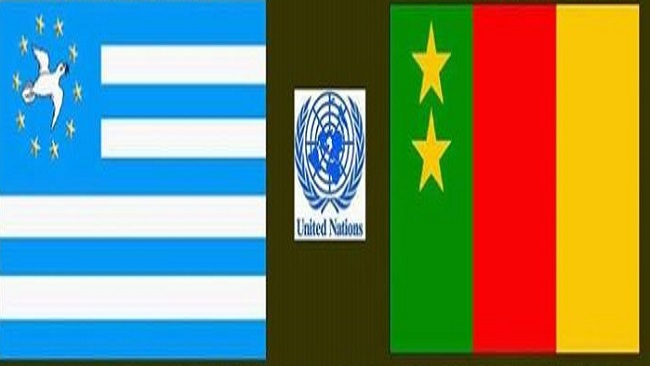
One of the armed groups, the Southern Cameroons Defence Forces (SOCADEF,) agreed to the United Nations’ call for a worldwide cessation of hostilities during the pandemic.
On March 25, Ebenezer Akwanga, the group’s leader, said that “SOCADEF are prepared to support the ceasefire and will ensure the security and free circulation of international observers and humanitarian organizations in Ambazonia … in accordance with human rights law.”
Ambazonia is the term used by the separatist rebels for the English-speaking regions of the majority French-speaking country. However, no country has recognized Ambazonia’s independence.
The release, addressed to Cameroon’s President Paul Biya, also called on the “authorities and security forces of the Republic of Cameroon to respond to the call made by the secretary-general of the United Nations.”
Akwanga added that “we are ready to meet with representatives designated by the Republic of Cameroon to work out the appropriate implementation of the ceasefire.”
The UN Secretary-General, António Guterres, on March 23 called for an “immediate global ceasefire in all corners of the world” to protect the most vulnerable civilians in conflict-ridden countries from the “fury” of the coronavirus pandemic.
Esua has welcomed the developments, saying that as bad as the coronavirus may be, it might be an agent of peace in Cameroon.
“Here, for example, clashes between the separatists of the Republic of Ambazonia and the army have greatly diminished, if not suspended, and we have had no news of fighting for weeks. A dozen days ago, Samuel Ikome Sako, interim president of the Federal Republic of Ambazonia, announced a total lockdown, with the closure of the borders of the English-speaking regions due to the virus. So far, the separatists are respecting the directive: There is a general calm in the area, there have been no cases of direct confrontation with the military or kidnappings by the ‘Amba Boys’ (the name of the separatist groups in action,” the archbishop said.
However, the peace is not universal, and Bishop George Nkuo told Crux the fighting has not abetted in the Diocese of Kumbo.
“As for the cease fire I am not aware that anything like that had taken place here in Kumbo,” he said.
“I guess those who are calling the shots here are not ready to use the coronavirus to derail their struggle. There is obviously a need to take this virus seriously and it is a common enemy, and in the face of such a war the warring parties need to review their goals. So far, nothing has changed as I see it. I think it is unfortunate because if we don’t fight it together, if it ever reaches Kumbo many people will perish.”
Some armed separatist groups have made it clear that there would be no ceasefire on their part.
On March 27, a statement from Julius Nyiawung, the vice president of the Ambazonia Governing Council – one of several separatist groups claiming to be the legitimate government of the area – said there shall be not be a “unilateral ceasefire in the Ambazonia war of independence because of COVID-19 pandemic.”
The statement explained that “to permit such unilateral action will be to provide Cameroon unhindered access to everywhere in our towns and villages.”
Those fears are not unfounded, since there is no indication that the Cameroonian military is ready to implement a ceasefire.
Esua admitted the army “continues to patrol the streets with tanks and in some cases, especially in the villages, there have been ambushes or killings.”
The current conflict began in 2017 after government forces ruthlessly put down strikes organized by Anglophone teachers and lawyers over perceived attempts by the government to destroy the common law and British-style education systems practiced in Anglophone regions. The breakdown in attempts at dialogue resulted in the growth of several separatist movements.
The resulting conflict, now in its fourth year, has killed over 3000 people, with about a million forced from their homes. Esua insists the ceasefire by at least one of the separatist groups offers a lot of hope.
“Overall, we hear fewer gunshots or gunfights here in Bamenda and we really hope that the emergency due to the spread of the virus will lead all actors involved to rethink their strategies and reach an agreement,” the archbishop said.
He added that he believes such a ceasefire could offer a pathway towards a resolution to the Cameroon Anglophone crisis.
Source: Crux
Biya regime makes face masks compulsory
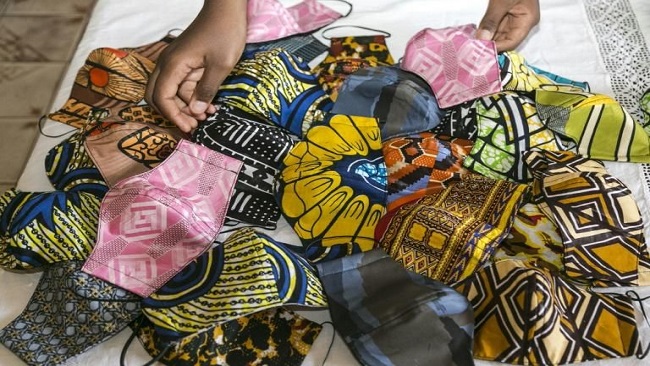
The compulsory wearing of face masks in public places as part of measures to curb spread of coronavirus begins Monday in Cameroon as cases of the virus in the country near a thousand.
Mask wearing is one of seven supplementary preventive measures the Prime Minister, Dr Joseph Dion Ngute, announced last week as part of government response to Covid-19.
Cameroon counted 848 confirmed cases on Sunday, including 98 recoveries and 14 deaths, according to a tally by The EastAfrican.
The additional measures also include the local production of medicines, protective masks and hand sanitisers, the establishment of specialised treatment centres for Covid-19 patients in all regional capitals, intensification of screening and awareness-raising campaigns.
The new measures add to an initial 13 which have been effective since March 18 including closure of borders, schools, prohibition of gathering of more than 50 people, systematic closing of bars, restaurants and leisure spots from 6pm, urban and inter-urban travel restrictions, the regulation of consumer flows in markets and shopping centres.
“I urge the population to become actively involved in the fight against the spread of the Covid-19 in our country by scrupulously observing the measures prescribed by the government, especially the prohibition of gathering and the restriction of urban and inter-urban travel,” the Prime Minister advised in a televised address amidst reports that some Cameroonians have been flouting the rules.
Source: Daily Nation
Yaounde Begins Large-scale Chloroquine Production
Cameroon has required the wearing of face masks by all of its citizens and begun large scale production of Chloroquine to treat COVID-19. The country says its hospitals are already overwhelmed, with more than 850 confirmed cases within 6 weeks, yet it expects confirmed COVID cases to rise into the several thousands.
Almost everyone on the streets of Yaounde began wearing masks Monday. Police were out to enforce the measure, taken by the government to limit the spread of COVID-19. 22-year old Christian Yubin speaking via a messaging App said the police forced him to buy and wear a mask.
“Temperatures are very high, up to 35 degrees and they are asking us to wear masks which suffocate us. I think the best thing to do is to respect social distancing. Stay far from people,” said Yubin.
Dr. Georges Alain Etoundi Mballa, director of pandemics and epidemics at Cameroon’s public health ministry said they are insisting on preventive measures because hospitals are already being overwhelmed by the number of COVID infected persons.
He said with the ever-growing number of infected persons, the government has asked people who are feeling better in hospitals, including COVID-19 patients, to return to their homes, where they will have medical follow up by hospital staff. He said the government is also transforming football stadiums and gymnasiums into facilities where COVID-19 infected persons will be received for treatment.
Production of chloroquine
Madeleine Tchuente, Cameroon’s minister of scientific research and innovation, said besides the obligatory wearing of masks, the government has ordered the production of the drug chloroquine to treat COVID-19 patients. She said they have started producing 6,000 tablets per day and expect to drastically increase production when they get some more ingredients from China.
Tchuente said President Paul Biya has ordered them to produce at least eight million tablets of chloroquine each day as the situation is getting worse. She said Cameroon has the know-how and laboratories to produce the chloroquine but what they lack are the necessary active pharmaceutical ingredients they can import from China and India, and that China has assured Cameroon that the ingredients will be shipped in two weeks.
Chloroquine is one of the oldest and best-known anti-malarial drugs. It has also attracted attention over the past few decades as a potential antiviral agent. Last week, Cameroon announced that it had seized counterfeit chloroquine from at least 300 pharmacies and hospitals and closed two fake pharmaceutical companies as thousands of its citizens were rushing for the drug with the unproven believe that it can stop COVID-19 infections.
Emmanuel Anyangwe Ngassa, a Cameroon-born medical doctor practicing in Germany, said U.S president Donald Trump is leading many African countries to believe there is a cure for COVID-19, when scientists have not yet announced any. He spoke via a messaging App from Bonn.
“What is the essence of that drug? Chloroquine has not been proven to treat COVID-19 successfully. It was unfortunate that Donald Trump took this thing up, spoke about it and publicized it,” he said.
The rush for chloroquine as a treatment to COVID-19 began in Cameroon in March after France announced that half of 14 patients who underwent chloroquine therapy got better and when U.S President Donald Trump referred to it as a potential cure for the ravaging coronavirus disease.
Source: VOA