
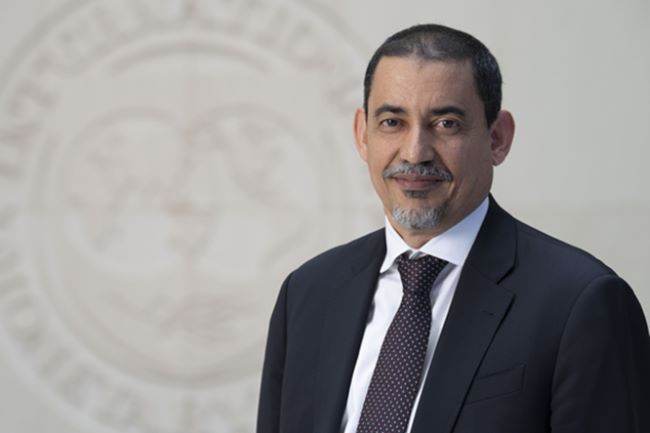
IMF appoints Mauritania’s Zeidane to head Africa Department
Mauritanian Zeine Zeidane has been appointed director of the IMF’s Africa Department. A former prime minister and an IMF official for more than a decade, he takes up the role at a time when African states’ expectations for financing and reforms remain high.
The International Monetary Fund said on April 3, 2026 it had appointed Zeine Zeidane as director of its Africa Department, succeeding Ethiopia’s Abebe Aemro Selassie, who will step down on May 1 after nearly a decade in the role. During his tenure, the IMF mobilized about $60 billion in financing for sub-Saharan Africa.
The appointment gives Zeidane oversight of the Fund’s Africa portfolio. His career spans senior government positions and roles in Mauritania’s financial sector. Born in Mauritania, he served as central bank governor before becoming prime minister in 2007. He joined the IMF in 2012.
Zeidane has held several senior posts at the Fund, including deputy director of the Africa Department and of the Middle East and Central Asia Department. In those roles, he worked on key policy issues such as concessional financing and the IMF’s response to the COVID-19 pandemic.
His time in the Middle East also helped strengthen ties with Gulf countries, which have become major financial partners, including in Africa. He was involved in opening the IMF’s regional office in Riyadh in 2024, part of a broader shift toward new financing hubs.
This combination of regional experience and knowledge of IMF operations is expected to be a key strength in his new role.
African focus on access to financing
The appointment comes as African governments call for greater support from the IMF, particularly improved access to financing. Several countries are pushing for more flexible terms better aligned with their fiscal constraints, especially through concessional instruments for low-income economies.
Reform of IMF quotas is another key issue. Despite its population and economic size, Africa remains underrepresented in the institution’s governance. Officials are calling for changes to quota formulas to better reflect the vulnerability of developing economies.
Debt pressures also remain high. After a series of shocks — including the pandemic, imported inflation and tighter global monetary policy — many African countries face limited fiscal space.
The IMF has advocated a mix of gradual fiscal adjustment and growth support. A 2025 note by the institution found that, in several cases, debt stabilization can be achieved without restructuring.
Zeidane’s experience, including as governor of Mauritania’s central bank, may help manage trade-offs between fiscal sustainability and social priorities.
A changing global environment
Zeidane takes office as global economic dynamics shift. U.S. trade measures and the growing influence of China, India and Gulf states have accelerated the diversification of Africa’s partners.
This has strengthened African countries’ bargaining power but also complicated coordination among creditors. In this more fragmented landscape, the IMF is increasingly working with a broader range of public and private actors to address financing challenges.
Expectations also vary across the continent. Monetary unions such as WAEMU and CEMAC are focused on strengthening macroeconomic convergence while maintaining financial stability. Middle-income countries, meanwhile, are seeking precautionary financing tools to buffer external shocks without entering full IMF programmes.
Source: Business in Cameroon


