
Breaking News
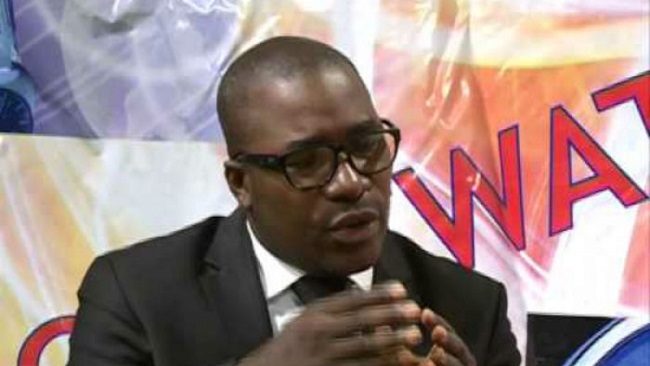
Barrister Agbor Balla and Dr. Fontem en route to Yaoude inside a military vehicle
Cameroon Intelligence Report has been reliably informed that the Chairman of the Cameroon Anglophone Civil Society Consortium, Barrister Agbor Balla and the Secretary General Dr. Fontem Neba are currently being moved to Yaounde in a military vehicle. Both leaders were arrested some few hours ago in the Southern Cameroons province of Buea.
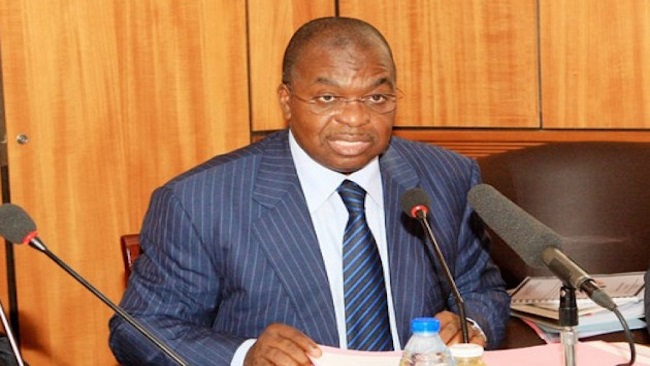
Consortium, SCNC banned after Ghogomu declaration
Some senior political commentators have accused the Paul Biya-led One Cameroon regime of toying with the nation’s unity and future. Their comments were made public earlier today when state radio and television announced a ministerial order from the Minister of Territorial Administration and Decentralization banning the Cameroon Anglophone Civil Society Consortium and the Southern Cameroons National Council.
The decision by Minister Rene Emmanuel Sadi came after a declaration by the chairman of the so-called Ad Hoc Committee; Ghogomu Mingo Paul that the new generation of Anglophone leaders have unanimously resolved to resist any further dialogue with the Biya Francophone Beti Ewondo government.
Ghogomu Paul ignored claims by the Anglophone Consortium that the Yaounde regime was gambling with Cameroon’s future by continuing to maliciously deploy the military in the Southern Cameroons region and implementing sinister divide and rule tactics against Anglophone’s key actors.
The Minister Rene Sadi’s order has shut the door to the advice that was given to President Biya to personally and visibly head a holistic solution-seeking strategy that will prove his commitment to a robustly sustainable peace with British Southern Cameroonians.
Our chief political correspondent in Yaoundé opined that for there to be true unity, stability and progress in the country, President Biya should engage the Cameroon Anglophone Civil Society Consortium with new faces who are not going to be wasting time establishing so-called Ad Hoc Committees that will not resolve pertinent issues .
At the time of filing this report, the Cameroon Anglophone Civil Society had not reacted to the ministerial order published by the Yaounde regime.
By Chi Prudence Asong
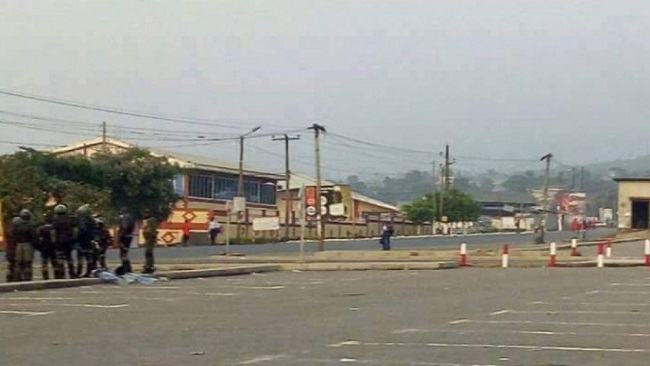
Ghost town gathers steam in West Cameroon
An anti-Francophone rebellion is brewing in Southern Cameroons, where the embattled government of the 83 year-old Paul Biya continues to bring in new anti Anglophone measures and militarizing the English regions of the country. Now, even elected local officials are joining the fray in a seemingly random but increasingly prevalent wave of civil disobedience in West Cameroon.
Working under the direct supervision of the Cameroon Anglophone Civil Society Consortium and on the theory of strength in numbers, the Anglophone teachers and lawyers have paralyzed business and academic activities in British Southern Cameroons. Southern Cameroons have observed a successful civil disobedience campaign for three days and there are speculations that the Consortium intends to step up the fight against Anglophone marginalization.
Furious at the success of the ghost town operations, the chairman of the so-called Ad Hoc Committee announced late yesterday that dialogue with the Anglophone leaders has come to an end. Prof. Ghogomu Mingo Paul in his statement launched a scathing attack on members of the Cameroon Anglophone Civil Society.
Anglophone lawyers, teachers’ trade unions and campaigners have tried to get the Biya Francophone Beti Ewondo government to implement a two state federation that will guarantee political and economic freedom to West Cameroonians. However, the regime in Yaounde has remained defiant and is reportedly planning to suspend thousands of Anglophone civil servants while maintaining a huge military presence in the English regions.
State buildings are empty ever since Monday the 16th of January 2017 and municipalities have stalled in ordering strikers back to work. The Southern Cameroon strikes are becoming so frequent that everyone from council workers to motor taxis, medical doctors to buy’am sell’am, has walked off the job at some point. Ghost town operations today were again successful following an appeal from the Consortium that West Cameroonians should remain calm and discipline.
By Soter Tarh Agbaw-Ebai
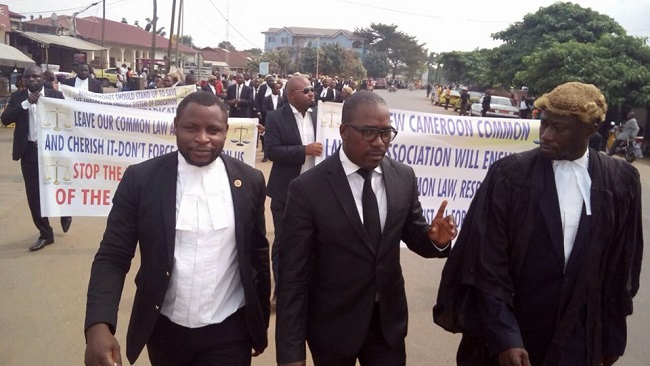
Anglophone Problem: Leaders appeal for greater self discipline
Dear Brothers and Sisters,
Last week, the Consortium called for a Ghost Town to protest against the continuous militarization of our towns, police provocation and brutality – shooting and arrest of citizens – even as the negotiations were going on. This call has been respected throughout the NW and SW Regions. West Cameroonians are a peaceful people and must remain so.
However, some pictures of people exacting violence on school children in Limbe have shocked the Consortium. These pictures remind us of what happened in Bamenda a month ago. Let it be clear that the Consortium unreservedly condemns violence in all its forms and aspires to a society where respect for human personality and property will reign supreme. We strongly urge all our people to remain decent, and to show greater self-discipline. We must undo violence from our cultural make up, and beware of infiltrations and people who are sent to incite violence so as to justify a crackdown. Nevertheless, we encourage parents to keep their children at home when there is a call to strike.
We call on Government to clear our streets of all armed uniform men. We also demand that all those arrested, abducted or kidnapped in Bamenda, Mutengene, Buea, Kumba and Mamfe, including teachers who expressed strong views about the current situation of the country should be released forthwith.
Fellow Citizens,
Concerning the work the Teachers’ Union did in the Teachers’ Ad hoc Committee, we expect them to present it to the public and educate the masses about its contents before an agreement is finalized. We are consulting with them and will ensure that the outcome is satisfactory to our people.
We therefore decry all attempts by the Chairperson of that Committee to manipulate the process and to exacerbate tensions at a time when everyone is looking forward to a sustainable solution. In the same vein, we urge the community – parents, students and other stakeholders – to be patient and wait for the Teachers’ Unions to suspend the strike when the process has come to a logical end. But this can only be after the community has been properly informed about the resolutions arrived at, and guarantees provided that past abuses will not be repeated.
Our hope for this beautiful country is that we and our brothers East of the Mungo can cohabit peacefully, and that every child will have equal opportunity to rise to greatness through hard work. We pray for a country where our origin will no longer limit us.
God is our strength.
For the CONSORTIUM
Barr. Nkongho Felix A. Dr. Fontem A. Neba
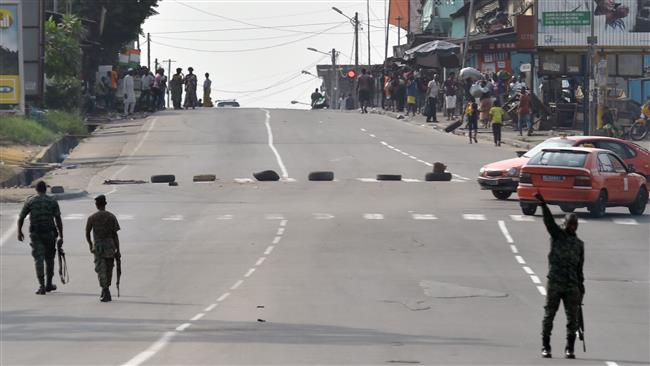
Ivory Coast: Police fire tear gas to disperse protesting students
Police in the Ivory Coast have fired tear gas at hundreds of pupils and students, who were out on the streets in the main city of Abidjan to protest government failure to meet the demands of striking teachers. The protests on Monday came amid an intensifying nationwide strike by disgruntled teachers who have refused to attend their classes since the conclusion of the New Year’s holidays, demanding a boost in career earnings.
The teachers were joined by dissatisfied civil servants across the African country, who commenced a five-day strike early last week, demanding that the government scrap pension cuts and another plan to increase the retirement age from 55 to 60. Other reports said young men on Monday entered schools across the country, forcing children out of classrooms and urging them to join high school students and hold protests, similar to the one in Abidjan.
The development came on the heels of a strike by mutinous troops, who took over army bases in cities across, causing a wave of panic across the country for several days. They demanded bonus payments, forcing the government to clinch a deal of paying each soldier 12 million CFA francs ($19,278) in bonuses, starting from Monday. Troops, however, said they had not received any money the authorities had promised them, raising the specter of further unrest. Ivory Coast, the world’s top cocoa producer, is West Africa’s largest and most prosperous economy.
The French-speaking country emerged from nearly a decade of short wars and a protracted crisis in 2011. However, the factionalized, ill-disciplined military and increasing political divisions have sparked fresh concerns about the state of security in the country and how the government could continue to realize its economic objectives in the future. Under the leadership of President Alassane Ouattara, who came to power in the wake of a 2011 civil war, Ivory Coast has emerged as one of the world’s fastest growing economies. But his critics say only a fraction of Ivorians have benefited.
Presstv
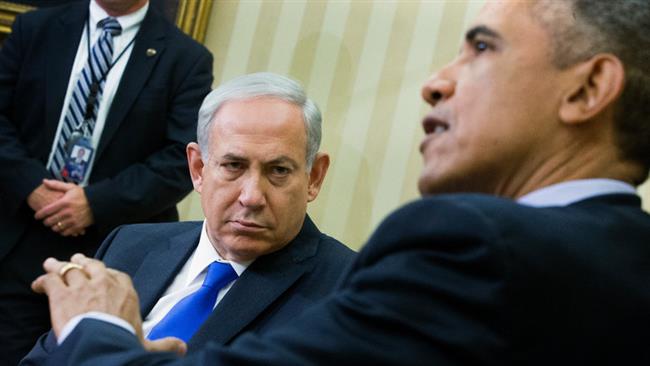
“US has no credibility in the Middle East”
The United States has no credibility in the Middle East region despite President Barack Obama’s efforts to make it look like otherwise, a political analyst says. Gordon Duff made the comments in an interview on Monday when asked about Obama’s remarks that the US and Israel are still close allies and the recent anti-Israel UN resolution has not damaged the military and intelligence ties between Washington and Tel Aviv.
“I don’t think it caused a major rupture in relations between the United States and Israel,” said Obama in his final interview on CBS’s “60 Minutes” on Sunday night. “Obama’s statement to put himself on a record of the US sustaining the relationship with Israel is not based on any kind of reality. The Obama administration has been at odds with Israel in many ways that never hit the news, (and) the public has never seen,” said Duff, senior editor of Veterans Today.
“There is no question that Obama and (Secretary of State John) Kerry have found Israel the most miserable possible partner that has been in political eyes continually,” he noted. “All Obama is trying to do now is to make the US look like it’s still relevant and the relationship we had with Israel and the one we’re going to have is going to make this very clear that the US no longer has a role of any kind in the Middle East, nothing, the US has no credibility, has no position, has nothing to offer, except hate and that’s what’s coming,” he added.
The UN Security Council voted 14-0 last month to pass Resolution 2334, which demanded an immediate end to Israel’s “illegal” settlement activities in the occupied Palestinian territories. The US decided to abstain – and not veto – the resolution, allowing it to be adopted.
The Obama administration has argued that the abstention was in line with the official US policy which views the settlements as a major impediment to resolving the Israeli-Palestinian conflict. But the move angered Israeli Prime Minister Benjamin Netanyahu who accused President Obama and Kerry of being behind the “shameful” act. The continued expansion of Israeli settlements in occupied Palestine has always been a roadblock to peace initiatives in the Middle East.
Presstv
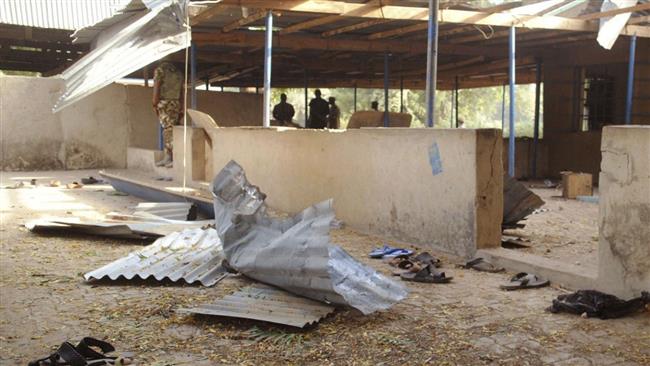
Nigeria: Four people including university professor killed
At least four people, including a university professor, have been killed after a radicalized girl detonated her explosive-laden vest at a university campus in Nigeria’s northeastern province of Borno, police say. The explosion occurred at a mosque in the staff quarters area of the University of Maiduguri in the provincial capital Maiduguri at dawn on Monday, when university professors were saying their prayers at the mosque, said Victor Isuku, Borno police spokesman, adding that a child was also killed in the blast.
He further said that the explosion also claimed the life of another child, who was with the bomber, adding that at least 15 other people at the mosque also sustained “various degrees of injuries” and were taken to the University of Maiduguri Teaching Hospital. However, the National Emergency Management Agency, whose staff took the wounded to hospital, said 17 people had been injured.
The mosque blast took place minutes after police forces, patrolling the grounds at the back of the university, shot another radicalized girl, who had wrapped herself with explosives, as she tried to enter the campus while ignoring stop commands. “The IED (improvised explosive device) strapped to her body exploded, killing her instantly,” Isuku said, adding that the girl had been 12 years old.
No group has so far claimed responsibility for the attacks but they bear the hallmark of the Boko Haram Takfiri terrorist group. In recent months, army troops and civilian fighters in Nigeria have managed to foil many bomb attacks involving terrorists wearing explosive vests before the assailants were able to reach heavily-populated targets and detonate their bombs of their own accord.
Last month, however, two women, with the Boko Haram, killed 57 people and injured 177, including 120 children, after they detonated their explosive vests at a bustling market at Madagali, a town in the neighboring province of Adamawa. On December 24, Nigerian President Muhammadu Buhari, who came to power in 2015 with a pledge to eradicate Boko Haram, announced that the army had “crushed” the terror group a day earlier by retaking its last key bastion, deep inside the thick Sambisa Forest in Borno.
The group, however, has resorted to sporadic shooting and bombing attacks in northeast of the African country, spreading panic among the local residents. Boko Haram, whose name means “Western education is forbidden,” has claimed responsibility for a number of deadly terror attacks in Nigeria since the beginning of their militancy in 2009, which has so far claimed the lives of at least 20,000 people and made more than 2.7 million displaced.
The United Nations has warned that areas affected by Boko Haram face a humanitarian crisis. Back in February, four nations of the Lake Chad Basin – Chad, Cameroon, Niger and Nigeria – launched a campaign, together with a contingent from Benin, to confront the threat from Boko Haram militants in the region.
Presstv
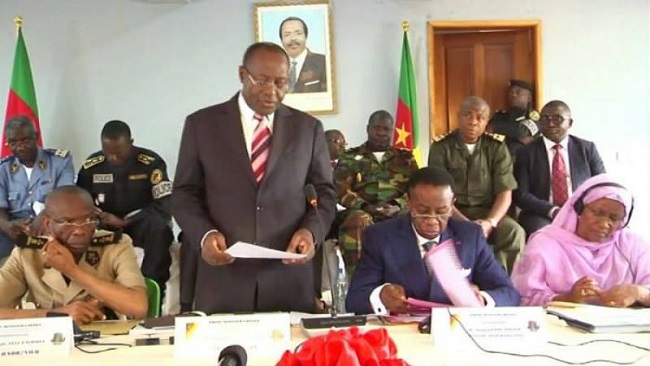
Ad Hoc Committee Chairman announces end to dialogue as ghost town continues in West Cameroon
The head of the so-called Ad Hoc Committee has announced in a press release issued in the French language that negotiations between the Biya Francophone regime and the Cameroon Anglophone Civil Society Consortium have come to an end. The pronouncement came as Southern Cameroonians are observing day-two of the civil disobedience campaign earlier decreed by the Consortium.
The regime had established the Francophone dominated Ad Hoc Interdepartmental Committee to review and propose solutions to the problems identified with respect to the demands of Anglophone teachers. This committee, chaired by Professor Ghogomu Paul Mingo, held two meetings with representatives of striking teachers in Bamenda. The last one took place on Thursday 12 and Friday 13 January.
The Cameroon Anglophone Civil Society Consortium made it abundantly clear to Ghogomu Paul Mingo and his team of inexperienced negotiators that the demands of the Common Law Lawyers and the Anglophone teachers were linked to the marginalization policy instituted by the Francophone regime in Yaounde.
It was evident the Ad Hoc Committee had to fail in its attempt to induce trade unionists to lift their call to strike. In a communiqué released yesterday Monday 16 January 2017, Professor Ghogomu Paul Mingo, announced the end of his mission and blamed West Cameroon leaders for erecting a stone wall during the dialogue process. The light weight political elite from the Bamenda province of Southern Cameroons also accused the new generation of Anglophone leader of taken parents and students hostage for political reasons.
By Rita Akana