
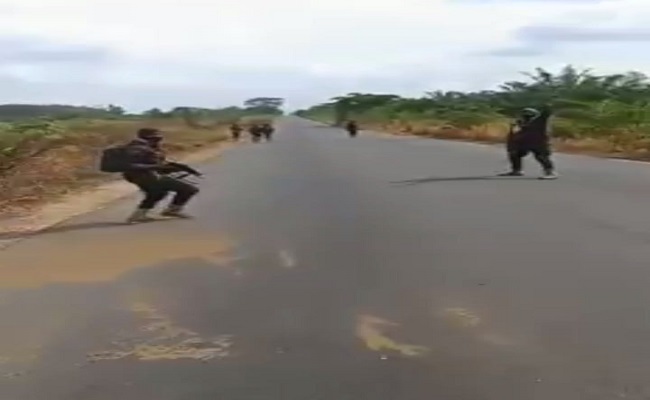
Violence and food prices remain high in Southern Cameroons
Violence against civilians remained high in Cameroon’s North-West and South-West regions in 2025, according to a report prepared in December by the U.S.-based NGO FEWS NET. While the two regions were relatively calmer during the peak of post-election tensions in October, the report points to an intensification of separatist attacks targeting ruling party officials and individuals linked to the electoral process.
FEWS NET notes that even as clashes between Anglophone separatists and government forces declined, separatist fighters increasingly relied on kidnappings for ransom and targeted attacks. These have included assaults on opponents and defectors. The killing of Donga Mantung lawmaker Abe Michael following his abduction is cited as an illustration. The organization adds that although street protests have largely subsided, the political climate remains tense.
Food prices rise above recent norms
On the economic front, FEWS NET links the security situation to a deterioration in market conditions. Conflict-related declines in agricultural production, combined with high transport costs, have kept seasonal food prices well above the five-year average and moderately higher than last year’s levels.
Between October and November, the report records a fresh acceleration in prices. Maize prices rose by 13% to 20%, tubers by 17% to 20%, rice by 6% to 10%, imported frozen fish by 14% to 20%, and wheat flour by 43%.
According to FEWS NET, these increases, which extended into December, are largely driven by market instability, supply chain disruptions, and transport constraints linked to post-election tensions. Domestic availability has also been hit. Household stocks of maize, potatoes, beans, and rice from the December off-season harvest, already limited by the conflict, were further depleted by lockdowns imposed by separatists in September and October. These measures significantly disrupted farming activities and restricted cultivation.
Source: Sbbc


