

Minister Atanga Nji’s shadow over SOBA alumni election
What should have been a straightforward contest for leadership of the Sasse Old Boys Association (SOBA) has taken a troubling political dimension, raising serious questions about the creeping influence of partisan politics, powerful political patrons and the independence of alumni institutions.
According to reports from three credible Cameroon Intelligence Report sources in Yaoundé and Buea, the FCFA 500,000 reportedly contributed by Senator Otte Andrew Mofa to the campaign of Barrister John Kameni in the recent SOBA elections allegedly originated from the Minister of Territorial Administration, Paul Atanga Nji. If these revelations are accurate, they raise questions that go far beyond the amount of money involved. They touch on the integrity of the electoral process, the motivations of political actors and the disturbing possibility that an alumni association is being drawn into the orbit of partisan political interests.
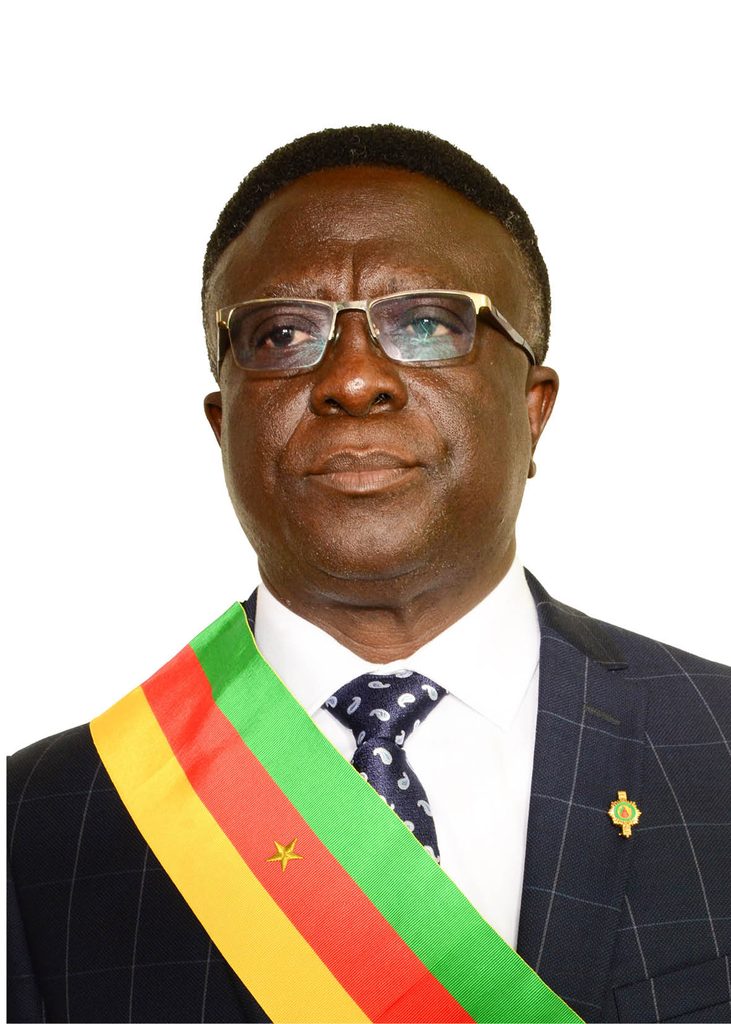
Since when did the presidency of SOBA become a political investment requiring financial sponsorship from powerful figures within the ruling establishment?
SOBA is an alumni association, not a political party, not an electoral constituency, and certainly not an extension of the ruling CPDM’s political machinery. Its leadership ought to be determined by the merit of candidates, their vision for the association, their commitment to the institution and the confidence of fellow alumni—not by the financial muscle or political connections of external benefactors.
The reported financial trail, if substantiated, suggests an uncomfortable reality: that some individuals may have viewed the SOBA election not merely as an opportunity to serve old schoolmates, but as a strategic contest in which political influence could be cultivated, consolidated and deployed. And this is where Paul Atanga Nji’s reported involvement becomes particularly troubling.
As Minister of Territorial Administration, Atanga Nji occupies one of the most politically sensitive positions in the Cameroonian government. His office is deeply associated with the administration of political affairs, electoral processes and the maintenance of the government’s political order. His alleged interest in financing a candidate in an alumni association election therefore invites legitimate scrutiny.
What exactly does the Minister of Territorial Administration stand to gain from the leadership of SOBA? Why would a government minister, or someone acting on his behalf, reportedly channel financial support into an alumni election? What strategic interest could possibly justify such involvement? Is it simply a matter of personal friendship, fraternity or generosity? Or does it reflect a broader political calculation to secure influential voices, networks and institutions within the ruling party’s sphere of influence? These are questions the Cameroonian public—and SOBA members themselves—deserve answers to.
The suspicion that Atanga Nji sought a SOBA leadership sympathetic to the CPDM is not an unreasonable political inference in light of the reported allegations. Alumni associations are not insignificant social formations. They bring together professionals, business leaders, civil servants, politicians, intellectuals and individuals with considerable social capital. Their networks can be influential, their voices consequential and their institutional platforms potentially useful to political actors seeking to reinforce their legitimacy.
A politically aligned leadership of SOBA could conceivably become another avenue through which ruling-party influence is extended into elite social networks. And in a country where President Paul Biya’s continued stay in power has increasingly become a defining political controversy, the possibility that even alumni institutions are being courted, financed or politically aligned to reinforce the ruling establishment should alarm anyone who values institutional independence.
Cameroon cannot afford to have every association, professional body, cultural institution, alumni network and civil society platform reduced to an appendage of partisan politics. The CPDM’s political interests should not be confused with the interests of Sasse College alumni. Nor should the ambitions of political patrons be allowed to overshadow the collective purpose of an institution built on shared educational heritage and fraternity.
The SOBA presidency is not a miniature presidency of Cameroon. It is an office of service. Its legitimacy must derive from the trust of alumni, not the largesse of political benefactors.
If the reported FCFA 500,000 contribution was indeed sourced from Minister Atanga Nji, then Barrister John Kameni and the relevant parties owe SOBA members a clear and credible explanation. Transparency is not an unreasonable demand. It is the minimum standard expected of anyone seeking to lead an association whose credibility rests on the integrity of its members and its electoral processes.
The danger here is not simply that money may have changed hands. The deeper danger is the precedent that such alleged political financing could establish: that alumni elections can be influenced by external political interests, that candidates can become indebted to political patrons and that the independence of SOBA could be compromised by forces whose objectives have little to do with the welfare of Sasse alumni.
SOBA must not become another political battlefield in the CPDM’s campaign to manufacture loyalty, cultivate influence and sustain the status quo. The alumni association belongs to its members. Its leadership must answer to its members. Its mission must remain anchored in fraternity, institutional development, educational advancement and the welfare of the Sasse community.Not the ambitions of ministers. Not the calculations of political financiers. And certainly not the imperatives of a ruling party seeking to perpetuate its grip on power.
If the allegations surrounding this reported FCFA 500,000 contribution are true, they represent a troubling attempt—whether deliberate or accidental—to inject partisan political influence into an institution that ought to stand above party politics.
SOBA members must insist on transparency, demand accountability and defend the independence of their association. When political money begins to dictate the direction of alumni institutions, the question is no longer merely who won the election. The question becomes: Who really owns the institution and whose interests will its leadership serve?
By Soter Tarh Agbaw-Ebai


