
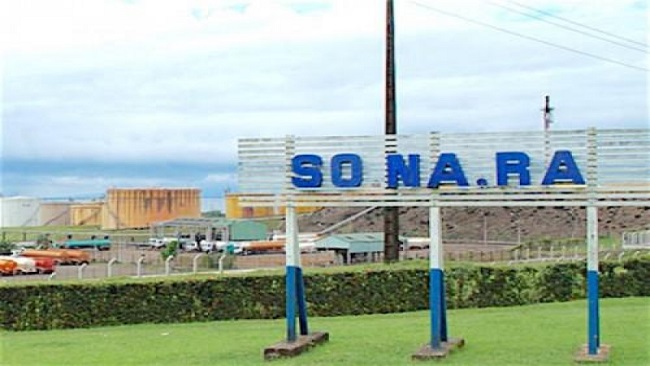
Dion Ngute admin revises Sonara rebuild plan, raising cost to CFA700 billion
Seven years after a fire crippled the National Refining Company (Sonara) on May 31, 2019, Cameroon is no longer looking to simply restore the country’s only refinery. The government now plans to rebuild and modernize the facility under a CFA700 billion project, marking a major shift in both scope and ambition.
The new phase officially began on June 29 with an international market consultation in Yaoundé. The process has brought together engineering and construction firms, oil companies, financial institutions, investment banks, and specialized advisory firms.
According to the Ministry of Finance, the market sounding exercise is intended to gather feedback on the project’s technical, financial, legal, and contractual framework before the government moves to the next stage. The objective is to refine the project structure and make it more attractive to investors and qualified operators.
Once the consultation ends, the government plans to launch a call for expressions of interest, shortlist bidders, hold discussions with selected candidates, and then choose the private partner that will deliver the project.
The project, however, has evolved well beyond repairing the facilities damaged in the 2019 fire. According to the Ministry of Finance, it has been redesigned to include a full modernization of the refinery.
A Bigger Bet on Domestic Crude
Under the revised plan, the government intends to build a hydrocracker unit that would allow Sonara to process crude oil produced in Cameroon. The project also includes upgrades to storage facilities and an increase in refining capacity from 2.1 million tons to at least 3.5 million tons a year.
In effect, the government has merged two projects that had long been treated separately: rebuilding Sonara after the fire and carrying out the second phase of the refinery’s modernization program, which had been announced years before the 2019 disaster.
That change significantly expands the scale of the investment. What began as a reconstruction project has become a broader industrial upgrade with much larger financial, operational, and strategic implications.
The revised scope has pushed the project’s estimated cost to CFA700 billion, far above the CFA250 billion initially earmarked to repair or replace facilities destroyed in the fire. More importantly, it reflects the government’s broader ambition to transform Sonara into a modern refinery that can play a larger role in Cameroon’s oil value chain rather than simply restore lost refining capacity.
One major question, however, remains unanswered: who will ultimately pay for the project? While the government has outlined its preferred contractual structure, it has yet to explain how the financial risks will be shared among the state, Sonara, private investors, and, potentially, consumers.
A DBFM Public-Private Partnership
The market consultation, which ends on June 30, also sheds light on the contractual model the government intends to use.
According to the Ministry of Finance, the project will be developed as a public-private partnership (PPP) under a Design-Build-Finance-Maintain (DBFM) model. Under this arrangement, the private partner will be responsible for designing, building, financing, and maintaining the upgraded refinery.
Unlike the Build-Operate-Transfer (BOT) contracts that Cameroon has used for several infrastructure projects in recent years, the DBFM model leaves Sonara at the center of the project. The Ministry of Finance says the state-owned refinery will retain ownership of all the facilities and remain responsible for day-to-day operations throughout the life of the contract.
On paper, the structure allows the government to keep control of a strategic national asset while relying on private partners to finance, build, and maintain the infrastructure. It also raises several key questions. Will the financing be backed by sovereign guarantees? Will future payments come from Sonara’s revenues or the state budget? How long will the contract run? And what revenue streams will be used to cover the long-term maintenance costs of such a large industrial facility?
Those questions matter because Sonara plays a critical role in Cameroon’s economy. Since the 2019 fire halted its refining operations, the country has become increasingly dependent on imported refined petroleum products.
A Second Refinery Changes the Equation
The Sonara overhaul is also moving forward in a changing industrial landscape. A second refinery is already under construction in the Kribi industrial-port zone in the South Region. The project is being developed by the National Hydrocarbons Corporation (SNH), Cameroon’s state-owned oil company and one of Sonara’s shareholders.
According to previous announcements, the Kribi refinery is expected to reach a capacity of 30,000 barrels per day by 2028, with an initial output of 10,000 barrels per day targeted for the second half of 2026.
In a country with a relatively small domestic fuel market, the development of two state-backed refineries inevitably raises questions about how the projects will complement each other.
SNH has rejected suggestions that the two facilities will compete. The company says it has no intention of challenging the country’s historic refinery and has reaffirmed its willingness to provide technical, industrial, and financial expertise for Sonara’s reconstruction and modernization once the government formally launches the project.
That position is meant to ease concerns about duplicated infrastructure, but it does not settle the broader debate. Once completed, the upgraded Sonara refinery and the new Kribi facility will both have to fit within the same national refining strategy. Decisions will have to be made on the type of crude each plant will process, available production volumes, target markets, storage capacity, port logistics, energy security, and the financial sustainability of both assets.
With its budget now set at CFA700 billion, the Sonara project has entered a new phase. The goal is no longer simply to repair the damage caused by the 2019 fire. Cameroon is now betting on a much broader transformation—one that aims to rebuild its historic refinery, process more locally produced crude, reduce dependence on imported refined fuels, and develop a national refining industry without creating costly overlaps between its two flagship projects.
Source: Business in Cameroon


