A man was shot and killed on November 4 by gendarmes trying to clear a path through heavy traffic for the president of Chad’s National Assembly, Haroun Kabadi. After the tragedy, many Chadians took to social media to express outrage at Kabadi’s security detail, particularly because this isn’t the first time they’ve been involved in a similar incident.
On November 6, the High Court of N’Djamena opened an investigation into the death of Bonheur Manayal Mateyan, a 34-year-old motorcyclist, who had been killed two days before by shots fired by Kabadi’s security detail on Pascal Yoadimnadji Avenue in N’Djamena. Four soldiers from Kabadi’s security detail have been arrested for “murder and complicity to murder”, according to the public prosecutor.
But what exactly happened? Emmanuel Béasngar, a close friend of Mateyan’s, wasn’t there when it happened. However, after his friend’s death, he spoke to many eyewitnesses.
“We need to make an example of these murderers”
Bonheur was my childhood friend — we’ve been friends for more than 20 years. He lived in the same neighbourhood as me. He drove a motorcycle taxi. On Monday, he gave a local girl a lift into town. Around 6pm, the president of the National Assembly’s convoy came down Pascal Yoadimnadj Avenue.
But it was rush hour and so there was a lot of traffic on the road. The convoy had sirens going, but they weren’t enough to free up the road, which is just barely large enough for traffic to go in two directions. So Kabadi’s security detail fired a few shots to frighten people off the road.
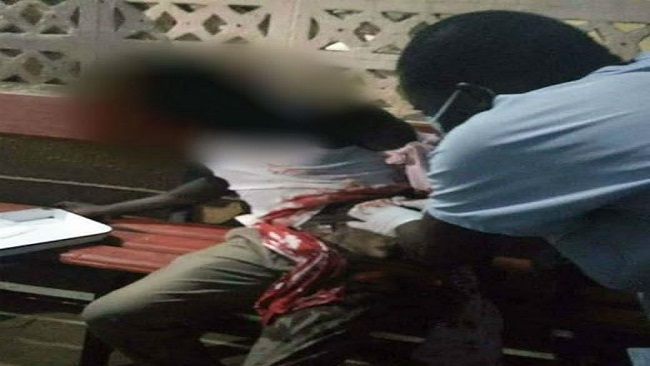
Even though Bonheur had stopped on the side of the road to let the convoy pass, he was hit by two of these gunshots. First, he was shot in the stomach and then in the back. When I heard what had happened, I came immediately. We rushed him to the hospital but he had lost too much blood already. He died from his wounds.
During a plenary session at parliament, Kabadi said that his security detail had to fire shots in the air because a vehicle “had tried to break into the convoy twice. Unfortunately, the bullet must have hit a [telephone] pole and come back to hit a passerby”.
Béasngar isn’t satisfied by this explanation.
I’m angry. Something like that shouldn’t happen in the middle of a town. If the gendarmes wanted target practice, it shouldn’t be on civilians. Bonheur has a wife and three children. The youngest is just two weeks old. Who is going to take care of them? We want real justice for Bonheur. We need to make an example of these murderers.
“Bonheur didn’t pose any danger to the convoy”
On social media, people expressed shock and outrage over Mateyan’s killing. Some Chadians spoke out against the culture of impunity surrounding the security forces. One local journalist, who asked to remain anonymous, explained:
This is the second time that Kabadi’s security detail has been involved in this kind of incident. Back in July 2018, security forces shot a man under similar circumstances. The man was hospitalised but, thankfully, he survived his injuries. Usually, soldiers only have the right to shoot if the president of the National Assembly’s life is in danger. But Bonheur wasn’t in any way a danger to the convoy.
In a statement published on November 5, the president of the National Assembly, who is a member of the ruling party the Patriotic Salvation Movement [‘Mouvement patriotique pour le salut’ or ‘MPS’ in French] admitted that his security detail had “in an attempt to clear a path caused the death of a citizen by gunshot wounds”. Kabadi said he “regretted the death” of a fellow citizen and extended his condolences to Mateyan’s friends and family.
Mustapha Youssouf Ramadan
L’Assemblée nationale du Tchad réagit après la mort à fleur d’âge du citoyen Matebaye Mayanel Bonheur dans la l’après midi du 04 Novembre en plein N’djaména.
Twitter user Mustapha Youssouf Ramadan tweeted (in French): Chad’s National Assembly reacts to the death of Matebaye Mayanel Bonheur [sic] in the prime of his life on the afternoon of November 4 in the middle of N’djaména.
Even though members of Kabadi’s security detail were arrested, Béasngar doesn’t think they will be held accountable for their actions. The journalist who spoke to the FRANCE 24 Observers team added: “We’re talking about soldiers here who have protection. They will simply pretend to punish them.”
“If we aren’t able to establish who fired the shot, the National Assembly will be considered responsible, the public prosecutor told French news agency Agence-France Presse. That’s what happened with the previous incident involving Kabadi’s bodyguards. That was settled amicably by the National Assembly in July 2018.
Congolese forces have said on Saturday they have killed 25 Takfiri militants since launching an offensive against them late last month in an eastern region also struggling with an Ebola outbreak.
Seven soldiers from the Democratic Republic of Congo had also died since the campaign to root out the Allied Democratic Forces (ADF) militia began on October 30, the general in charge of the operation, Jacques Nduru, told Reuters.
He said the army had seized four of the group’s positions around the eastern city of Beni in North Kivu province. Regular militia attacks have hampered efforts to contain Ebola across the area.
The ADF, originally a Ugandan rebel group, has been operating along the Congo/Uganda border for more than two decades. It is one of a number of armed factions active in east Congo long after the official end of a 1998-2003 war.
Several of ADF’s attacks have been claimed by the Daesh Takfiri terrorist group, but the extent of their relationship remains unclear.
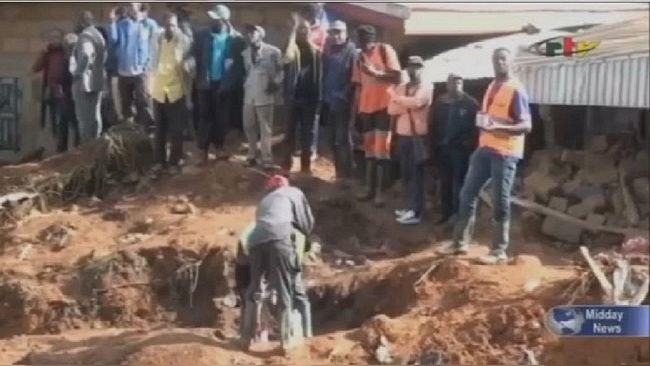
Cameroonian President Paul Biya on Friday declared a national day of mourning on Saturday to honor 43 people killed by a landslide in the western city of Bafoussam last week.
“Flags will be flown at half-mast throughout the country, as well as at Cameroonian embassies and consular offices abroad,” Biya said in a statement released Friday night.
Forty-three people were confirmed dead, over 150 families affected and several others reported still missing after the landslide caused by heavy downpour lashed Gouatchie 4 neighbourhood of Bafoussam on Oct. 28.
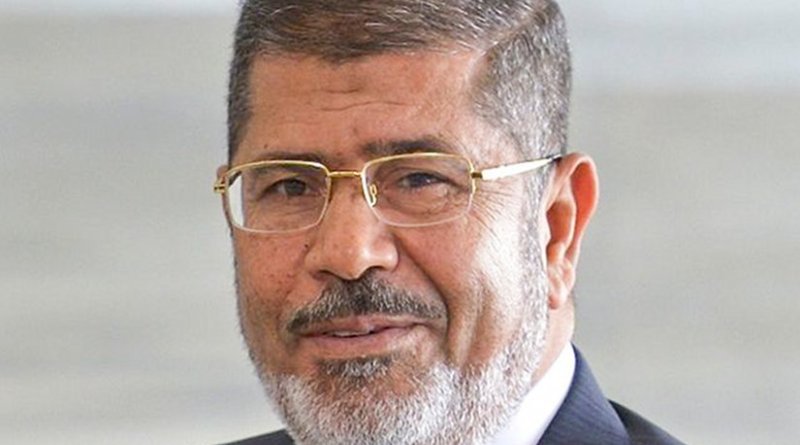
The “brutal” prison conditions of Egypt’s former president, Mohamed Morsi, may have directly led to his death, according to a report by UN experts.
“Dr. Morsi was held in conditions that can only be described as brutal, particularly during his five-year detention in the Tora prison complex,” a panel of UN experts – including Agnes Callamard, special rapporteur on extrajudicial, summary or arbitrary executions – and the UN Working Group on Arbitrary Detention reported on Friday.
“Dr. Morsi’s death after enduring those conditions could amount to a state-sanctioned arbitrary killing.”
“The authorities were warned repeatedly that Dr. Morsi’s prison conditions would gradually undermine his health to the point of killing him. There is no evidence they acted to address these concerns, even though the consequences were foreseeable,” the experts said.
In a joint statement on Friday, Egypt’s former minister of Planning and International Cooperation, Amr Darrag, called the report “a significant step forward in holding such regimes accountable for their actions”.
Senior members of Morsi’s former government also welcomed the report, calling on the UN to extend its investigation to include the ‘suspicious circumstances’ surrounding the death of Morsi’s son, Abdullah, who reportedly died of a heart attack on September 4.
Abdullah Morsi, 25, had been in touch with the UN to formally complain about his father’s death just before he died.
The UN experts warned that thousands more prisoners in Egypt were enduring similar conditions, and their ‘health and lives’ may also be at severe risk.
“We have received credible evidence from various sources that thousands more detainees across Egypt may be suffering gross violations of their human rights, many of whom may be at high risk of death,” the statement said. “This appears to be a consistent, intentional practice by the current Government of President Abdel-Fattah El-Sisi to silence dissenters.”
Egypt’s former President Morsi
The UN experts further called on the Egyptian government to put an end to state-sponsored practices that violate “the right to life, the right not to be subjected to arbitrary detention, the right not to be subjected to torture or ill-treatment, the right to due process and a fair trial, and adequate medical care”.
Morsi, a senior figure in the Muslim Brotherhood organization, was Egypt’s first democratically-elected president after the 2011 revolution, but he was deposed following a military coup led by Abdel Fattah el-Sisi in July 2013.
He had been serving a 20-year prison term on charges of ordering the arrest and torture of protesters, a 25-year jail term on charges of passing intelligence to Qatar and a three-year term for insulting the judiciary.
Morsi suffered from medical neglect during his incarceration as well as poor jail conditions.
The 67-year-old former president fainted during a court session on June 17 and died afterwards.
The Muslim Brotherhood has labeled Morsi’s death a full-fledged murder.
Last year, a report by a panel of UK legislators and attorneys warned that the lack of medical treatment could result in Morsi’s “premature death.”
The panel said that Morsi was being kept in solitary confinement for 23 hours a day, which under UN guidelines, would qualify as torture.
During the past few years, Sisi has faced growing criticism about his way of treating dissidents, especially those linked to the Muslim Brotherhood movement.
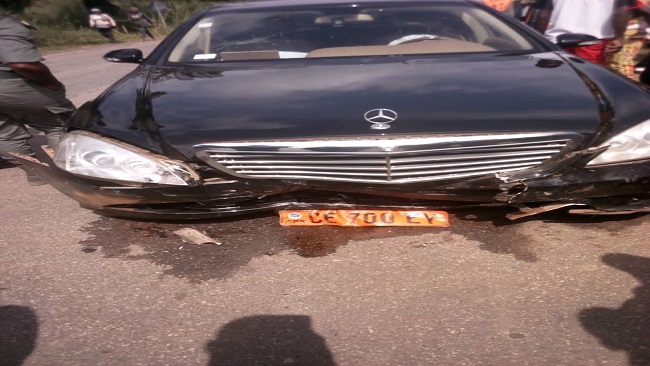
In a remote locality not far away from Mbalmayo known as Nkol Metet, the notorious former French Cameroun defense minister, Remy Ze Meka has reportedly killed at least 3 civilians and injured dozens while driving at lightning speed.
French Cameroun Regional military officials have held Mr Remy Ze Meka in an undisclosed location in Nkol Metet convinced that the villages would lynch him.
It was said that Remy Ze Meka’s subsequent disarray made him a less lethal relevant force, no longer needed by the ruling CPDM crime syndicate.
But his action today in Nkol Metet has made it clear the former defense minister remains a force to be reckoned with, at least by helpless civilians.
One eye witness who spoke to Cameroon Concord News said it was the bloodiest car accident in Nkol Metet which should have gone unreported because of the sheer remoteness of the area.
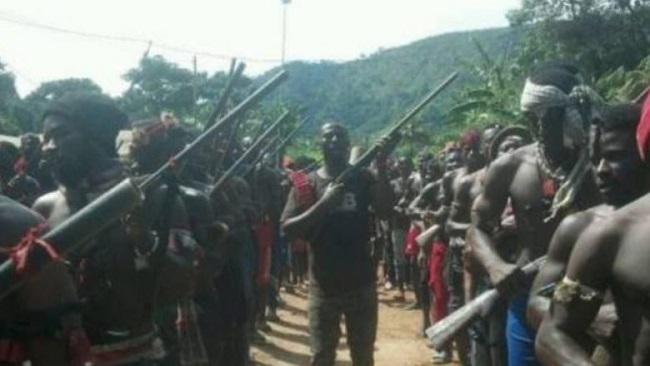
The head of the Southern Cameroons Intelligence Agency says Ambazonia Restoration Forces will teach the French Cameroun regime a lesson if provided with modern war equipment. In a recent briefing with Vice President Dabney Yerima on the state of the revolution, the Ambazonia Intel chief told the exiled cabinet on Sunday that the French Cameroun enemy is waging a war against Southern Cameroonians but Restoration Forces in Ground Zero are ready to face it with their men, society and capacity.
He highlighted that the Biya Francophone regime was harboring delusions thinking it could defeat Southern Cameroons Self Defense Forces within a very short period. He pointed out that Yaoundé was now aware that the Ambazonia resistance movement has the capacity to paralyze the enemy.
Also speaking during the Sunday cabinet meeting was Vice President Dabney Yerima who praised the intelligence chief for making the trip to Ground Zero. Comrade Yerima stated that Southern Cameroonians will never take it at ease with an enemy that threatens their existence, stressing that Southern Cameroonians all over the world should continue to invest in the Amba Bonds Project to free the homeland.
Cameroon Intelligence Report understands the French Cameroun army is fully stretched and any decisive and swift action from Southern Cameroons Restoration Forces who have remained fairly capable and utterly determined irrespective of the internal divisions that have rocked the Interim Government will send La Republique parking out of the Federal Republic of Ambazonia.
The Ambazonia leaders unanimously agreed that Southern Cameroonians will not compromise on even one iota of the Ambazonia quest for independence.
About 20,000 Southern Cameroonians, most of them civilians have lost their lives during French Cameroun’s three year war on Ambazonia. However, there are under-the-table talks in Yaoundé that the French Cameroun military had effectively lost the war by failing to achieve its aim.
The International Criminal Court sentenced Congolese rebel chief Bosco “Terminator” Ntaganda to 30 years in jail for war crimes and crimes against humanity on Thursday, the highest ever penalty issued by the tribunal.
Ntaganda was convicted in July of offences including murder, sexual slavery and using child soldiers in a mineral-rich region of the Democratic Republic of Congo in the early 2000s.
Most of the charges against Rwandan-born Ntaganda, 46, related to a series of gruesome massacres of villagers carried out by his fighters.
“Murder was committed on a large scale,” presiding judge Robert Flemr said, adding that the Hague-based court had taken the “particular cruelty” of some of Ntaganda’s actions into account.
“The overall sentence imposed on you shall therefore be 30 years of imprisonment.”
But while the judges gave him the maximum sentence allowed by the ICC in terms of the number of years, they said that “despite their gravity” his crimes did not warrant a full-life prison term.
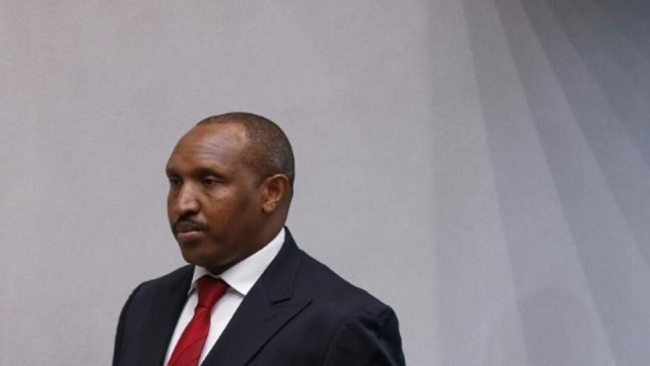
Ntaganda, dressed in a blue suit and shirt and wearing a red tie, showed no emotion as the sentence was passed in the high-security courtroom.
An ICC spokesman confirmed it was the heaviest ever sentence handed down to date by the court, which was set up in 2002 to try the world’s worst crimes.
Ntaganda has appealed against his conviction earlier this year on 13 counts of war crimes and five of crimes against humanity—which saw him become the first to be convicted by the ICC of sexual enslavement.
‘Held to account’
Human Rights Watch welcomed the prison term.
“Bosco Ntaganda’s 30-year sentence sends a strong message that even people considered untouchable may one day be held to account,” said Ida Sawyer, deputy director of Human Rights Watch’s Africa division.
“While his victims’ pain cannot be erased, they can take some comfort in seeing justice prevail.”
A refugee from the 1994 genocide of Tutsis in Rwanda, Ntaganda emerged as a ruthless driver of ethnic Tutsi revolts that subsequently convulsed neighbouring DRC.
Judges said Ntaganda was a “key leader” of the Union of Congolese Patriots rebel group and its military wing, the Patriotic Forces for the Liberation of Congo (FPLC), in the DRC’s volatile Ituri region in 2002 and 2003.
More than 60,000 people have been killed since the violence erupted in Ituri, according to rights groups, as militias battle each other for control of mineral resources.
The court heard fearful villagers dubbed him “Terminator”, after the Arnold Schwarzenegger film about a merciless robotic killer, during two bloody operations by Ntaganda’s soldiers against civilians in rival villages in 2002 and 2003.
Fighters loyal to him carried out atrocities such as a massacre in a banana field behind a village in which at least 49 people including children and babies were disembowelled or had their heads smashed in.
No mitigating factors
Ntaganda received a series of sentences ranging from eight to 30 years, with ICC rules saying that the overall prison term must reflect the highest individual sentence.
He got 30 years for murder and attempted murder, with judges saying he was directly guilty of the murder of a Catholic priest and indirectly responsible for many others by directing the military offensives. He also received a 30-year sentence for persecution.
Ntaganda further received 28 years for the “systematic” rape of “women, girls and men” including girls aged nine and 11; a sentence of 14 years for the sex slavery of child soldiers recruited by his group; and 12 years for the sexual enslavement of civilian children.
Judges said they found no mitigating factors, despite defence arguments that he was himself a victim of the Rwandan genocide.
Ntaganda—known for his pencil moustache and a penchant for fine dining—said during his trial that he was a “soldier not a criminal” and that the “Terminator” nickname did not apply to him.
After the Ituri conflict, Ntaganda was integrated into the Congolese army and was a general from 2007 to 2012, but then became a founding member of the M23 rebel group in a new uprising against the government.
In 2013 Ntaganda became the first ever suspect to surrender to the court, walking into the US embassy in the Rwandan capital Kigali and asking to be sent to the Netherlands.
Ntaganda is one of five Congolese warlords to have been brought before the ICC, and his former FPLC commander Thomas Lubanga was sentenced to 14 years in jail in 2012.
His conviction was seen as a boost for the ICC after several high-profile suspects walked free. The court has also been criticised for mainly trying African suspects.
US President Donald Trump has been ordered to pay $2 million to settle a lawsuit concerning a New York charity in his name.
The New York-based Donald J. Trump Foundation was founded by Trump in 1988 to donate the proceeds from his book Trump: The Art of the Deal to charitable causes.
However, records show that Trump began to illegally solicit donations for the Foundation starting as early as 1989, and then using the fund for his personal gain.
Trump’s breach of trust
Justce Saliann Scarpulla of the state Supreme Court in Manhattan found Trump guilty of breach of trust and misappropriation of funds from the charity foundation to advance his 2016 campaign.
“Mr. Trump’s fiduciary duty breaches included allowing his campaign to orchestrate the fundraiser, allowing his campaign, instead of the Foundation, to direct distribution of the funds, and using the fundraiser and distribution of the funds to further Mr. Trump’s political campaign,” she wrote.
Justice Scarpulla ordered Trump on Thursday to pay $2 million to eight non-profit charities.
The $2 million is expected to go to Army Emergency Relief, the Children’s Aid Society, City Meals-on-Wheels, Give an Hour, Martha’s Table, the United Negro College Fund, the United Way of the National Capital Area and the United States Holocaust Memorial Museum.
“The court’s decision, together with the settlements we negotiated, are a major victory in our efforts to protect charitable assets and hold accountable those who would abuse charities for personal gain,” attorney general, Letitia James, said in a statement.
Donald Trump Jr, Eric Trump and Ivanka Trump – who were also directors of the Trump Foundation – are required to undergo mandatory training “on the duties of officers and directors of charities”, James noted.
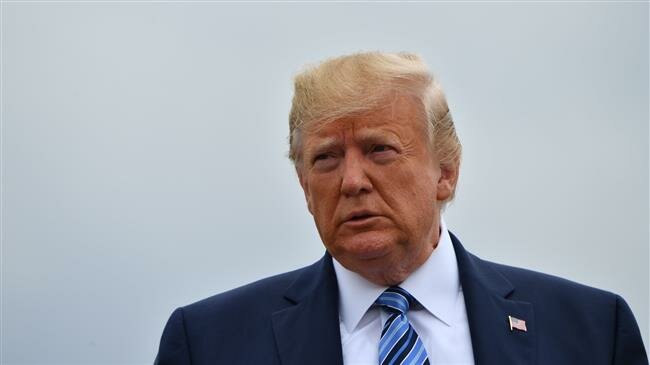
(L-R) Donald Trump Junior, Ivanka Trump and Eric Trump listen to their father, US President Donald Trump give a joint press conference at the Foreign and Commonwealth office in London on June 4, 2019, (Photo by AFP)
“No one is above the law — not a businessman, not a candidate for office, and not even the President of the United States,” James further noted.
The Trump Foundation was shut down in 2018 after it came under scrutiny for being “little more than a checkbook” for Trump who used the its funds for his personal gain, instead of the charitable causes stated in its mission.
International Criminal Court Judges will on Thursday sentence Congolese rebel chief Bosco “Terminator” Ntaganda after he was convicted earlier this year of war crimes and sexual slavery.
Ntaganda faces life in prison for a litany of crimes including directing massacres of civilians in Democratic Republic of Congo’s volatile, mineral-rich Ituri region in 2002 and 2003.
He became the first person to be found guilty of sexual slavery when he was convicted by The Hague-based ICC in July. In total he was convicted on 13 counts of war crimes and five of crimes against humanity.
The Rwandan-born 46-year-old has appealed against his conviction.
“Judges may impose an imprisonment sentence of maximum 30 years or life imprisonment when justified by the extreme gravity of the crime,” the ICC said in a statement announcing his sentencing.
The ICC judges heard separately from victims and witnesses in September to help them decide on the sentence.
The first-ever suspect to voluntarily surrender to the ICC, Ntaganda walked into the US embassy in the Rwandan capital Kigali in 2013 and asked to be sent to the court in the Netherlands.
During his trial Ntaganda was portrayed as the ruthless leader of ethnic Tutsi revolts amid the wars that convulsed the DRC after the 1994 genocide of Tutsis in neighbouring Rwanda.
Judges found that Ntaganda was a “key leader” in terms of planning and operations for the Union of Congolese Patriots rebel group and its military wing, the Patriotic Forces for the Liberation of Congo (FPLC).
– Sexual slavery –
Fighters loyal to him carried out atrocities such as a massacre in a banana field behind a village in which at least 49 people including children and babies were disembowelled or had their heads smashed in.
Ntaganda was also responsible for the rape and sexual slavery of underage girls, and of recruiting troops under the age of 15.
More than 60,000 people have been killed since the violence erupted in Ituri region in 1999 according to rights groups, as militias battle each other for control of scarce mineral resources.
Ntaganda — known for his pencil moustache and a penchant for fine dining — told judges during his trial that he was “soldier not a criminal” and that the “Terminator” nickname did not apply to him.
After the Ituri conflict, Ntaganda was integrated into the Congolese army and was a general from 2007 to 2012, but then became a founding member of the M23 rebel group in a new uprising against the government.
Prosecutors said his decision to hand himself in to the ICC that year was based on self-preservation as he was in danger because of a feud in the group.
Ntaganda is one of five Congolese warlords to have been brought before the ICC, which was set up in 2002 as an independent international body to prosecute those accused of the world’s worst crimes.
Ntaganda’s former FPLC commander Thomas Lubanga was sentenced to 14 years in jail in 2012.
But the ICC has suffered a string of setbacks over recent years with some of its most high-profile suspects walking free, including Ivorian former leader Laurent Gbagbo earlier this year.
It has also been criticised for mainly trying African suspects so far.
An attack on a convoy transporting local employees of Canadian mining company Semafo in Burkina Faso left 37 people dead and 60 wounded on Wednesday, a regional governor said.
Saidou Sanou, the governor of Est Region, said in a statement that the ambush by “unidentified armed individuals” took place on Wednesday morning.
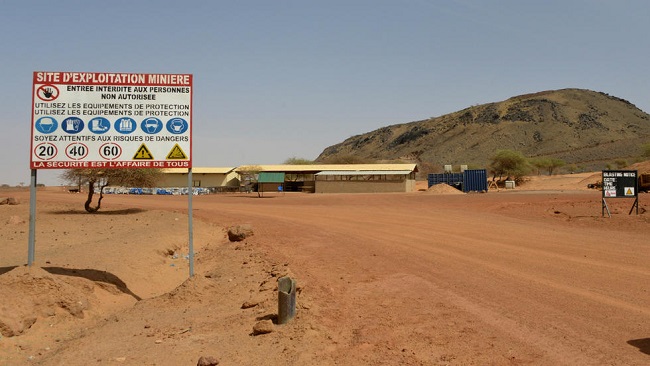
The attack took place between Semafo’s Fada and Boungou mine sites, about 40 kilometres from Boungou, the company said in a statement.
The five buses were being escorted by the military when they were ambushed, resulting in “several fatalities and injuries,” the company added.
Few details were immediately available.
“We are actively working with all levels of authorities to ensure the on-going safety and security of our employees, contractors and suppliers,” Semafo said, while offering condolences to the families of the victims.
The mine itself, it added, remains secured and its operations have not been affected.
Semafo operates two mines in the West African country, which is battling a jihadist revolt that has claimed hundreds of lives.
This was the third deadly attack suffered by Semafo in 15 months. Two others in August 2018 also targeted vehicles travelling to its mines, and a police vehicle was attacked on the same road between the city of Fada and the Bongou gold mine last December.
‘Armed bandits’
The company blamed “armed bandits” for last year’s attacks, and subsequently reinforced its armed escorts.
Burkina Faso is an impoverished and politically fragile country in the Sahel, and its security forces are badly equipped, poorly trained and underfunded.
The country’s northern provinces have been battling a four-year-old wave of jihadist violence that came from neighboring Mali.
The attacks—typically hit-and-run raids on villages, road mines and suicide bombings—have claimed more than 630 lives nationally, according to an AFP toll.
On Monday, an attack on a base in northern Burkina Faso killed at least five gendarmes and five civilians.
Nearly 500,000 people have also been forced to flee their homes.


 Mustapha Youssouf Ramadan