
Breaking News
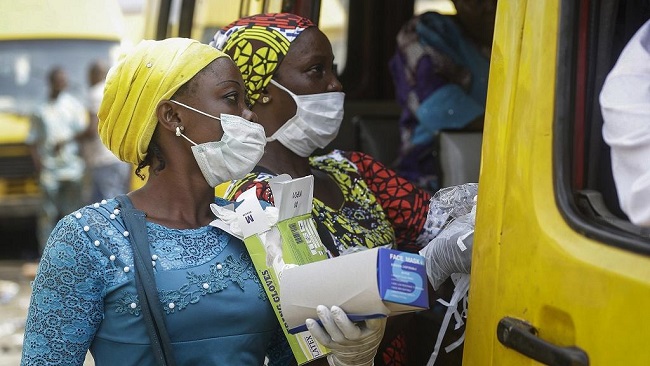
Coronavirus testing rate increasing in Cameroon
Hundreds of cases have been confirmed in Cameroon but health officials fear there may be many more that are still unreported.
Now, it has launched nationwide testing. As healthcare workers in Cameroon race to contain the spread of COVID-19 infections, door-to-door testing is under way in several regions of the country.
Cameroon has deployed 1,200 medical workers in the commercial hub of Douala, the start of a nationwide door-to-door screening program
Al Jazeera
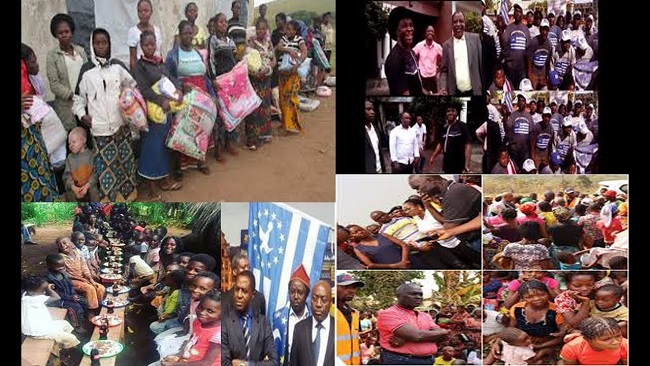
Ambazonia Humanitarian Crisis: French Cameroun Regime Told To Allow Aid Access Amid Pandemic
Cameroon’s government should ensure that its response to the COVID-19 pandemic respects rights and prioritizes support for those who need it most, including in violence-affected areas. The authorities should allow unhindered access to aid organizations in conflict zones to deliver life-saving assistance.
Health officials have confirmed over 800 cases of COVID-19 and 10 deaths as of April 10, 2020, the majority in the cities of Yaoundé and Douala. The actual number of cases is most likely higher since testing is limited. The country has only four testing laboratories, three of them in Yaoundé, the capital.
“The COVID-19 pandemic is unfolding at a time of crisis across Cameroon, particularly in the Anglophone regions and in the country’s Far North region,” said Ilaria Allegrozzi, senior Africa researcher at Human Rights Watch. “More needs to be done to ensure that those at greatest risk and those who are fleeing fighting are protected from infection and able to get care if they become sick.”
In addition to crucial steps to prevent COVID-19, a broader humanitarian response is critical to saving lives in the Far North region, the heart of the Boko Haram insurgency, and in the two Anglophone regions, where armed separatist groups are fighting for independence. Ongoing attacks by Boko Haram and separatists and military operations in these areas have already severely restricted access for aid agencies and their capacity to assess needs and deliver assistance to the people most in need.
On April 5, Boko Haram fighters stormed Amchide, Far North region. Three witnesses told Human Rights Watch that two teenage suicide bombers detonated their explosives in the center of the town, killing six men on the spot and injuring 13 others, three of whom later died. Another man was shot in a confrontation between Boko Haram fighters and the military, a resident said.
Since late 2013, the Boko Haram conflict in the Far North has caused about 300,000 people to flee their homes and has left 1.9 million in need of assistance.
In the English-speaking regions, violence is also ongoing despite the call for a COVID-19 ceasefire by a separatist group, Southern Cameroons Defence Forces (SOCADEF), on March 26. The UN secretary-general’s spokesperson welcomed the move, urging other groups “to do the same thing.” So far, the group, which operates in Fako and parts of the Lebialem divisions in the South-West region, is the only separatist group to have stopped fighting because of the pandemic.
At least 15 separatist groups operate in the North-West and South-West regions. In areas of the South-West region and across the North-West region, violence is continuing and military operations are being carried out. On March 31, gendarmes killed four civilian men in the village of Okoyong, Manyu division, South-West region. Four witnesses told Human Rights Watch that gendarmes shot them in front a shop. One witness said: “The gendarmes were looking for Amba boys [armed separatists] but it has been over one year that Amba boys left our village [and] these men were construction workers.”
To prevent the spread of COVID-19, the government has suspended flights by aid groups, jeopardizing their operations. The head of an international humanitarian organization based in Cameroon told Human Rights Watch: “Since over three weeks, humanitarian flights have been grounded. UN agencies and non-governmental organizations continue to ask the government to resume them. These flights are key to reach the most vulnerable people living in remote areas. With the virus rapidly spreading, this is exactly the time when the Cameroon’s government needs to facilitate our work.”
In an April 8 news release, the United States Embassy said that Cameroon’s government should allow the UN Humanitarian Air Service to resume its flights and allow aid workers and medical supplies “to assist people in need and fight COVID-19.”
In the North-West and South-West regions, health facilities have been badly affected by the violence, exacerbating a situation in which the hospitals, like many across the country, lack capacity and equipment. According to the UN children’s agency, UNICEF, only 34 percent of health facilities are functional in the Anglophone regions. Since late 2016, many health facilities have been shut down, attacked, or burned. Medical staff has been assaulted, threatened, or forced to flee, depriving people of access to medical care.
The Cameroon government has taken steps to contain the spread of COVID-19, including shutting schools and universities, closing borders, banning mass gatherings, encouraging people to follow hygiene rules, and creating a help line. Medical staff, however, have told Human Rights Watch of their concerns that the pandemic is straining the resources of an already fragile health care system.
A doctor working in Bamenda, North-West region, told Human Rights Watch: “I worry the spread of the virus in the North-West region might have catastrophic consequences. Hospitals lack basic equipment. There are only three ventilators in the whole region and nearly no isolation-designated spaces in hospitals.”
Even in major urban centers like Yaoundé and Douala, hospitals are ill-prepared to respond to the pandemic. A doctor in Douala told Human Rights Watch: “There are less than 10 ventilators in the whole city. We are having challenges in treating patients with acute respiratory distress.”
Instead of improving its pandemic response, the government seems more concerned with silencing free speech, Human Rights Watch said. On April 3, an opposition party leader, Maurice Kamto, called on Cameroonians to work together in response to government inaction. The police stormed the premises of Equinoxe TV in Douala late that day, threatening to arrest journalists if they aired Kamto’s declaration. Efforts should be focused on critical measures, such as health care and protecting health care workers, not threatening those who question the government’s response, Human Rights Watch said. “Cameroon’s government should accelerate its response to COVID-19, expand access to testing, and make sure those affected by violence, including the displaced, are protected and have access to care,” Allegrozzi said. “If the government doesn’t take preventive steps, shortages of goods, including food and non-food items, water, shelter, and health care could have a devastating impact on people who are already vulnerable.”
Source: Human Rights Watch
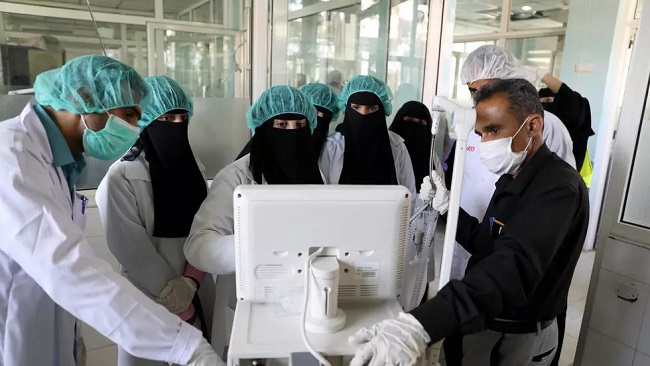
World coronavirus deaths surpass 100,000 as billions remain under lockdown
The global coronavirus death toll topped 100,000 as Easter weekend celebrations around the world kicked off in near-empty churches with billions of people stuck indoors to halt the pandemic.
Extraordinary measures from New York to Naples to New Delhi have seen businesses and schools closed in a desperate bid to halt the virus’s spread, and the IMF has warned that the world now faces the worst economic downturn since the Great Depression.
More than 102,000 people have died of COVID-19 with 1.7 million infections detected globally, according to a Johns Hopkins University tracker, with nearly 70 percent of the fatalities in Europe.
The United States, now the pandemic’s epicentre, became the first country to record more than 2,000 virus deaths in one day and is closing in on Italy’s 18,849 fatalities — currently the highest national figure.
With more than half a million reported infections, the United States already has more coronavirus cases than anywhere else in the world.
President Donald Trump, however, said that with the US infection trajectory “near the peak” and social distancing working well, he was considering ways to re-open the world’s biggest economy as soon as possible.
He acknowledged the risk of higher death tolls if businesses restart too soon.
“But you know what? Staying at home leads to death also,” Trump added, pointing to the massive economic suffering for millions of Americans.
It is unclear when that will be possible, with New York Governor Andrew Cuomo saying millions in the state — the hardest hit in the country — will have to be tested before it can reopen.
The World Health Organization has warned that prematurely lifting lockdown restrictions — affecting more than half the planet’s population — could spark a dangerous resurgence of the disease.
Eerie emptiness on Easter
Easter celebrations that would normally see churches packed with parishioners were replaced by an eerie emptiness on Friday.
Even hallowed traditions have been revamped — Pope Francis will livestream his Easter message from the seclusion of his private library.
“We have to respond to our confinement with all our creativity,” the pontiff said. “We can either get depressed and alienated… or we can get creative.”
Worshippers in Germany embraced social distancing orders to celebrate Good Friday at a drive-in service in Dusseldorf.
“It was a sad feeling at first,” Catholic priest Frank Heidkamp told AFP, as hundreds gathered in a parking lot.
In Muslim-majority Pakistan, the Christian underclass is facing unemployment because of the pandemic this Easter, and many are wondering how they will survive.
“My kids asked me for new Easter dresses and shoes but I have told them we are not going to have Easter this year,” said Aamir Gill, a cleaner who was fired without severance days after the virus crisis took hold in Pakistan.
‘Deadly resurgence’
More than four billion people are confined to their homes as governments worldwide have imposed never-before-seen measures to halt the virus, which first emerged late last year in central China.
Like Trump, governments in Europe are under pressure to strike a balance between keeping people safe and keeping already battered economies stable.
“Lifting restrictions too quickly could lead to a deadly resurgence,” WHO chief Tedros Adhanom Ghebreyesus said Friday.
Some countries, especially in Asia, are worried about a possible second wave of infections imported from travellers as life creeps back to normal.
And while President Trump has discussed a rapid return to economic stability, the US government’s top infectious disease specialist Anthony Fauci said that despite signs of progress, “this is not the time… to be pulling back at all” on social distancing efforts.
Glimmers of hope
Glimmers of hope may be emerging in some countries.
Spain, the third-hardest-hit country, saw its lowest 24-hour toll in 17 days, after Prime Minister Pedro Sanchez said the “fire started by the pandemic is starting to come under control”.
And the daily rises in new infections in hardest-hit Italy have slowed dramatically.
Still, the Italian government said it would extend lockdown orders until May 3.
In Britain — where the government has resisted calls to ease lockdown measures — spirits were lifted on Friday when virus-stricken Prime Minister Boris Johnson showed signs of recovery after three days in intensive care.
“The prime minister has been able to do short walks, between periods of rest,” a Downing Street spokesman said.
Fears of catastrophe
The pandemic has shaken the global economy, and the International Monetary Fund — which has $1 trillion in lending capacity — said it was responding to calls from 90 countries for emergency financing.
G20 energy ministers, meanwhile, pledged to work together to ensure oil market stability after major oil producers agreed to cut output.
A dramatic slump in oil demand, worsened by a Saudi-Russia price war, has sent prices crashing to near two-decade lows in recent weeks.
In much of the developing world, there are fears the worst is still to come.
War-torn Yemen, already suffering one of the world’s most acute humanitarian crises, reported its first case.
In Brazil, authorities confirmed the first deaths in Rio de Janeiro’s slums, where overcrowding and poor sanitation have raised fears of a catastrophe.
Source: AFP

Why Dr Fontem Neba is a symbol of the Ambazonia Resistance
The Wedge in our Struggle
My people, there are a number of things the enemy has done to us through these fellows to systematically disrupt our struggle or restoration quest.
- They killed trust in leadership by propping up dishonest guys in our midst. The act of smearing honest people and making them look untrustworthy is by far the deepest cut. Crooks have become our reference point. No wonder, we no longer trust anyone. Those who can drive this struggle have crumbled under the bullets of unverified calumny. So, when a good idea comes from them, we pull up the smear and use the stench to disqualify its proponent, then the bad guy continues to shout “Feeloo ambazoonians”. No plan on how to move forward except bannings and sowing division. Simple tactic!
- Disunity among the leadership, so that no constructive action can be taken against LRC. They only agree when the action will not favour us. See the Swiss initiative. They were already exposing our fighters to the Swiss and pushing everyone into their luggage when the plan leaked and the trip by the LGA chairmen to Switzerland was aborted. That was a massive brainwashing scheme that would have brought our liberation struggle crashing. And they were just happy to go and see Switzerland, not knowing that it was a satanic plot.
- Egotism and the love for money have driven a wedge between us and our goal. Why would someone remind anyone offering to mediate about money owed him by LRC at this time? Why would someone even place a financial precondition for holding talks? Why would someone lie that he has the largest force on the ground and use that to position himself as a power broker before the Swiss? Why would a group of people decide, against expert advice, to sign away to the Swiss their right to a multilateral mediation format? Why would SCian politicians accept Swiss money to go from UK, Canada to the US advertising the Swiss initiative to the exclusion of the European institute for peace (an EU funded organisation)? These questions beg for answers.
- Disrupting fund raising projects is a major scheme to render the struggle bankrupt, apart from embezzlement. Every time a seemingly viable fundraising initiative is laid out, they too will do theirs and distract the public that is already weary of bickering. They cause the public to transfer their stigma on it, and when the momentum dies down, they abandon theirs. See the bonds, the pins and other financial ideas.
- Disinformation and Misinformation of the masses. Using their very loud megaphone, they distort every notion of good. Points 1-4 above have been achieved through the alphabet TV and paid social media activists. Some of them puts out their write-ups using the name of some of these activists in exchange for a fee. They deceive the people at home about non-existent diplomatic moves and breakthroughs and distort international relations concepts. It’s like a veil of darkness cast over our people’s heads.
- The lure of power and the desire to exercise corrupt influence . Even some of the IG converts in the diaspora are easily brainwashed because of the temptation of corruption. Many of them see themselves as an emerging Bulu/Beti clan when we restore our independence. So, they use that to make their communities and families believe that as future ministers and LG chairmen in SC, they will have more benefits and influence than others – greed! Let them show us the blue print or the strategy that will take us to Buea.
- Killing or disarming our own fighters cannot be excused on any grounds. Is it surprising that we have lost more of our elite soldiers to our own bullets than to LRC? After commissioning Nambere to eliminate some of his peers, it was time to do away with him so that all traces could be wiped. But he preferred to surrender to the enemy than to succumb to the bullets of his own people. He confided his ordeal to those who were ready to listen. This is a familiar scenario which the RFs do not yet understand. Many who sensed danger have fled the resistance because they don’t know when the order for their execution will come. Others have been captured because their position was deliberately leaked to the enemy. Who does that? Does the mass execution of the Bui 23 tell us anything?
In all
I have travelled round this country and have met different people who have complained about the manner in which they were robbed in broad day light and lamented the general state of things. They told me how they were harangued into donating thousands of dollars for diplomatic trips which never happened. In others, Ngwa Irene personally went there and collected $12000 cash and when the community asked for a receipt it became a brawl. Some communities have not recovered from the financially induced coma caused by these buccaneers.
I challenge all those hiding in WhatsApp groups or FB, wearing aliases to come to a public debate to explain their plan for the restoration, if there is any, and stop using subterfuge to deceive our people. If you cannot diagnose a disease, then you cannot treat it.
Denying these facts is denying, like LRC, that our people don’t have any problem. “Any man who does not know, and knows that he does not know is willing to learn; teach him. Any man who does not know, and knows not that he does not know is a fool; shun him”. We should now understand why for two years we have been spinning in the same spot and claiming that we are on course. Having run out if arguments, they claim that it is because some people don’t use the name “Ambazonia” and so it affects the struggle. 😫 Lame excuse! With all what is going on, ask yourselves again, are these people truly taking us to Buea or to Golgotha?
Yours in the struggle
Fontem Neba
Scholar & Freedom Fighter
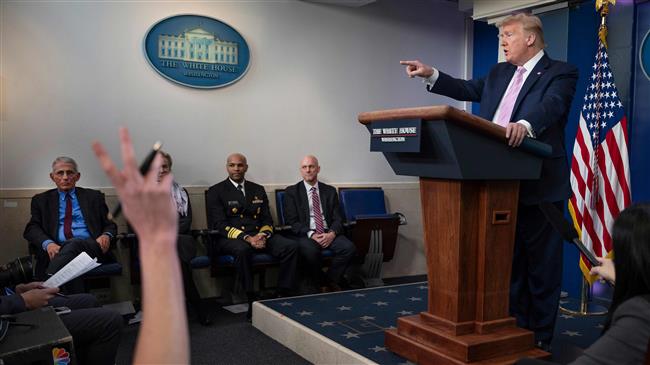
Most Americans disapprove of Trump’s handling of coronavirus crisis
Support for President Donald Trump’s response to the coronavirus crisis has plunged over the past month, with a majority of Americans now disapproving of his handling of the pandemic, according to several new polls.
Some 55 percent of respondents disapprove of his management of the public health crisis, while just 44 percent approve, an ABC News/Ipsos poll released Friday shows.
The survey found that support for Trump’s handling of the Covid-19 pandemic has fallen sharply from the levels he achieved in mid-March, when 55 percent of Americans approved of his response and 43 percent disapproved.
Almost all Americans, 86 percent, report being concerned about being infected by the coronavirus, similar to the 89 percent observed last week, the ABC News/Ipsos poll found.
A Reuters/Ipsos poll this week found approval of Trump’s handling of coronavirus had dipped to 42 percent, down from 48 percent the week before.
Trump’s overall approval rating stands at 46 percent approve and 49 percent disapprove, falling from 48 percent approval in late-March, according to a CNN poll released Thursday.
Concerns over the coronavirus and the plummeting US economy has lowered Trump’s overall approval ratings and could damage his re-election chances in November’s US presidential election.
Some of Trump’s Republican allies and advisers are said to be concerned over his daily press briefings on the pandemic, which Trump has used to propagate lies and disinformation about his response to the pandemic.
“White House allies and Republican lawmakers increasingly believe the briefings are hurting the president more than helping him,” The New York Times reported.

The United States on Friday became the first country to record more than 2,000 coronavirus deaths in one day, with 2,108 fatalities in the past 24 hours, according to the Johns Hopkins University tally.
The US has now recorded over 18,680 deaths and is closing in on the toll of 18,850 dead in Italy, which has seen the most fatalities so far in the global pandemic.
America is also approaching half a million confirmed cases of Covid-19, with 501,000 as of Saturday morning an increase of 35,098 in the past 24 hours.
Globally, there have been nearly 1.7 million confirmed cases, with the death toll topping 100,000 on Friday.
New York state, the epicenter of the COVID-19 pandemic in the US, along with the neighboring states of New Jersey and Connecticut, were recording some of the worst outbreaks in the country, even as public health authorities expressed optimism that the pace of infections appeared to be slowing.
As of Saturday, the New York City metropolitan area had 5,820 coronavirus deaths, accounting for more than half the nation’s fatalities.
Source: Presstv
Lockdown measures in Italy extended until May 3
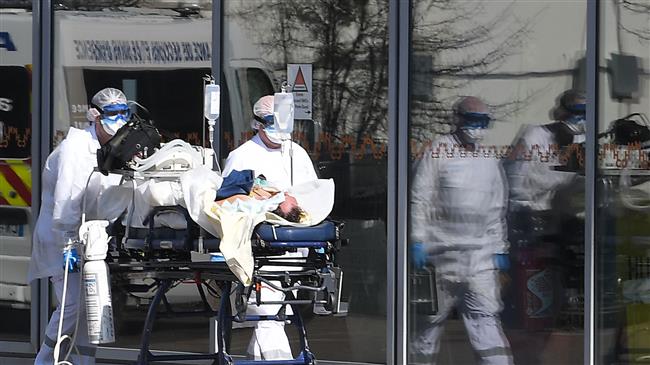
On Friday, Italian Prime Minister Giuseppe Conte issued a new decree that extends the country’s lockdown until May 3 as health officials have confirmed the Covid-19 curve continues to flatten.
Although Italy remains one of the countries with the highest number of infections in Europe, the number of patients hospitalized and those who are in intensive-care has fallen for the fifth straight day.
Officials are urging people not to ease up on the lockdown measures as the restrictions continue to show results. Only a small fraction of businesses that had been shuttered since March 12 will be allowed to re-open on a trial basis from Tuesday.
Also on Friday, Conte reiterated Italy had not given up on its drive for the European Union to issue joint debt to finance a shared response to the economic downturn caused by Covid-19.
But the idea of shared debt is strongly opposed by wealthy countries such as Germany, Austria and Holland.
According to latest polls, the Italian public opinion is increasingly turning against the European Union due to Brussels lack of solidarity.
Italian Prime Minister Giuseppe Conte has warned that the European Union’s existence would be under threat if it could not tackle the coronavirus pandemic and its socio-economic consequences. On April 23, EU leaders are slated to discuss which financial tools shall be adopted to deal with the bruising effects of the Covid-19 crisis.
Source: Presstv

COVID-19: African community targeted in China crackdown
Africans in southern China’s largest city say they have become targets of suspicion and subjected to forced evictions, arbitrary quarantines and mass coronavirus testing as the country steps up its fight against imported infections.
China says it has largely curbed its COVID-19 outbreak but a recent cluster of cases linked to the Nigerian community in Guangzhou sparked the alleged discrimination by locals and virus prevention officials.
Local authorities in the industrial centre of 15 million said at least eight people diagnosed with the illness had spent time in the city’s Yuexiu district, known as “Little Africa”.
Five were Nigerian nationals who faced widespread anger after reports surfaced that they had broken a mandatory quarantine and been to eight restaurants and other public places instead of staying home.
As a result, nearly 2,000 people they came into contact with had to be tested for COVID-19 or undergo quarantine, state media said.
Guangzhou had confirmed 114 imported coronavirus cases as of Thursday — 16 of which were Africans. The rest were returning Chinese nationals.
It has led to Africans becoming targets of suspicion, distrust and racism in China.
Several Africans told AFP they had been forcibly evicted from their homes and turned away by hotels.
“I’ve been sleeping under the bridge for four days with no food to eat… I cannot buy food anywhere, no shops or restaurants will serve me,” said Tony Mathias, an exchange student from Uganda who was forced from his apartment on Monday.
“We’re like beggars on the street,” the 24-year-old said.
Mathias added that police had given him no information about testing or quarantine but instead told him “to go to another city”.
Police in Guangzhou declined to comment when contacted by AFP.
A Nigerian businessman said he was evicted from his apartment earlier this week.
“Everywhere the police see us, they will come and pursue us and tell us to go home. But where can we go?” he said.
– Growing tensions –
Other Africans said the community had been subject to mass COVID-19 testing even though many had not left China recently, and placed under arbitrary quarantine at home or in hotels.
China has banned foreign nationals from entering the country and many travellers are being sent into 14-day quarantines either in their own accommodation or at centralised facilities.
Thiam, an exchange student from Guinea, said police ordered him to stay home on Tuesday even after he tested negative for COVID-19 and told officers he had not left China in almost four years.
He believes the measures are specifically and unfairly targeting Africans.
“All the people I’ve seen tested are Africans. Chinese are walking around freely but if you’re black you can’t go out,” he said.
Denny, a Nigerian trader evicted from his flat on Tuesday, said police moved him to a hotel for quarantine after he spent several days sleeping on the streets.
“Even if we have a negative test result, police don’t let us stay (in our accommodation) and they don’t give a reason why,” he said.
– ‘Crazy fear’ –
The infections in Guangzhou have sparked a torrent of abuse online, with many Chinese internet users posting racist comments and calling for all Africans to be deported.
Last week a controversial cartoon depicting foreigners as different types of trash to be sorted through went viral on social media.
“There’s just this crazy fear that anybody who’s African might have been in contact with somebody who was sick,” said David, a Canadian living in Guangzhou who did not want to give his full name.
China’s foreign ministry acknowledged this week that there had been some “misunderstandings” with the African community.
“I want to emphasise that the Chinese government treats all foreigners in China equally,” said spokesman Zhao Lijian on Thursday, urging local officials to “improve their working mechanisms”.
The complaints in Guangzhou contrast with a welcome reception to Chinese efforts in battling the coronavirus across the African continent, where Beijing this week donated medical supplies to 18 countries.
“When China engages Africa it’s the central government that does that, but when it comes to immigration enforcement that happens at the local level,” said Eric Olander, managing editor of the China Africa Project.
“That explains why there’s an inconsistency in the more upbeat messaging we hear about Chinese diplomacy on the continent and the increasingly difficult realities that African traders, students and other expatriates face in their day-to-day lives in China.”
Source: AFP
Spain to ease coronavirus lockdown as country’s rates of infections, deaths slow
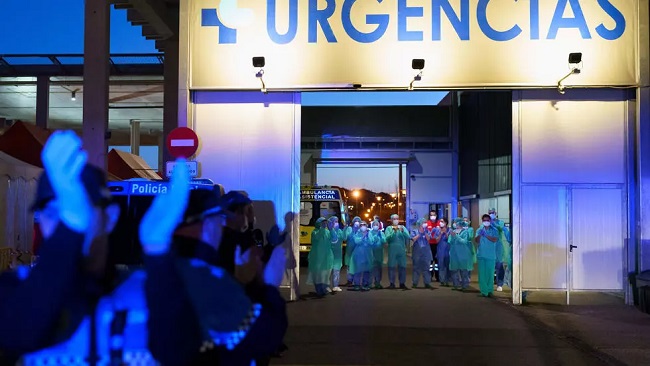
The coronavirus death toll curve in Spain flattened further on Friday as the government prepared to start easing one of the world’s strictest lockdowns and virtual Easter celebrations were held instead of traditional processions.
Spaniards have been off the streets since mid-March and have suffered nearly 16,000 fatalities from the COVID-19 disease – the third worst toll after Italy and the United States.
But the slowdown in the rate of infection and death has enabled officials to consider a gradual lifting of the lockdown.
“The government is preparing new scenarios of de-escalation,” Health Minister Salvador Illa told reporters.
Even though several officials have said the formal lockdown will probably continue into May, some restrictions are to be lifted on Monday to breathe life into a paralysed economy.
From then, workers in some sectors such as construction will be allowed out again and some factories will reopen.
Further easing of the lockdown will depend on analysis of the epidemic’s evolution, Illa said. “These are very complex decisions that require multi-disciplinary analysis.”
Though many people will return to work, social distancing should be maintained, Maria Jose Sierra, the deputy head of health emergencies, said at a virtual news conference.
“We will give a series of recommendations. The most important is if there is a person who shows the slightest symptom, they should contact the health system and remain in self-isolation,” she said.
‘Give us hope’
Protective masks are recommended and authorities plan to distribute them at public transport hubs.
Instead of taking to the street for ceremonies on one of the most important days of the Christian calendar, many Spaniards held virtual processions on social networks, hooking up to play folk music and wear traditional costumes.
In the Castilian town of Cuenca, drummers went onto balconies and doorsteps to play songs they would usually perform around the town.
Reuters footage showed a closed church in Seville, normally the site of lavish Holy Week processions, with flowers and candles piled by the closed gate but no one around, and a mask pinned to the gate with the inscription “give us hope”.
The number of daily deaths fell to 605 on Friday, the lowest figure since March 24, the health ministry said. The rate of increase has dropped to 4%, down from 20% two weeks ago. Spain’s total death toll stood at 15,843 as of Friday.
“We are seeing the curves are on the decline, even though there are still many cases,” Sierra added.
(REUTERS)