
Breaking News
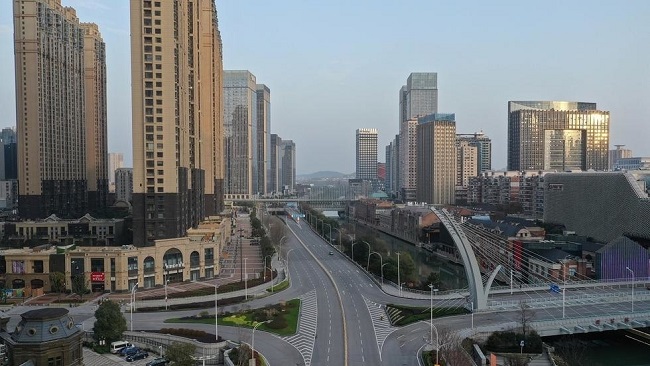
Covid-19: Cameroon’s diplomatic mission to China has not helped
The pandemic has meant that governments in Africa are faced with a litmus test on how they respond to their citizens in troubled times, especially those overseas. And so far, the test results have been negative. The early response of respective African governments to the distress call sent out by their citizens stuck abroad, amid the coronavirus pandemic, has largely been slow, inadequate or nonexistent.
Some Africans away from their home countries are living in distress. Stuck abroad and facing a difficult experience thousands of miles away from home, many are unsure when they will return.
Dr Pisso Scott Nseke, a Cameroonian business consultant living in Wuhan, China, is one of them. Nseke is grappling with the ripple effects of the coronavirus which broke out in Wuhan last December. “We are facing economic difficulties – loss of jobs and revenues,” Nseke told the Mail & Guardian. He said there is also the problem of housing, with Africans having been forced to leave their abodes in search of shelter. “They don’t know where to go!”
Cameroon’s diplomatic mission to China has not helped. Nseke said officials from the embassy in Beijing used to send messages of encouragement at the beginning but these came to an abrupt halt. The last time Nseke and some 200 other Cameroonians in Wuhan officially heard from their embassy was on February 7.
This is despite the Cameroonian government’s public announcement on February 20 that the president had ordered the urgent disbursement of 50 million CFA francs (around $83000) to assist them. Fast-forward to today, and those hopes have all faded away. “We haven’t seen even one franc of the money,” Nseke said. “I feel frustrated and disappointed that the government has not done as the others [governments in Africa]. I want to return home but the borders are closed,” he said.
Nseke’s frustration with Cameroon’s government was echoed by other stranded Africans who spoke to the Mail &Guardian. Tisiliyani Salima, leader of the Zambian student community in Wuhan, feels disappointed that her government has not been able to evacuate her and other Zambian students back home. “Following the outbreak, we watched helplessly how other countries airlifted their citizens from this city. Only sub-Saharan African students stayed back, besides South Africans who were later evacuated home,” she said.
Back in February, the Zambian government gave ¥1,035 (around $150 or R2700) each to some 182 Zambian students in Wuhan, according to Salima. But they have since not heard much from their embassy or received further government assistance. Salima says some of her peers are now grappling with expired visas in addition to other personal issues.
Like Salima, Theophilus Komalafe, a Nigerian student at Beihang University in Beijing, says “nothing has actually happened with regards to evacuation back home”. Komalafe hasn’t received even palliative support from his government. “The response from the federal government [of Nigeria] has been very poor. It is high time the government changes the way it responds to its citizens in distress,” Komalafe said.
Another Nigerian student in South Africa said he wrote to the Nigerian High Commission in Pretoria before the nationwide lockdown but still has yet to receive even a response acknowledging receipt of his email. “This is not unusual and I didn’t expect much,” the student said.
In April it was reported that some Africans were being mistreated in China, and their governments did little in response. Many reported being targeted and thrown out of their apartments. “Africans have been subjected to high levels of scrutiny, suspicion, anger and discrimination in Guangzhou,” Keith B. Richburg, director of the Journalism and Media Studies Centre at the University of Hong Kong said.
Authorities from African countries including South Africa, Nigeria, Ghana, Uganda, Zimbabwe, Kenya as well as from the African Union, called on China to provide answers to the Chinese assault on African immigrants. But as Africans across the continent continued to vented their anger on social media regarding the attacks, the diplomatic rows came to an end. Geoffrey Onyeama, the foreign affairs minister of Nigeria, said the skirmishes with China had been “sorted out”.
Thousands of stranded Africans either need help or are seeking to be brought home. They had travelled for various reasons, most commonly: study, business, family visits and tourism. Some were trapped in foreign lands when countries imposed restrictions on movement or completely shut their borders, making travelling back home almost impossible.
South Africa alone has registered more than 3 600 of its citizens who want to return home. Kenya announced it will be evacuating its nationals from China at their own cost, a move its former trade and foreign affairs minister Moses Wetangula described as “a big letdown”. Nigeria commissioned two airlines to repatriate over 2 000 of its citizens from various European countries as well as the United States and the United Kingdom. Some other African countries such as Cameroon and Uganda have opened registers for their citizens abroad who wish to return home.
As it stands, though, most governments’ evacuation plans have started and ended with lip service.
Circumstances are much worse for migrants all over the continent who were on the move heading home or travelling in search of work. The Guardian reported on Tuesday that there were large numbers of students from Chad stuck in Cameroon, and around 1800 workers from Nigeria stuck in isolated gold-mining areas in Burkina Faso. Around 1000 Malian and Senegalese migrants are also reportedly trapped in Mauritania.
Many of the people migrating – a large proportion of them women and children – were migrating illegally. It is reported that around 2300 migrants who were being transported by traffickers have been abandoned in Djibouti.
Several factors could be fuelling the inaction or slow response of some of these African governments. One prominent factor is the absence of a culture of African governments responding to situations such as citizen repatriation — like in the West — according to Babatunde Fagbayibo, professor of law at the University of South Africa, Pretoria. “There is really no template, but that is not an excuse.”
Fagbayibo also believes many African governments lack the ability to articulate clear political visions – and subsequently fail to understand how their actions now can convey more important messages about solidarity and national pride.
Some governments might argue that they don’t have the funds to engage in this type of repatriation. But Fagbayibo argues that such reasoning is not tenable “because this is a crisis that could also work in the favour of the government, in the sense that if you show willingness, you could use it as a political point; that ‘at least when citizens were in distress we sent people to go take them there.’
Culled from the Mail/Guardian
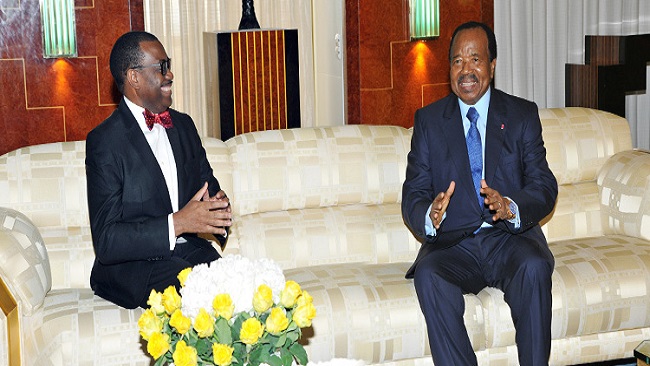
African Development Bank approves €40 million in grants for bridge linking Cameroon and Chad
The Board of Directors of the African Development Bank Group (www.AfDB.org) has approved grants worth €40.94 million for the construction of a bridge to connect Cameroon and Chad across the Logone river.
The grants, comprising a €20.785 million tranche for Cameroon and €19.215 million for Chad, were approved on 30 April 2020. The facility is from the Investment Facility for Africa under a framework agreement between the Bank Group and the European Commission.
The funds will co-finance the costs of construction of the bridge between Yagoua in Cameroon and Bongor in Chad, access roads and feasibility studies, management said in a report to the Board.
The bridge, once completed, is expected to bolster bilateral and sub-regional integration and cross-border trade, safeguard life and property during the river crossing and boost socio-cultural ties between the two countries.
“Specifically, the project aims to promote interstate trade, particularly between Cameroon and Chad, reduce travel time and transportation costs, and improve accessibility of basic services by nearby communities,” the report noted.
In addition to the Logone river bridge, other projects under the Pillar Assessed Grant or Delegation Agreement (PAGODA) include the rehabilitation of the Lome-Cotonou road, road development and transport facilitation on the Bamako-San Pedro corridor between Mali and Côte d’Ivoire and the rehabilitation of the CU2a community road section in Burkina Faso near the border with Niger.
The Bank and the European Commission are committed to co-financing development projects that tackle poverty by investing in critical infrastructure to promote seamless connectivity of transport, energy and ICT.
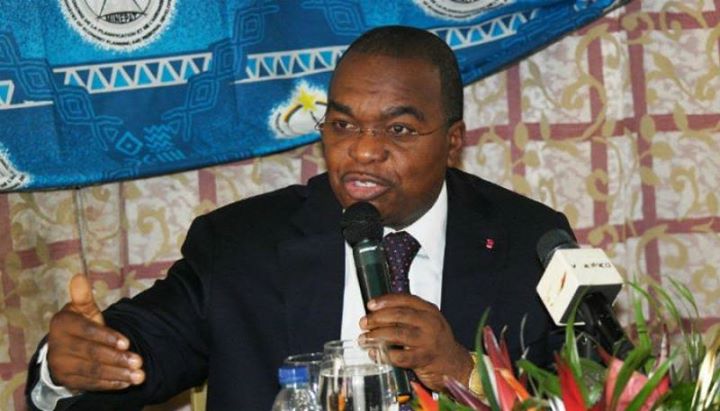
Biya minister upbeat about COVID-19 response after IMF loan
Cameroon is poised to upgrade its emergency response towards COVID-19 outbreak following the approval of an emergency loan by International Monetary Fund (IMF), Cameroon’s Minister of Finance, Louis Paul Motaze said on Wednesday.
“It is (IMF loan) very good news for the country. You know that we are facing the crisis (COVID-19) and there is a plan that has been designed by the government and we needed money for that. We are very happy to know that the negotiations have led to a positive conclusion,” Motaze told reporters in the capital, Yaounde, adding that the loan will be used “specifically” to equip hospitals, supply needed material in a transparent way.
The outbreak of the COVID-19 pandemic is having a “significant” impact on Cameroon’s economy, and could lead to a historic fall of GDP growth, he said.
“We are losing a lot of money to COVID-19. That means that we are going to face a lot of difficulties in the future and this is why it’s very important for us to see how we can look for funding for all the projects we have, because life should continue after the crisis,” said Motaze.
On Monday, IMF declared it has approved a disbursement of 226 million U.S. dollars to help Cameroon meet the urgent balance of payments the country needs stemming from the COVID-19 pandemic.
To date, Cameroon has registered in 2,265 confirmed novel coronavirus cases, including 108 deaths and 934 cured cases, according to the latest statistics from the Africa CDC.
Source: Xinhuanet

Cameroon doctor faces influx of COVID-19 patients
With the help of a nurse, Dominique Djomo puts on his personal protective equipment – a cap, coveralls, protective glasses, visor and gloves – and starts another day dealing with an influx of COVID-19 cases.
The anesthesiologist’s work at Douala’s gynaecology, obstetrics and pediatric hospital has changed beyond recognition since the first case of the new coronavirus was detected in Cameroon in early March.
The Central African country now has one of the highest case rates in the region, with over 2,000 people infected and more than 60 dead.
While scenes of overwhelmed hospital wards have been broadcast from across Europe and the United States, most African countries have so far been spared much of the mayhem.
As cases rise, however, doctors are beginning to get a taste of the challenges that lie ahead.
Djomo used to spend his days between the operating theatre and emergency rooms and carrying out consultations. Now, the new coronavirus and the people it affects dictate his time.
“I have … no rest, no weekends, no peaceful nights, it is the patients who run my programme,” said the 39-year-old. “This is not the usual care. There are many more precautions to take.”
Douala paediatric hospital was picked by the government as one of a few centres to receive critically ill COVID-19 patients. It has since received over 200 patients, dozens of whom were hospitalized, Djomo said.
Djomo and his team frequently work 24-hour shifts. Last week, when a Reuters crew visited the hospital, the resuscitation ward was full, its 12 beds occupied by patients.
A lack of space and a shortage of critical supplies such as ventilators has forced Djomo to make some difficult calls.
During the Reuters visit, he had to turn down a request from another clinic that wanted to transfer a patient to the hospital because he only had five ventilators and they were all being used.
Djomo’s family and friends worry that he may get infected.
As in many parts of the world, protective equipment is running short for medical staff in the hospital, including overalls. More than 20 healthcare workers have been infected in Cameroon and at least two doctors have died, said a senior health official.
“I would personally like to make my contribution, that at the end of this epidemic I can be satisfied with myself,” said Djomo. “Family, friends ask me to be careful. But we remind them that it can happen to everyone. Anyone can be sick.”
Source: Whtc.com

French Cameroun Politics: Biya’s hardliners going after Maurice Kamto’s finances
The Francophone dominated government’s multiple attempts to cut Maurice Kamto off from his financial backers is the latest sign of the growing influence of a diehard government faction led by Samuel Mvondo Ayolo, head of civilian staff at the presidency.
This item is still developing

Ambazonia conflict and coronavirus: Fear runs deep
Everyone fears coronavirus, but for Augustine, a villager in Cameroon’s Southwest Region, the dread is especially deep.
If he were to fall seriously ill from the new virus, he would need to make a five-hour trek by road and canoe from his home in Ekondo to a health centre able to care for him.
The trip would unfold in the midst of a brutal conflict in this remote corner of Cameroon between armed separatists and government forces.
His first step, Augustine said fatalistically, would be to “pray intensely.”
Since October 2017, when anglophone militants took up arms against the French-majority state, more than 3,000 people in the Southwest and neighbouring Northwest Region have lost their lives, according to humanitarian organisations.
Around 700,000 people have fled their homes.
Healthcare infrastructure has been one of the collateral victims of the fighting — 115 medical centres have been destroyed and attacks on medical personnel are frequent, leaving people in remote areas almost stripped of defences at a time of pandemic.
In Ekondo, “we try to practice barrier gestures as much as we can, because we have to do everything possible to prevent the virus,” said Augustine, reached by AFP by phone from the Gabonese capital of Libreville.
So far, the two regions have been relatively spared from the virus — only 30 cases had been recorded as of Tuesday.
But Cameroon overall has had 2,077 cases and 64 deaths, the second highest in sub-Saharan Africa after South Africa.
In addition, the country is beginning to ease coronavirus restrictions that have been especially tough for the poor, who amount to a third of the population, according to the traditional benchmark of poverty.
Restaurants and night clubs, for instance, have been authorised to re-open, and it remains possible to travel between highly contaminated and uncontaminated areas.
– ‘Not enough mortuaries’ –
If the pandemic reached remote anglophone areas, “there’s not enough (medical) workers, enough amublances, roads or even mortuaries to take care of the sick and the dead,” said Sarli Nana, who works for an NGO helping displaced people.
“Many healthcare professionals have been driven out of their jobs” and in those medical facilities which survive, “there’s a lack of equipment, medicine, water and electricity,” he said.
Aid workers are especially worried about any virus outbreak in makeshift camps that have sprung up in the equatorial forest where thousands are sheltering after the conflict destroyed their homes.
“There’s no (running) water or access to care, the conditions are catastrophic,” said Marc Serna Rius, coordinator of a local NGO called Reach Out.
“The people who are holed up in the bush are the most vulnerable of all,” he said. Many are elderly and greatly at risk from COVID-19.
Because of the poor security, access to these areas by aid groups is very difficult.
– Civilians in the middle –
On the ground, both the separatists and the armed forces seem to have turned a deaf ear to the UN’s appeal, made on March 23, for a global truce in combat zones on account of the pandemic.
“Nothing’s really changed,” said Nana.
“The separatists and the army are still carrying out attacks. People in the region are still being targeted for killings and are fleeing.”
The rebels, as well as the security forces, have been frequently accused by rights watchdogs of crimes against civiliians.
“Several separatist attacks” have been carried out since late March, said Blaise Chamango, the head of an NGO in the Southwest Region.
Last weekend, troops carried out an offensive against a separist camp in Bafut, in the Northwest Region.
In late March, the authorities announced a two-year reconstruction programme for the battered regions, including refurbishing schools, water access, thousands of homes and health centres.
A total of 90 billion CFA francs ($150 million / 136.5 million) has been earmarked — but the scheme was announced before the pandemic got into its stride and inflicted widespread disruption.
Culled from AFP
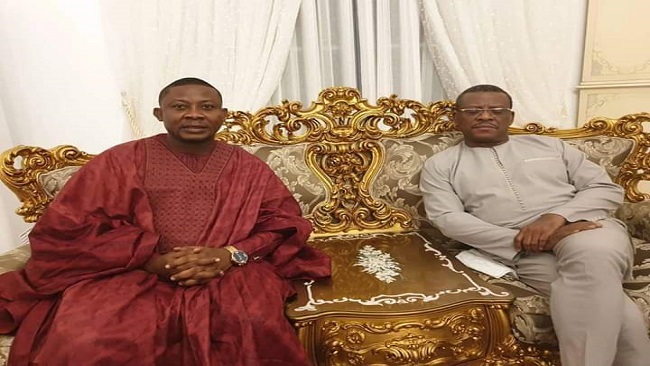
Success Nkongho: the poison among Southern Cameroonians
The dust about Nkongho Success’ betrayal of the Southern Cameroonian cause seems to be settling, especially as the fight against the Coronavirus seems to have overshadowed the struggle for the independence of Southern Cameroons.
While Southern Cameroonians are observing a ceasefire to enable the international community battle an insidious and disruptive virus, Nkongho Success has been at work, betraying more Southern Cameroonians and hurting those he considers as his sworn enemy.
Today, he has sent Paul Ayah Abine, the illustrious judge and once-upon-a-time presidential candidate who helped him to grow politically, to the SED where he will face some tough questions about his political and financial activities.
Nkongho Success has been talking with the country’s Territorial Administration Minister, Paul Atanga Nji, and Prime Minister, Joseph Dion Ngute, both of whom are in support of a sinister plot to silence the retired judge forever.
Mr. Nkongho claims he has evidence that Mr. Ayah Abine had sinister a plan to buy arms and destabilize the country.
He claims the learned judge wanted to use his church to raise money for his 2018 presidential campaign, some of which would have been channeled into an arms purchase deal.
He alleges that Judge Ayah had asked him to charge his faithful in his fake church CFAF 5,000 each which could have made the learned judge an instant billionaire and a huge threat to the government.
Judge Ayah is not a stranger to SED and his sound knowledge of the law will be the largest tool in his tool box in his effort to deal with this massive mess Mr. Nkongho has created for him and his family.
Mr Nkongho, who now lives in Yaoundé, is now enjoying some form of protection and immunity and these will last for as long as he continues to betray many Southern Cameroonians.
His family has been set up in Yaoundé by the government. All of his brothers have left Mamfe and his cousins who sympathize with the Southern Cameroonian cause have completely disconnected from him.
Speaking over the phone to a friend in Mamfe, Mr. Nkongho said he would never regret his decision, although Amba fighters had seized all of their farms and allocated them to other people.
He has sworn to destroy Judge Ayah, claiming that it was Mr. Ayah who attacked him first.
More will be yours as Cameroon Concord News Group gathers more details.
By Rita Akana in Yaounde

Coronavirus Outbreak: Les Brasseries du Cameroun pressured Biya to lift the ban on bars and pubs
French brewery cartel known as Les Brasseries du Cameroun reportedly pressured President Biya to undermine Cameroon’s Health Ministry lockdown provisions against COVID-19 exposing the government’s total ineptitude in dealing with the crisis, Cameroon Concord News Group has gathered from concordant sources in Yaoundé.
The pandemic is now sweeping across Cameroon, overwhelming hospitals, and leading to the surging death toll but the Head of State has ordered all pubs, bars and breweries to operate as usual. While in mother France, pubs are only permitted to either deliver drinks or allow customers to pick them up.
The French brewers threatened Etoudi with severe consequences if the regime failed to put an end to the lockdown. Officials at the Ministry of Public Health have blatantly refused to criticize the government for downplaying the risk of coronavirus spreading in beer parlours.
The Biya decision was put into practice without any proper consultation with Cameroonian trade bodies and civil society organizations. A cream of Cameroonian clergies have raised fingers against the move on social media with a prominent Man of God stating that “The reopening of bar is DANGEROUS. When the FLOOD subsided after 40 days, Noah did not RUSH OUT. He sent a bird out and it was after the 3rd bird did not return that he knew it was TIME to STEP OUT. Please do not join the multitudes that are rushing out because they are tired of staying at home. A lot of people have already been infected and unknowingly will keep infecting others. Let us be wise like Noah to OBSERVE for many more days inside our own ARK, OUR HOMES before taking any action. May we and our loved ones be preserved and protected from this pandemic in Jesus mighty name. Amen.”
By Chi Prudence Asong