
Deadly shooting in New Zealand hours before the Women’s World Cup opening match
Deadly shooting in New Zealand hours before the Women’s World Cup opening match
Deadly shooting in New Zealand hours before the Women’s World Cup opening match
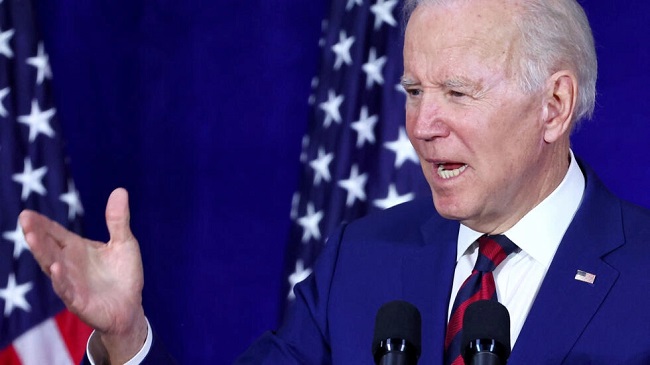
US President Joe Biden and a Vatican envoy discussed the Russian invasion of Ukraine and deportation of Ukrainian children Tuesday, the White House said.
Biden and Cardinal Matteo Maria Zuppi discussed the papacy’s efforts to provide “humanitarian aid to address the widespread suffering caused by Russia’s continuing aggression in Ukraine, as well as the Vatican’s advocacy for the return of forcibly deported Ukrainian children,” a White House statement said.
Zuppi, archbishop of Bologna and president of the Italian Episcopal Conference, came to the White House at the request of Pope Francis, the Biden administration said.
Biden, only the second Roman Catholic to become US president, also delivered “his wishes for Pope Francis’s continued ministry and global leadership and welcomed the recent nomination of a US archbishop as cardinal”, the White House said.
Source: AFP
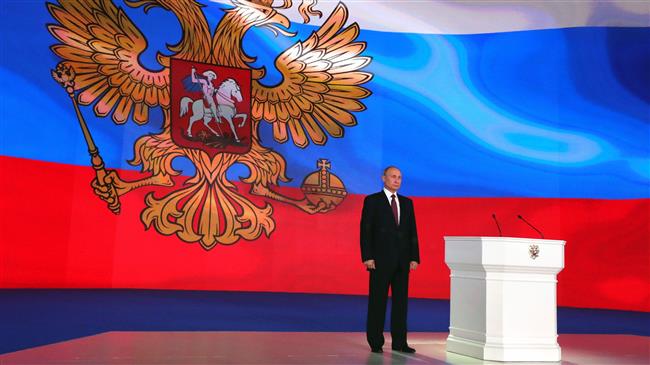
Russian President Vladimir Putin will not attend the summit of the BRICS group of nations in South Africa in August “by mutual agreement”, South Africa’s presidency said on Wednesday.
Russia will be represented by its Foreign Minister Sergei Lavrov instead, the presidency said in a statement.
South Africa faced a dilemma in hosting the summit because, as a member of the International Criminal Court (ICC), it would theoretically be required to arrest Putin for alleged war crimes if he were to attend.
The ICC has issued an arrest warrant for Putin. The leaders of Brazil, India, China and South Africa will attend the summit, the presidency said.
Source: France 24
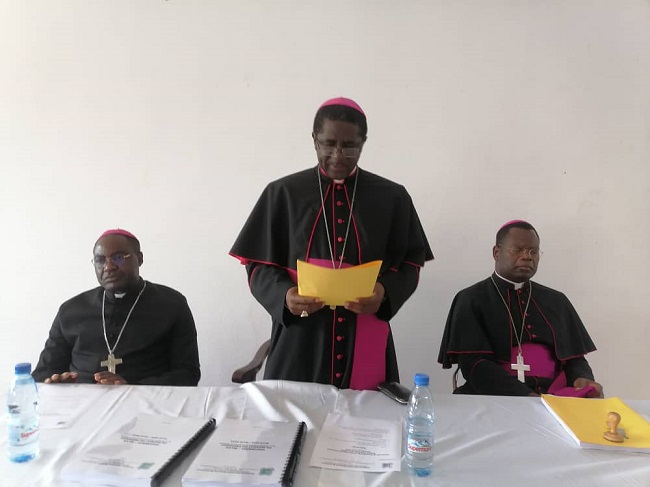
Archbishop Andrew Fuanya Nkea of Bamenda Archdiocese in Cameroon has described the Sunday, July 16 murder of civilians in his Metropolitan See as a “very painful moment”.
On July 16, unidentified gunmen reportedly killed 10 people and injured another two at Nacho junction in the city of Bamenda in Cameroon’s troubled Northwestern region, Reuters reported.
The assailants arrived in two unmarked vehicles and immediately ordered people to lie down with accusations of failing to back local separatists, and opened fire as some obeyed while others ran.
Speaking to journalists Monday, July 17 after a visit to the scene of the incident, Archbishop Nkea decried the loss of life in the Cameroonian Archdiocese and called for the respect of human life.
“Within this past week, we lost six children in this neighborhood and now again we have lost 10 people within this same neighborhood,” the Cameroonian Catholic Archbishop said.
He added, “That is why I came out of my house to come here to this place where it happened a couple of hours ago so that we pay our last respect to the people who died here.”
“It is a very painful moment for all of us and when the moment is hard and hot like this, we come out to bring consolation to the people, we come out to pray for the dead and to show that good will always triumph over evil,” Archbishop Nkea said.
The Archbishop of Bamenda who doubles as the President of the National Episcopal Conference of Cameroon (NECC) further said, “Evil can never defeat good no matter how long it takes.”
The Catholic Archbishop who previously served as Apostolic Administrator of Mamfe Diocese in Cameroon’s Southwestern region continued, “Human life is sacred and we call on everyone, whoever they are, to respect human life.”
“Life is given to us by God; let us leave God alone to be able to take it back. That is why I came to encourage the people of this neighborhood and extend to them my solidarity. We are together with them in prayers and in spirit,” he said.
A manhunt has been launched for the “terrorists” behind the massacre, North West region governor, Adolphe Lele Lafrique, has been quoted as saying in the Reuters report.
“Investigations are on, and we will issue a statement on this later today,” the Cameroonian Governor added.
Cameroon’s English-speaking regions plunged into conflict in 2016 after a protest by lawyers and teachers turned violent. An armed movement of separatists claiming independence for the so-called republic of Ambazonia emerged following the government’s crackdown on protesters.
School boycotts have become common in these areas, as have enforced moratoriums on public life known as “ghost towns”.
In his July 17 address to journalists, Archbishop Nkea reiterated the need for peace, saying, “I have always said that love is better than hatred. I have always said that life is better than death. I have always said that living and loving one another is better than killing one another.”
“It is not right to take the lives of other people. It could have been any of us and there are people who were sitting here who were taken by bullets,” the 57-year-old Catholic Archbishop who started his Episcopal Ministry in August 2013 as the Coadjutor Bishop of Mamfe Diocese said.
He added, “I think it is high time that all this should stop. We want this violence to stop. Let people be able to go on with their normal lives again.”
“We condemn hate speech. We want our people to be able to live their normal lives. And that is why we say it is enough. Let this come to an end. We should stop killing one another,” the Cameroonian Archbishop emphasized.
Source: aciafrica
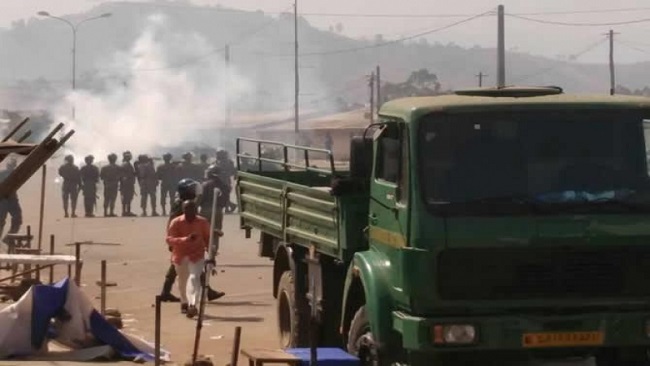
Cameroon’s military says it has arrested scores of rebels suspected in the shooting deaths of 10 civilians Sunday in the northwest town of Bamenda. The military says separatists disguised themselves as government troops to try to frame them for the killings, which a rebel spokesperson denies.
Bamenda city mayor Achombong Paul, who visited Bamenda Regional Hospital on Tuesday morning, said residents of the city are living in fear after Sunday’s brutal killings.
“Every human life has value. Every human being has a right to live and nobody for whatever reason has a right to take away the life of an individual,” he said. “We cannot live in a town where there is chaos, fear and all the kinds of atrocities going on at the same time. We will never move forward with this attitude. No, we won’t. People can’t go to work, nothing works in this town because people are scared to be killed.”
Hospital director Nsame Denis said at least 600 people have visited the hospital since Sunday’s killings to find out if their family or friends are among the victims.
“We received in total 12 victims of firearm injuries. Out of this 12, one is in the intensive care, one took treatment and went home, and at the level of the mortuary, we have 10 corpses amongst whom three are female and seven are males ranging from 24 to 56 years,” Nsame said.
Cameroon’s military, in a July 17 statement, said about 12 heavily armed fighters dressed in military gear similar to that of the central African state’s military shot indiscriminately at civilians at Nacho Junction in Bamenda.
The military said scores of suspects have been arrested in a crackdown operation less than 48 hours after the killings.
Deben Tchoffo, governor of the Northwest region, said fighters want to create panic among civilians who collaborate with the military by reporting suspected separatists.
“I would like, on behalf of the head of state, to assure the population that measures are being taken by the security services to locate the authors of that barbaric act and sanction them. I would like to strongly condemn those attacks by a terrorist group,” he said.
Separatists on social media, including Facebook and WhatsApp, denied responsibility for the killings. They said government troops were responsible, asserting that the military wants to give separatists a bad image to the international community.
The Center for Human Rights and Democracy in Central Africa reports that Sunday’s killing comes two days after Cameroon’s military was said to have raided Awing Quarter, another neighborhood in Bamenda, and killed at least five people.
Northwest Region Governor Tchoffo acknowledges that civilians were killed in Awing Quarter but blames fighters for the killings.
The Cameroon government said people wounded in both attacks are being treated free of charge in hospitals in Bamenda.
Rights groups, including Human Rights Watch and the Center for Human Rights and Democracy, accuse both the military and rebels of abuses, including rape, torture and killings.
Cameroon’s Northwest and Southwest regions have seen years of deadly battles between government troops and separatists fighting to carve out an English-speaking state from French-speaking majority Cameroon.
The conflict has killed more than 6,000 people and displaced more than 760,000 others, according to the International Crisis Group.
Source: VOA
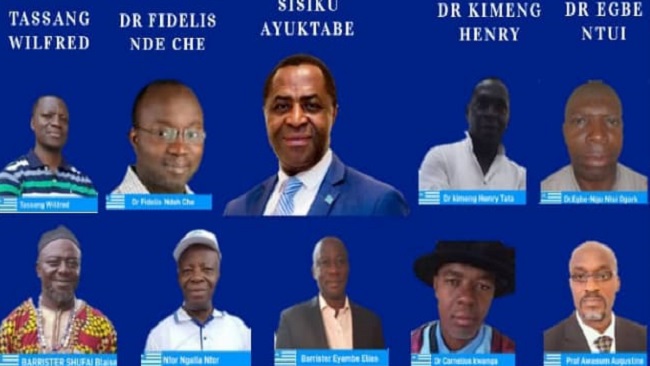
Separatist activism is likely to continue in Southwest and Northwest regions of Cameroon through at least late 2023. Unidentified assailants dressed in official military uniforms entered a bar and opened fire indiscriminately in Bamenda (Northwest) at around 19:30 July 16, killing nine people and injuring two others. The exact reason for the attack is unclear. A military spokesperson has attributed the attack to Ambazonia separatists.
The threat of violence remains elevated in the English-speaking regions as various armed groups continue to call for secession, highlighting the dangers for those operating or traveling in western Cameroon. The situation has remained tense since October 2017, when secessionists unilaterally proclaimed the independence of the so-called state of Ambazonia, which is unrecognized internationally. Human Rights Watch estimates that about 4000 civilians died due to armed forces and separatist-linked violence since late 2016.
Security-related operations are ongoing. Checkpoints and searches of vehicles and personnel are likely, particularly outside major cities such as Buea (Southwest) and Bamenda (Northwest). Authorities may enact temporary security measures such as curfews and telecommunication restrictions without notice in the event of significant violence or unrest.
Various armed groups operate in the region, such as the Ambazonia Defence Forces (ADF), which is also plagued by banditry and other criminal activities.
Security forces frequently skirmish with Ambazonia secessionist militants (also called “Amba boys”), regularly leading to casualties. Separatists have carried out ambushes targeting security forces and government officials involving improvised explosive devices. There are also reports of militant abuses, including kidnappings and killings, against the local population. Militants often issue stay-at-home orders (also known as “ghost cities”); residents who do not comply with such measures may face intimidation and violence.
While many kidnappings go unreported, it is estimated that dozens to hundreds of people are kidnapped each year in both Northwest and Southwest regions. Targets notably include prominent members of civil society, politicians, security forces, teachers, and priests, among others. Militants may target foreign nationals due to their perceived worth in the event of a ransom demand. High-profile individuals have been kidnapped in recent months, including a senator and her driver, who were seized by ADF militants in Bamenda on April 30. Security forces released several hostages, including the senator, during a military operation in Ashong (Northwest) on May 30. The Bakassi Peninsula (officially part of Cameroon) also hosts many oil-related operations attracting criminals and militants who seek to kidnap oil workers, aiming for a higher ransom.
Culled from Crisis 24

Unidentified gunmen have carried out a deadly attack, resulting in the loss of nine lives, including that of a recently married couple in the city of Bamenda in Cameroon.
The victims, identified as Simplice Lontsi Tsomene, 37, and his wife Hélène Raisa Tanga, 25, were known as loving parents to three children and were also the proud owners of a phone shop.
Authorities are attributing the attack to separatist rebels, who struck at a busy junction. According to reports, the assailants arrived in two unmarked vehicles and immediately ordered people to lie down.
Eyewitnesses have come forward to reveal that the gunmen accused the victims of being “black legs,” insinuating that they were either colluding with the government or were not complying with the separatists’ directives.
Rebels who want to create a separate country called Ambazonia for Cameroon’s English-speaking regions have been locked in conflict with the government since 2017, and Bamenda is one of their hotspots.
A day before these latest shootings, troops attacked a residence in the same neighbourhood of Nacho, killing five young men.
The situation is rapidly deteriorating, with horrendous human rights abuses and atrocities being committed. Amnesty International recently published a report detailing alleged murders and rapes by both sides in the Anglophone armed conflict and urging the government to investigate.
Although no group has claimed responsibility for the killings, some separatist Ambazonia leaders in the diaspora have been urging their fighters to go after those they brand as “black legs”, without mercy.
Sources: BBC and Africa News
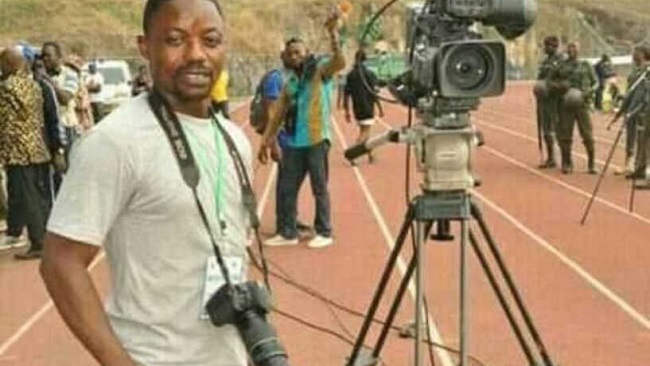
Cameroonian journalists are facing lethal threats and false legal charges as they pursue reporting in the midst of Cameroon’s Anglophone conflict, according to a new report on press freedom and freedom of expression submitted to the United Nations by Freedom House, the Committee to Protect Journalists (CPJ), and the American Bar Association’s Center for Human Rights, with the support of Covington & Burling LLP.
The joint submission on press freedom in Cameroon released ahead of the country’s Universal Periodic Review (UPR) in Geneva later this year marks six months since the abduction and killing of prominent Cameroonian journalist Martinez Zogo, whose mutilated body was found five days later.
The groups’ submission highlights that the killing, physical attacks, abduction, torture, and harassment of journalists by Cameroonian police, intelligence agencies, military, and non-state actors continue to have a severe chilling effect. Several journalists have been forced into exile, two journalists have died in government custody under suspicious circumstances since 2010, and, most recently, prominent journalist Martinez Zogo was murdered in January 2023. In addition, two other journalist deaths are being investigated by CPJ.
“President Paul Biya’s government routinely claims that the plethora of media outlets in the country proves that the right to media freedom is enjoyed in Cameroon, but the reality is the polar opposite as laid bare in this joint report,” said Angela Quintal, CPJ’s Africa program coordinator. “The arbitrary detention of journalists labeled terrorists, the killings with impunity and the widespread censorship tactics fostered by the government, must be reversed for democracy to overcome Cameroon’s protracted conflict.”
The arbitrary imprisonment of journalists coupled with incommunicado and lengthy pre-trial detention has made Cameroon the second worst jailer of journalists in sub-Saharan Africa after Eritrea. Cameroon also detains journalists the longest after Eritrea. Five journalists are currently being detained there, four of whom are being held on anti-state charges in connection with the ongoing Anglophone conflict that has pitted separatists in the English-speaking regions of Cameroon against the forces of the majority French-speaking government.
The Cameroonian government uses anti-terror, anti-state, “false news” charges, and criminal defamation legislation to detain and convict journalists. It also prosecutes journalists by military tribunals rather than impartial civilian courts and consistently denies them the right to a fair trial and appeals process.
“The politically motivated detention of journalists in Cameroon is of serious concern,” said Margaux Ewen, Director of Freedom House’s Political Prisoners Initiative. “Through this submission, we remind Cameroon of its obligations under domestic and international law. We also show solidarity with the five journalists currently behind bars, who will not be forgotten.”
The Cameroonian government frequently suspends broadcasts and broadcast permissions, orders internet shutdowns, and blocks access to social media, communication platforms, and journalism offices and studios.
Cameroon is rated “Not Free” in Freedom House’s Freedom in the World 2023 report. The country has an overall score of 15/100, with a score of 0/4 for media freedom (since 2018). The country has consistently appeared on CPJ’s annual prison census since 2014, with press freedom and journalist safety in decline for more than a decade. The American Bar Association’s Center for Human Rights has documented multiple due process violations in trials of journalists reporting on the Anglophone crisis.
“This submission conclusively shows that the Cameroonian justice system continues to fail to protect journalists and other human rights defenders,” said Ginna Anderson, Associate Director of the American Bar Association’s (ABA) Center for Human Rights. “The significant fair trial violations that the ABA Center for Human Rights has documented show an escalating breakdown in the rule of law and the protection of fundamental freedoms. It is vital that the UN Human Rights Committee engage the government of Cameroon on the specific violations and recommendations contained in this report.”
“Through Covington’s Kurt Wimmer Media Freedom Pro Bono Initiative, our lawyers provide pro bono support on media freedom matters, seeking to protect and advance media freedom and the safety of journalists,” said Peter Lichtenbaum, a partner at Covington & Burling LLP. “Our work on the joint submission to the United Nations UPR Review process assessing Cameroon’s actions with respect to press freedom supports these objectives.”
Among the recommendations in the report, CPJ, Freedom House and the ABA urged President Paul Biya’s government to finally account for the death in custody of Samuel Wazizi, to free the journalists it has arbitrarily detained, including those falsely accused of terrorism, and to ensure that the murder of Martinez Zogo and the killing of Jean-Jacques Ola Bebe do not go unpunished. They also called for Cameroon’s overly broad anti-terror law to be reviewed and to include a public interest defense.
Cameroon will undergo its UPR in November 2023 as part of the 44th session of the Universal Periodic Review Working Group in Geneva.
Source: CPJ
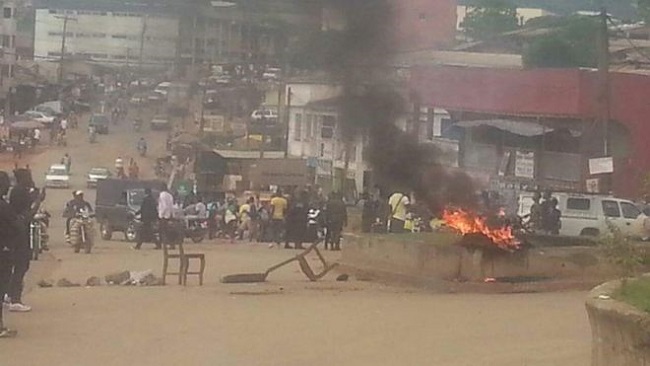
Gunmen killed 10 people and injured two others at a busy junction in the city of Bamenda in Cameroon’s troubled northwest, the regional governor said on Monday.
A witness said the attackers arrived in vehicles late on Sunday, ordered people onto the floor with accusations of failing to back local separatists, and opened fire as some obeyed while others ran.
The Ambazonia Defence Forces (ADF), one of the main separatist groups in the English-speaking region which has been fighting since 2017 in protest of alleged marginalisation by the majority French-speaking government, denied responsibility.
North West region governor Adolphe Lele Lafrique told the Reuters news agencty a manhunt had been launched for the “terrorists” behind the massacre. “Investigations are on, and we will issue a statement on this later today,” he added.
The witness said men in military uniforms arrived in two vehicles to storm Nacho Junction, where restaurants, bars and shops are located, at around 7:30pm (18:30 GMT).
They shot at people indiscriminately, the witness said, before taking off.
“There is [the] possibility that it could be revenge killing,” ADF spokesperson Lucas Asu said, suggesting the attackers could have been disguised as separatist fighters.
Discrepancies between the French and English academic, legal and administrative systems which have always existed concurrently, as well as cries of political and economic marginalisation, crystallised into a series of protests and riots in 2016.
The violent suppression of those protests has led to a full-blown conflict that has resulted in the deaths of more than 6,000 people in Anglophone Cameroon since.
Earlier this month, human rights group Amnesty International slammed government troops, militias and separatists for killings, rapes, torture, and burning of houses among other atrocities in Cameroon’s English-speaking regions.
It said those who speak out were being threatened and detained.
SOURCE: REUTERS
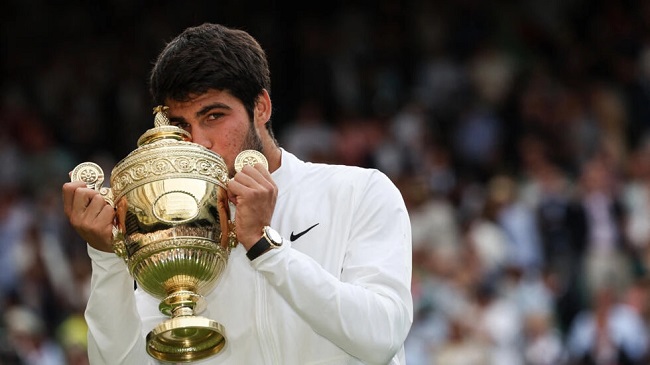
Carlos Alcaraz defeated seven-time champion Novak Djokovic to claim his first Wimbledon title on Sunday, shattering the Serb’s dream of a record-equalling 24th Grand Slam crown.
World number one Alcaraz recovered from dropping the first set and saving a set point in the second to win 1-6, 7-6 (8/6), 6-1, 3-6, 6-4 after four hours and 42 minutes on Centre Court.
It was a second major for the 20-year-old Spaniard following his US Open title last year as he became Wimbledon’s third youngest men’s champion.
The result will also spark feverish speculation over the start of a generational shift, with 36-year-old Djokovic carrying the torch of the ‘Big Three’ now that Roger Federer is retired and Rafael Nadal is sidelined, perhaps permanently.
Australian Open and French Open champion Djokovic had been bidding to equal Federer’s record of eight Wimbledon titles and match Margaret Court’s all-time mark of 24 Slams.
When he won his first major at the Australian Open in 2008, Alcaraz was still three months shy of his fifth birthday.
Djokovic was playing in his ninth final at Wimbledon and 35th at the majors, while for Alcaraz it was just a second in the Slams following his US Open triumph.
The Serb went into the match not having lost on Centre Court since his 2013 final defeat to Andy Murray and he hit with relentless precision in the first set.
Alcaraz, who had been crippled by body cramping in his loss to Djokovic in the French Open semi-final in June, was unable to settle and let a break point slip away in the seven-minute opening game.
Golden chance
Djokovic took advantage and raced into a 5-0 lead on the back of a double break before the Spaniard got on the board.
It was too little, too late as Djokovic claimed the opening set with a smash.
But Alcaraz finally freed himself of his shackles and broke for 2-1 in the second set.
Djokovic hit straight back in the third game before saving a break point in the fourth, coming out on top of a 29-shot rally.
The Serb was hit with a time violation in the tie-break before seeing a set point saved.
Alcaraz needed no second invitation when he carved out and converted a set point to level the contest with a backhand winner.
The marathon set had taken 85 minutes as Djokovic’s run of 15 tie-breaks won in a row at the majors ended.
Alcaraz broke in the opening game of the third set and again after an exhausting 26-minute fifth game, which went to 13 deuces and saw Djokovic save six break points before he cracked on the seventh.
Alcaraz backed it up with a rapid-fire service game which took just two minutes in comparison and broke again against the dispirited defending champion to move two sets to one ahead.
Djokovic argued with umpire Fergus Murphy over his monitoring of the shot clock and did little to endear himself with the crowd by taking a lengthy toilet break before the fourth set.
However, the break worked wonders as the Serb broke twice in the set, levelling the final courtesy of Alcaraz’s seventh double fault of the final.
Djokovic wasted a golden chance to break for 2-0 in the decider with a wild smash and Alcaraz made him pay, breaking for 2-1.
A frustrated Djokovic collected another code violation for destroying his racquet against the net post before he slipped 3-1 down.
Alcaraz was not to be denied and he claimed a famous victory when Djokovic buried a forehand in the net.
Source: AFP