
Breaking News
COVID-19: Cameroon has 730 confirmed cases with 10 deaths
The World Health Organisation (WHO) Regional Office for Africa in Brazzaville, Congo, said the number of coronavirus cases in Africa has increased to over 11,900. The United Nations’ health agency gave the update on its official twitter account @WHOAFRO on Friday. “COVID19 cases in Africa rise to over 11,900 – with 1,586 recoveries and 608 deaths reported,’’ it said.
The breakdown in the WHO African Region COVID-19 dashboard showed that South Africa, Algeria, and Cameroon had continued to top the list of countries with the highest reported cases. South Africa has 1,934 cases and 18 deaths followed by Algeria with 1,666 cases and 235 deaths, while Cameroon has 730 confirmed cases with 10 deaths. It also showed that the countries with the lowest confirmed cases are South Sudan and Burundi, which had reported three cases each with zero death. The second-lowest confirmed cases of COVID-19 countries in Africa are the Gambia and Sao Tome, which have confirmed four cases each while the latter has zero death, the former (Gambia) has recorded one death.
Mauritania is in the third category with the lowest cases as the country has recorded six confirmed cases with no death. Also, the dashboard showed that COVID-19 cases had risen to 288 in the past two days from 254 confirmed cases with seven deaths in Nigeria. However, WHO Regional Director for Africa, Dr. Matshidiso Moeti, said COVID-19 had the potential not only to cause thousands of deaths but to also unleash economic and social devastation. In a statement posted on the agency’s website, the regional director said the virus had continued to spread on the continent. “Its spread beyond major cities means the opening of a new front in our fight against this virus. “This requires a decentralised response, which is tailored to the local context. “Communities need to be empowered and provincial and district levels of government need to ensure they have the resources and expertise to respond to outbreaks locally,” Moeti said.
WHO said it has been working with governments across Africa to scale up their capacities in critical response areas. It listed the areas of response as coordination, surveillance, testing, isolation, case management, contact tracing, infection prevention and control, risk communication and community engagement, and laboratory capacity. It said Ghana, Kenya, Ethiopia, Egypt, Morocco, Tunisia and Nigeria had expanded national testing to multiple laboratories, allowing for decentralised testing. “These combined measures will ensure the rapid identification of cases, the tracking down and quarantining of contacts and the isolation and treatment of patients,” the agency added. (NAN)
Culled from Vanguardngr.com
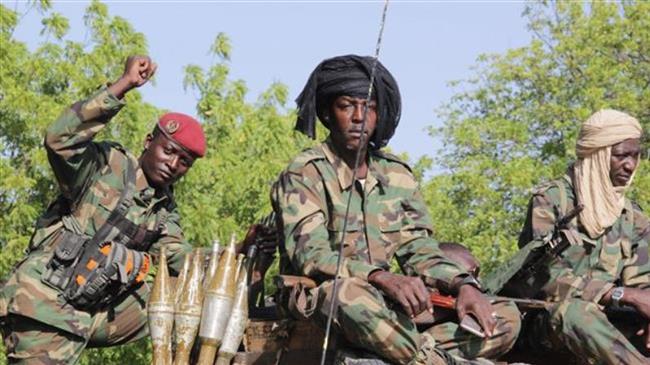
Chad army says 52 troops, 1,000 Takfiri militants killed in offensive
The Chadian army said Thursday it had wound up an offensive against Boko Haram Takfiri militants in the Lake Chad border region in which 52 troops and 1,000 militants were killed.
Army spokesman Colonel Azem Bermendoa Agouna told AFP that the operation, launched after nearly 100 soldiers were killed last month, ended Wednesday after the Nigerian militants were forced out of the country.
“A thousand terrorists have been killed, 50 motorized canoes have been destroyed,” he said, referring to a large boat also called a pirogue.
It is the first official snapshot of the outcome of Operation Bohoma Anger, launched after Chad’s armed forces suffered their biggest one-day loss in their history.
Lake Chad is a vast, marshy body of water where the borders of Niger, Nigeria, Chad and Cameroon meet.
The western shores of the lake have been hit by the Takfiri militants crossing from northeastern Nigeria, where Boko Haram launched a bloody campaign of violence in 2009.
On March 23, the Takfiri militants mounted a deadly seven-hour assault on a Chadian army base at Bohoma, killing at least 98 troops, according to an official toll.
Chad declared departments near the lake “a war zone” in order to give the military free rein for the offensive.
The four countries bordering the lake on 2015 set up a formation called the Multinational Joint Task Force (MNJTF), also including Benin, to fight Boko Haram.
But Chad, whose forces have a relatively high standing in the Sahel, has shown frustration with the MNJTF following the Bohoma losses.
“Chad is alone in shouldering all the burden of the war against Boko Haram,” President Idriss Deby Itno complained last weekend.
“I met the commander of the MNJTF and asked him to take over.”
Boko Haram’s 11-year-old campaign has claimed tens of thousands of lives in northeast Nigeria and driven nearly two million people from their homes.
Separately, in Niger, the defence ministry in Niamey said its armed forces, in a joint operation with Chad, had inflicted “heavy losses” on Boko Haram in the lake region.
“Arms caches, logistical points and several boats were destroyed” and islands used as rear bases in the lake’s marshland were “bombarded from the air,” it said.
Landlocked and poor, Niger is facing Takfiri militant attacks in opposite ends of the country — an insurgency that has spilled over from neighbouring Mali, and raids in the Lake Chad region by Boko Haram fighters.
In Burkina Faso, meanwhile, five soldiers were killed and three were wounded on Thursday when their unit came under attack from Takfiri militants in Solle, in the northern province of Loroum, an army official said.
Around 4,000 people lost their lives last year in militant- or community-related violence in Mali, Niger and Burkina Faso, according to UN figures.
(Source: AFP)
EU finance ministers reach agreement on coronavirus rescue deal
EU finance ministers agreed a 500-billion-euro ($550-billion) rescue Thursday for European countries hit hard by the coronavirus epidemic, but sidelined a demand by Italy and France for pooled borrowing.
The breakthrough came after the Netherlands softened its position on the crucial question of making countries in need commit to economic reform and outside oversight in return for assistance.
The Hague blocked the talks two days earlier by insisting that Italy, or any other country in need, deliver on governance targets — which Rome saw as a shocking demand during a health crisis.
“Europe has decided and is ready to meet the gravity of the crisis,” French Finance Minister Bruno Le Maire tweeted after the talks.
As a compromise, the final statement clearly states that the rescue would be specifically earmarked for costs related to the COVID-19 crisis, which has killed more than 65,000 people in Europe.
The ministers, however, set to one side a proposal from Italy, Spain, and France for a joint borrowing instrument, sometimes dubbed a “coronabond”, that would have raised money towards a recovery after the outbreak.
Germany, the EU’s most powerful member, has refused the pooled debt proposal and ministers agreed only to “explore” the idea under the direction of EU leaders, who are set to meet later in the month.
The package agreed is worth about 500 billion euros ($546 billion), short of what many observers believe is necessary to restart the European economy when the health crisis recedes.
Data indicate that the economy across the continent is already in a historic meltdown, with everyday life paralysed to fight the spread of the virus.
Despite 19 EU countries sharing a common currency, member states have reacted unilaterally to save their economies, giving richer countries such as Germany a big advantage over those with less spending power.
‘Other ways’
The main component of the rescue plan involves the European Stability Mechanism, the EU’s bailout fund which would make 240 billion euros available to guarantee spending by indebted countries under pressure.
Italy and Spain had the backing of the majority of member states to keep the conditions for tapping the ESM to an absolute minimum, but the Netherlands fought hard for something tougher.
Putting conditions on support is seen as a humiliation in Rome and Madrid, evoking bad memories of the eurozone debt crisis when auditors from Brussels dictated policy to bailed out Greece, Portugal and Ireland.
But the mutualisation of debts was a bridge too far for Berlin and The Hague, which refuse to take on joint loans with highly indebted states such as Italy, France or Spain which they consider too lax in their public spending.
Repeating her well-known position, German Chancellor Angela Merkel on Thursday firmly rejected the notion of pooled debt in Europe.
“But there are so many other ways to show solidarity and I think we can find good solutions here,” she added.
In addition to the eurozone rescue fund, the EU ministers agreed 200 billion euros in guarantees from the European Investment Bank (EIB) and a European Commission project for national short-time working schemes.
Source: AFP
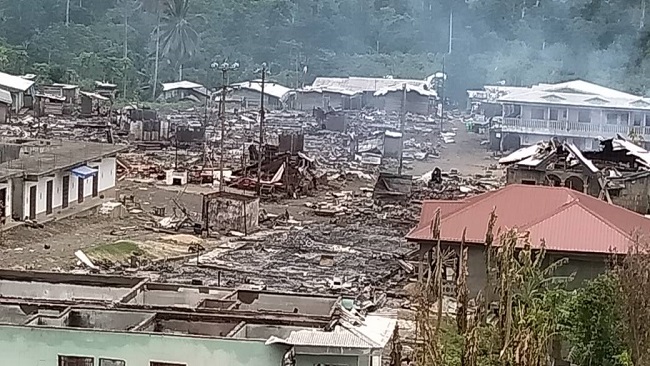
Ravaged by war, Southern Cameroons Southern Zone turns attention to Covid-19 fight
Covid-19 has had a big impact on Cameroonians around the country, especially those living in the Centre Region, Littoral, West and Southwest regions. In February 2020, when we first heard of Covid-19 virus, many Cameroonians took the pandemic—and our preparedness to fight it—for granted. The government did not immediately plan or announce any measures to tackle the pandemic. As a result, in the Centre Region, it was business as usual, with educational institutions and commercial spaces remaining open.
Meanwhile, the Northwest and Southwest regions were still reeling from the economic and social impact of the ongoing Anglophone crisis, which began in 2017 and has already taken many lives and caused widespread displacement. The onset of Covid-19 has only aggravated the situation in the Northwest and Southwest regions. After a delayed initial response to the Covid-19 crisis, Cameroon has finally put some measures in place to tackle the pandemic.
Impact of government measures
The Cameroonian government has now announced several measures to curtail the spread of Covid-19. These include social distancing, a ban on public gatherings of 50 or more people, a lockdown of all shops and bars after 6 PM everyday, and a restriction on the number of people that can be ferried in a taxi at a time.
Although businesses used to do relatively well in the Southwest region, with people buying and selling things at a low cost, the onset of Covid-19 has impacted the economy and has significantly hit the supply of goods in this area. The price of hand sanitisers, which were not in much demand previously, has skyrocketed. Masks and gloves have also have seen a rise in price, even as their stocks deplete. The government’s decision to close several marketplaces has had a direct impact on the livelihoods of many people. The government has also closed down Cameroon’s borders, halting the trade of some goods as a result. The situation is graver for those who run small shops as they are now unable to meet the basic needs of their families.
Before the Covid-19 pandemic struck, Cameroon maintained a good trade relationship with China. But with the closure of all borders, trade has been hit. Most goods used by Cameroonians are from China, but now there is a stigma attached to Chinese goods due to a lot of misinformation. The Southwest region is experiencing a widespread shortage of products, forcing many to look elsewhere to satisfy their needs. This has made life even more difficult for the less privileged and differently-abled, who are now struggling to access even basic amenities.
Cameroonians have typically neglected health and sanitation issues. Activities such as washing hands, cleaning your surroundings and waste disposal have seldom been followed. Most people did not even know of or how to use hand sanitisers. The healthcare system has also been plagued by malpractice and the incompetence of inadequately trained medical personnel. But with the arrival of Covid-19, there has been some change in personal health and hygiene practices and the functioning of the medical system. The government is working to sensitise Cameroonians around the country on measures to protect themselves against this disease, including issuing communiqués on the proper techinique of on washing your hands with soap.
People comply with advisories
People in the Southwest region have become more aware and alert since the government’s measures to counter the spread of Covid-19 went into action. The government has also set up a dedicated helpline to help people access the right information. News of three alleged cases in the region caused some panic but people have been adhering to the safety and hygiene measures more strictly since then. The cases were later found to be negative, but the people continue to remain cautious and follow the government’s advisories.
Some civil organisations such as Social Change and Establishment Center for Youths and Disabled Persons are teaching people how to make hand sanitisers and face masks themselves since there is a shortage of these product and those that are available are being sold at a high pricer. Even the artistic community is doing its bit to educate people. A musician in the Southwest region has written a song to help inform people about the dangers of the of the Covid-19 virus.
There has been no positive Covid-19 case in the Southwest region as of now, and people are continuing to adhere to the government restrictions and suggestions. However, the shortage of basic goods continues and people are struggling. The government must take into consideration the concerns of the people, especially the differently-abled and less privileged, and must plan to help them meet their basic needs.
Culled from Orfonline.org
Cameroonians looking for missing president amid coronavirus crisis
Cameroon’s aged president is coming under fire for his absence from the national stage as the central African country faces a burgeoning coronavirus crisis.
A month after the first case of COVID-19 was recorded, 87-year-old Paul Biya has yet to address the nation — a silence that for supporters is a sign of gravitas but for critics one of failure.
According to official figures posted early Monday, Cameroon has 658 cases of the virus, with nine deaths, making it the second most-affected country after South Africa in sub-Saharan Africa.
Cameroon is already waging two violent conflicts, one against Boko Haram terrorists in the north, the other against English-speaking separatists in the west. The fighters in the new front are doctors and nurses who are woefully lacking in masks and breathing equipment.
In his 37 years in power, Cameroonians have become accustomed to Biya’s long absences, mainly because of poor health, but his silence over the pandemic is raising sharp questions. He posed for the cameras after talks with the US ambassador on March 11, but did not speak to the press.
Six days later Biya urged Cameroonians on Facebook to “respect” measures taken to combat the virus, but since then there has not been so much as a whisper from a leader who has overseen many crises since he took power in 1982.
– Biya ‘cannot be pinned down’ –
Biya’s track record suggests he is not a major communicator in the best of times, making just three or four appearances a year. But for researcher Stephane Akoa, “In a context like this, the presidential message is important.”
Last week, speculation mounted on social media that Biya could be dead, prompting a formal public denial by Communications Minister Rene-Emmanuel Sadi, who insisted that Biya was “going about his official business as normal”.
But there was no word from the president himself, provoking a sharp attack from main opposition leader Maurice Kamto, the runner-up to Biya in 2018 elections. On Friday, Kamto demanded that the president address the nation within seven days, otherwise “the people… will inevitably see his failure”.
Biya’s silence “is becoming criminal,” he added. Labour Minister Gregoire Owona snapped back, saying Kamto wished to politicise the crisis, calling it “shameful”.
Oswald Baboke, the president’s deputy chief of staff, commended Biya’s “wisdom… (and) restraint,” writing in the press that “the President’s time cannot be improvised and cannot be pinned down.”
Thus far the youthful health minister, Malachie Manaouda, has been the point man for the coronavirus crisis, tweeting out frequent updates and detailing the government’s response. But criticism has grown louder with the rise in known cases from 142 to 658 in a week.
– ‘Lack of coordination’ –
“Government communication is weak, its response was late and in some respects poorly prepared,” said Stephane M’Bafou, a consultant in public management and governance. “There is an obvious lack of coordination,” said economist Albert Ze.
Prime Minister Joseph Dion Ngute on March 13 announced measures such as closing borders and a ban on rallies, which have been extended.
The one new step since then, attributed to Biya but announced by Ngute, has been the creation of a solidarity fund worth one billion CFA francs (1.5 million euros / $1.65 million). Others say the response does not go nearly far enough.
“We must quickly declare a curfew, isolate the cities where cases are confirmed and move towards a general containment regardless of the socio-economic cost,” said M’Bafou.
Source: AFP
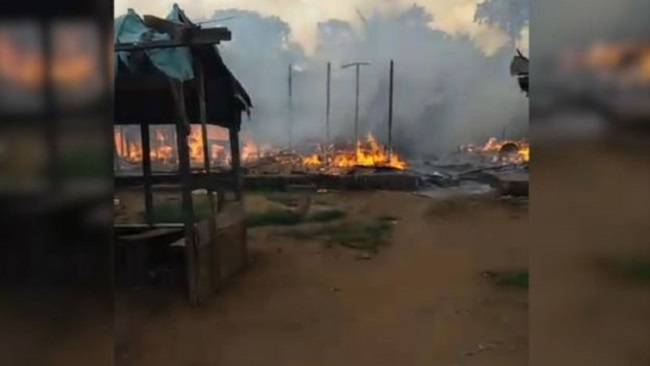
Southern Cameroons fighters relaunch attacks to reject French Cameroun reconstruction Plan
Cameroonian separatist fighters have relaunched attacks after the government announced a reconstruction plan, claiming that peace was returning to the English-speaking Northwest and Southwest regions of the central African state. The military said attacks were reported in at least seven villages, with about 13 fighters killed, but the fighters say the military had more casualties.
Public Works Minister Emmanuel Nganou Djoumessi says road construction engineers are leaving after persistent attacks in several parts of the Northwest region, where President Paul Biya had instructed them to begin reconstructing the central African state’s English-speaking regions, devastated by three years of separatist conflict. Djoumessi spoke to VOA via a messaging app.
“The work started, unfortunately some criminals came and destroyed the property of the company but we have to continue without showing any signs of weakness. The head of state [Cameroon’s president] himself is extremely committed,” he said.
Biya last week created what he called the Presidential Plan for the Reconstruction and Development of the English-speaking Northwest and Southwest regions. The reconstruction and development plan envisages construction of roads, schools, hospitals, public edifices, markets, private homes and villages in areas destroyed by three years of fighting.
After the plan was announced, separatists warned on social media that they will not accept such projects from what they said a foreign government in Yaounde, and began attacking military posts and burning more infrastructure. The fighters torched local council offices and schools in Bui, Donga Mantung and Ngoketunjia administrative units in the Northwest and Lebialem and Manyu administrative units in the Southwest.
The military said in a release that there was heavy fighting in the northwestern villages of Vekovi, Tatum and Mbiame and the southwestern town of Kumba, with 13 fighters killed. The fighters on social media said the casualties were more on the side of government troops. The military has denied the allegations.
Benard Okalia Bilai, governor of the English-speaking Southwest region, speaking via a messaging app, said since the attacks were relaunched last week, the population has been collaborating with the military to denounce the attackers.
“The populations have understood that they were misled, so they have realized that their future, their hope is within the institutions, and that what the head of state has put at their disposal is their future and that they should collaborate with those authorities, the forces of law [the military], to denounce those who are disturbing. The damages are enough,” he said.
Christopher Effimba, leader of the NGO Hope Cameroon, said the central African state should make sure peace fully returns to its English-speaking regions before reconstruction projects are launched. He said the separatists are still very active and strong. He also spoke via a messaging app.
“Infrastructural development cannot be implemented in the field if we do not have a peaceful atmosphere. Therefore, calm the atmosphere,” he said. “We need peace to enable the road workers to dig the roads. If the people do not accept peace, it is impossible for any Caterpillar, any bulldozer to go in there and try to do any road.”
Unrest began in Cameroon in 2017 after a government crackdown on peaceful protests led by lawyers and teachers who complained of being marginalized by the French-speaking majority.
In October 2019, Biya organized a national dialogue to solve the crisis but the separatists did not attend. The separatists said they will only be ready to discuss the terms of their independence in a republic they have created called Ambazonia.
The unrest has killed more than 3,000 people and displaced over 500,000 according to the United Nations. Fifty thousand others are asylum seekers in neighboring Nigeria.
Source: VOA
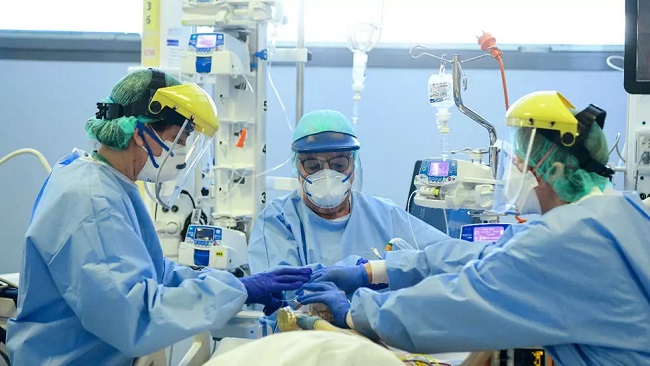
Italy says number of doctors killed by coronavirus passes 100
One hundred Italian doctors have died of the novel coronavirus since the pandemic reached the country in February, Italy’s FNOMCeO health association said on Thursday, with analysts estimating that 10 percent of those infected in Italy work in healthcare.
“The number of doctors who have died because of Covid-19 is 100 — perhaps even 101 at the moment, unfortunately,” a FNOMCeO spokesman told AFP.
The toll includes retired doctors the government began calling in a month ago to help fight a coronavirus that has officially claimed a world-topping 17,669 lives in Italy.
Italian media reports estimate that 30 nurses and nursing assistance have also died of Covid-19.
“We can longer allow our doctors, our health workers, to be sent to fight without any protection against the virus,” FNOMCeO president Filippo Anelli said on the association’s website.
“It is an unfair fight,” he added.
Rome’s ISS public health institute estimates that 10 percent of those infected with the novel coronavirus in Italy work in health care.
Hard-hit Italy was the first European country to shut down almost all business activity on March 12 because of the virus.
The closures and accompanying containment measures have helped stem the spread of a disease that has officially claimed 17,669 lives across the country since February, the world’s highest toll.
The Italian government is now weighing how and when to ease social distancing measures that have so far been extended until April 13.
(FRANCE 24 with AFP)
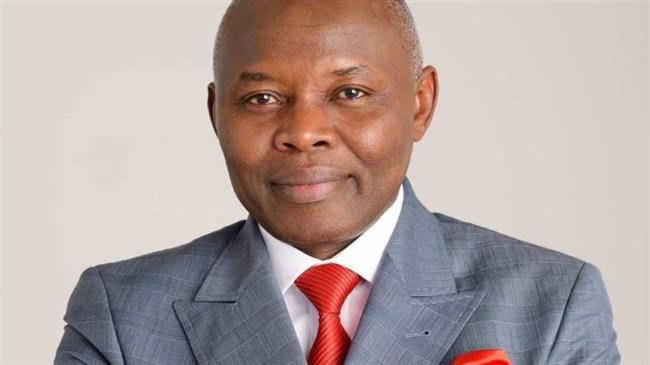
Congo-Kinshasa: Senior aide to President Tshisekedi detained in anti-corruption drive
Vital Kamerhe, a key ally to President Felix Tshisekedi in the Democratic Republic of Congo, was placed in custody at Kinshasa’s central prison on Wednesday evening, a judicial source said.
Kamerhe, who became Tshisekedi’s chief of staff after a long spell as speaker of parliament, was taken to Makala prison shortly after 7:30 pm (1830 GMT), under a wide-ranging crackdown on corruption.
A key figure on the political scene in the DRC, the 61-year-old Kamerhe was detained under “a provisional arrest warrant” after being questioned for more than six hours by the public prosecutor in an inquiry into suspected mismanagement of public funds, the judicial source said.
It was the first time a presidential chief of staff — a position that wields great clout in the DRC — has been arrested in the country’s history.
Tshisekedi has vowed to tackle corruption to bring the “renewal” of justice and end the perceived impunity of political and business elites.
Named to head Tshisekedi’s cabinet after the new president was sworn in on January 24, 2019, Kamerhe is being investigated into use of funds earmarked for major construction projects.
Kamerhe initially ran in the 2018 presidential elections but backed out to team up with Tshiseki. The two leaders signed a political agreement that gave birth to a joint platform, Heading for Change.
The December 2018 vote led to the first peaceful transition in the history of the former Belgian Congo, although Tshisekedi also has to juggle power with forces that support former president Joseph Kabila.
Kamerhe’s political party, the Union for the Congolese Nation (UNC), has several ministers in a sprawling coalition government of 67 members.
A banker, two corporate bosses and an official from a state-owned firm have already been placed in provisional custody during the inquiry into the financing of Tshisekedi’s “100 days” action plan. Some detainees have been released.
(Source: AFP)