
Yearly Archives: 2017
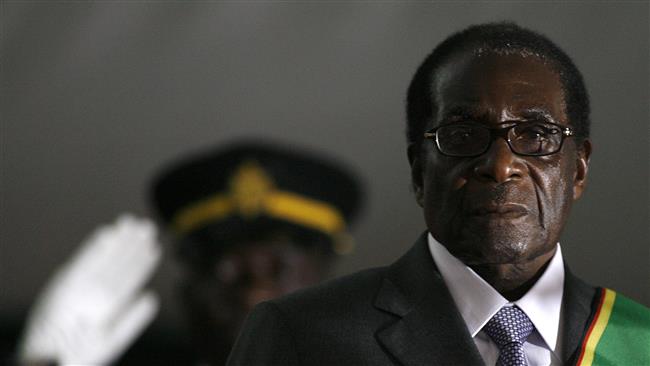
Mugabe granted immunity from prosecution
Zimbabwe’s former leader Robert Mugabe has been given immunity to stay in the country as he bowed to increasing pressures and quit office after nearly four decades in power.
Sources close to the recent negotiations with Mugabe that led to his resignation said Thursday that he had been given immunity from potential prosecution and assured that his safety would be protected.
The 93-year-old former president had reportedly asked for assurances to stay in Zimbabwe and die there.
“For him it was very important that he be guaranteed security to stay in the country … although that will not stop him from traveling abroad when he wants to or has to,” said a government source about discussions between negotiators and Mugabe in recent days.
“It was very emotional for him and he was forceful about it,” said the source who spoke on condition of anonymity.
Another source said Mugabe had received assurances that his wife, Grace, and other members of his family, would be protected following his resignation.
“The outgoing president is obviously aware of the public hostility to his wife, the anger in some circles about the manner in which she conducted herself,” said the source, adding, “In that regard, it became necessary to also assure him that his whole family, including the wife, would be safe and secure.”
The political standoff that began earlier this month in Zimbabwe and finally led to Mugabe’s ouster after 37 years in power was triggered by a battle to succeed him that involved his wife.
The army put Mugabe under house arrest after he sacked his long-time deputy Emmerson Mnangagwa as fears grew that the president was engineering a path for his wife to succeed him. Mugabe refused to resign for almost a week, even after the ruling Zanu-PF party sacked him.

However, on Tuesday Mugabe sent a letter to the country’s parliament, which had began an impeachment motion against him, and announced his resignation.
Mnangagwa, who had fled Zimbabwe out of fear for his life, returned to the country the same day to be nominated as new Zanu-PF leader. Parliament had announced that Mnangagwa would be sworn in as Zimbabwe’s new president on Friday.
Source: Presstv
Ambazonia Crisis: Louis Berger hired to support connectivity improvement between Cameroon and Nigeria
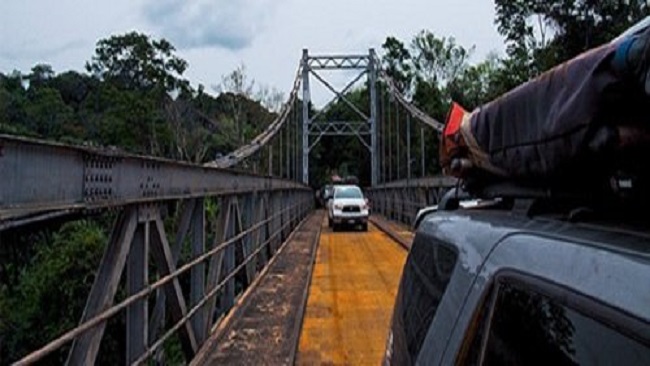
Louis Berger was awarded a 1.5 million euro (1.7 million USD) project management and construction supervision services contract by the Cameroonian and Nigerian governments for construction of a two‑lane bridge over the Cross River at Ekok/Mfum, which is the border between the two countries.
Louis Berger is providing project management and construction supervision services for the construction of a two lane bridge over the Cross River at Ekok/Mfum, which is the border between Cameroon and Nigeria
Louis Berger is providing project management and construction supervision services for the construction of a two lane bridge over the Cross River at Ekok/Mfum, which is the border between Cameroon and Nigeria.
“We are proud to support both governments to improve their transport infrastructure and the connectivity between the two countries,” said Jacques Blanc, Louis Berger’s senior vice president. “The new bridge will contribute to more effective and time-saving transportation while providing safer and more comfortable journeys to road users on each side of the border.”
The two-lane box girder balanced cantilever bridge will be approximately 403 meters (1,322 feet) long with a 150-meter span over the Cross River and approximately 1.4 kilometers (.9 miles) of approach roads. The new structure will replace the single lane suspension bridge currently connecting the two countries because its lack of traffic capacity generates long queues on both sides of the border.
The team will support the Project Implementation Unit, the Road Sector Development Team within the Federal Ministry of Power, Works and Housing in Nigeria. It will also work with the African Development Bank Group project unit within the Ministry of Public Works in Cameroon. The project has a duration of 18 months with a 12-month defects liability period. Services include project management, construction supervision and training on bridge construction management.
The current project is part of the Program for Transport Facilitation for the Bamenda-Enugu road corridor, a program funded through an African Development Fund joint loan to Cameroon and Nigeria and a grant to the Economic Community of West African States (ECOWAS).
Louis Berger has been working in Africa for more than 50 years. The firm has 25 years of experience in Cameroon and more than 30 years in Nigeria, where the company has implemented projects in the economic and institutional development, transport, and water markets.
About Louis Berger
Louis Berger is a global professional services corporation that helps infrastructure and development clients solve their most complex challenges. We are a trusted partner to national, state and local government agencies; multilateral institutions; and commercial industry clients worldwide. By focusing on client needs to deliver quality, safe, financially-successful projects with integrity, we are committed to deliver on our promise to provide Solutions for a better world.
Source: Louis Berger
Biya to attend Africa-EU Summit as the Ambazonia crisis continues to give the dictator an uncomfortable moment
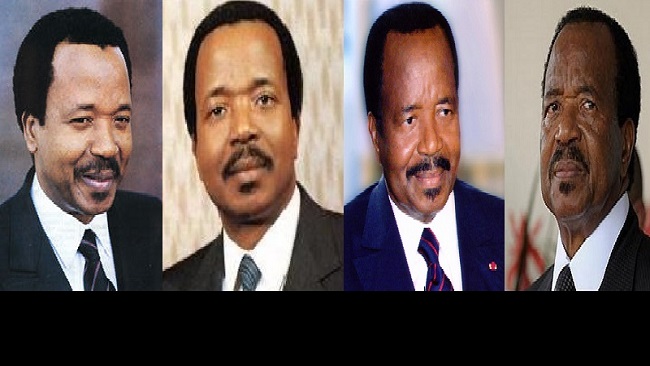
Cameroon’s Head of State, Paul Biya, will be in Abidjan, Côte d’Ivoire from November 29-30, 2017, for the 5th AU-EU Summit which will bring together African and European heads of state. The Summits of Heads of States and Governments take place traditionally every three years alternately in Africa and Europe with the aim of taking stock of the progress made in the implementation of commitments and providing political guidance for further work.
The Summit, which will be held on the theme: “Investing in youth for a sustainable future,” will also be attended by the President of the European Council, the President of the European Commission, the President of the African Union and the Chairperson of the African Union Commission.
The meeting will hold against the backdrop of political changes in Zimbabwe where the country’s former president, Robert Mugabe, has been forced to retire after having led his country for thirty-seven years. It should be recalled that it was Mrs. Mugabe’s vaulting ambition that pushed the former president to make some mistakes which led to the military taking over power and sidelining the 93-year-old Mugabe. Also, having been in power for that long, it was just normal for the country’s population, that had taken the brunt of Mr. Mugabe’s dictatorship and mismanagement, to take to the street in support of the military.
Similarly, the situation of Africans being sold in Libya as slaves will also be on the agenda of the summit, as this incident has shocked the entire world, especially the African continent, with many experts around the world blaming African governments for not doing enough to create an enabling environment for their citizens. It should be recalled that Sub-Saharan African countries have been mired in corruption and poor governance which are blighting the lives of their people and chasing young men and women from their countries to failed states like Libya where they hope to make their way to Europe which they erroneously consider as an earthly Paradise.
It is obvious that the issue of security will also be on the table, as the continent is facing a huge security challenge. Libya is today a magnet for many jihadists groups following the killing of Qaddafi, Somalia is yet to be back on its feet, Boko Haram is making its presence felt in Nigeria, Cameroon and Chad, while the Malian situation is far from being addressed. The Anglophone crisis will give Mr. Biya and his delegation an uncomfortable moment, given that the entire world is aware that all its efforts to roll back the Anglophone rebellion have been unsuccessful. If not checked, the situation could transform the entire Central African region into a pretty mess. The Anglophone problem will therefore be on the table, either during Mr. Biya’s personal meeting with European partners or during his tête-a-tête with his French masters.
Though the continent has made some baby strides towards modern-day democracy, there is still a long way to go for some countries such as Cameroon where Mr. Biya has been presiding over the country’s destiny for thirty-five years, with no impressive economic and political outcomes. In Cameroon, multiparty politics exists on paper, but political alternation is surely a distant tomorrow affair. Mr. Biya and his party have won all elections organized in the country since 1992 and this speaks to the type of multiparty politics that exist in the country. Political intimidation and physical elimination are still among the tricks and tactics used by the ruling party, popularly known as a crime syndicate, to stay in power.
With regard to human rights, Cameroon has one of the worst human rights records on the continent. Freedom of association has suffered over the last decade, while arbitrary arrests and detentions have been on the rise over the last few years. Over the last year, its response to the Anglophone crisis has been anything but civilized. On October 1, 2017, more than one hundred Anglophones were mowed down by the country’s military which thought it could intimidate the Anglophone minority into silence, but its response has instead made the conflict more complicated to address.
More than 50,000 Anglophones crossed over to Nigeria as refugees on October 1, 2017, with people from Manyu Division accounting for more than 90% of the refugees, as the government wanted to use the occasion to punish Manyu Division which is the birthplace of Anglophone activism and activists such as Barrister Felix Nkongho Agbor-Balla, Chief Justice Paul Ayah and Sisiku Ayuk Julius Tabe who is the current president of the “Federal Republic of Ambazonia”, which is the name of the Anglophone region that wants to secede from Francophone Cameroon.
It should also be recalled that some 100,000 Anglophones have been internally displaced following a botched declaration of independence by the Anglophone minority on October 1, 2017, and this is giving the country a bad name. Mr. Biya and his government have never really addressed concerns expressed by Anglophones who have been discriminated and marginalized for more than 56 years. Mr. Biya who counts on time to solve his problem is gradually coming to terms with the fact that the Anglophone problem will not go away anytime soon, as various Anglophone organizations are working hard to keep the struggle on the front burner in order to erode the government’s reputation and credibility, if it has any. Courts and schools in the Anglophone region have remained closed and diplomatic efforts by Anglophone groups abroad have left the government permanently under pressure.
In recent months, the conflict has degenerated, with soldiers and Special Forces deployed in the Anglophone zone becoming targets for Mr. Cho Ayaba’s military wing of the SCNC which has been calling for the secession of the Anglophone zone from the francophone region which is suffering from advanced economic and political decay due to neglect and mismanagement. Some 20 soldiers have lost their lives in this conflict which many analysts believe could have been averted if Mr. Biya and his government had opted for genuine and inclusive dialogue called for by many, including the Vatican, the U.S., the United Kingdom, France, Canada and other partners of the beleaguered government.
Meanwhile, the country’s northern part is still under an insurgency that is making life unbearable to the citizens. Boko Haram has been killing and maiming innocent civilians and its objectives are still unclear. Many Cameroonian soldiers have also been victims of this insurgency that has lasted for more than four years and there is really no end in sight. The Boko Haram insurgency is complicating issues for the government that has to deal with a very vociferous Anglophone minority that is hell-bent on walking away from a union that was flawed right from its inception. If this region succeeds to walk away, Cameroon’s economy will suffer, given that the Anglophone region accounts for more than 60% of the country’s GDP. The South West region alone accounts for more than 40% of the country’s wealth, given that its oil and gold deposits are in the region. The South West region is also the country’s largest producer of cocoa and it is also rich in timber which is being harvested with impunity.
Regarding the country’s economy, the once prosperous economy has been on its knees for a long time due to mismanagement and corruption, with unemployment and inflation attaining unimaginable rates. The country’s road infrastructure has aged and is crumbling, making it hard for farmers to move their produce from the rural areas to the city where the markets are.
Over the last eleven months, the country has reported more 4,300 fatal accidents, with some 20,000 Cameroonians losing their lives. The railway system has also faced some major challenges in recent times. The country’s railway corporation is struggling, as its assets are old and cannot stand the stress of moving large numbers of people and goods. The corporation is currently locked in a class-action law suit following a terrible accident in Eseka in 2016 that resulted in the death of more than 200 Cameroonians. Many passengers on that ill-fated train have never really been accounted for and many families are yet to be compensated for the loss of their loved ones.
As usual, the government is working hard to deflect blame and responsibility and this is earning it so many enemies and adversaries. Cameroon is seemingly a peaceful country, but if you scratch beyond the surface, you will find out that there is a lot of insecurity in the country. Poverty and unemployment have created pockets of bandits and crooks who are marauding the streets of cities such as Douala and Yaounde to prey on innocent citizens. Even uniformed officers are taking advantage of the insecurity caused by the Anglophone crisis to make a quick buck and the government is looking the other way, giving the impression that it has approved of these illegal means used by these criminals to extort money from the population.
While not much is expected from the Abidjan summit, many experts hold that many issues will be dealt with during the two-day summit. They argue that focusing on youths will be good, but seeking to address the issue of insecurity across the continent will help to attract investors who will help to create jobs for the youths. It is hoped that the summit will be used to bring pressure on African leaders to embrace democratic means that will help their economies create job, foster transparency and reduce the insecurity that is helping to stunt the continent’s economic growth.
By Soter Tarh Agbaw-Ebai with contributions from the editorial team
Zimbabwe: The Crocodile is back in Harare
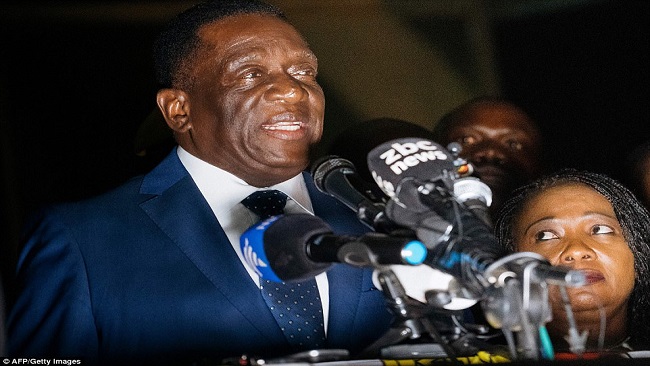
Zimbabwe’s president designate Emmerson Mnangagwa arrived back in Zimbabwe on Wednesday where he delivered a tub-thumping speech to jubilant Zanu PF supporters in the capital Harare.
Mr Mnagagwa used his first public words after arriving back from South Africa to accuse the Mugabe regime of trying to poison him, and said he decided to act rather than ‘wait for them to eliminate me.’
He also gleefully referred to Robert Mugabe as the ‘former president’ to wild applause from the crowd.
Mr Mnangagwa, who is known as The Crocodile from his revolutionary days, also promised a ‘new democracy’ for Zimbabwe along with peace, security and jobs.
In an attempt to pacify early critics who said Zimbabwe was simply replacing one dictator with another, Mr Mnangagwa vowed to be a ‘servant’ to the country and a voice for ‘the people of Zimbabwe’ – a phrase he repeated dozens of times.
After Mugabe, African ageing leaders wonder what next
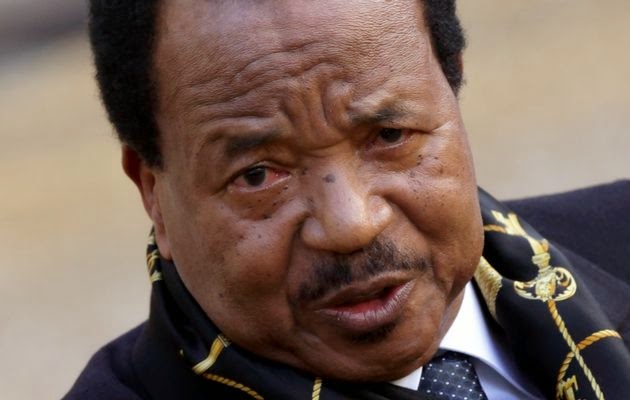
Hours after Zimbabwe’s Robert Mugabe was forced out after 37 years in power, Uganda’s president, another former guerrilla in office for more than three decades, was tweeting about pay rises for civil servants and bright prospects for his army tank crews.
Supporters of long-serving African leaders dismiss parallels with Zimbabwe, where Mugabe’s former deputy – sacked during a power struggle with Mugabe’s wife – is about to take power with military and public backing.
But Ugandan President Yoweri Museveni’s tweets, which come amid rising anger at the 73-year-old’s attempts to prolong his rule, suggest he is one of several African leaders looking south and wondering about their own stability.
“Now that the economic situation in Uganda is improving, the government will be able to look into raising of salaries of soldiers, public servants, health workers and teachers and also deal with institutional housing,” Museveni tweeted on Wednesday.
It was unclear what improvement he meant. Uganda’s faltering economy is growing too slowly to absorb a booming population of 37 million. The number of citizens spending less than a dollar a day has surged to 27 percent, the statistics office reported in September, up from 20 percent five years ago.
President since 1986, Museveni is among Africa’s longest-serving leaders. They include Equatorial Guinea’s Teodoro Obiang, president for 38 years; Cameroon’s Paul Biya, president for 35 years; Congo’s Denis Sassou Nguesso, president for two stints totaling 33 years.
The family of Gnassingbé Eyadéma have ruled Togo for half a century, and the Democratic Republic of Congo has been run by the Kabila family since Laurent Kabila took power in 1997. He was replaced by his son, Joseph, in 2001. Some countries allow only two presidential terms, but several have rolled back such legislation.
In Cameroon, Biya scrapped term limits and cracked down on the opposition. In Congo, Nguesso jailed an opposition leader this year for protesting against removal of term limits. Still, Mugabe’s fall has sent a shiver through a continent whose northern countries saw the Arab Spring revolts tear down repressive regimes, even though many of the new leaders proved as bad as the old.
Franck Essi, secretary-general of the opposition Cameroon Peoples’ Party, said opposition movements were closely watching events in Zimbabwe. “Leaders must put in place mechanisms for a democratic and peaceful transition that will allow new leadership. If not, sooner or later, the people who are suffocating will wake up,” he said.
Some places have already seen change. Burkina Faso’s Blaise Compaore was ousted by protests in 2014 as he tried to change the constitution and extend his decades-long rule. In January, Gambia’s erratic ruler Yahya Jammeh fled after regional pressure ended his 22-year reign.
Angolan president Jose Eduardo dos Santos stepped down this year after four decades in power; his handpicked successor has pushed out some key dos Santos allies.
For many nations, a Zimbabwe-style switch in the loyalties of the armed forces or a rift in the inner circle represents one of the few ways that rulers might be forced from power. Despite Zimbabwe’s well-established opposition, change didn’t come until Mugabe’s inner circle split over his succession plans, and the military put him under house arrest.
Hundreds of thousands of protesters have flooded Togo’s streets this year, calling for an end to half a century of Eyadéma family rule. It didn’t work.
Brigitte Adjamagbo-Johnson, a top Togolese opposition official, said they had hoped for a Zimbabwean-type change of power where the military came over to their side. “We’d wanted the Togolese army to fight alongside us. We were moved seeing that Zimbabwe’s army and civilian population were all in the streets dancing. That’s what we want in Togo,” she said. “There will be change in Zimbabwe this year and there will be in Togo too.”
A slump in commodities prices has deprived some nations of the resources they have traditionally used to muffle protests. In some cases, corruption has also emptied state coffers. In central Africa, Congo’s Kabila has repeatedly postponed elections after refusing to step down at the end of his term last year, sparking deadly protests.
Jean-Pierre Kambila, Kabila’s deputy chief of staff, tweeted that Zimbabwe’s protests were a colonial fantasy. “A fabricated demonstration dreamed up by those who do not accept the liberation of Africa. Other Mugabes will be born. Nothing to worry about,” he wrote.
Uganda, a key Western ally set to begin exporting its substantial oil reserves, removed term limits in 2005 to extend Museveni’s rule.
The east African nation has seen far less violence under Museveni than the two dictators who preceded him. But now tensions are rising as social services crumble and parliamentarians attempt to remove a constitutional age cap that would bar Museveni from standing in the next election.
Police have used deadly force against protesters, and repeatedly arrested the main opposition leader. Security forces dragged parliamentarians opposing the bill out of the legislature. On Wednesday, police raided a popular newspaper, detaining eight staff.
Okello Oryem, Uganda’s state minister for foreign affairs, dismissed any parallels with Zimbabwe, saying Mugabe’s overthrow was the result of Western interference. “The intelligence services of the West have worked day and night to bring down Zimbabwe,” he told Reuters. “Citizen pressure in Zimbabwe can only work if and when the army allows it.”
But another Ugandan opposition leader, Asuman Basalirwa, warned that national leaders who refused to step down risked plunging their countries into conflict. Military intervention to end dictatorships ultimately leads to more repression, he said, something that many feared might be in store for Zimbabwe.
“It is time for the continent to democratize,” he said. “Those who have not yet experienced what happened in Egypt, Tunisia, Libya and now Zimbabwe should just wait for their turn because it will surely come.”
Source: REUTERS
CPDM Government accepts soldiers killed a hundred Southern Cameroonians
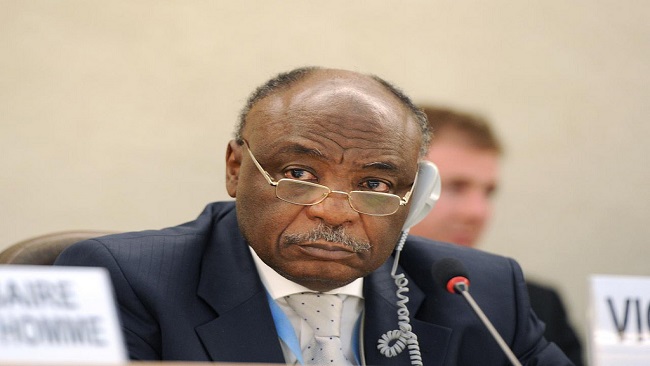
The French Cameroun government has finally accepted that more than a hundred Southern Cameroonians were killed during the October 1 Independence Day celebrations. The revelations were made during a meeting that held on November 8th, 2017 grouping members of the UN’s Anti-Torture Committee and the Permanent Representative of Cameroun to the United Nations in Geneva, Fabien Nkou Anatole.
The UN body reportedly told the predominantly Francophone delegation composed of representatives from the Ministries of External Relations, Justice, and the General Delegation for National Security including the National Gendarmerie that lawyers were not often present at police interrogations of Southern Cameroons detainees even though this is provided for by law.
The UN Committee of experts grilled the delegation from La Republique du Cameroun over allegations of summary executions and the existence of secret detention facilities and mass graves, particularly in the context of the Southern Cameroons crisis and the fight against the Nigerian Islamic sect, Boko Haram.
The UN Anti-Torture Committee pointed out that the regime has over powered the Yaoundé Military Tribunal and legalized torture. The French Cameroun delegation was also informed that prison conditions in Cameroun were deplorable. The UN experts observed that “the trials of soldiers and police officers accused of torture gave rise to only light sanctions, or even suspended sentences, despite the heavy penalties provided for by the Penal Code.”
Fabien Nkou Anatole who retired as Minister Counselor at the Cameroon embassy in Bonn Germany a decade ago and was immediately appointed by his kinsman, Paul Biya to Geneva insisted that the corporatist demands that precipitated the Southern Cameroons crisis had given way to a real armed insurrection aimed at splitting the country and accompanied by violence against citizens and property.
The French Cameroun representatives begged the UN Committee not to give credit to the reports of some institutions such as the International Crisis Group and Amnesty International.
By Sama Ernest with files from Cameroon Info.Net

Where is Vice Prime Minister Amadou Ali? Mystery surrounds whereabouts of the patriarch of Kolofata
The French Cameroun Minister of Labour and Social Insurance, Gregoire Owona is now deputising for the Vice Prime Minister in charge of Relations with the Assemblies, Amadou Ali plagued by health concerns for several months now.
This fact has gone unnoticed by the docile Francophone political elites. Recently, it was Minister Gregoire Owona who was questioned following the fire that ravaged the four upper floors of the administrative building of the National Assembly. Owona reportedly told some MPs that “I am here as the acting Minister of Relations with the Assemblies and I am really sorry to see what happened here.”
It is evidently clear that Minister Amadou Ali has not recovered from the disease and stress that took him to France some months ago.
Cameroon Intelligence Report understands President Biya long granted Mr. Ali permission to stay off duty and follow up with treatment. To date, there is not much information on the Deputy Prime Minister’s bill of health. But the appointment of an interim to his position suggests that the situation is worrying.
Ali was conspicuously absent during the parliamentary sessions of March and June and was replaced by Ange Michel Angouing, Minister of Public Service and Administrative Reform. His last appearance in public was in August.
By Chi Prudence Asong, CIR
Bundes: Chancellor Merkel’s fate uncertain as half of Germans favor new polls
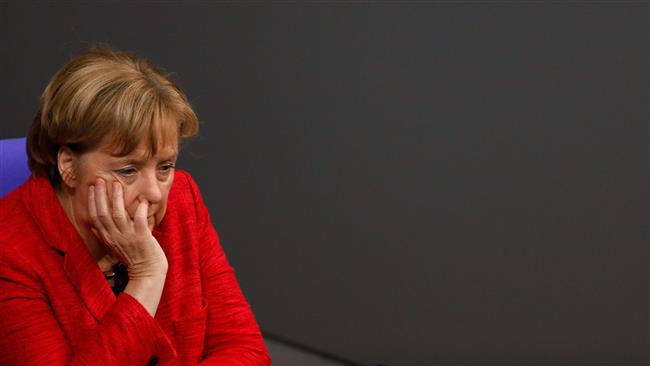
A new opinion poll shows that half of Germans are in favor of new elections as Chancellor Angela Merkel struggles to reach a compromise with other parties to form a coalition government.
Five weeks of coalition talks between the three parties trying to form the next German government effectively collapsed late Sunday.
A survey conducted by German Institute for New Social Answers (INSA) for Bild newspaper showed on Wednesday that 49.9 percent of Germans were in favor of holding new elections.
Merkel won a fourth term in office in elections in September but overall support for her party declined, forcing her to enter into negotiations with two other parties on a coalition government.
But the German chancellor, known for her negotiation skills, failed to broker an agreement between her conservative Christian Democratic Union CDU/CSU, the Free Democratic Party (FDP), and environmentalist Green Party.
Merkel herself has suggested that she would rather face fresh polls than leading an unstable minority government.
Forty eight percent of the respondents in the Wednesday poll also said they believed center-left Social Democrats (SPD) were right not to participate in coalition talks with Merkel’s CDU/CSU at all.
Only 18 percent would favor such a coalition with the SPD, which lost ground in the September elections.

The far-right Alternative for Germany (AfD) Party spoiled Merkel’s victory in September by surging into the parliament for the first time in more than half a century. The results even caused friction within her own bloc, with her party’s Bavarian sister party threatening to set out on its own.
Four out of 10 people said in the survey that Merkel should run again as chancellor if new elections are called. But 24 percent said they would prefer another candidate for her party. The chancellor herself has said she sees no reason to resign from her post.
It is now up to President Frank-Walter Steinmeier to decide about how to proceed. Though his position is largely ceremonial, he has a crucial role at times of governmental crises like this.

President Steinmeier said on Monday that he did not want new elections and was prepared to give the parties more time to negotiate. The parties do not face strict deadlines; but if no achievement is ultimately made, Steinmeier will be forced to call snap elections.
Merkel is said to have told her party allies privately that her fate is now in the president’s hands.
Reports said Steinmeier, a former SPD leader, could bring considerable pressure on the party to change its mind and join a coalition with Merkel’s party. But there were also reports that SPD would only be willing to take part in a coalition under a new chancellor.
The Federal Republic of Ambazonia: Why we support the Interim Government
Over the last thirty-six years, Paul Biya Bi Mvondo, the blood thirsty leader of French Cameroun has pursued the colonial and annexationist agenda of his predecessor Babatoura Ahmadou Ahidjo over the Southern Cameroons with brutal and cruel arrogance. Southern Cameroonians have endued fifty-six years of French Cameroun’s colonial rule of terror with revolting indignation in the hope that the international community would come to our rescue.
Hundreds of thousands, perhaps millions of petitions filed by Southern Cameroonians to the United Nations, the African Union and international organizations established to protect and promote the liberating ethos of freedom and respect for international law received only timid acknowledgement. The bureaucratic shield surrounding the United Nations system and the corrupting influence of French Cameroun using the wealth obtained from looting the natural and mineral resources of the Southern Cameroons guaranteed French Cameroun the impunity to prosecute its policy of oppression and criminality over the Southern Cameroons. Considering French Cameroun and himself insulated from scrutiny over the brutality of French Cameroun’s colonial policies in the annexed territory of the Southern Cameroons, the leaders of French Cameroun ignored all entreaties and appeals to dialogue with the leaders and peoples of the Southern Cameroons to find a lasting solution to longstanding issues.
The time has come for all the leaders of the various liberation movements of the Southern Cameroons to join the revolutionary train set on the rails by our people back home in the Southern Cameroons to support the interim government established at the just ended conclave in Kaduna, Nigeria to kick French Cameroun’s out of our territory. This support is critical because the only language that will get the UN and the international community out of slumber to right the consequences its misfeasance in our territory is that of a united targeted field action. The time for that action is now.
At the threshold of the ongoing irreversible popular revolution in the Southern Cameroons, Paul Biya Bi Nvondo the sanguinary vampiric emperor of French Cameroun paid two visits to Abuja in one month. He met with His Excellency President Mohammandu Buhari. Nothing but the Southern Cameroons revolution could have compelled this aging dictator to make the unprecedented visits to Aso Rock considering his legendary record of ignoring Africa. He hoped that he could persuade the Nigerian President through diplomatic means and may be corruption which is his hallmark, to deport hundreds of thousands Southern Cameroonians and their leaders who over the years, sought refuge in Nigeria.Among these Southern Cameroonians future prominently, SesekuAyuk, the humble but determined pillar of the Southern Cameroons revolution.
Those who know the President of French Cameroun, his missions to Nigeria portrayed his tacit acknowledgement at long last, that the much-anticipated David of the Southern Cameroons struggle had emerged in Nigeria to confront the Goliath of French Cameroun brutal annexation of the Federal Republic of Ambazonia.
The dispatch of French Cameroun’s Minister of Territorial Administration Rene Sadi to Nigeria where he was received by the Vice President of the Federation His Excellency Professor Yemi Osibanjo a few weeks ago carried further symbolic weight. This visit is a testament to the fearful impact on the colonial regime of the outcome of the conclave of the Southern Cameroons that took place in Kaduna, Nigeria. Far reaching decisions were taken in that conclave regarding the road map for the actualization of the liberation of the Southern Cameroons. This road map is premised on the threshold of the Southern Cameroons independence and freedom pact that was sealed on October 1, 2017 with the blood of hundreds of thousands of our citizens.
These desperate actions by the criminal regime in French Cameroun underscore the significance of Nigeria in our liberation struggle. The presence in Nigeria of our interim leader and hundreds of thousands of Southern Cameroonians are key advantages that we have in our wining strategy. This is one compelling reason why we must support our interim leader and the interim institutions of governance established at the conclave for the actualization of our freedom.
Currently, there are officially over forty thousand Southern Cameroonian refugees in Nigeria. These are but conservative figures because over the last fifty-six years, hundreds of thousands of Southern Cameroonians sought refuge in Nigeria fleeing from the brutality of the annexation of our territory. They did not fold their hands and resigned themselves to fate. They have been active in our struggle in many ways. They, for example, are significant participants in the grass roads revolution that has reclaimed our independence and are actively defending it at the colossal costs of blood and limb.
Nigeria is of great importance to our cause not just because the Federation has offered our people and leaders the protections and support afforded in international law to victims of war crimes and international criminality. Nigeria is and was and will always be a key player in the defense of our liberty, freedom and independence. The Southern Cameroons has some enduring historic ties with Nigeria. The ethnic,nationality and cultural identity that the Southern Cameroons shares with Nigeria from the Niger Delta, Bakassi, Cross River, Ogoja through to Mubi in the North are indelible factors that must be seriously weighed and acknowledged. The presence of our leadership and hundreds of thousands of our people in Nigeria, and millions more directly concerned with the ethnic and nationality component in this struggle, calls for urgent attention. It is in our best interest to support a leadership that realises this reality and has the capacity to mobilize it for our common good.
Nigeria is the natural environment where our people will and have always sought refuge in time of need. Our interim Head of State Seseku Ayuk Tabe was in Cross River State of Nigeria to visit and support our people. Our diaspora has been blackmailed by some collaborators of the colonial rule making Nigeria the natural ideal environment where they will sooner or later meet and commune with their families. For example, over the past few days, one Benard Foju, a disgraced CPDM MP for Lebialem accused the Lebialem diaspora of brainwashing Lebialem youths and providing them drugs to torch his house and to resist colonial rule. This conduct which is not isolated, was intended to mobilize the enemy forces of oppression to target members of the diaspora, making Nigeria the natural environment for many to establish contact with their families back home. There is therefore good reason for us to support the interim government whose base in Nigeria offers the best hope yet to liaise with all Southern Cameroons organizations to prosecute the urgent realization of our peoples’ freedom.
We are conscious that there are many Southern Cameroons organizations and individuals out there agitating for leadership or to present alternative leadership of our struggle. It is possible for them to make meaningful contributions towards the realization of our cause without tacitly helping our adversary French Cameroun in dislodging us from Nigeria and depriving us of a natural environment for the realization of our liberation. This perforce must lead to the vacation of our territory by the occupation forces of French Cameroun. Those who are attacking the interim President and the interim government are missing the target and in ignorance advancing the objectives of our enemy. They should spare the invectives in them and direct them towards French Cameroon. The Southern Cameroons needs a leader who is humble, matured, composed, resolute, determined and focused.
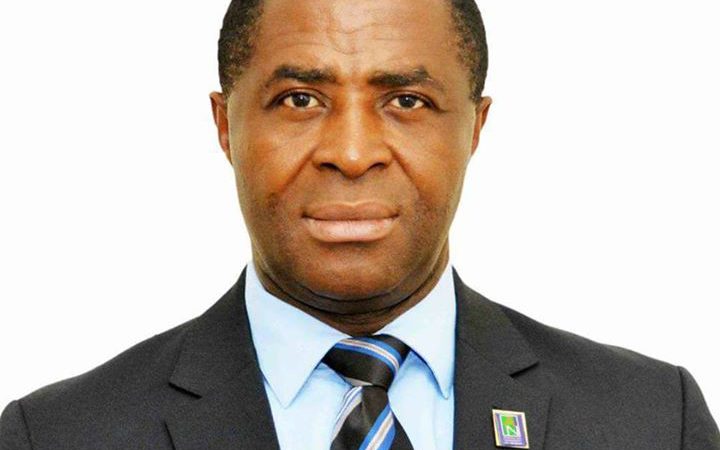
Sisiku Ayuk Tabe has demonstrated that he can reach out to front line leaders and all Southern Cameroonians. The postings by some leaders disclosing the subjects of their communication portray him as a steady leader who reaches out to Southern Cameroonians in the hope of building a consensus and grand coalition for the realisation of our objectives. This is what the leader of a revolutionary struggle must be. He has demonstrated that he can accept criticism and wise counsel in all humility. He is approachable, and available. We salute his endurance, steadfastness, vision and focus. He has depersonalised the leadership of the struggle. This is an attribute we sought many years ago. He is at the very heart of every man, woman and child in the Southern Cameroons. We strongly call on all the leaders of the various organizations in the Federation of Ambazonia to work with the interim government to confront our common enemy. There is a place and role for everyone in this struggle. Let us support Sisiku Ayuk Tabe who so far has led us this far. In him, we see the star of the Ambazonia revolution shining.
By Soter Tarh Agbaw-Ebai
Editor-in-Chief
Cameroon Concord News Group