
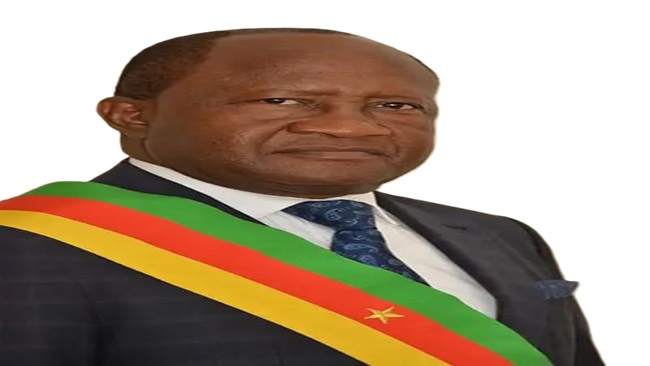
Yaoundé: Hon. Theodore Datoua is new Speaker of the National Assembly
The election of Hon. Theodore Datoua as new Speaker of the National Assembly offers more than a ceremonial changing of the guard in Yaoundé the nation’s capital. Frankly speaking, the electoral process in the national assembly presents a moment to reflect on the health of Cameroon’s so-called democratic establishments and the expectations Cameroonians rightly hold of them.
The office of Speaker of the National Assembly in Cameroon is not merely administrative. To be sure, Cameroon’s National Assembly Speaker is a custodian of parliamentary integrity, a referee of debate, and a bridge between the government and the governed.
In Cameroon’s political climate where trust in institutions is in very short supply, the National Assembly Speaker’s role becomes even more consequential. The tone set in parliamentary sessions—whether one of openness or opacity, rigor or routine—will ripple outward into public life.
Today’s transition from the 86 year-old Cavaye Djibril to Theodore Datoua comes at a time when Cameroonians are seeking renewed confidence in governance. Economic and political pressures, tribal and social tensions, and calls for genuine dialogue have underscored the need for a national assembly that is not only functional, but responsive. Hon. Theodore Datoua now has an opportunity to strengthen parliamentary oversight, encourage meaningful debate, and ensure that diverse voices particularly the Anglophones are not just heard, but taken seriously.
Today’s election in Yaoundé signals continuity and intent. Will Theodore Datoua’s tenure prioritize transparency? Will parliamentary proceedings become more bilingual and more accessible to ordinary citizens? Will legislative scrutiny of executive action grow sharper and more consistent? These are not abstract questions—they go to the heart of democratic accountability.
No speaker acts alone. The effectiveness of the Cameroon National Assembly depends on the collective will of its members. Yet leadership shapes culture. If Hon. Datoua commits to fairness, procedural discipline, and institutional independence, he and his new team will elevate the entire chamber.
Welcoming a new Speaker, then, should not be an exercise in routine optimism, but in measured expectation. The office carries both prestige and responsibility. If used well, it can help reinforce democratic norms and restore faith in public institutions. If not, it risks deepening cynicism.
Cameroon stands, as many nations do, at a crossroads between continuity and change. The National Assembly—and its new Speaker—now have a chance to show that representative governance can rise to meet the moment. The country will be watching.
By Soter Tarh Agbaw-Ebai


