Live from Colchester: A pictorial history of the SOBA UK 2019 Convention


The spokesman for Yemeni Armed Forces says more than 4,000 Sudanese militiamen fighting alongside Saudi-led military forces against Houthi Ansarullah fighters have been killed and many more injured ever since the Riyadh regime and its allies launched a military aggression against Yemen.
Speaking at a press conference in the capital Sana’a on Saturday afternoon, Brigadier General Yahya Saree said 4,253 Sudanese militants have lost their lives in clashes with Yemeni forces, noting that the total number of the Saudi-paid Sudanese mercenaries killed in Yemen since the beginning of the current year stands at 459.
Source: Presstv
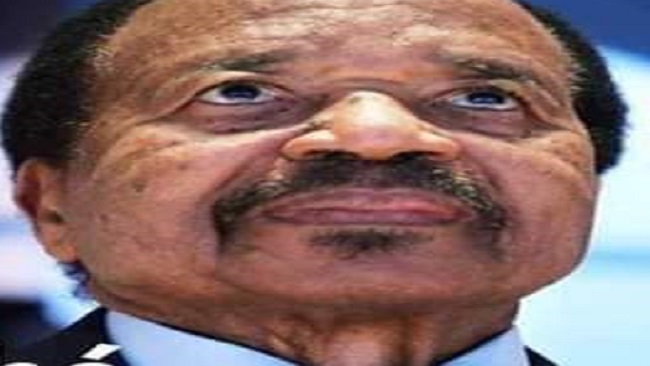
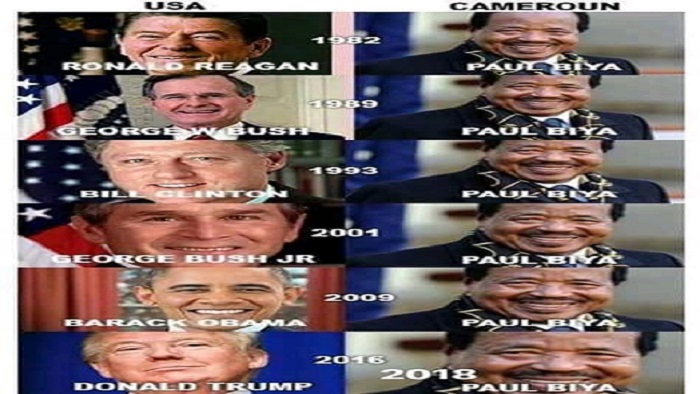
Ambazonia Vice President Dabney Yerima says the French Cameroun government under the 86 year old Paul Biya is now in a downward spiral following US President Donald Trump’s decision to terminate its eligibility for trade preference benefits under the African Growth and Opportunity Act (AGOA), as of January 1, 2020, due to persistent gross violations of internationally recognized human rights in Southern Cameroons.
Comrade Dabney Yerima told a cream of reporters late on Friday that it was enormously satisfying for the Ambazonia Interim Government that the US President spoke of persistent human rights violations being committed by Cameroonian security forces. These violations included extrajudicial killings, arbitrary and unlawful detention, and torture of Southern Cameroonians.
Dabney Yerima observed that for three years, the French Cameroun soldiers have not been able to defeat the Ambazonia Self Defense Forces and they are currently stuck. On the contrary, he added, the Southern Cameroons resistance is thriving and actively expanding to pro Yaoundé Southern Cameroons CPDM barons.
Vice President Dabney Yerima also appealed to Washington to play a direct role in the crisis that has rocked the two Cameroons. Yerima launched a scathing attack on the Yaoundé regime that has created armed militia groups all over the Federal Republic of Ambazonia.
By Soter Tarh Agbaw-Ebai
Thousands of South Africans drank beer, danced and sang in Johannesburg on Saturday as the country celebrated a hat-trick of Rugby World Cup titles — and the first with a black captain.
The 32-12 triumph in Japan was beyond the wildest dreams of most Springboks supporters, who had dreamt of a victory, but not by such a convincing margin.
Sports clubs were packed despite the 11:00 am (0900 GMT) kick-off and those who turned up were not disappointed as South Africa stunned pre-match favourites England 32-12 in Yokohama.
Traditionally a sport followed by whites, rugby has grown in significance among the 90 percent black population, whose favourite sport is football.
Captain Siya Kolisi last year became the first black Test skipper of the Springboks and six of the starting line-up in Yokohama were black.
Only one black player, Chester Williams, was in the 1995 World Cup-winning team and two, JP Pietersen and Bryan Habana, were part of the Springboks team that triumphed again 12 years later.
In Japan on Saturday, black wingers Makazole Mapimpi and Cheslin Kolbe scored the two late tries that put the final beyond the reach of pre-match favourites England.
At the Gold Reef City theme park close to central Johannesburg, a multi-racial crowd of young, middle-aged and old screamed with excitement every time the Springboks gained possession.
Among the crowd was businessman Preggie Subrayen, who believes the victory will bear the kind of fruits the country desperately needs to take it to new heights.
“This win will definitely boost the morale of people. Hopefully there will be a spin-off like after the 1995 win, when South Africans came together and united,” the 59-year-old said.
“I believe that this will change the economy for the better,” he said, of a country grappling with an economy deep in debt and near-30 percent unemployment.
His views were echoed by Jappi Nkoko, who was wearing a green replica Springbok jersey and carrying a national flag. He said he hoped the World Cup triumph would boost investment.
“If you recall, after the 1995 win our economy boomed, so (hopefully) it will happen again,” he said.
“Now that we have won, people will start supporting each other.”
In the 1995 win, South Africa’s first black president Nelson Mandela famously handed the trophy to the team’s white captain Francois Pienaar.
Source: AFP
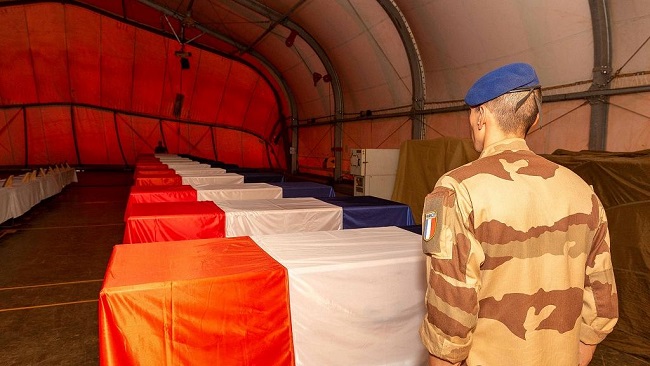
At least 53 soldiers and one civilian were killed in a militant attack on a military post in northern Mali on Friday, the government said.
The attack is one of the deadliest strikes against the West African country’s military in recent memory. It is still reeling from jihadist raids in late September that underscored the increasing reach and sophistication of armed groups operating in the region.
“The dispatched reinforcements found 54 bodies including one civilian, 10 survivors, and found considerable material damage. The situation is under control,” government spokesman Yaya Sangare said on Twitter in the early hours of Saturday.
The authorities first reported the attack by armed men on the army post in Indelimane, Menaka region, on Friday, but gave a lower provisional death toll.
From their stronghold in Mali, groups with al Qaeda and Islamic State links have been able to fan out across the Sahel, destabilising parts of Niger and Burkina Faso.
Thirty-eight Malian soldiers were killed on Sept. 30 in coordinated attacks on two army bases in central Mali, which has slipped from government control despite the presence of the French army and other international forces.
REUTERS
Britons will go to the polls on December 12. The election campaigning has begun in earnest as politicians across the country attempt to woo potential voters.
After weeks of brinkmanship combined with just a hint of political dithering, PM Boris Johnson won his battle to take the country to the polls. PM Johnson was quick to categorise this trip to the ballot as a defacto referendum on the country’s exit from the EU but at the official launch of the Labour party election campaign, party leader Jeremy Corbyn widened the parameters.
Someone who is clearly not on the side of the opposition is US president Donald Trump who called into the radio show hosted by Brexit Party leader, Nigel Farage, to tout a potential Tory-Brexit Party path.
At this early stage in the electoral race, the Conservatives lead Labour by some 15 points with the bookmakers reflecting this in their electoral predictions.
The PM might have bigger problems closer to home, in the midst of the election campaign Johnson must worry about keeping his own parliamentary seat. Labour challenger Ali Milani is keen to unseat him.
These elections are not simply a case of Johnson vs Corbyn, the Liberal Democrats, The DUP and of course Scotland’s SNP all have the ability to make matters extremely uncomfortable for Westminster’s big two.
And now the opening bells of this electoral race have rung, all parties are pledging a transformed Britain – but in what direction?
Culled from Presstv
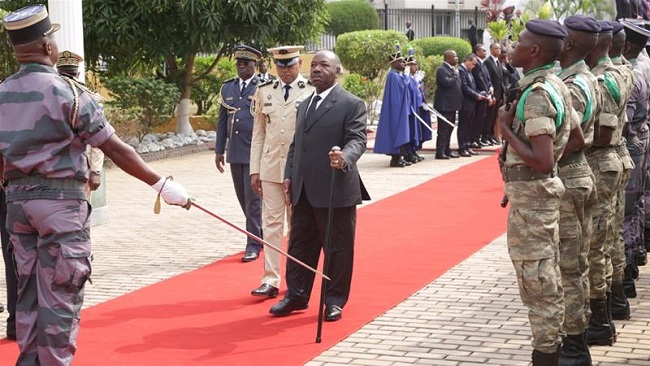
Hundreds of people including leaders, proprietors, media gurus from across the world have converged on the Five Lakes Resort in Colchester for the SOBA Annual Residential Convention 2019.
This item is still developing!
The Brexit Party leader’s election ultimatum to the prime minister has enough momentum to place Labour leader, Jeremy Corbyn as the next premiere.
Nigel Farage on Friday criticized Prime Minister Boris Johnson’s new Brexit deal as nothing but a surrender treaty originally penned by former Prime Minister, Theresa May, while giving the PM a 14 November deadline to agree on a new “Leave Alliance”.
The alternative would be to unleash Brexit Party candidates in every seat in England, Scotland and Wales, he warned.
The move would produce a split in the Conservative vote at the snap poll on 12 December, Mr. Farage said.
Recent surveys have speculated that after the general election, no single party will hold a majority of seats in parliament.
The Conservatives are projected to fill 35% of seats in parliament after the general election, while the Brexit Party is projected to win 13% of seats, according to a recent YouGov survey.
If the Brexit Party splits the Leave vote, Labour leader, Jeremy Corbyn, could end up as the new prime minister. Mr. Corbyn is hoping to curry support from the Scottish National Party and Liberal Democrats, who may be able to act as a “kingmaker” when the final results come in.
On Tuesday, UK lawmakers unanimously agreed to hold a December general election in a bid to resolve the Brexit paralysis. The motion was subsequently approved by the House of Lords and then the Queen.
The last national vote in 2017 ended in a “hung Parliament”, making it difficult for the government to pass legislation.
The ruling Conservatives hope to improve their current Brexit fiasco by gaining a clear majority in the upcoming election.
The EU has imposed a 31 January deadline for Boris Johnson to hammer out a divorce deal.
Source: Presstv
One month after Cameroon’s hyped Grand National Dialogue, the prospect of peace in the country’s Anglophone regions is still distant.
President Paul Biya called for national dialogue, and his government organised talks that took place from September 30 to October 4, leading to the adoption of dozens of recommendations to restore peace.
The five days of talks were boycotted by most separatist leaders, but gathered more than 1,000 participants. They recommended “special status” for the North West and South West regions, home to most of the anglophone minority that makes up 16 percent of Cameroon’s population.
Biya, who has maintained authoritarian rule since 1982, hailed the resolutions from the dialogue as “rich and varied”. He promised that they will be “the object of attentive and diligent examination with a view to implementing them.”
George Ewane, the spokesman for the national dialogue said that 58 fighters had laid down their arms in the South West earlier this month.
“The situation gets better by the day… The grand dialogue has brought much comfort to people’s hearts.”
An expert group is currently working on “the content of the special status” and the government is drawing up legislation to give shape to such status in practice, Ewane said.
“We would like the bill to be put to parliament during the next parliamentary session,” he added, which is in November.
Absent from the dialogue amid talk of his failing health, Biya surprised many by ordering the release of 333 detainees linked to the crisis, as well as 102 opposition activists arrested during peaceful protests against his re-election in 2018.
Those freed included the president of the Movement for the Renaissance of Cameroon (MRC), Maurice Kamto, who challenged Biya at the polls and was released after eight months in jail.
According to Blaise Chamango, an activist in Buea, the capital of the South West region, schools in some districts “remain closed and inaccessible,” while “dead city” protest strikes imposed every Monday by separatist forces have not stopped.
“The population in the crisis zones is still confronted with the same realities as prevailed before the dialogue,” he said.
Several attacks by armed groups have been reported in the past weeks, notably in the North West, reputed to be the more rebellious.
“Atrocities have resumed strongly in Bamenda,” the North West regional capital, Cameroon state radio declared last week.
The anglophone population remains “rather sceptical”, said Chamango, “because they no longer have confidence in the government.”
The country’s opposition leader Kamto argued that peace required “direct talks with the political representatives of the armed groups that control the terrain”.
“The grand national dialogue does not seem to have brought a new and lasting solution to the demands of the anglophones regarding the shape of the state,” Kamto said as he came out of prison.
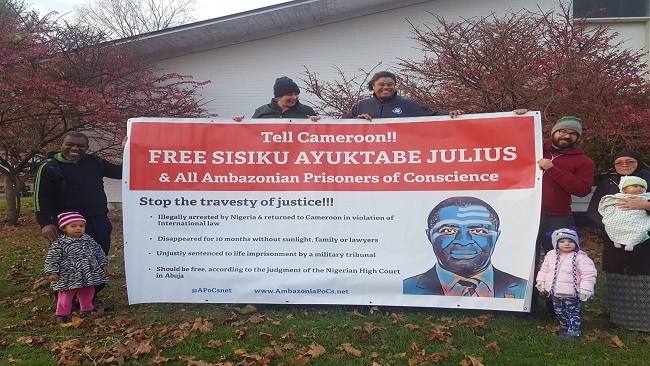
At the end of August, the most influential separatist chief, Julius Ayuk Tabe, was given a life jail term by a military court in Yaounde, with nine of his supporters. From jail, he dismissed the dialogue as a “non-event”.
But government spokesman Rene Emmanuel Sadi has said: “We don’t envisage any dialogue more inclusive than the one… that just took place in Yaounde.”
Armed anglophone separatist forces have clashed with government troops almost daily over two years of escalating conflict in the North West and South West regions of the central African country.
The population has been hostage to the violence, which has claimed more than 3,000 lives in English-speaking parts of the mostly francophone country, according to the International Crisis Group. More than half a million people have abandoned their homes.
The language split is a vestige from federation in 1961, a year after independence, when a British-ruled territory on the Nigerian border joined with the former French Cameroons.
The federal system was replaced in 1972 by a united republic. Some separatists have long argued that centralised francophone power neglected the anglophone regions. In 2017, the tension erupted into violent conflict.
AFP